teisipäev, juuni 06, 2006

Dutch Ambassador to Leave 'Homophobic' Tallinn

Dutch Ambassador Hans Glaubitz (pictured, left) is leaving Estonia because his male partner, a black Cuban, has been the victim of homophobia and racism, according to several news reports.

The Ambassador's partner was subjected to verbal harassment and threats in the street and threats. These began after a local magazine wrote that the appointment of a gay Ambassador with a black partner had to be seen as a Dutch provocation.

The Dutch Ministry of Foreign Affairs had hoped that Estonia, like its neighbour Finland, would be able to accept a relationship between two men. According to a report by the US Embassy in the capital Tallinn there have been nine cases of threats made to non-white embassy staff, mostly by Neo-Nazis or skinheads.

In a personal statement, quoted by the NRC, Glaubitz indicated the behaviour of the Estonian government was beyond reproach as his partner was treated well on an official level.

The treatment by members of the Estonian public was another matter. "[Estonian] society is far from ready for two men, particularly if one of them is black," Glaubitz said.

The Ambassador and his partner are being transferred to a two-year assignment at the Consulate General in Montréal, Canada.


First, does anybody know which local magazine was the first to discuss this man's private life? I doubt it was Kroonika, but could it have been the SL Õ? Pray tell to whom we all owe the honor of bad publicity for oma isamaa meie õnn ja rõõm...

Second - I actually heard - second hand - of an African-American individual affiliated with the American embassy that had to put up with a few 'Heil Hitlers' from some enthusiastic self-defoliating skinheads in Tallinn. I too was pressured for money from a leather-clad skinhead in the Old Town at an Internet Cafe. He actually asked me for money in Estonian, then Russian, then Finnish, and finally English. So you can't say they've lost all of their mental faculties :)

The idea that Estonia is any different from Finland though in its attitudes towards blacks, is a bit off mark though. Throughout my travels in Northern Europe I was privy to racist jokes a plenty. I don't think it is necessarily because people there are malevolently racist - I think it is because they just don't live near a lot of black people. When I lived in a very caucasian neighborhood as a child, I too had some funny ideas about people who didn't look like me. Now that I live in New York though, I have a lot of funny ideas about people that DO look like me.

A interesting tidbit is that the word for black man in Estonian is 'neeger' which is an insulting term in English, but Estonians insist that 'must' the word for 'black' also means 'dirty' and is a far more derogatory thing to call someone.

Estonian attitudes towards homosexuality though are a separate issue. I am currently unaware of any openly gay celebrities or high profile individuals in Estonia. I am aware they exist - and I am sure most people could point them out - but it just doesn't seem like something which is openly discussed in society.

Yet, sexuality isn't really openly discussed in public either. It is in magazines, sometimes on TV, but in a public setting? I rarely saw straight couples 'making out' or embracing in Old Town - and if they were, they were usually foreigners, or it was warm out and they were drunk.

I welcome all comments on Estonia's attitudes towards homosexuality though. I am NO expert.

I do think it's important though to view this from a European perspective. As any Dutchman will tell you, Holland, with the recent assasination of Pim Fortuyn and the murder of Theo Van Gogh, not to mention the effort to strip the citizenship of Ayaan Hirsi Ali is struggling with similar issues of bigotry and tolerance.

Three Years of Marital Bliss


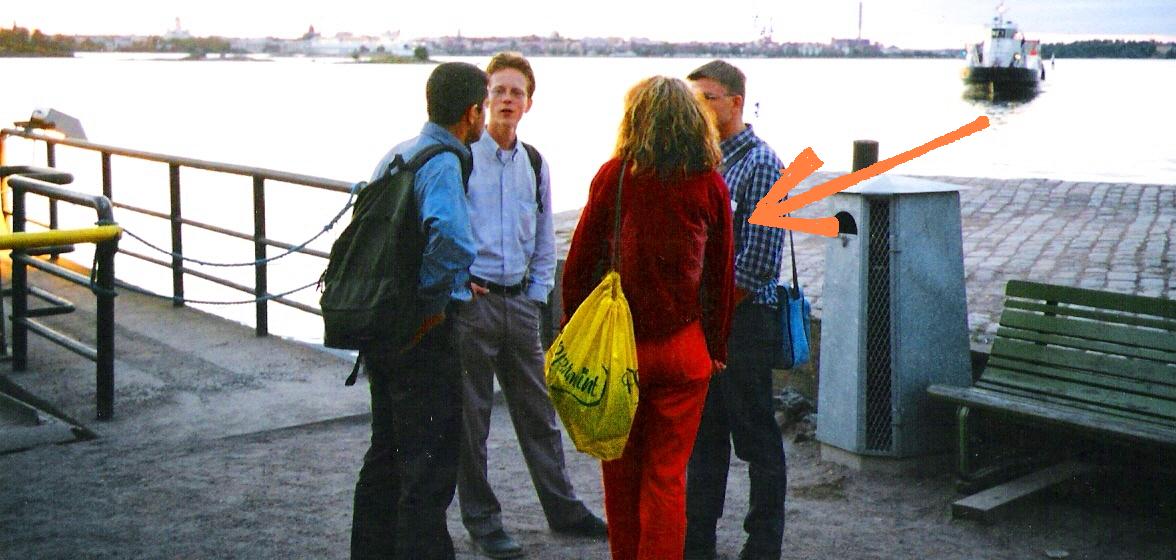
This photo was taken on or about the 5th of August in 2002. The young woman in the red pants and red jacket is Epp - then just one of the many fuzzy foreigners in my company in Helsinki - now my wife and the mother of our child.

The clean (well cleaner than New York Harbor) waters of the Gulf of Finland are at play in the distance, and, according to my memory, I most likely was intoxicated by the time I took this photo of what was to become a familiar backside.

As of today - 6/6/06 - the number of the beast - we are officially married for three years. Many marriages don't last that long. For example, Lisa Marie Presley's marriage to Michael Jackson only lasted about 19 months. Frank Sinatra and Mia Farrow on the other hand duked it out for a full two years. So we have something to be proud of - a true achievement in today's society!

When we got married, my romantic cousin asked if it meant that I wanted to "spend the rest of my life, forever and ever" with Epp. I have never been comfortable with the idea of the "rest of my life, forever and ever" because I am a bit of a fatalist and I just don't like predicting the future. I enjoy more to go with the flow. But, as of today, it does appear that we are on the road to spending the "rest of our lives, forever and ever" together.

We were married in Tallinn on June 6, and then took a sweaty bus south to Viljandi where we honeymooned (the most unlikely honeymoon spot on Earth). We had a nice south Estonian dinner and retired. The next day we greeted her family and I had to give an embarrasing speech. It was overcast. I still was getting used to having this metal ring on my finger. I always hated rings (or any jewelry, body art etc.) and so it took awhile to get used to. I have to say that I was a bit uncertain about getting married. In all my predictions for the future, marriage had never seemed to manifest itself in my dreams. I didn't know what to expect, I wasn't sure what it meant, I wasn't sure that if I was turned loose in a nightclub in Amsterdam if I'd succumb to adultery and other debacherous acts. I just was not very confident before I took the plunge.

But now, three years, later, it seems to have worked out pretty well. I like being married. In fact, I oddly am enjoying it more each year, which is the opposite of what others describe as a "long meal with dessert at the begining." The hype of marriage is long gone, and again it's just me and my kullake, living together, watching bad movies on the Lifetime network together, and, once in awhile, frequenting NYC comedy clubs together. Two peas in a pod. Two bees in a nest. Two humans in legal bondage :)

And, in a way, I am glad we did it the way we did it. Our wedding had little fanfare - limited planning, the thousands of cousins did not materialize to muster up a bon voyage. Instead, we just got married, and have lived happily since, so much so that, today, when I am on business trips, I actually have trouble sleeping without the warm human being in bed next to me.

A really good marriage necessitates the compliance of two really well-suited people. When I met Epp in Helsinki those four years ago, I knew pretty much immediately that she was creative enough, interesting enough, moody enough, and crazy enough to put up with somebody like me. It felt like I had finally found a partner that could put up with me and vice versa. And it seems that my gut instinct was right.

neljapäev, juuni 01, 2006

Toored Sõnad

OK...hakkame jälle.

Esimene on paras. Paras tähendab "fitting" või "appropriate" inglise keeles. Mu lause on:

Ma arvan et sul on parasid riided pülmale.

Teine on hälgima. 'Hälgimaä' tähendab "to starve" inglise keeles. Mu lause on:


Kui te ei söö mitte midagi, siis te kindlasti hälgite.


Kolmaks on ilmuma. 'Ilmuma' tähendab 'to appear' inglise keeles. Mu lause on:

Veevana ilmus jõepeal.

Neljaks on toores. 'Toores' tähendab 'raw' inglise keeles. Mu lause on:

Tõitsi lemmik toit on toored porgandid.


Okei, viimane sõna on segema. 'Segema' tähendab 'to disturb' inglise keeles. Mu lause on:

Need inimesed kes jööb kohvi sukru ja piimata alati segeb mind!

teisipäev, mai 30, 2006

Nordic? Defense? Mwahahahahahah.

Remember the Winter War where Finns young and old bound skiis to their feet and defeated Stalin's invasion of Finland? Ok, so maybe you don't, but that was the highlight of Nordic military prowess in the 20th century.

Other Nordic countries, like Sweden, just decided to let Hitler do as he pleased. Denmark surrendered, Norway had to endure Quisling's Vichy-like regime, Iceland went fishing, and Estonia? Well, Estonia didn't listen to Laidoner.

But now, the Nordic defense ministers are cooperating, and the EU's Nordic battalion, which includes troops from Estonia, Finland, Norway, and Sweden this week opened its headquarters in the Swedish city of Enköping.

Meanwhile Jürgen Ligi, Estonia's defense minister is also in Enköping to dream up scenarios where they could possible use the Nordic Battalion Group - perhaps defending Lake Peipsus from drunken Russian fishermen, or defending the Faroe Islands from drunken Faroese fishermen or...

Defence Ministers from Sweden, Norway, Estonia, and Finland are taking part in a workshop Tuesday here on coordinating activities.

The four countries are members of the Nordic Battle Group, a rapid reaction force, which is to be ready to work with the European Union during the first half of 2008.

Tuesday’s workshop, at the home of the Uppland regiment in Enköping, includes a series of fictitious scenarios where the defence ministers will discuss cooperation and decision-making on the national, joint, and EU level.

Eesti Mayor of Mälmo to be Tried for Junket

From The Local, Sweden's News in English:

A senior Social Democrat politician in Malmö will go on trial this August charged with taking bribes.

Municipal commissioner Ilmar Reepalu is accused of accepting a free trip to Africa from businessman Dan Olofsson. He is being charged together with former governor of Skåne Bengt Holgersson. Olofsson is being charged with bribery.

"I think that this will be over with before the election," Reepalu told Swedish Radio.

Sweden goes to the polls on September 17th


According to Swedish Wikipedia, Reepalu was born in Estland in 1943 but found some very important reason to relocate to Sweden as a youngster.

Las õpime jälle!

OK, I have a limited amount of time so here are my five new words -


Lahkuma - see tähendab "to depart" inglise keeles. Mu lause on -

"Järgmine Silja laev lahkub kell 17:00."

Teine sõna on kuumutama. See tähendab "to simmer." Ma proovin -

"Las riisi kuumutab pottis pool tunneks."

Ja järgmine on äädikas. Äädikas tähendab "vinegar" inglise keeles. Proovime -

"Inglismaal söövad nad kala ja krõpsud äädikasiga."

Tegilukult mina olen lugenud menuud eesti keeles, sest et mu järgmine sõna on purustama. See tähendab "to crush" inglise keeles. Nii -

"Kui te tahaks teha veini, siis te peaks purustama viinamarjad."

Viimane sõna on libu. Libu tähendab "harlot" inglise keeles. Nii -

"Kui sa tahaks leida üks odav naine, siis mine Molly Malone'sse laupäeval õhtul, sest et palju libusid hangivad seal."

Ja see on kõik (ja tore)!

pühapäev, mai 28, 2006

The Politics of Pronks

First, dear readers, I would like to apologize for writing another post about the most controversial monument in Tallinn. However, I was thinking, and thinking, and then thinking some more about how this will play politically, and I came up with a few basic thoughts. Being an American and an Atlanticist who believes that World War II was more about power and geography and less about ideology, I am perhaps biased in the eyes of some readers. Well - whatever - here are a few main political observations on this controversy.

1. This is bad for Tallinn mayor Jüri Ratas. Ratas, as mayor of Tallinn and a member of what appears to be the most popular party in Estonia, Keskerakond, should have been front and center in this debate. Instead he's been invisible, wondering what all the fuss is about. His nonchalant attitude about the memorial shows him catering to his "nostalgic for Communism" base - funny considering that the USSR died when he was a spotty 13 year-old. He might preserve KESK's hold on the "nostalgic for Soviet times" crowd, but his lukewarm defense of the controversial soldier will cost him big in the "character" category.

2. This is also bad for Isamaaliit AND the future Isamaaliit-Res Publica Union. With its smart ties and Eurospectacles, Res Publica seemed like Isamaaliit for the 2000s. Isamaaliit - it's name translates as "fatherland union" was the more old fashioned, genuinely patriotic party, with roots going back to 1987. Most of its members probably are nothing but Estonian patriots. But the high profile media attention given to certain Isamaaliit members like Kalev Rebane, and other skin heads, leaves a bad taste in anybody's mouth.

3. This is actually a win for the Reform Party. Andrus Ansip's commitment to moving the soldier to a cemetery - where most war monuments are located - and out of central Tallinn speaks less about what the monument stands for, than the fact that there is a Soviet memorial in central Tallinn that is a lighting rod for conflict. The Soviet nostalgia parties every May 9 don't help. With Isamaaliit and Res Publica voters pondering their future following the merger of the two parties, many could jump ship and move to Reformierakond.

4. This hurts Edgar Savisaar's presidential ambitions. Savisaar's belief that the monument should stay there reinforces the attitudes of his opponents that he is nothing but a Soviet-style yes man, an Estonian slave with a Russian master. Just read the comments on Postimees and you can see how deeply in hate some people are with the guy.

5. This helps the presidential ambitions of Toomas-Hendrik Ilves. Because where is Ilves these days? He's in Brussels. Far away from skin heads, spray paint, red flowers, and the bronze soldier in central Tallinn. He has said little if nothing on the matter, and he shouldn't have to - he's in the European parliament, it is wholly out of his jurisdiction. So as the mud flies, none of it lands on him.

laupäev, mai 27, 2006

An interview with Aili Jõgi

We were discussing the two girls that destroyed the first monument to Red Army soldiers in Tallinn - a wooden one - before the occupation authorities decided bronze would be more fitting, and less easy to destroy. Well if you ever wondered what happened to the two girls that blew up the first Soviet memorial in downtown Tallinn 60 years ago, now's your chance.

Aili Jõgi was less than 15 years old when she, and her neighber Ageeda got rid of the first memorial there. She spent her 15th birthday in an NKVD prison. She was allowed to leave Siberia in 1970.

A key moment in her interview:


"Ja mis tehti meie presidendiga? Ma mõtlen siis, kui Lennart Meri kirst toodi Kaarli kirikust välja ja kirstuga auto läks sellesama punasõduri eest läbi. Kas nad tõesti ei saanud teiselt poolt minna?! Kas matuse korraldajail üldse aru peas ei ole?!"


"And what did they do with our president? I think that, when Lennart Meri's coffin came out of Kaarki Kirik, the car coffin went right in front of and past the Bronze Soldier. Couldn't they really have gone the other way? Didn't the organizers have any common sense?"

Jõgi says she took up the discussion of the memorial with Tallinn mayor Jüri Ratas, but he decided, after a lot of thought, that it didn't bother him.

Uskumatult loll avaldus... Poisslinnapead ei häiri, kui tema linnas on pisuke maalapp, kus Eesti riigi lipp ei tohi lehvida, aga punalipp tohib.


"This was an incredibly stupid statement...it doesn't disturb the boy mayor [she refers to him as poisslinnapea throughout the piece, Ratas is 28 years old.] that his city used to be a little chunk of land where it was prohibited to wave the Estonian Republic's flag, but it was permitted to wave the Red flag."

reede, mai 26, 2006

Laanet Bans Pronkssõdur Protests

Estonian Interior Minister Kalle Laanets is your typical Estonian public servant - young and faced with difficult decisions. At age 41, he is of the same generation of post-Soviet leadership as Finance Minister Aivar Sõerd and Education Minister Mailis Reps - people born long after WWII yet somehow caught up in the historical melee.

Can you believe that? Fighting over history? So angry that you are willing to become agitated and violent for something that has actually little bearing over your life here and now, in the present? It happens everywhere. It's some kind of human disease.

Well anyway, as of today rallies for and against the bronze soldier in central Tallinn have been banned. That means that neither Tiit Madisson from Isamaalit nor Vladimir Lebedov - a founder of Intermovement and an opponent of independence from the 80s - can hold rallies and argue about who killed who in World War II in front of the controversial memorial and May 9 party zone.

While the move seems undemocratic, banning sounds scary, it's actually not. It's fairly common to not allow protests in certain municipal areas in this zion of democracy known as the United States of America. And it is a safety issue.

But it has attracted the attention of international media.

Karvased Päevasõnad

Ok, several of today's words come from Mõmmi Aabits, a song to which my daughter knows all of the words.


Täna esimene päevasõna on sarnane. See tahendab "alike" inglise keeles. Siin on minu lause -

Tõnis Kasemets on Markko Märtini sarnane.

Nümber 2. Küpsetama. See tahendab "to bake" inglise keeles. Minu lause -

Kaur praegu küpsetab küpsid köögis.

Kolmaks sõnaks meil on arendama. See tahendab "to develop." -

Anstile meeldib oma auto arendama.

Järgmine päevasõna on abiratas. See tahendab "training wheel" inglise keeles.

Mõned blogijad oli kirjatanud, et Tallinna linnapea on Jüri Abiratas, mitte Jüri Ratas.

Ja me lõpetame sellega, Karvane. See tahendab "furry" või "hairy" inglise keeles.

Ruhnu karu on kindlasti karvane!

neljapäev, mai 25, 2006

...Ja Veel

OK, I think I have found some more words to learn for today. Täna hommikul ma sõitsin rongiga tööle. Need on minu päevasõnad.


Lurr - ma õppisin seda sõnat eile õhtul Epuga. Me lugasime 'Laps ja Toit' - üks ajakiri Eestist. Siis, see on minu lause lurrile.

Liisu isa ütles et Linnaleht on mingi lurr.

Järgime sõnad on 'meeles pidama,' mis tahendab 'to remember.' Ma tõesti ei tea kuidas õelda seda veel. Tavaliselt ma ütlen 'maletama.' Aga las ma leiutan midagi -

Sina pead meeles oma telefoni numbrit!

Okei. Järgine asi on Uskuma. Lihtne,jah? Ei.See on minu vale lause. Palun api!

Uku usub maausk.

Järgmine sõna on stereotüpiline imelik Eesti sõna. See sõna on 'Iialgi,' ja ma mõtlen et see tahendab 'never.' Proovime -

Inno ütles et ta on iialgi käinud Kärdlas.

Viimane päevasõna on 'Valdama,' ja see tahendab 'to be fluent.' Minu viimane lause on see -

Vambola valdab vabalt Võru keeles.

kolmapäev, mai 24, 2006

Õpime Sõbrad!

OK, so I have two main missions in life - Mission 1 - make music. Mission 2 - õppida eesti keelt. The missions are not exactly in that order.

In order to increase my Estonian skills I have decided to put together vocabulary lists. Today's words/phrases to be learned are the following -
Lasema Õhku
Plehku Panema
Suurepärane
Lööma/Lüüa
Kunagi


Knowing the basic meanings is the easy part. 'Lasema õhku' means to 'blast away.' I learned this from Jüri Liim in Postimees. The phrase can be used like so, I believe:

"Jüri Liim tana hommikul ütles et ta tahaks laseda pronkssõduri õhku."

'Plehku panema' I learned from E Nagu Eesti. I think you can use this one like so:

"Epp proovis püüdma Martat, aga Marta panes plehku."

'Suurepärane' is an adjective. I think it should be easy to incorporate. It seems like a synonym of 'täiuslik' and 'imehea.' So it can be used like this:

"Oi oi oi, vanaema. Sinu klimpisüpp on tõesti suurpärane!"

'Lööma/Lüüa' looks less promising. Let's try this one in the past tense.

Eesti löös Taani üleeile jälgpallis.

Bear with me. I know this is frustrating to watch...Ok, here's our final term, 'kunagi.' Oh, it would be nice to know how 'mitte kunagi' and 'nähagi' are different. But let's try 'kunagi.'

Mart söi pitsat ühest restoranist Tallinnas, aga ta oli häige sellel õhtul. Ta ütles mulle et ta ei viitsi süüa seal samal kohal mitte kunagi.

I await your many corrections...

teisipäev, mai 23, 2006

At Postimees, It's All Pronkssõdur, All the Time!

What do you see when you look into the eyes of the Pronkssõdur ('bronze soldier') near the Estonian National Library in Tallinn?

Do you see the defiant look of the Red Army soldiers that drove Hitler's troops out of Pribaltika? Or do you see the manical laugh of the men who loaded your grandmother into a cattle car bound for Siberia? Or do you just see an ugly, bronze dude in a cape (how many soldiers back then wore capes? Come on!)

I regularly read Postimees, one of Estonia's daily national newspapers, and today has been Pronkssõdur day - the day where every leading news story is about what different important - and not so important - people in Estonia think about this guy.

One really important person who made his opinion clear today was Prime Minister Andrus Ansip, who told Eesti Radio that:

Kõige enam sümboliseerib see pronkssõdur seal okupatsiooni ja sellist ausammast okupatsioonile me Tallinna südalinnas Kaarli kiriku kõrval taluma ei peaks.


Basically, "the bronze soldier is a symbol of occupation that doesn't belong next to the Kaarli Church in the heart of Tallinn."

Ever the cautious public servant, Villu Reiljan told the newspaper that it wouldn't solve the problem to move the Bronze Soldier, which Ansip has recommended relocating to a cemetery.

Not one to miss an opportunity to get a few more votes from his base, Edgar Savisaar chimed in saying that the bronze soldier should stay where it is. But I had a hard time translating him without using a dictionary so we'll leave it at that.

Finally, President Arnold Rüütel decided that the best way to scuttle the controversy would be to bury it in red, or blue, black, and white tape. He believes that a commission should be set up to address the matter.

Other than Savisaar, Postimees found two organizations to disagree with Ansip - Vene Erakond Eestis and the Anti-Fascism Committee. VEE said that the Bronze Soldier memorial is a great place to come and put down flowers and honor ones grandfathers who won the war against fascism in World War II.

Sadly, in 2003, VEE only got 0.20 percent of the vote, or 990 votes in total. However, a spokesperson for the group said on ETV that removing the statue would not bode well for Ansip. One can only guess that VEE hopes to double its turn out in the 2007 election.

I think this debate will go on for a long time and never really cease in Estonian society. I mean look at the US. It's 2006 and we are still arguing about the Civil War!

esmaspäev, mai 22, 2006

Mu Lemmik Eesti Laul

When we lived in Estonia, one of my favorite television programs was 'Laulukarussel' - a program where Estonian children get up on a platform in the middle of groves of lollipops and and other Willy Wonka-esque stage decorations, and sing children's songs.

At home in Estonia, those that are moved by the vocal prowess of young Estonia can anonymously call in and vote for their favorite 10-year-old. In Estonian living rooms heated discussions take place between men and women who work at Eesti Ühispank by day and succumb to Laulukarussel by night. Instead of arguing over finances or politics, they debate whether or not to place a vote for Kristjan and his passionate rendition of 'Jõulu Ingel' or Sandra and her stirring delivery of 'Tule Metsa.'

'Tule Metsa' is, above all others, my favorite children's song. To me it is the unofficial Estonian national anthem. While 'Mu isamaa' is melancholic and just makes you want to burst into tears when it is performed right, 'Tule Metsa' is a boisterous and childish anthem.

Here are the lyrics - and here is my favorite verse...


Metsa läksid sa,
mühisevasse metsa,
läksid tuulutama,
närve puhkama.
Metsa läksin ma,
metsast tulid välja sa.
Teadsin, metsast pead sa
välja tulema!

Ref:
Tule metsa, mine metsa!
Hoia metsa, metsa, metsa!
Et me mets ei saaks otsa!
Et me mets ei läheks metsa!


Five points to anyone who can translate that!

reede, mai 19, 2006

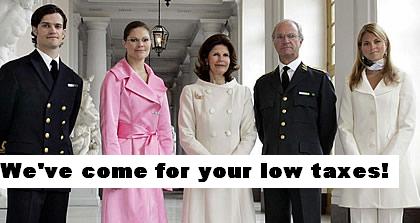
Swedes Come for the Low-Taxes; Finns for the Cheap Girls


Estonia's northern neighbors sure have their minds set on Eestimaa. For Swedes it's a low-tax haven where the alcohol and tv commercials come cheap.

As The Local reports:

When the Swedish tax authority wanted to produce a television advertisement to encourage taxpayers to pay up on time, they chose to make it in low-cost Estonia, partly in a bid to escape high Swedish taxes.

The ads, featuring popular comic Johan Wahlström, would have cost 50 to 100 percent more to make in high-tax Sweden than they did in Estonia, Björn Tennholt at the Swedish Tax Authority (Skatteverket), told Expressen.

Asked why the ads cost so much less to make on the other side of the Baltic, Tennholt said it was due to the wages. When pressed by Expressen's reporter as to whether the taxes were partly to blame he admitted, "of course, Sweden is a high-tax society."


The Swedish tax authority also printed their brochures in Finland to cut down on cost, but Swedish tax brochures are not what Finnish guys are after. No, Finnish guys crave Virolainen vittu. As the Helsingin Sanomat reports:

One in four buyers of sex services in Estonia are Finns, according to an extensive survey released on Thursday.

About 400 prostitutes in different parts of Estonia responded to the questionnaire arranged by the European Union equality project Equal last autumn.

Finns were overwhelmingly the largest group of foreign customers, coming right after local men.


That's right, the Estonia of 2006 boasts an economy so healthy, local men can now take advantage of the sex trade:

According to sex service providers, more than half of buyers were middle-aged married Estonian men ... The most typical customers were Estonian married men and local Russians.


It's nice to see Estonians moving on up in the world.

neljapäev, mai 18, 2006

A Picture is Worth Several Hundred Words...

In the highly-controversial post about Estonian names, I mentioned how, having lived in Denmark, I found many similarities between the Danes and the Estonians. I also mentioned a place called Skagen, at the northern tip of Denmark, which reminded me a lot of Saaremaa and the Estonian west coast in general. I went to Skagen in 2001 - it was just a few days after September 11, and my body was filled with these conflicting, raw emotions.

The most profound images to me of September 11 were not of the planes crashing into buildings and murdering my fellow New Yorkers, but of the women and men who knew they were done for, and held hands and jumped from the tops of those buildings. I imagined the air was cold and that they got to look at the city as they fell downwards. It was this idea - I hadn't actually seen photos, just read news reports - that replayed over and over again in my head when I was there in Skagen.

After that event happened, we were all waiting for the next shoe to drop - for another attack. I telephoned home from the booth in Skagen to make sure that my relatives and friends were all accounted for.

But Skagen was nice. It used to be - perhaps still is - a summer colony for artists. While we were there we went to some art museums and met up with German students, who were, like all Europeans, better dressed and more 'hip' than we ragged Americans were, although our hair was cleaner.

The hills surrounding the village - which stunk of dried fish - invited one to visit the coast, where the chimneys from tile- and thatch- roofed cottages puffed smoke into the air. I should comment here a bit more about the fish. The smell hung like a fog in the air. I remember eating ice cream and feeling that I was eating fish-flavored ice cream. Yum!

Anyway, on those placid hills I looked out at the Baltic and thought about life and death. My friend who took this above photo looked at me and said "I'm scared about what's going to happen." It was an extremely humble expression of fear. I will never forget the look on his face.

I took a lot of photos that evening - like the one above - but I lost that roll of film. This is how. I took my camera with me shortly afterwards to Prague to visit my friend Patrick. In Prague I stayed a few floors above him in a rented suite - which was cheap. They actually checked me into my hotel room as "George Washington" because that was the name of my university and they screwed up. So I stayed as "George Washington" in Prague for a few nights and drank a lot of pivo. On the morning I was supposed to leave, a strange Czech woman woke me up. She was the person in charge of cleaning rooms and I had overslept passed my check out time. I was mostly naked and scrambled to get my belongings together while this woman yelled at me in Czech. I pulled all my films together and stuffed them in my bag, but, sadly, I lost the roll with the films of Skagen.

Fortunately, years later, Jarrod - the friend who was with me in Skagen - posted some of his photos on his website. And I was able to steal one for this post. If you look you can see it looks like your typical city on the Baltic coast, and wouldn't be out of place as an Estonian village on the Baltic Sea.

kolmapäev, mai 17, 2006

Vanilla Ninja Pics!

Jens-Olaf has some great photos of Estonia's ambassadors of ... pop music ... at their finest in Osnabruck or some such town in Deutscheland.

Go there to enjoy more.

teisipäev, mai 16, 2006

There's Something About 'Titad'

Once in awhile when I launch into a story about my 2-year-old daughter, somebody, usually a person over the age of 25 years that has yet to procreate, begins to tell me about their childhood. And I immediately glaze over and lose interest. Why is that? I think it is because the 25-year-old person was a baby when Dallas was a hot show, most people had rotary phones, and cable TV was a luxury. So, they are neither cute nor babies anymore, and thus not interesting to me - Mr. My Daughter Was Up AT 5:30 AM This Morning.

And the thing is that, in America, having babies isn't really a thing 25-year-olds do. In fact, it's not often a thing 35-year-olds do. It's more for the 35-menopausal age group. Babies are viewed as lifestyle accesories, not as biological results. Americans really think that they can choose when and how to have a baby, like "when they're ready." I've got news for you - you'll never be ready. Child is father of the man.

Of these Americans, some, like me, did not plan on having one yet became accustomed to the result. Others put it off for so long that their eggs are crusty and difficult to penetrate by even the most ambitious, viral sperm. They then get fertility treatments and have triplets. So either way, you never know what life has in store for you!

In reality, babies are not a 'lifestyle choice.' I know there are things like condoms and birth control pills and the rhythm method and abortion, but individuals must actively work at and often fail in their efforts NOT to have children. Children, it seems, just want to be born.

I have to say that becoming a father was a bit of an easier process in Europe. I recall walking down Stroget in Copenhagen in 2001 and seeing groups of young mothers parking their babies outside of cafes in August to have a drink with some friends and then roll their way home. Or seeing babies tucked into "Baby Bjorn" carrying pouches in Finland. It seemed like children were just treated as a normal thing like - "Oh, look, I had sex and a baby came out. Better give it a name and feed it something."
It looked like something that wasn't scary, but that could be done.

When we found out about the impending birth of our child I was a little worried about telling my colleagues. I think I didn't tell them until my wife was eight months pregnant. Part of me was worried about any complications, but the other part of me was the socially conscious American who just "wasn't ready" to announce to a room full of Estonians that his family tree would grow another branch in just nine months.
Or did they even care? Pssh. Who knows with these Estonians. They all look like they are engrossed in a game of poker. When I finally did tell them, I think they were disappointed I didn't tell them sooner. But I had my own issues to face.

Seeing other Estonian dads my age really helped me get used to the idea of being a dad. Sometimes you need a little demonstration. And sure, Estonians get divorced a lot and drink alot and all that stuff most people do - but I have yet to witness a major family breakdown - broken dishes, flying fists, angry words - on an Estonian street.

And then there is the word for 'Dad' - Isa or Issi. I liked this word when I was going through the fatherhood acclimation role. 'Dad' to me sounded like Dennis the Menace's father. I wasn't sure I was ready to become an authoritative 'Dad' who knew best, but I thought I could manage being an 'Issi.' In fact, I am not sure I have much to teach even now. What will I tell my child about the Presidency of George W. Bush, for example? If somebody asked me about it, I think I could manage a sort of sombre dance of shrugging my shoulders and rolling my eyes. And I am just now starting to understand the intricacies of the stock market. And I am somebody's Dad? Yep. And I am an Issi too. But 'Dad' sounds like I know something. And 'issi' just sounds like I am a big clown.

Anyway, if you are feeling 'ready' to have an Estonian baby, here are some of my favorite names that I will unfortunately never be able to give a child with a straight face.

*NOTE: THIS SECTION HAS BEEN UPDATED TO REFLECT MY THOUGHTS ON THE NAME TEET*

For boys, Teet - which is cool in both Estonian and English. In Estonia "Teet teeb teed" literally means - "Teet is making tea." In English, the name "Teet" reminds one of the thing on the cow you squeeze until the milk comes out. Valvo, not the car, is also a favorite, and Silver (like the color). In fact, you could name your son, Silver Valvo, if you like sturdy Swedish cars

For girls, you can't go wrong with Õie, which offers three vowels in a row, Sibülla (the Estonian word for onion is 'sibul'), and my personal favorite, Asse. You can imagine how Americans would pronounce that one.

War in the Woods

My wife got me this book to feed my Estonia/World War II jones. It is inevitable that, as a man, I will become more and more interested in war and conflict as I age, and hunker down as my father before me in excitement as a World War II special premieres on the History Channel.

The book is called War in the Woods: Estonia's Struggle for Survival. It is by Mart Laar, the once and again prime minister of Estonia. To American eyes, Mart Laar is kind of like one of us. He's large, ballsy, a blowhard. He's a loud, shining, argumentative diamond in the rough from a region where 'dynamic'is epitomized by ... well no one. The north isn't exactly known for is charismatic leaders.

But the book is different from the man. It is told from an Estonian perspective - that is it it doesn't boil the Estonian resistance down to "former Hitlerists" as some media outlets might be told to do. But it doesn't suffer from any kind of bombastic flair. The two main sources of information are interviews with actual Forest Brother guerillas - those who fought the Soviets in the woods for the ten years after 1945 - and the archives of the Communist Party in Estonia.

The effect is strong, particularly due to Laar's attention to detail. He goes into long paragraphs about which rifles they were using, and how communications networsk were set up and destroyed by the Soviets and set up again. In fact, all I dreamt about last night was cutting Soviet communications cables. It's a good read.

Two things strike me though. One is the age of the Forest Brothers. When we think of them, we think of them as time beaten men. But these were young gentlemen, most in their 20s, loaded up with rifles, grenades, and whatever else - trying to coordinate a guerilla war with limited communication channels and support. It's like you want to go back in time and give the guys laptops and cellphones. "Here Hirmus Ants (a famous forest brother) use my Nokia, it's much more effective than your primitive radio."

The other thing that is interesting is the ferocity of the NKVD. The Soviets spent millions of rubles and thousands upon thousands of lives destroying the Estonian republic. They wasted so much of their precious resources in a land that ultimately rejected their rule, anyway. Why would they do such a thing? Were they wholly irrational, evil, corrupt human beings? They look that way. Most of their official photos make them out to look like Dr. Evil from the Austin Powers series. But still, the effort undertaken to liquidate a whole system of government - to destroy a whole society - is just insane.

Fortunately they failed and the guerilla's efforts were not in vain. What the publicity of this book does though, is that it erases the notion that Estonia willingly submitted to Soviet rule. And according to the Forest Brothers cited in the book, after they realized that they were not going to regain independence, that is what they set out to achieve using guerilla tactics.

neljapäev, mai 11, 2006

Finnish and Estonian Trade Unions to 'Harmonize'

Back in the day when I was a whiny new new leftist (in the US the 1930s Left is known as the "Old Left," the 1960s Left is known as the "New Left," and like everything in this post-post-modern world, the 1990s Left was known as the "New New Left")we used to complain about globalization, and how come, if the world was just one, big, free market, the labor movement couldn't expand at the same rate that multinational corporations - many of which had no national face - did.

Leave it to the Estonians and Finns to answer that question many years after it was posed...

The top employee organisations in Estonia and Finland have agreed to harmonise the supervision of workers' rights between the two countries.

The chairmen of the Central Organisation of Finnish Trade Unions (SAK), the Finnish Confederation of Salaried Employees (STTK), the Confederation of Unions for Academic Professionals in Finland (Akava), the Confederation of Estonian Trade Unions (EAKL) and the Estonian Employees´ Unions´ Confederation (Talo) signed a deal in Tallinn on Thursday.

A transition period limiting the access of Estonians to the Finnish labour market expired on May Day.

The organisations said the unions should do everything in their power to ensure the smooth flow of information across the Gulf of Finland.


This is also further proof that the "Talsinki" meme - that Tallinn is just a suburb of Helsinki, that Estonian and Finnish are actually two dialects of one huge Finnic language group, that the future will be just one big, warm sauna, goes beyond the existence of the 'Talsinki' Rugby Team - which combines Helsinki's Rubgy Club with the Tallinn Tigers.

Sure there are the little differences. While 'hyvää' in Finland is 'good', 'hüva' in Estonia is just 'ok.'

kolmapäev, mai 10, 2006

Estonian word of the week - käli

No, not Kalli - something you say when you hug someone. Not Kali - a fermented bread beverage. But Käli. This is the Estonian word for sister-in-law, although I am not sure all Estonians know it.

The Käli creates an interesting new look at your relationship with your wife. After falling in love with your wife, you may come to think that all her family members may be in some way similar to her as they are born of the same blessed genetic union.

How untrue. What your in-laws teach you is that genetics do exist, but they aren't everything. Consider that my wife was born 16 months before her sister followed her onto planet Earth. Yet the two of them turned out significantly different.

For example, Elo, my käli, is a confectioner. She works in a bakery. She knows a lot about cakes and has a highly informed opinion of baked goods. I bet she can tell the difference between breads baked in different locations.

Elo also likes the Pet Shop Boys a lot. Maybe less in recent years, I don't know. But I do know that she doesn't have many CDs, but of the CDs she does have, a plurality of them are made by the Pet Shop Boys.

She's also taller than my wife. In fact, you may come to see Elo as the older sibling because she has the authority that comes with height. Elo moved to Tartu when she was a young woman and stayed. She has lived in the same apartment for most of that time. Her daughter, husband, and mother-in-law are all Tartlased. She seems like a fairly stable person.

Compare that with my wife who is a journalist and has the critical eye of a suppressed editor-in-chief. She is also addicted to real estate and planning trips. In fact, I believe that at some point in her life she may become a travel agent, not for the salary, but for the pleasure of searching websites across the Internet looking for the best last minute prices.

She is also the young woman who - in her mid 20s - felt an enormous urge to become a bum sweep over her. With pocket atlas in hand she found herself sleeping in less-than-savory conditions from the Canary Islands to Israel to India. She was trained as a journalist - but she sold beads in marketplaces across Europe. When we were in Brighton, England at about 2 am once, I had to convince her that it really wasn't a good idea to hangout on some stranger's roof. And I was the party pooper.

Finally, Epp - my wife - is shorter than Elo. And she looks a little different. They have some things in common. For example, they both are intrigued by Eurovision, Astrology, witchcraft, and soap operas. So, I wouldn't be surprised if both wound up being practioners of maausk in old age and spent their last days picking berries and worshipping rocks.

Why am I telling you this? Because the Estonian word of the week is käli. Maybe you can take a little time out today to think about your kälid as well.

(PS - those ladies aren't really my wife and her sister. They are two famous Estonian twins)

teisipäev, mai 09, 2006

Perfect Timing

Today Estonia became the 15th European Union member to ratify the dreaded 'EU Constitution' passing the baton north to Finland where the nation of Santa Claus and reindeer will decide by the end of the month whether or not to ratify the document as well.

To commemorate this historic day, a rally was held in Anton Tammsaare park, where girls shook their asses to Euro stars and foreign minister Urmas Paet preached to a willing choir. EU support remains steady at 67 percent in the country. Looking down on it all is the statue of Anton Hansen Tammsaare, the national writer who managed to capture Estonians hunger for hard work in his series Tõde ja õigus or Truth and Justice.

What would Anton say to the dancing Estonian ladies and the Noor Eesti Välisminister Paet? Would he pick up his stone arms and applaud? Or would he just say 'Noh' and go back to studying the grass? My kroons are on the latter.

Meanwhile up the hill, former Red Army soldiers who today can barely control their bladder let alone steady a Kalashnikov, are laying red roses and memorials in cyrillic script at the foot of the monument to the liberators of Estonia - they who pushed the German fascists out of Russia and then grabbed pastoral Estonia as a nice souvenir along the way.

Old men with smelly gums that look like they just wet their pants, their wives with conservative hairdos, and relatives gathered while stubborn Estonian guys with signs and foolish unemployed gentlemen who idiotically shave their heads in order to save money on hygienic costs (you know, all that EU inflation on shampoo products) turned their backs on them.

They come to honor the dead and reexamine old wounds, and they should be respected for that, regardless of history - just as Estonia's other WWII vets and metsavennad should be allowed to honor their dead relatives, friends, colleagues, and elected officials. And these wounds won't completely heal until the last of them are just memories. Everybody is entitled to the simple respect that comes with unbearable grief.

BUT I doubt anyone would disagree that if they had their choice - they'd rather be chilling with Anton Tammsaare than with the fearsome 'Soviet liberator/Land grabber' next to the National Library.

Anyway, I know the EU project is bureaucratic, elitist, and often just silly. But you have to say, Europe Day in Tammsaare Park, with some Saku Rock and some pizza from that place across from McCools sounds much better. And some fly girls.

esmaspäev, mai 08, 2006

When you need a little gloom and doom...


The Sixth Nordic Poetry Festival will be held in Estonia between May 11 and 13 (this coming week) and will feature depressing-yet-uplifting poetry about the somber-yet-soothing sea at locations in Tallinn, Tartu, and Kohtla-Järve.

The titles of the program topics? 'Harbor of Good Hope', 'High Tide & Low Tide', 'At the Edge of the Inside Sea', 'Here & There Beyond the Seas', 'Related by Sea', and, 'I Carry the Water of the Seas.' Poets from across the Northern Dimension will read, including the one and only Hando Runnel.

This year also marks the 15th year of Nordic activities in Estonia. Estonia has five Nordic Council offices on its soil, and according to Wikipedia has 'expressed interest in joining' the council. I recall one vote where it fell short of the votes necessary to join. But other than that - what is the status of Estonia's desire to join Norden? Have they accepted yet? Or is Eesti as always stubbornly persisting?

UPDATE

So I sent an e-mail to the Nordic Council asking when Estonia was becoming a member, and I got no response.

I checked some background and it looks like Triimu Velliste (Isamaaliit) requested to join in 2003, and he was pretty much met with the same answer.

But I am guessing that it will take a few more years before Estonia officially becomes a member. Estonia is already a de facto Nordic country at cultural events here in the US. For example, Estonians are represented at Scandinavian Fest in Pennsylvania and the Nordic Arts Festival in Wisconsin.

The reason Estonians get sucked into these events is probably two fold 1) they have a well-organized foreign community that is capable of supplying arts & crafts, lecturers, choruses to larger festivals like these and 2) they are a smaller country that cannot draw that much attendance to their own festivals. So it's a win-win situation.

Likewise, joining the Nordic Council could be a win-win for them. Because selling Estonian folk music or poetry abroad as just Estonian raises question marks, but selling it under the Nordic umbrella makes it more interesting and accessible to the global audience.

Anyway - I am still waiting for my e-mail back from the Nordic Council. I'll let you know when I get it...

reede, mai 05, 2006

Dear Tass

ITAR-TASS has once again revealed the thinking of the Russian political elite towards Estonia.

In a recent release, which highlights yet another attempt by Isamaaliit to get a monument to the Russian soldiers that died in Estonia fighting the Germans in World War II, TASS describes it as an effort by Estonian "nationalists."

Estonian nationalists demand demolition of Soviet monument

TALLINN, May 5 (Itar-Tass) - Another round of the war against the recent history and its monuments is beginning in Estonia. Several day before the Victory Day a draft resolution was submitted for the consideration of the Tallinn City Council, which suggested the pulling down of the Monument to Soviet Soldiers – liberators of the Estonian capital from the Nazi occupation. The initiative came from the Pro Patria Party, which has only seven seats out of 63 in the City Council.

After Estonia withdrew from the Soviet Union early in the 90s, it started a war against monuments dating back to the Soviet times, which is regarded by Tallinn as “occupation.”


Dear Tass,

There is no party in Estonia that is not a 'nationalist' party. Edgar Savisaar - the head of Keskerakond - was independent Estonia's first prime minister. It was he who went to the US in the autumn of 1991 on behalf of his country seeking meetings with George H. W. Bush. Eesti Rahvaliit's Arnold Ruutel is Estonia's president. It was he who politely told Gorbachev in 1990 that Soviet law was no longer in effect in Estonia. I don't need to go over the nationalist bases for the formation of Isamaaliit - itself a continuation of the pre-war Estonian party, SDE, or the Reform Party. They're all nationalists. Estonia has been an independent country for 15 years. There is no non-nationalist party in government in Estonia today.

The distinction between 'rightwing' and 'nationalist' is one that should be made. Rightwing parties agree on certain economic and social principles. But every party in Estonia agrees on the principle of Estonian statehood. They are all nationalists. The terminology is archaic. We might as well call left-wing Americans "loyalists."

Learning from Savisaar

Former Estonian Prime Minister Mart Laar recently won the 2006 Milton Friedman prize from the Cato Institute - a thinktank in Washington, DC - for his commitment to "the values of liberty and free choice recognized by the prize, and his dedication to these ideals helped him to lead his country to economic prosperity through a radical free market program."

Laar is respected around the world for his commitment to liberal economic policies. Yet in his own country, Laar's party Isamaalit isn't even part of the ruling coalition. Instead power is shared by the Reform Party, Keskerakond, and Eesti Rahvaliit. Of the three, KESK has been climbing to power over the past few years as the public soured on the Res Publica-led coalition and bought KESK leader Edgar Savisaar's brand of populism.

The only problem with Savisaar is that he is seen as corrupt, unfriendly to international business (see this editorial about the Estonian Railways dispute), and too friendly with Russia (he regulary meets with United Russia - the Kremlin majority party - to, I don't know, scheme, drink vodka, drink some more vodka, take a sauna. You know - politician stuff.

But Savisaar is attractive to Estonians who don't have much because he - unlike Reform and Isamaalit and whomever else - acknowledges their concerns in a language they can understand.

Take Savisaar's latest comments, courtesy of Baltic Times:

“Tallinn looks good indeed, but there are areas in Estonia that are badly lagging in terms of development and where poverty rules,” Savisaar was quoted as saying during a meeting with Irish Ambassador Noel Kilkenny on April 28."


At home, Savisaar was attacked by Reform and Res Publica alike. But their railings against his "unpatriotic" words - which play well with their nationalist base - do not mitigate the effect he has on every aging pensioner and unemployed Ida-Virumaa resident that can vote in the next election. And the thing is that Savisaar is party right. North-Tallinn is still unflatteringly impoverished.

European liberals might point out that you have to grow the economic pie for the poor of Estonia to get a larger slice. But you don't win elections by telling Estonia's less fortunate to suck it up for the benefit of free enterprise.

Estonia's parties outside of KESK really need to pay attention to Savisaar's techniques. Building strong support in three overlapping communities - among Estonia's rural citiens, former manufacturing base (often unemployed), and, yes, large minorities, can greatly help those parties with solid ideas - like SDE or Reform or Eesti Eest, for example - perform better in the critical parliamentary elections next year.

If you can campaign among pensioners in rural Estonia who barely have running water, or go to Narva or Kohtla-Järve and speak to Russian-speakers in their own tongue about ideas, then you'll probably see KESK's impressive lead shrink by the time March 2007 rolls around.

Because Mart Laar can collect all the Milton Friedman prizes for the next five years, and it still won't change the fact that there are people in Estonia that are at least going to need some genuine-sounding lip service to vote for anyone other than Keskerakond in the next election.

neljapäev, mai 04, 2006

The Start of a Beautiful Eurovision Friendship?

Estonia's ambassador to Eurovision this year, Sandra Oxenryd, offered a glimpse at the developing symbiotic relationship between Swedish pop singers and Eurolaul in a recent interview. One wonders if Estonia has become something of a "farm team" for Swedish pop (in the US the minor league baseball teams where future professionals hone their skills are often referred to as farm teams.)

Some excerpts:


In 2002 Sahlene who was also Swedish, represented Estonia and achieved a good placing by coming 3rd, does this motivate you in any way?

Hmm, yes, and no, everyone´s achievement is a motivation, I think.

What is the opinion about your performance in Sweden? How did the Swedes react to you representing Estonia ? Will Sweden award Estonia 12 points?

I don´t know, you´ll have to ask the Swedish public, but I hope they will (smiles).

How did you get to enter the Estonian Eurovision final Eurolaul?

These song writers wrote the song for Sahlene in 2002, and they have a contact in Sweden,Peo Nyhlen on Scandinavian songs, who they work with, when they want to have a Swedish singer to their songs or so. They contacted him, and he gave them my name, and, well, here I am.


Talk about diplomatic responses! But beneath the smiles it looks like there's some kind of international pop singer trading going on. A modern day Hanseatic League if you will. Merchants in Malmö collaborating with merchants in Lyndanisse. I'll trade you one Swedish pop princess for three good pop songs. That kind of thing. I also wonder if Sweden will indeed scratch Estonia's back and vote for their own. Sort of like a little Greek-Cyprus action, except involving Sweden and Estonia.

pühapäev, aprill 30, 2006

Will it be Savisaar vs. Ilves?


According to an article in The Baltic Times it just might play out that way. It's all up to how well Arnold Rüütel feels in late August. If he's up to the task, then Savisaar may stand down. But if not, it's becoming clear that Mr. Clay Island could have other plans.

God, why does this look like a classic Estonian competition between the narcissist in the bowtie (Jaan Tõnisson) and the burly bloke with the shady connections (Konstatiin Päts)? Does it scare you too? Good.

The strength of a democracy is tested in each election. Because Estonia does not directly elect its presidents, that means that the strength of Estonia's democracy is placed on the backs of 101 politicians. That leaves a citizen feeling unsure. The fear that Ilves creates is that he may prefer white blazers to classic black. The fear Savisaar generates is that he may decide to proclaim himself the first Estonian "king" since Lembitu.

What's a disenfranchised voter to do? Nothing. It will all be settled behind closed doors. Great. Not!

Personally, I think Ilves has a better track record. He did a suitable job as foreign minister, and he is an oft-referenced and respected MEP. Savisaar's ride, though, has been a bit more bumpy. Would he even make it through the next five years without having to "resign forever from politics" again? How many times can one "resign forever from politics"? That is the question.

But it's still unclear where things stand. And who knows what Savisaar's final agenda will look like. But it may wind up that both get rejected and the next Prez is Laine Jänes. And her last name means bunny. I think having a President Bunny would be cool.

kolmapäev, aprill 26, 2006

The Ice Museum

Today I finally got a chance to flip through The Ice Museum, a new book by Joanna Kavenna that traces her journeys across the Nordic lands in search of the myth of Thule. During her journey she visits Norway, Greenland, Shetland, Svalbard, and Estonia, where she meets with former president Lennart Meri to discuss his theory on the origin of the myth of the Scandinavian frontier of Thule.

Meri posits that Thule was actually an event - not a place - and that the event was a meteor crashing into Saaremaa about 700 years before the birth of Christ. "Thule" he believes, comes from the Estonian word for fire, "tuli."

While the quest for Thule is interesting, it is Kavenna's description of Estonia - its juniper trees, bogs, marshes, and recovering infrastructure, that reminded me of my own connections to the place. Kavenna continually points out that Estonians are a simple people who are connected to nature and rocks and lakes. How true.

I call my in-laws päkapikud - elves - because their idea of a good time is to rummage through the forests finding wild mushrooms or berries. The Russians called them Chuds - which I have read in Old Slavic translates to "weird." The Latvians joke of Estonians who are slow, rural people. Maybe. But there is something very different in the way my wife picks berries and how I did when I was a child.

It reminds me of how I met an old Indian man on Long Island who told me about the food of his ancestors - squash, beans, maize, fish. They had such profound meaning for him. And I have to say that the often greasy and heavy foods of Italy mean a lot to me. Sometimes I feel that mozzerella is one of the crutches upon which my existence rests. I also am turned off my fancy Italian restaurants. I feel that this food is meant to be consumed in the home, not dished out in expensive platters.

But it must be cool to have belonged to one stretch of Earth for 5,000 years. To know songs that have meaning. To speak a language that uses archaic constructions like "Läheme Antsu juurde" - let's go to Ants' root. It's a powerful eternal feeling, and you can understand why Estonians care so much about their lakes, rivers, coasts, and forests. Their country is not just a place where they can walk around feeling good that they are in the EU and NATO all day. It's not just a place where they work and play and sleep and drink Saku Originaal. It's actually sacred to them.

I've never really known a feeling like that myself. But it's all there in the well-crafted lines of Kavenna's new book.

reede, aprill 21, 2006

New Estonian Stats


The Estonian Statistical Office has posted some new population stats for 2005 that are interesting.

For starters, the population of Estonia is now 1,347,510. There are 620,600 men and 726,910 women, - or men make up 46 percent of the population, while women are 54 percent. That ratio has held steady since 2000.


When it comes to the ethnicity pie, the percentage of ethnic Estonians has slightly increased over the past five years, from 67.9 in the 2000 census to 68.5 percent of the population according to the results posted last month. The percentage of ethnic Russians has fallen slightly - down to 25.70 from 25.84 in 2000. Other minority ethnic groups, Ukrainians, Belarussians, and Finns also declined in their share of the population.

Another interesting thing to see is which counties grew in population at the expense of other counties and cities. For example, despite an overall decrease in the population of about 1.7 percent, some places have actually increased in population over the past five years.

The population of Tartu has risen from 101,241 to 101,483, which is interesting considering that the numbers should have declined anyway due to the overall population decrease. Most other counties and cities experienced losses that are in agreement with the overall decrease of 1.7 percent. However, Ida-Viru County's population dropped 4 percent over the past five years.

esmaspäev, aprill 17, 2006

Noarootsi

When Estonia's own Eurovision groups - Ruffus, Neiokõsõ, Suntribe - fail, there's always one other place an Estonian can look for aspiring blonde pop stars, Sweden.

Swedish pop stars seem a bit different from Estonian pop stars. While Estonian pop stars suffer from borrowing perhaps a bit too much from the burlesque shows of Tallinn in their attire, Swedish pop stars seem like they are bent on serving not only the Swedish market, but the Japanese market as well, with their kitschy mutated 1980s haircuts and tanning-salon gold skin.

But what Eurovision is really about is bringing old Eurotrash chic and new Eurotrash chic closer together. And this year's ambassador of Baltic Sea State pop, the Swedish Sandra Oxenryd, looks like she could pass as an Estonian pop singer - or Swedish, it's so hard to tell! - on any casino-turned-cruise-ship plying the Swedish archipelago on route to Tallinna sadam.

To Sandra, we (me) at Itching for Eestimaa wish you only the best of luck.

The Political Market Settles...

According to TNS Emor, politics in Estonia are, for the moment, normaalne.

KESK has returned from its early March zenith of 25 percent support to 22 percent support in the latest poll conducted by TNS, while significant dips in support for Reform and Isamaaliit have been erased as Reform inches up to 15 percent support and Isamaaliit regains its foothold at 11 percent support.

SDE declined from 7 percent back to 5 percent, movement that mirrored Res Publica support - which rose to 6 then declined to 3. I wonder if all of Res Publica's (and Isamaaliit's) supporters will stick with Eesti Eest - the new party formed earlier this month - or will they find new homes in the Reform Party.

The only loser really is The Estonian People's Union (Eeesti Rahvaliit). They have lost support month over month for each of the last three polls conducted by TNS Emor. Will they be the next to be gobbled up by another party? Is Reform looking to absorb a little ERL?

kolmapäev, aprill 12, 2006

The Newest Weapon in the Monument Wars? 'Sitt'

Well, it looks like the monument wars are far from over. According to Russia-based Regnum - which keeps us up to date with all the news we need to know - somebody dumped some ca-ca on a Holocaust memorial (pictured) in Estonia recently.

Monument to Nazism victims in Kalevi Liyva, erected in place of mass executions of Soviet prisoners of war and Jews during WWII, is desecrated in Estonia, on April 12, a REGNUM correspondent was informed at Estonian Anti-Fascist Committee. Unknown persons left big amount of faeces on foundation of monument with David star. Committee’s activists recorded the desecration and put the monument into appropriate order.


Ugh. I can literally hear the author's bad English perferating my sensitive ear drums.

There's more...

It should be reminded, on April 11, International Day of Victims of Nazi Concentration Camps was commemorated. More than 20 concentration camps existed during German occupation in Estonia in 1941-1945, where more than 15,000 Soviet servicemen, more than 5,000 Jews, several thousands of Estonians, Gypsies, and representatives of other nations died. No republican newspaper in Estonian devoted its materials to the Day. The Museum of Estonian occupation did not react to the Memorial Day of Victims of Nazi Concentration Camps too.


Wow. They managed to work feces, Nazis, concentration camps, fascists, and Estonians into the same story. Pretty slick propaganda, if you ask me.

One has to wonder though. Are these feces-peddling, neo-neo-Nazis for real, and how little effort does it take to provoke an 'international' incident in Estonia? If I wanted to make Estonia look bad, and I was a member of the "Estonian Anti-Fascist Committee" - all I would need to do is shit in a bucket for a week and take it to Kalevi Liiv on April 11. Then I could justify the existence of my anachronistic group and condemn the actions at the same time!

One thing that's amazing about Estonia is, for all its monuments, so few of its people ever fought in any major war. Instead they've mostly been outside picking berries and peeling potatoes or cooking up some nice herring dish.

It's a pity that such a small country should find itself a graveyard of monuments for lost causes.

teisipäev, aprill 11, 2006

The American Dream

Recently my wife had a story published in Postimees about the demise of the "American Dream."
Like many of her American stories, it drew mostly on conversations with myself, family members, friends, and acquaintances about this international concept.

Unfortunately, her Estonian audience, particularly foreign Estonians living in America, didn't like hearing how many of my friends are over-educated, under-employed, and deeply in debt. I have heard that many of the individuals that frequent the Estonian House on 34th street, the local hub of Estonian-American culture, are actually fairly conservative, and are loyal Republicans. And we all know how Republicans feel about anyone who lobs a critique at America. It has been my experience that they are quite often upfront about their political convictions.

I understand why Estonians in the US, especially in second- and third-generation families, would be loyal to the Republican Party. Starting in the late 1940s, the Republican Party, which had lost four presidential elections to the Democrats in a row, began to run to the right of the Democrats on dealing with Communism, which was a reversal from their earlier, isolationist stance.

For foreign Estonians, the Republican Party was probably a more open vehicle for voicing their concerns, which was less likely in the Democratic Party, especially into the 1960s when issues like civil rights, the Vietnam war, and LBJ's great society tore that party into pieces. In the 1980s, their loyalty paid off with Ronald Reagan's uncompromising posturing towards the USSR. Reagan has gone down as the good guy, even though it was Democrats that refused to recognize the occupation of the Baltics in 1940, and it was Bill Clinton who told Boris Yeltsin that the Baltics would be joining NATO in the late 90s, and it was Dennis Kucinich, perhaps the most leftwing congressman, who introduced the resolution last year calling on Russia to acknowledge and apologize for the Soviet occupation. That's the way it is, and I understand that.

But for Republicans, loyal Americans, and anybody that still thinks everything is fine and dandy in the US and that the "American Dream" that is still nurtured in some quarters is still very much alive, I am confused about this vague ideal.

To me, the United States has always just been a country. And like all countries, it has its own very special problems. Today we do worry about health coverage. We do worry about the environment and immigration reform. We do worry about a great many things. Even President Bush likes to get his photo taken next to hybrid cars. These are not lefty pet issues. They are mainstream concerns. And people in my generation have been specifically affected in our peak earning years by a stubborn, individualistic economy where it is much easier to fail in life than succeed. My peers really are college graduates. Some have professional jobs, but others wait tables, answer phones, treat sewage, and still others went back to school, where they aspire to stay permanently. Opportunity has not exactly been knocking on their doors.

I am led to believe that things may have once been different. I can only assume that my grandfather and grandmother, who raised five kids on one salary, may have done so in a more advantageous economic environment. They lived that stereotypical 1950s dream, that supposedly is dead. Yet there are plenty of immigrant gas station owners and restauranteurs who find themselves amazingly wealthy and respected here in America. But for them there are also the migratory workers who sleep on concrete bunks in Southern California, or the Asian sweat shop workers who work in sub-human conditions in this very city.

Does that mean that everybody should have the same thing? No. But it does mean that if you are a foreigner thinking about coming to America to live out some sort of materialist fantasy, you should be prepared to handle the fact that you may not wind up being fabulously rich, and you may wind up living in a dump with cockroaches unable to see a dentist over your toothache because you are uninsured. This is the Americas after all, and yes, the US does share some similarities with its neighbors in Central and South America when it comes to living standards.

In my wife's story she referred to America as being in "crisis." Terrorists crashed planes into buildings a few blocks from here and I still am unsure if we are in "crisis." Things seem pretty much the same. But I can tell you that people consistently in opinion polls say that America is "headed in the wrong direction" and they cite things like health care and outsourcing as being among the top issues they worry about. People clearly are looking for something a little better than what they are getting in America.

The other night I met a man on the train. He was about 45. He appeared to have no college education, and worked for 20 years in a supermarket, working his way up to manager, until they downsized staff and he was let go. He then moved down south to take a job in a manufacturing plant making refridgerators, until he lost his job again - this time they moved the plant to Mexico. Now he lives at home with his mom and works at a drug store for $6 an hour.

For every wealthy investment banker on Wall Street there are dozens of guys like him. Just remember that any time you ponder the American Dream.

reede, aprill 07, 2006

Varek goes over like a lead balloon...

According to an unscientific poll on Postimees' website, Ilves in the clear popular pick.

He's got 47 percent of all votes, followed by Jaan Manitski, who has 20 percent. Peeter Tulviste is a distant third with 8 percent, followed by Ene Ergma with 6 percent, Laine Jänes with 5 percent, and Varek - KESK's first pick - with 3 percent.

But does popular opinion matter in a country where the president is selected by whomever won the parliamentary elections three years ago? Again, we'll see.

neljapäev, aprill 06, 2006

Presidential Match-Up

As of today, the field of presidential candidates have broadened. Keskerakond has named Toomas Varek (see photo), a former mayor of Rakvere, as its lead candidate but also nominated fellow parliamentarian Enn Eesmaa, and Aadu Must, your classic academic/politician from Tartu whose daughter is head secretary of Kesk. Of the all, Aadu Must sounds the best, just because his punchy name reminds me of African dictators like Idi Amin.

Interestingly, Kesk, which has 25 seats in the Riigikogu, hasn't picked anybody that's on any other party's list. For example, Isamaalit named psychologist turned parliamentarian Peeter Tulviste, businessman Jaak Manitski and Toomas-Hendrik Ilves, the latter being the most interesting because he's not even a member of Isamaaliit.

Res Publica, who also has 25 votes in the Riigikogu, named Riigikogu speaker Ene Ergma, Tartu University rector Jaak Aaviksoo and Eesti Telekom CEO Jaan Männik as its candidates.

It will be interesting to see if Eesti Eest - the newly formed party merged from Isamaaliit and Res Publica will agree on a new set of candidates.

Similar names also popped up on the Reform party's list - Toomas-Hendrik Ilves, population affairs minister and poet Paul-Eerik Rummo, and Tartu mayor Laine Jänes.

Finally, the Social Democrats named Toomas-Hendrik Ilves, Jaak Aaviksoo, and parliamentarian Liina Tõnisson.

My wife thinks that the real candidates right now are Ilves and whomever Kesk names - Varek I guess, and that the rest are just done to promote politicians - she could be right. But right now I see a few "stealth" candidates, most prominently Jaak Aaviksoo. Because he is an academic and isn't in parliament, he may come out of the fray as a "compromise" candidate that everyone can agree on if strict party discipline forces Ilves - obviously the most nominated - off the table. Ergma doesn't strike me as the most ideological of the Res Publica faction, so she may also be a stealth nominee. I'll be interested in who Villu Reiljan decides to nominate for the Estonian People's Party, Rahvaliit.

We'll see.

kolmapäev, aprill 05, 2006

IMF Says Estonia is Ready for Euro

Well, it looks like Eesti's Euro hopes aren't over just yet. A staff visit from the International Monetary Fund this week pointed out some items of concern, but overall gave Estonia the thumbs up for joining the European Monetary Union and adopting the Euro as a currency.

However, the IMF did highlight three key risks.

· The possibility of overheating. While productivity improvements could support high rates of growth for many more years, growth is now well above current estimates of potential growth (around 7 percent) and is thus not sustainable. Unchecked, this could lead to labor market pressures and, possibly, higher inflation.

· External imbalance. The large external current account deficit-the counterpart of private capital inflows-is a side effect of catch-up growth, but is not sustainable in the long run. In time, the deficit will shrink as households and firms need to stabilize or reduce their foreign liabilities. This could require sizeable resource reallocations. The key to a smooth adjustment will be to sustain Estonia's liberal economic institutions and flexible labor market, which are the basis for a nimble, fast-growing economy.

· Rapid credit growth. Low interest rates and strong investment demand have sparked exceptionally rapid credit growth, which raises prudential concerns, particularly since most borrowing is in foreign currency, albeit in euros. The authorities' concern is appropriately focused on the credit-financed real estate boom, possibly a bubble, which could end with financial stress for households if growth stumbles or interest rates rise sharply.


Still, the IMF sees the adoption of the common currency as benefiting Estonia's economy in the long run, rather than being just another obstacle.


Overall, Estonia is well placed to join the EMU and would benefit from membership. Early euro adoption is an appropriate target since this would reduce, if not eliminate, the risks faced by the economy as it continues on the path to real convergence. Nevertheless a delay would not create significant risks so long as the CBA continued to be underpinned by strong financial and structural policies.


Still, there is always the chance that Estonia could go the way of the other northern EU members, Sweden and Denmark. Of all the Nordics, I think that Estonia is politically most similar to Denmark - and the Danes have remained Euroskeptics through and through.

So don't be surprised by opinion polls like this one that show limited enthusiasm for Euro adoption.

According to a survey by TNS Emor, 40% of people aged 15–74 are in favour of the introduction of the euro in Estonia. 50% of the population is opposed to the European single currency.

The survey conducted in March showed that the introduction of the euro in Estonia is supported more by men, Estonians, people less than 51 years old and those with higher incomes.

People see benefits of the euro mainly in the fact that travelling to the euro zone countries will become simpler.

According to this survey, only one-third of the population is aware that upon the introduction of the euro, Eesti Pank will exchange kroons to euros for an indefinite term.

According to the survey, the support of citizens for Estonia’s membership in the European Union remains stable: it was 68% in March.

esmaspäev, aprill 03, 2006

The Estonia Ferry Disaster: Eestimaa's JFK Assassination?

The official word on the M/S Estonia - which sank off Finland en route from Tallinn to Stockholm in 1994, taking 852 lives, was that the visor bow door had failed in rough seas, opening the ship to the waters that eventually sank it.

Despite the pronouncement from Stockholm, conspiracy theories have abounded - some speculating that the ship was being used to transport Russian military intelligence via Estonia through Sweden and onwards to the United States or UK. According to the most popular theory, as espoused in German journalist Jutta Rabe's 2003 film Baltic Storm (which sucked, by the way), an explosion onboard caused the ship to sink.

Adding more fuel to the fire, a Swedish customs officer in 2004 announced that yes, the ship had been used to smuggle Russian military secrets out of Estonia. This prompted Tallinn to set up its own investigation which confirmed the officer's account and accuses the Swedes of stonewalling their investigation in a report disclosed last week.

Now, as Sweden's The Local reported this week, some of Estonia's cabinet ministers didn't want to disclose the report because they felt it was so controversial.

Somehow, I wonder if this story will be a controversy that never dies, like the assasination of President John F. Kennedy in 1963 in the US. We too had a questionable official report, conflicting testimony from eyewitnesses, suspicious actions from involved governments, and high-profile films made about conspiracy theories. But that mystery has never been solved - and it's likely that this one won't be either.

Growing Up

This past weekend the naine, the laps, and myself went down to Washington, DC to take in the annual Cherry Blossom Festival. Well, that was the official excuse to go down to my old hometown, but it was probably chosen because, when you live in New York, your only other options are Philadelphia, Boston, and...Hartford? No, just Philadelphia and Boston.

Going to DC at this date was exciting for me. I left DC much as I have left every other place - fed-up, with a lot of ex-friends, some bad habits, and a desire to "get the hell out of town." But going down south I started thinking about how I wound up in our nation's capital anyway? How did I wind up spending three and a half years in Washington, DC. What exactly happened there and what did I learn from that experience?

The whole DC-life is really worth a memoir. But what surprused me as I walked past the sets of that TV show called "My College Life" was that few aroused any feeling in me. The bench where the homeless celebrity (we had lots of homeless celebrities on campus) Sean used to sit, before he was recognized in a "Most Wanted" poster and subsequently arrested for a 1986 kidnapping rape was still there. The blinding white lights and plastic smell of Tower Records were still in full blossom - where I used to spend hours not doing homework and touching CDs wishing I was making them. The window to my ex-girlfriend's room was still there, where I used to leave flowers I had broken off from the garden outside the police station down the street.

I mean I spent a lot of time in that town - but for some reason it was if those days were long gone and perhaps had never really happened at all. I even saw my old journalism professor Steve Roberts - and I imagined that, yes, I had been in his class. But was I? That was so many moons ago.

I wondered if the rest of my life would proceed the same way . If every memory of today would be paved over by fuzzy familiarity. I am slowly growing - but even when I look down the tree of life - even four branches down - it still seems like I am perched atop an intimidating summit.

When I was in DC I did a lot of things I wouldn't do today. I joined radical student organizations and fully bought into the emotions of the "revolutionary" that is, I read books by people that had died sad, lonely deaths. I filled my lungs with anger - and in DC - my anger was directed towards overachievers and khaki pants. I wonder where did I go wrong in my pursuit of life? Why did it take me so long to figure out the very simple things?

If I were any wiser I would never have gotten into ideologies that encourage emotional self-immolation. And I would have dumped troubled friends faster and more mercilessly. I also would have tried even less to please people who never can be pleased. I should have also realized that college is just one stop on a bus and that I should just do what I was there to do and get out when I could. I shouldn't have wasted so much time on fruitless activities.

As my graduation time approached I was relieved and tense. I couldn't wait to "get out" of school and "graduate" to real life. I was right about that. "Real life" is much more rewarding and productive. And I get paid. Which is nice. I made a lot of good friends in school and learned many lessons - mostly outside the classroom. But I am sure it was worth it in its own way. I am just glad that I am not there any longer.