neljapäev, veebruar 21, 2008

abraham obama fitzgerald roosevelt

I have been watching the Democratic presidential primaries from afar. Though I earlier said I would support the institutional candidates, Hillary Clinton and John McCain, if pressed, I ultimately decided that whoever won the Democratic primaries deserved to win, and whoever eventually lost deserved to lose.

At the moment, the loser is Hillary Clinton. And it's not just because of Obama's pretty words -- it's because her campaign looks like John Kerry's in 2004. Bill Clinton is Tereza Heinz Kerry, the tempestuous spouse. Campaign Manager Mark Penn is a combination of Mary Beth Cahill and Bob Shrum, the clueless Beltway insiders. And when challenged, Hillary the candidate is either too silent or too wonky -- Kerry in a nutshell. There's a great list of reasons for Hillary's losses here.

But what of Obama? As I wrote earlier, Americans believe in recurring motifs in their history. Or rather, American politicians believe in using myths about their predecessors to create the 'rendezvous with history' meme that is essential to any campaign. This does not happen in Estonia, though on occasion President Ilves' continental bowtie reminds me of Jaan Tõnisson's gentlemanly top hat.

But in America, the 'torch is passed' concept is central. Clinton resurrected Franklin Delano Roosevelt; George W. Bush preferred his cousin Teddy. Reagan, in a truly old school move, had Calvin Coolidge's portrait hung in his office. You see, as a person born in 1911, Reagan could actually remember Coolidge.

For Republicans, Reagan himself has become the new motif. Every Republican candidate must appear 'Reaganesque' to win the nomination. John McCain is 'Reaganesque' because he is old and he was endorsed by Sylvestor Stallone, whose series of Rambo and Rocky films in the 1980s pit the rugged American protagonist against commies and terrorists, the arch enemies of freedom.

For Democrats though, it's more difficult. Clinton brings to mind a stained dress, Carter the Iran hostage crisis, and Johnson the Vietnam body count. Democrats have to go all the way back to John Fitzegerald Kennedy to resurrect their 'rendezvous with [partisan] history.' Even DNC Chairman Howard Dean has been parading Harry Truman around in an effort to reconnect the Democratic Party to its elected forebears.

And so, for Obama, it is Kennedy, the youthful, exuberant, and short-lived American president who has been summoned for the purposes of presidential myth making. It was, after all, the powerful endorsement of both Sen. Edward Kennedy and Caroline Kennedy Schlossberg, which finally gave Obama the veneer of establishment credibility.

But is Obama really a sunny and optimistic Kennedy? Or is he more a fire and brimstone Lincoln? Either way, there's some powerful myth making in the works as we speak and it could result in the eventual naming of new international airports and highways. Goodbye Honolulu International Airport, hello Barack H. Obama International Airport? An Obama victory might even result in the issuance some new currency, just so Americans can pay for goods with the audacity of hope. The wheels of American history are turning again. Stay tuned.

teisipäev, veebruar 19, 2008

pressure drop

What? Did you actually think I was going to stick my nose in the gigantic diplomatic mess that is the Republic of Kosovo? Let's just recall that it took slightly less than two years and a war for Russia to let go of Estonia in 1920. And let's also recall that Russia lost that war, just because it still feels good. Maybe there's a light at the end of the tunnel?

But here's something even more interesting -- the latest poll on support for Estonian political parties. Well, what do you know, the post-Bronze Soldier boost for Andrus Ansip's Reform Party has started to decline amidst a slow down in the real estate market and concerns about inflation and less tourists.

Despite this, Reform's ability to work with its sometimes fractious coalition partners, Isamaa-Res Publica Liit and Sotsiaaldemokraatlik Erakond, has kept the party afloat with 35 percent of respondents saying they support the party of wealth plus patriotism.

The real news to me is that it looks like Sotsid and the Rohelised are eating into the top three parties' support. IRL has 13 percent support compared to SDE and the Greens, who have 12 percent support. Can you believe that Marek Strandberg's Greens are polling as well as Mart Laar's IRL? What happened?

The final piece of the puzzle is Eestimaa Rahva Liit, the agrarian party who, with a consistent 5 percent of support, are ripe for acquisition. My only question is who will swallow ERL first?

esmaspäev, veebruar 18, 2008

palju õnne, narva

If you are ever in the mood for a good chuckle and have a reasonable grasp of the Estonian language, open up a history book of the Estonian Soviet Socialist Republic.

Inside you will find scant mention of the 'fascist dictatorship' that ruled Estonia for 22 very brief years from 1918 to 1940, but instead will discover the intricate details of meetings between the Estonian communist intelligentsia in 1917. Jaan Anvelt brought his well-worn edition of Das Kapital. Viktor Kingissepp served tea and biscuits.

This was not the history of a people or a place, but of a political movement for whom people and places were mere props in their master plan for humanity. Monuments in the ESSR commemorated events that to people today would be utterly meaningless.

One such monument was to Eestimaa Töörahva Kommuun, a puppet people's government set up in Narva on 29 November 1918. It didn't last long. Kingissepp died at the hands of Estonian authorities in 1922. Anvelt, who fled to Russia after the war, died at the hands of Stalin during the purges in 1937.

Because of the chaos that ensued during World War I, the Russian Revolution, and finally the October Revolution in the Russian Empire, the official mouthpieces of the Communist Party called for smaller local councils to be established that would be later reintegrated into a post-tsarist Bolshevik super state. The undemocratic Eestimaa Töörahva Kommuun, led by Estonian communists Kingisepp and Anvelt, was such an organization.

As a city, Narva is isolated in Estonia by both language and geography. Almost every other major Estonian city speaks Estonian as its majority language, while Narva is Russophone. Narva is also nearly 200 kilometers from Tallinn, making the trip to Estonia's border city a long bus ride. It is for these reasons, perhaps, that the Narva City Government today finally got around to moving a monument to the Eestimaa Töörahva Kommuun that was displayed on a wall next to Narva's City Hall.

The monument may find a new home at the Estonian Historical Museum in Tallinn, which would be a fitting place for the likenesses of Anvelt and Kingissepp. The communists have once again found themselves in the Estonian history books, just in a less prominent way.

reede, veebruar 15, 2008

ethnicity and nationality

I have recently been keeping my eye on the race to succeed Eero Heinäluoma as chairman of the Social Democratic Party in Finland, with the excellent blog, A Lamb with No Guiding Light as a daily source of fresh English-language info.

Some people, particularly those on the Internet, really don't like SDP, but having come face to face with Erkki Tuomioja and known some party members, I must say that even if their policies irritate, their bleeding hearts are often in the right place.

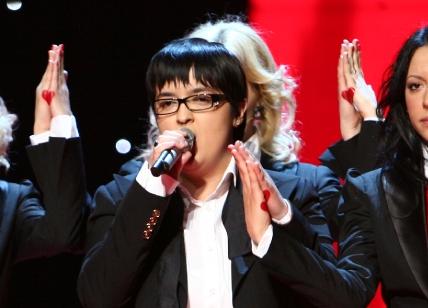
Tuomioja, the former foreign minister, is now a candidate to be party chair, while fresh-faced former MTV VJ Maria Guzenina-Richardson (photo) is running for vice chair. Tuomioja is famous in Estonia because his grandmother, Hella Wuolijoki, was born in Valgamaa in southern Estonia. Guzenina, who is not famous in Estonia, owes her name to her Russian family roots. And yet, nobody considers Guzenina to be Russian, nor does anyone consider Tuomioja to be Estonian.

Finnish, it appears, is a nationality, as opposed to an ethnicity. Finns are defined more by their relationship to the omnipresent, omni-taxing state than their shared ancestry, even if they all happen to look the same.

Somehow, here in Estonia this concept of ethnicity and nationality is mixed up. People talk about "Estonians" as if being Estonian meant being devoid of foreign roots, but those who do so forget that President Ilves had a Russian grandmother while Estonian Europarliamentarian Katrin Saks had a Russian grandfather. Minister of Culture Laine Jänes and Tallinn Mayor Edgar Savisaar both have Russian mothers, for instance. Yet the public sees them as indisputably Estonian.

How can one speak of one ethnicity then, when even those who are deemed most representative of that ethnicity actually have a diverse background? The answer, it seems, is that Estonianness is more of a national identity than an ethnic one. Estonians, therefore, are defined more by their relationship to the sinine must valge and "Leto Svet" than the fact that they all happen to look the same.

This, I think, is a concept that those hoping to understand Estonia should embrace.

This post has been updated to reflect that Guzenina is running for vice chair of SDP, not chair.

esmaspäev, veebruar 11, 2008

the nordic model

Estonians are frequently asked by their nordic compatriots something along the lines of, "Why didn't your country adopt the Nordic model when it was reconstituting the state in 1991-1992?" The line of questioning today also leads us to, "Will Estonia adopt the Nordic model in the future?"

President Ilves was recently asked this in an interview with the City Paper, the question and reply:
Estonia, it is commonly claimed, wants to be regarded a Nordic country. Still there are obvious and profound differences between Estonian and e.g. Norwegian welfare policies. To what extent does the President consider the Scandinavian/Nordic welfare state a good model for Estonia?

I am sorry to see that such outdated clichés are still spreading. I recommend a little homework in the future, or an examination of what is happening in Estonia – Estonian and Nordic welfare policies are not so different, actually they are increasingly similar. The primary question is money.
Money, yes, but also history and, very importantly, contemporary history. You get the sense reading nordic impressions of Estonia that they a) do not know Estonia, and b) do not know themselves.

Estonia in the past has been criticized as being sort of an imaginary West. Anatol Lieven warns us in the updated version of The Baltic Revolution to not be fooled by the Scandinavian-looking airports. You may feel that you are in the West, but you are not really in the West.

It's the "imitation" West, fake like those "Scandinavian sweaters" old Russophone ladies sell in Tallinn's Old Town. It may look and feel like a real Scandinavian sweater, but since it was knitted by Eva Ivanova and not Bo Svensson, it's not the real thing, even if Bo Svensson pays the Chinese to make them while he tans himself aboard his yacht in the Adriatic.

I would argue that if Estonia had copied the "Nordic model" in the 1990s it would have arrived at even more of a precarious position as a "fake West." The first reality is that the modern Nordic welfare state was formed by primarily social democratic parties over the past century. The model was designed by consensus over time. It was not something that could be translated into Estonian by talented researchers at the Ministry of Social Affairs and then force-fed to the Riigikogu.

Estonia organically chose other models. It chose a flat tax, partially because it was easy to implement and partially to attract investment in what was then a very poor country. Estonia since has chosen policies though that do copy the Nordic model.

A classic example is the Mother's Salary, implemented in 2004, that provides state financial assistance to mothers of newborns so that they can support their growing families -- and the fattening of the citizenship rolls -- while retaining their jobs. That's a policy that all the flat tax advocates in the world should ignore when they talk of the "Estonian model". President Bush admires Estonian taxation policy. I have a feeling he wouldn't admire the mother's salary.

So, organically, Estonia is embracing policies that mirror its neighbors. Partially because Finland and Sweden have positive birth rates, and Estonia has a negative one, some geniuses came to the conclusion that this kind of social support policy might help to raise the birth rate in Estonia. and, wouldn't you know, the birth rate has risen in Estonia since that policy was introduced. So, organically, Estonia came to adopt part of the Nordic Model, not because it was told to, but because it found out the hard way that it works.

This is what the other Nordic countries do not understand about Estonia. Estonia is still a country in transition. It is likely that in the future, as Estonia accrues more wealth, it may adopt more of these classic Nordic welfare policies, not because they want to buy the whole model, but because the policies are shown to work in countries similar to Estonia. So the idea that Estonia would copy the "Nordic Model" because it likes the way "Nordic" sounds is silly. Estonia will arrive at those policies organically if they are indeed as good as the Norwegians make them out to be.

But, amidst this backdrop, we have to admit that the era of the Nordic Passport Union is behind us. The social democratic parties that built social democracy in the nordic countries in the 1950s and 1960s have given way to the government of Fredrik Reinfeldt in Sweden, who supported Bush in both the 2000 and 2004 elections; the government of Anders Fogh Rasmussen in Denmark, who advocates limiting immigration and lowering taxes; and even across the Gulf of Finland, it is the National Coalition Party of Sauli Niinistö that has the popular momentum.

Is this the 'Nordic Model' they were talking about? It is certainly the "Nordic environment" that Estonia is surrounded by, an environment of tax-freezing, immigration-limiting governments run by economists and bankers, rather than career civil servants. In this way, Estonia fits in quite nicely.

And what of Nordic cooperation with supranational organizations? Denmark, Norway, and Iceland are in NATO, while Finland and Sweden are not. Finland, Sweden, and Denmark are in the European Union, while Norway and Iceland are not. Finland has adopted the euro as a currency, while Sweden and Denmark remain skeptical of the European Monetary Union. This diversity begs the question, is there a model here to follow?

And, of course, linguistic policies. Estonia has been urged by some to adopt the "Nordic Model" when it comes to languages, but proponents of such are usually referring to the Finnish model. The model of Norway, Sweden, and Denmark is actually to grant municipalities extensive rights in determining their working languages. Hence, Danish is the official language of Denmark, and is co-official in the Faroe Islands, but Faroese is not an official language in Copenhagen. So again, which model to follow?

My only prediction is that if there is a Nordic policy that works well and makes sense for Estonia to adopt it, then it will be adopted. To merely adopt a model at the bequest of a traveling bureaucrat would be more in tune with the model of "imitation West" than the real thing. Estonia, like the Nordic countries, will continue to develop and create policies where it sees fit. It may also happen that the traditional Nordic countries might borrow a policy from Estonia in the future, if they find it to be in their best interests.

neljapäev, veebruar 07, 2008

johannes walker

As I was loading old newspapers and advertisements into the ahi the other day, I caught a glance of a reklaam (advert) for a peculiarly named brand of whiskey, "Johannes Walker."

"That can't be," I said to myself, shaking my head. I took another look and realized that I was looking at an advertisement for the Scottish whiskey "Johnnie Walker."

My eyes, having scanned through many issues of Postimees, were just accustomed to seeing the j, o, h, and n, and assembling "Johannes" from them instead of what was actually written, you see.

As I have written previously, Estonia is the kind of country where, if you have a foreign name, it makes your life a bit more complicated. It's not that they are unfamiliar with English names, it's just that they are not used to guys ordering taxis using those names.

I recently asked a friend in Tartu named Stew what name he uses when he orders taxis. He confessed that his wife usually does the ordering, but when pressed he uses "Sten" just to make his life easier. Then there's the editor of Baltlantis, who I am pretty sure is not named Vello Vikerkaar. Surnames too get "estonianized" without one asking. If your family name is "Johnson" it is likely that you will be rendered "Johansson" at the Post Office.

When I order a taxi, I have settled on using the name "Juhani." I like this name. I have been informed that mostly Finns are named "Juhani", but that will help explain my subtle yet definitely foreign accent. I have also noticed that the people at the taxi call centers are nicer when you say your name is "Juhani" rather than "dzha-steen" or "joo-stin". If I used my English name they might switch immediately to English and charge me double. As Juhani, I can pass as an a põder (reindeer) of the Markku Peltola variety and pay the actual rate.

What I would like to know is what names you foreigners in Eesti have used to order a takso at midnight? This should be interesting. I am also interested in knowing what names Estonians use when they are abroad. Epp's name is so unique that there is no English-language variant to adopt. Her uncle Tiit, though, goes by "Tim" in England with good reason. And when we met with a friend named "Ahto" in New York recently, he proudly passed off his name as "Otto", you know, like that bus driver on The Simpsons.

teisipäev, veebruar 05, 2008

serbians perplexed by 'leto svet'

It's not even been a week, and Estonia's Eurovision entry "Leto Svet" is already raising eyebrows in Belgrade:

"There will be at least one song in the Serbian language at this year's Eurovision Song Contest, even if you don't count the hosts, joked Saša on the OGAE Serbia website.

One gets the impression that the lyricist has looked in the 'At the Restaurant' chapter of a Serbian phrase book, as the words for peas, green beans and lobster are mentioned!

Serbs are asking themselves if this is a desperate step by the Estonians to get a place in the final, which they haven't achieved since the introduction of semi-finals in 2004. Unfortunately for Estonia, Serbia cannot vote in the semi-final they take part in.

Is it just me, or does Peeter Oja bear a striking resemblance to last year's winner? Anyway, here's more:
Beta news agency reports from Tallinn that the Estonian contest winners, Kreisiraadio, will brave singing in Serbian as they battle for the Eurovision title in May in Belgrade.

But from the song's title, to its lyrics, it seems that the many intricate grammatical inflections of the Serbian language were lost upon the band.

Beside the puzzling Serbian lyrics, which seem to consist of a list of food items, the song also features words in Estonian and German.

This is it Eesti! This could be the year that Eurovision comes back to Tallinn!

mälu instituut

President Ilves this week announced the establishment of the Mälu Instituut, or Institute of Memory, which despite its interesting name, serves an honorable purpose -- to look into the human rights violations committed in Estonia in the period from 1944-1991.

I would take it a step further and argue that the Institute of Memory should study the entirety of the Soviet period, not just the human rights violations, because from living here, at least, it sometimes seems that the 1960s and 1970s have fallen down some collective mental black hole.

It seems especially pertinent to address this condition of national memory loss as we celebrate the 90th anniversary of the founding of the Republic of Estonia. What everyone knows, but won't say, is that out of those 90 years, 50 were spent under foreign occupation. That's not to diminish the symbolism of the event. I mean in three years, from 1917 to 1920, Estonia went from being part of two tsarist provinces to an independent country subject to international law.

But what of those 50 years? Perhaps the reason that we hear so little of them, except the dramatic beginning and end of Soviet rule, is because the older generation -- who experienced the Soviet period as adults -- are not used to telling their stories. There are a number of reasons for this, but I would peg one down as simple childhood trauma.

The elders of today experienced the beginning of the Soviet occupation as children. They were separated from their families, dispossessed of their land. Some families were not reunited until after the death of Stalin in 1953. A full decade or more had elapsed. So in a way, their personal memories were destroyed. What they did remember, they did not wish to discuss in public.

A second factor is that the current middle-aged generation in Estonia went through a deep revolution in identity in the 1980s. They disowned their Soviet heritage, they divorced themselves from their pasts as party members. Estonia in 1991 was something real, but a childhood singing songs about Lenin was now "fake". So for them too, the Laars, Ansips, and Savisaars of Estonia, the Soviet period is nothing to gather around and reminisce about.

This blotting out of the 1960s and 70s as a sort of a wasteland of useless memories, is interesting when you consider that in the United States, there are stacks and stacks of books that cover this period in great detail. Indeed a major campaign issue of this year's contest between Barack Obama and Hillary Clinton has been their interpretation of who was most responsible for the Civil Rights Act of 1965.

There are actually many books to be written about in this period, especially with regards to the emergence of a new national intelligentsia in the 1960s that replaced the one forced underground or into exile in the 1940s. But for some reason it lacks the relevance in today's Estonia that it has elsewhere. It would be a worthy task to record memories of this time before they are lost forever.

esmaspäev, veebruar 04, 2008

jänese aasta

Last week arrived this month's issue of Eesti Naine -- a popular woman's magazine, which discussed the past year in the life of the Minister of Culture, Laine Jänes.

Jänes, 43, is the former mayor of Tartu, like current Prime Minister Andrus Ansip was before her. She is also a member of Reformierakond -- the most popular party in Estonia -- which has its base in Tartu City Administration.

For several reasons, I suspect that when a successor is chosen for Härra Ansip, who in a few weeks will become Estonia's longest serving prime minister ever, and I mean since 1918 -- Jänes might be the candidate at the top of the ticket.

One factor is that Reformierakond has managed to build itself into a generic, mainstream political party. What people need to understand about Estonian politics is that many local officials are not ideologues, they are career public servants. They don't choose to run on the IRL slate because they have read all of Mart Laar's books, they do so because IRL is the feel-good, patriotic party, and most Estonians like to feel good and be patriotic and say, "Elagu Eesti" (long live Estonia) every Feb. 24. It also helps if their party helps get them elected.

But Estonians like money, and Reformierakond is the "money" party. Whereas IRL's platform could be described as "patriotism plus wealth", Reform's platform is more like "wealth plus patriotism."

It's a winning combination that draws in huge swaths of the electorate. Compare that to the more narrow focus of other parties like the Greens, who are basically for the environmentalists, or the Social Democrats, who are for the unions. There's a reason why Reform has so many seats in the Riigikogu -- people who value the environment and teachers' unions want to be wealthy as well.

But that's not the only factor that would help Laine Jänes. Let's not forget that she is also an eesti naine (Estonian woman). Estonian women make up a disproportionate amount (54 percent) of Estonian voters. Interviews with the women's press helps to build her image. They might like her politics, but they also will appreciate that she is a mother of two and that she is attractive.

Femininity could make a difference for a voter forced to choose between Jänes and Edgar Savisaar or Mart Laar. And even if you don't get to vote for Jänes in your district, some Estonians vote for the prime ministerial candidate anyway. I am sure most voters who cast their votes for the Green Party last March felt they were voting for Marek Strandberg, rather than that other guy on the list.

Another factor is this. Jänes may have the quintessential Estonian surname, but her mother is Russian, and she was born in Moscow. Integration is an important social issue, and having a prime minister who is personally part of both communities could give her some extra authority in resolving these issues, or at least discussing them domestically.

Your average Estonian's personal life does not revolve around Russia -- Russia doesn't pass the hapukapsad at Christmas time, Russia isn't in your car when you are driving through Põlvamaa listening to Radio Elmer, Russia isn't in your sauna, whipping you with birch branches, et cetera. Still, Russia is important to Estonian voters, and they would like to have a prime minister that can keep Russia at arms distance but in a non-threatening way.

Finally, Jänes' name means 'rabbit' and President Ilves' name means 'lynx'. This could lend itself to all kinds of terrifying headlines. It's just a hypothesis that Jänes could be in the running for the prime minister's seat in the next election. It's also possible that, like any person in Estonia, there are dozens of people that passionately hate her and will stick out their leg for her to trip over it given the right opportunity.

[Update] I screwed up Reformierakond's slogan from the last election and so this post has been amended. But the concept, that they are a party that represents liberalism and thus wealth in Estonian politics stands. It was Ansip who called Steve Forbes a genius, not I.

pühapäev, veebruar 03, 2008

leto svet


This is the Estonian Eurovision entry this year. I decided not to vote, but "Leto Svet" by Kreisiraadio still got 20,000 more votes than "Ice Cold Story" by Iiris Vesik. The song is in Serbo-Croatian, German, and Finnish, and is a mockery of Eurovision multilingualism, choreography, et cetera. Estonia did quite well in Eurovision in the past and won in 2001, bringing the contest to Tallinn in 2002, which was a big deal locally.

But since then they've moved to a two-round contest to accommodate all of the countries that wish to partake in the festival, including non-European countries like Israel, and Estonia has usually not made it to the second round because it has sent, in my opinion, generic pop songs that do not distinguish it from other countries.

That's why, in a way, this song is refreshing. I have a feeling though that some Eurovision viewers might not get the joke.

reede, veebruar 01, 2008

ergo dialoog

While filling out my insurance contract at Ergo Kindlustus in Tartu today I had a pretty funny conversation. The Estonian-speakers will get it. For those of you who have yet to master this rewarding tongue, bear with me.

On the policy contract you are asked questions such as, Kas Teil on diagnoositud HIV-viirust? -- "Have you been diagnosed with the HIV virus?" That question I understood well enough to answer. Others were more complicated. One question I was asked by the agent was:

Kas olete teinud enesetapukatse?

This question bothered me because what I understood couldn't possible be on an insurance form. That's because instead of what she asked, I heard:

Kas olete söönud enne hapukapsaid?

Literally, "Have you eaten sauerkraut before?" I thought about answering "jah" because we had hapukapsad for dinner last night, but I decided that no matter how much Estonians like their hapukapsad, there's no way they'd ask you that in order to get an insurance policy. As far as I know, hapukapsad has no medicinal properties.

The agent then explained to me that enesetapukatse is when an inimene (person) katsetab (attempts) tappa (to kill) enast (themself). Ah, enesetapkatse -- suicide. Kas olete teinud enesetapukatse? -- "Have you ever made a suicide attempt."

I informed her proudly that I had never attempted suicide, and, to be safe, let her know that I had eaten hapukapsad on many occasions.

neljapäev, jaanuar 31, 2008

suusakultuur

Yesterday on my way into the center of Tartu, I met a younger relative of my wife's named Ken who was walking up Jakobi street towards his school.

Ken is about 12 years old and he keeps changing every time I see him, getting older, wiser, et cetera. He and I stopped to chat, and he informed me that he was on his way to a school field trip, a school field trip to Otepää, the 'winter capital' of Estonia, where he and his classmates would be forced by their instructors to ski and enjoy themselves.

Can you imagine? Skiing as part of the curriculum? Another cousin, a few years younger than Ken, also must fulfill physical education requirements by going skiing right here in Tartu. It's almost a chore. Something she has to do, no matter how badly she wants to stay at home watching Pokemon, or whatever kids are into these days. Estonian kids must ski, even if there's no snow.

Every winter I have spent here, save this one, has been polar. It's been freezing and the ground has been continuously covered with thick dark ice and fresh snow well into March. But this winter has given credence to rising global anxiety about 'climate change'. It has snowed several times -- most of November saw Tartu blanketed with a rich layer of white stuff -- but January has been more like an darker and very moist incarnation of October.

But that doesn't mean that the Estonian kids get a free pass. Instead they just keep the snow machines at Otepää working at night to ensure that every bus load of Estonian boy and girls has the opportunity to enjoy their homeland's bounty of winter sporting activities.

Epp -- my wife -- says that being forced to ski has killed her desire to go skiing again in the future. Every morning during the winter season the children of Karksi-Nuia, the community in southern Estonia where she grew up, would have to board the bus with their skis, school bags and other accessories just so that Estonia could be the land that skis.

And to think, I was going to buy Marta -- our eldest daughter -- a pair of cross country skis to take advantage of our proximity to Otepää. But with unseasonal weather like this, snow machines or no snow machines, I am starting to think it's better to rent than to buy.

This post has been corrected to reflect my wife's experience with skiing in school.

statelessness in decline

Not sure if any of you readers care or noticed, but the number of stateless people in Estonia continues to decrease.

According to the Ministry of the Interior's Population Registry, as of January 2, 2008, there were 112,422 residents with undefined citizenship, or 8.2 percent of the population.

Over the past five years the number of stateless persons has decreased by about a third. In 2003, 12 percent of the population was stateless. In 1992, 32 percent of the population had no citizenship.

One consequence of Estonia's citizenship policy is that 8 percent of the population holds the passport of another state, mostly the Russian Federation, Ukraine, or Finland. Around 84 percent of the population of Estonia holds Estonian citizenship.

Recent efforts to liberalize some of the requirements, such as making the portion of the exam that deals with the constitution available in Russian language, assigning citizenship automatically to newborns that qualify rather than requiring an application by the parents, and allowing more seniors to wave the linguistic requirements of the citizenship test, have not been adopted by the ruling government.

I wonder when and how Estonia will declare itself to be statelessness free. Is it possible they will forget to count some old pensioner living at the end of a hallway in Narva somewhere? I guess anything is possible. The authorities have estimated that Estonia will cross the threshold of having zero stateless residents sometime around 2015.

I am gathering that in combination with free language lessons and school reform, mortality is also playing its role in this process.

esmaspäev, jaanuar 28, 2008

beibekultuur

We don't subscribe to the Estonian tabloid SL Õhtuleht, but I am bombarded by the images it places on its front page every day in varying circumstances. Usually the photos consist of either horrendous car crashes or Estonian babes, though last week there was a photo of a dead dog that had starved to death.

This post, however, concerns itself with the babes. As you may have heard, during the 1990s former President Lennart Meri initiated the search for Estonia's own Nokia -- that is a product it could use to define its existence in the international marketplace. Like many an eestlane, he drew his inspiration from the lump of lingonberry ice cream to our north, Finland.

Some extremely lazy jobud (jerks) responded by saying that Estonia's Nokia was already in existence and, uh, ripe for the picking. The lowest hanging fruit, if you will, was its natural resource of bodaciously blond women who are hotter than Raquel Welch's character in One Million Years BC and Jane Fonda's character in Barbarella combined.

Now, I have paged through many a historical photo from the Estonian ärkamisaeg of the 19th century, and I didn't notice any string bikinis, expensive manicures, hoop earrings, or eye liner. The photographic evidence from the 1920s and 30s is similarly devoid of the trappings of modern Estonian babe culture.

Therefore, the idea that beauty is part of Estonian national culture does not convince me. It's a new phenomenon. And perhaps ever since Meri enshrined the Eesti Nokia mythology in popular culture, some Estonian women have been enthusiastically heeding the call of the reactionary jobud who argued that it was their duty to put Estonia on the map by absorbing themselves in the details of babery.

For me, this babe culture is both fascinating and superficial. How am I supposed to react to the posturing of the Estonian Amazon woman? Is my jaw supposed to uncontrollably drop in salivation as I blurt out, "th-th-th-th-there goes Estonia's Nokia!" And if I don't, is there something wrong with me? As a foreigner in Estonia you hear all the time about "the women, the women." And yet, when you are actually here for a long time, is it possible that all this babe focus could get ... kind of annoying?

To make matters worse, I have noticed that I have spent a few seconds too long reading about the skiing exploits of Estonia's Kristina Šmigun in Postimees before I rip it up and load it into the ahi.

It was during one of these fire preparation sessions that I came to the conclusion that I had some sort of 'thing' for the Olympian. Not a bad thing, nor a naughty thing, not even an Eesti Nokia thing. Just a thing. I pay more attention to her than to Andres Veerpalu. Let's leave it at that.

But here's the question. Why is Kiku, who doesn't subscribe to the beibe kultuur, more interesting than whomever is pining for their 15 minutes in SL Õhtuleht? Could it be that having two gold medals is more impressive that merely having two bronze boobies? And if you put the two together, well, you just might have Estonia's Nokia right there.

Estonian women are capable of amazing things. As the old anecdote goes, a Saaremaa woman is supposed to be able to run a farm, raise 10 children, and take care of an alcoholic husband. And yet for the international masses they are too often defined by the babe culture than by their own accomplishments.

Estonia has weathered the feminist tumult of the past half century with some interesting results. It didn't go through the Western feminist revolution because of its inclusion in the eastern bloc. Hence its feminist discourse differs from neighboring Sweden and Finland.

And yet it has preserved a form of gender equality from the 1920s and 30s that rivals other nations. issues that pester other countries, like the number of females with higher education, do not apply here. And here in Estonia, this duality is reflected in the prevalence of the babe culture along with the fact that women play leading roles in politics, science, the arts, athletics -- everything.

What are we to make of this? Have things not gone far enough, as some Finnish politicians might think, or are things just right? And what is 'right' anyway?

This piece has been improved from a previous version.

pühapäev, jaanuar 27, 2008

varbla matus


Last week we drove out to Viljandimaa to visit Epp's grandparents, Karl and Laine. Karl just turned 80 a few weeks ago, and he was in good spirits despite dozing off several times during our little party for him. Laine is pushing 80 and is quite active. During the visit she allowed us to borrow some old family photos, including the incredibly sad one above.

It's of a funeral for 1-year-old Voldemar Landmann, Laine's older brother, who died in 1929 in Varbla Parish. Had he lived, he might be like Karl, dozing off at a party somewhere, surrounded by younger generations of relatives, collecting a state pension, and watching the Estonian version of Who Wants to be a Millionaire? on ETV. But that was not to be.

If you look closely you'll see that there is an open casket. To this day, Estonians see nothing wrong in taking a group shot with the recently deceased. I never quite figured out who was in the right when it came to this cultural peculiarity.

Are Estonians more in touch with the cycles of life, and so comfortable with death that they commemorate funerals with group photographs? Or are they simply insensitive and enamored with technology, snapping photos of kittens and coffins alike with an itchy finger so that they can upload them to share with friends?

I am not really sure, but it is sometimes uncomfortable to flip through a family photo album with Estonian friends, only to see their grandma there, laid out on display in a church and surrounded by mourners. It sort of ruins the moment. On the other hand, you are photographed at birth, and at your wedding. Why not at your funeral too?

reede, jaanuar 25, 2008

tuli

Remember how I wrote that I missed our ahjud? Well the novelty of bringing firewood into the house is wearing off.

It's not that don't I enjoy a little pyromania now and then, it's that you have to start the fire, then wait, then maybe it goes out, then start it again.

Once you are lucky enough to get the fire going, you must observe it all times to make sure you add more wood before the first batch is reduced to embers. And if you live in a house like mine, where you might have three going at the same time on a cold night, you become preoccupied with your ahjud.

We have a huge stack of old Postimees issues in our kuur. But it seems there's never enough kindling for the fire. And I have burned through some pretty sentimental issues of Postimees or Eesti Päevaleht. Yesterday it was the issue about Jaan Kross' passing. A few weeks ago it was Juhan Peegel who went up in smoke.

I also tried to get the sauna going, to no avail. I had to crouch down and keep feeding the sucker old copies of Postimees and cardboard and basically anything dispensable I could burn. And yet the cold dampness of the sauna kept extinguishing my efforts.

In this environment, one can feel for the gentleman above for taking advantage of an old wooden home in Kopli in Tallinn, recently gutted by fire, that was demolished yesterday by authorities who have become sensitive that that area of the nation's capital is something of a tinderbox.

I know he looks desperate making off with his booty of Kopli siding, but it is winter and he needs a bit more fuel for his sauna. I hope you understand.

kolmapäev, jaanuar 23, 2008

our two cents

I find it a bit interesting some times that three of my favorite blogs in the region are authored by Americans, former Americans, or people who have lived in the United States for extended periods.

There's Finland for Thought, authored by Phil of Baltimore, Marginalia, authored by the Chicago-born Peteris, and All About Latvia, run by Aleks -- now back in Riga -- who spent around a decade in Indiana.

Sometimes I wonder if we have been raised to cause trouble wherever we go: molded at an early age in the spirit of Tom Paine, who started one revolution in the American colonies, then left to France where he started another one. It's as if we will always be creatures of the enlightenment, two centuries after its expiration date.

And it's not just here on the Baltic rim. I've had passionate arguments with people about Russian politics, people who defend Putin and scorn Estonia, until I find out that they too are Americans who just happen to have been brainwashed by the Russian mass media before The Singing Revolution came to the local movie theater.

May I ask the question, who are we to judge or dictate or explain? How many times have I found myself buried in an argument over Estonian language laws only to realize that I never wrote them and I can't even vote here! And yet those other Americans hiding behind their laptops project all the attitudes they have gleamed from their adopted home media towards me. What a spectacular waste of time!

It is a bit funny how we manage to elbow our way into the public debate, no matter where we are, though. It must be a talent one acquires through watching Looney Tunes and eating peanut butter and jelly sandwiches. Now Estonia has a president who might at anytime burst forth a quotation from John Locke. Lithuania too. Should anyone be blamed or thanked instead?

I guess we'll just keep doing it like we've been doing it.

esmaspäev, jaanuar 21, 2008

sauna katastroof

And finally we were home. After a flight from New York to Warsaw -- which was delayed, like most flights on LOT Polish Airlines -- we had a relatively smooth trip up to Tallinn, despite landing in a snow/sleet/rain storm.

This was followed by sloshing through the pouring rain from Tallinn to Tartu -- so deliriously tired, I couldn't tell whether I was awake or asleep (don't worry, I wasn't driving).

After all that traveling the one thing I desired most was a shower to wash the grime of journeying by air from my body. But there was just one problem. My brother-in-law Aap, who had been house sitting for the past month, informed us upon arrival that the water hadn't been working for about a week.

You see, during a recent cold spell, the water pressure in the house literally blew the shower off the wall of our sauna. The metallic pieces lay strewn across the floor, and Aap decided to turn off the house water so as to keep it from continuously blasting from the sauna wall.

How he managed to live without running water for a week is a mystery to me. Did he brush his teeth? Did he order in coffee? How did he flush the toilet sans eau? Had he been holding it all this time? I decided that the guy was from Mulgimaa and that it was better to leave such questions unanswered.

Luckily for us the torumehed were able to come the next morning to install a new shower in the sauna and I was fortunate to be blessed with a good old fashioned case of irregularity from my travels, meaning I wouldn't have to use the compost heap for some ... more compost.

But I still can't get that image out of my head -- of the shower head exploding from the wall due to a cold snap. Could it happen again? While I am standing in front of it? Is this a regular occurrence in Eesti land? Who knows.

teisipäev, jaanuar 15, 2008

hella hella

It's an odd thing, but sometimes Estonian and American cultures cross-over in unforseen ways. Sure there's the small linguistic coincidences -- Estonians call pizza pitsa -- but then there are the bubbles of mixed meanings that appear out of thin air.

Today, I received an e-mail from a woman named Hella, and I realized that 'hella' is also a New England slang word that adds emphasis, as in "Teddy got hella laid in Martha's Vineyard."

In New York nobody would say something is 'hella cool', but up in Boston, the Sam Adams beer is 'hella refreshing', the recent study in The International Journal of Rural Psychology is 'hella intriguing', and the pizza in Cambridge is 'hella good', only one stage below 'wicked' -- the ultimate expression of joy for any Red Sox fan.

Whenever I read or hear the name of someone whose first name is 'Hella' I automatically expect that a) their last name will be the noun that is intensified; and b) the rest of their commentary will be your usual irritating Masshole fare, along the lines of "Yankees suck."

If an Estonian person's name is Hella Must, I therefore assume she is extremely dirty. If her name is Hella Lemmik, then she's my absolute favorite. And if I hear the name Hella, warning bells go off preparing me to hear a tale about a catastrophic journey on the T -- the Boston area's mass transit system, bereft of the letter 'r'.

These are subtle linguistic detours that few in the world are bound to experience.

neljapäev, jaanuar 10, 2008

the estonians are not the french

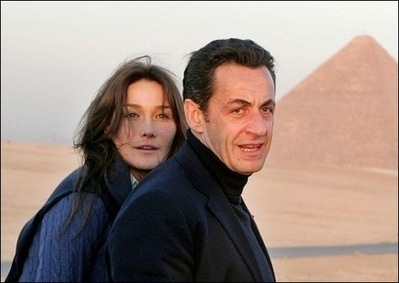
First French President Nicolas Sarkozy is estranged from his wife, Cecilia. Then they reconcile while he campaigns against Ségolène Royal. Then they divorce after he wins. The next thing you know he's holding Carla Bruni's hand at Euro Disneyland. And nobody bats an eye. Why? They're French.

Watching the French president woo his actress/songstress/Euro Disneyess has made me insanely jealous for something similarly exciting to transpire in Eesti land. Unfortunately Estonia, with its wholesome culture of family values, Uncle Milty, sinine must valge, and Vanilla Ninja is not France.

I tried to imagine a high profile politician plotting such a move. What would happen if Andrus Ansip left Anu Ansip for Anu Saagim? Or if Mart Laar ditched his family for someone younger and more artistic, like Kerli Kõiv? Maybe we should expect to see Jüri Pihl holding hands in a tender moment at the Kumu art museum with Blacky sometime soon?

But that's not to be and, I must admit, when I even think of an Estonian soap opera involving politicians and celebrities, it sort of makes me want to barf. Despite their stinky cigarettes, cheeses, and snails, French people can get away with that kind of thing. Estonians, with their sprats, hapukoor, and more hapukoor cannot.

French people are sexy. Estonian people are (mostly) cleanly. There is a difference.