kolmapäev, jaanuar 09, 2008

decisions, decisions

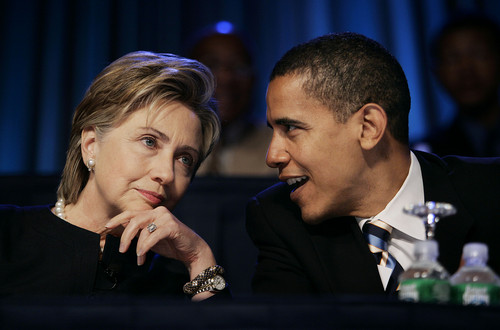
Something weird happened after Barack Obama won in Iowa last week. People around me started trying to figure out who he was, in a historical context.

Is he a visionary Franklin Delano Roosevelt, who, like Obama, rocketed to the presidency in 1932 after serving only three years as a governor of New York at a similar age (he was 50, Obama will be 47)?

Is he a soulful James Earl Carter who came out of nowhere in 1976 to give people hope after eight years of Nixon-Ford, Watergate, and Vietnam?

Or is he some wild combination of Bobby Kennedy and Martin Luther King, Jr., two men that greatly inspired the generation of Hillary Rodham Clinton, and two men whose ghosts haunt them every time they see Obama give one of his speeches?

I will confess that at least three people told me they were anticipating Obama's assassination should he win the nomination because the US "isn't ready" for a "person of color" to move into the "White" House.

I found this talk extremely depressing because as I walk around the southern tip of Manhattan island, I can't help but notice that Barack Obama looks more like the America I grew up in than the one people claim he is too different to lead.

At school I have had friends and acquaintances of every background, often times mixed. If you bump into any random human on Pearl Street, it's likely they have a story that begins in as odd a place as Honolulu, Hawaii and leads to Indonesia before stopping in Boston and Chicago.

This is what they call the "generational divide" in politics, and Obama has played his hand well by distinguishing himself from all the things about American politics that have made this younger amorphous and multicultural "generation" -- if such a diverse and abstract group of people can be recognized under one heading -- tune out altogether.

Who wanted to fight about the Swift Boat Veterans for Truth in 2004 when they couldn't even remember that war themselves? Who wanted a political bloodbath over Roe vs. Wade from 1973, when all of us, including Obama, entered adulthood with it in force? America, over the past 20 years or more, has been so bogged down in mind-numbing arguments over "faith" or "guns" that large swaths of younger Americans have remained apolitical because, like they have said on numerous occasions, they really don't care.

And so to them, including myself, seeing Barack Obama speak, someone who looks like someone I might work with during my life, someone whose history of an extended family matches so many families I know, and someone who was a tyke in 1968 -- a year in which he is allegedly stuck -- is as tired of Boomeritis as we all are, its refreshing and dangerously appealing.

I want to look away because I am afraid the man with the pretty words may sell me something we both know he cannot sell: hope in a better future. Change. Who can sell these things? Nobody. Because if you look at the history of the US, change in the form of a presidential candidate does not come often and if it does, it is because it was packaged that way. Thomas Jefferson was an old hand in American politics by the time of his Revolution in 1800. Was it really a revolution then?

As engaging as I find Sen. Obama, I have a hard time listening to 30-second clips of Hillary Clinton because she is telling me everything I have heard from Democrats all my life.

She is an appealing candidate, because you figure after eight years sharing a bed with Bill Clinton -- and our spouses do know us, at least most of the time -- she would be best to inherit the groaning apparatus of American foreign policy.

And yet I cannot listen to her. I respect her somewhat, but listening to her speak, I find myself wondering if Teddy Kennedy wrote the script. I know that to some people Teddy Kennedy is a dirty word, but I think he represents Massachusetts, warts and all, to the hilt.

And I hear the same promises from her that I would hear from John Kerry or Al Gore or Bill Clinton or Mike Dukakis or Walter Mondale. I hear about universal health coverage. I have heard a lot about that in my life and I don't expect to see it happen, even if Hillary becomes president. Even with Democrats controlling both houses of Congress. There are just too many institutional tripwires to stop that kind of change.

But beyond that is the arrogance, not coming from her but coming from her husband who called Obama's political rise a "fairy tale" in a demeaning way. It's an arrogance that says "we know better than you." But did Bill Clinton really know better? His record was either hit or miss and blame it on the Republicans. His professional hacks -- Paul Begala, James Carville -- alienated so many young voters that they were able to turn comics, like Jon Stewart or Stephen Colbert into folk heroes.

Given a choice between real politicians or comedians, younger people would probably choose the latter. This is the legacy of the Bush-Clinton-Bush years, years of non-ending arguments over what the definition of 'is' is. People would put more faith in Colbert for President than they do in Hillary for President.

So, to summarize, voting for Hillary Clinton would give some younger people icky feelings, feelings that might dissuade many young people from voting for anyone at all, except perhaps a comedian-cum-talk show host.

Barack Obama would also give them icky feelings but in a different way: of actually in believeing in something again for a few minutes, only to be let down again. I mean how many times can you put a quarter in the slot machine before you realize that today is not your lucky day? Some of us just never win. Ever.

Barack Obama: he inspired one part of America and scares the other part. Hillary Clinton, she embodies a different part of America and turns the other part off from politics. Who is the better candidate? Decisions, decisions, decisions ...

esmaspäev, jaanuar 07, 2008

sisuliselt sisu

Minu kallis naine was recently on the phone with a friend when she used a word I hadn't heard before: sisuliselt.

Estonians like to pepper their sentences with lots of tegelikult (actually), üldiselt (generally), põhiliselt (basically), põhimõtteliselt (principally), and tavaliselt (regularly). Sometimes I feel that every other word out of our niece's mouth is tegelikult, it's like the Estonian 'like' -- unapologetically overused.

But sisuliselt caught my attention because it contained the magic Finnish word 'sisu' which means something like 'determined' or 'resilient' or 'having guts'. The Finnish blogs are often chattering on and on about sisu, like it was the magic ingredient in life.

The Estonian meaning of sisu, though, is no easier to define. Aare.pri.ee, the väga kasulik eesti-inglise-eesti sõnaraamat defines sisu as 'content' -- the stuff that's inside stuff. The same online dictionary defines sisuliselt as 'in essence' or, as I would put it, 'essentially.' So, sisuliselt, the meaning of suomen sisu and eesti sisu are not that far apart.

The real divide, other than the Gulf of Finland, seems to be how they use the words. For Finns, it's the word. For Estonians, it arouses similar emotions to the word värk, which literally means 'stuff': ie. no emotions whatsoever.

Anyway, in either sense of the word, who do you think has more sisu -- Tarja or Sauli? And if anybody can better explain what these words mean, well, that's what the comment section is for.

laupäev, jaanuar 05, 2008

burn baby burn

The Estonian economic miracle may have built Tallinna kaubamaja and brought skyscrapers to downtown Tallinn. It may have built dozens of geometrically ambitious homes in Viimsi Vald, the luxury suburb north of the city. But if the flat tax is bringing investment to Estonia, somebody clearly forgot to steer the investors to the Kopli district of Tallinn.

When we went apartment hunting years ago we entertained the prospect of relocating to Kopli or North Tallinn, but then realized that the place was some sort of 24-hour, open air Soviet museum. The sharp contrast between the modern city center and these downtrodden neighborhoods is indicative of the kind of wealth gap that exists in a country that is constantly trying to grow the pie, rather than readjust the size of each piece everyone gets.

Standing there among the half burned homes and crumbling tenement blocks I wondered how these neighborhoods would finally turn out. Would the Estonian business elite wait until the last stateless pensioner died, then knock it all down to build a marina and a golf course? Would proponents of social democracy sweep in, salvage what they could, tear down the rest, and erect affordable housing?

The solution, it appears, is neither. Instead nature, and by nature I mean fire, has been taking its course on this less well off section of Tallinn. Over the past few days there have been a number of fires in the neighborhood, and according to Urmas Tooming we can expect it to continue.

neljapäev, jaanuar 03, 2008

meanwhile, in iowa

UPDATE: Well it looks like Barack Obama and Mike Huckabee are the winners tonight. As you may have sensed from reading below, I feel pretty ambivalent about the presidential candidates on both sides, though I feel the Democrats have superior candidates. I am really glad I am not an Iowa voter who had to be first to choose.

But Obama's "victory" seems a tad misleading. In the end each of the top three candidates got around a third of the vote, which actually tells us very little. I am glad there's a race though. If Clinton had waltzed right through the nomination process, I probably would have tuned out all together.

As for the Republicans, it appears that for the first time since 1976 there will neither be a Bush nor a Dole on the ticket. Or maybe Huckabee will choose Neil Bush as his running mate. Who knows.

****

I haven't written much about the US presidential election this year because a) this is a blog about Eestimaa and b) I haven't paid that much attention to the topics of Barack Obama's Kindergarten essays. But it's on the global mind, so why not discuss it.

To understand my perspective, you must grasp that I am 28-years-old, and the first presidential election I recall with crisp, almost like yesterday clarity, was between George Herbert Walker Bush and Michael Dukakis in 1988.

That is to say that the contests of 1972 (Nixon versus McGovern) or 1980 (Reagan versus Carter) don't weigh heavily on my mind. And in some ways that might endear me to Senator Barack Obama, because he too has been calling for a new American dialog that isn't stuck in 1968.

But for me, the most important factor is foreign policy experience, and for that reason, even though I like Senator Obama, if I was in Iowa I would *probably* be supporting Hillary Clinton. I used to like the relatively youthful Clintons in the '90s. Like I said, my country was run by Ronald Reagan, a man who was older than my grandfather, until I was 10 years old. But overtime I have tired of them, Chelsea, Socks the Cat, discussion of Bill's extramarital affairs, and, who could forget the Bridge to the 21st Century? Yuck.

But still, Hillary perhaps has the greatest experience. Among the Democrats I would trust her decisions over Senators Obama and Edwards because quite frankly, Hillary spent eight years traveling from country to country to meet and great the global elite. Hillary's done shots in Estonia. Hillary has visited the hospital where my first daughter was born in Tallinn.

I don't necessarily feel a strong affinity for her, nor do I enjoy listening to her speeches, but I do not fear her or find her incompetent. She's been my Senator for the past seven years and partially due to her political sensibilities and partially due to the disorganization of the New York Republican Party, she managed to do her job with limited criticism. Some have criticized her as "too liberal", but Hillary was once upon atime a supporter of Barry Goldwater.

This is not an endorsement of her, and I am actually quite torn between Clinton, Edwards, and Obama, but if I got in that tent, foreign policy experience would be on my mind.

In terms of the Republican side, their party is undergoing a period of disarray, mostly due to Bush's policies, but also due to generational changes in the party. The Republican generation of 1994 -- Tom DeLay, Rick Santorum -- has aged out of office. The "Contract with America" is done. The days of "America, applie pie, and Oliver North" are aged and sepia-toned.


So who is best to lead this motley crew of religious conservatives, 'don't tread on me' gun owners, Wall Street investment bankers, and 'blow 'em all to hell' foreign policy hawks?

The short answer is that I have no idea. I will say that in 2000 I went door-to-door in New Hampshire on behalf of Sen. Bill Bradley and of all the Republican voters I met, the John McCain supporters were the most convincing. That's not to say that Yankee Republicans aren't terrifying in their own 'fire and brimstone' way. But I respected them. I cannot say as much of the New Hampshire Bush supporters who chased me off their lawn.

Another "Yankee Republican" is Rudy Giuliani -- 'America's mayor.' People credit Giuliani for cleaning up New York City. It's endearing to see an Italian-American do so well. And yet Rudy's tenure at Gracie Mansion in New York was riddled by a police brutality scandals not to mention his high profile divorce from Donna Hanover and his use of police escorts for his then mistress, now wife Judith Nathan. There's just so much "New York only" political baggage to Giuliani that I just don't see him winning the nomination. In New York he could win, but in New Mexico? No.

A final Yankee Republican is Mitt Romney. His religious beliefs (he's a Mormon, a follower of a religious sect founded by a New York treasure finder in the 1820s after he translated golden plates written in "Reformed Egyptian" text) have raised eyebrows among some, but we'll leave that aside to just say that Romney can't even win his own state -- Massachusetts -- and he was never really popular there (he served one term).

In terms of the others, everybody loves Ron Paul. I liked Ralph Nader in 2000 too. I mean he was a wonk. He asked plenty of great questions. And in the end we wound up with George W. Bush. Paul has around $20 million in his "war chest" -- I have read that he may launch an independent campaign. Then there's Mike Huckabee. He's from Arkansas and enjoys preparing red meat to feed to religious conservatives during stump speeches. I have nothing else to say about him.

So if I was in the Republican tent, I'd probably have to choose McCain based on my foreign policy concerns. After all, it was McCain who did shots in Tallinn with Hillary.

e-land

It happened to us again. Asked to explain where we lived in the US, the anxiety of telling them, "Estonia" crept in the back of our minds. I have been there, others have too -- one old acquaintance has actually done business there on behalf of big pharma -- and yet, I must confess, I feel like I am pulling their leg every time I say it, because to Americans "Estonia" sounds like a made-up place name.

Not that they know much about other places. We are frequently asked what language is spoken there, to which we reach for the common sentence, "Estonian, it's like Finnish." But the truth is, unless you are from Minnesota or North Dakota, you probably have no idea that Finnish is different from Swedish. The real nerds will acknowledge that they know Finnish, Estonian, and Hungarian are related. That's true, except Hungarian is quite distantly related to the Finnic languages. So don't try using Hungarian in Estonia.

Maybe proponents of renaming Estonia "Estland" in the English context were right to some extent. There's nothing bad about "Estonia", but for some reason it sounds uncomfortable to English-speaking ears. As a weird thought, maybe it's because English, under its Latinate skin, is a rich Germanic language, a language of Jutes and Angles and Norsemen who did not defecate but skīta, who did not "consume" but etan, and who preferred a good fukka to "intercourse."

To our English ears, "lands" sound familiar -- a known quantity. Greenland, Iceland, Ireland, Scotland, Holland -- these are places we intuit more easily, even if we don't have a drop of English blood in our veins. Placenames that end in "ia" -- Bulgaria, Slovenia, Albania -- these are rendered in the Latin-based form, a language brought over by the Norman aristocracy that has become the manner of all sophisticated speech for most discourse, yet at the same time lacks the intimacy of the Anglo-Saxon and Norse vocabulary.

The distance in how we understand and react to language may have its root in those handful of politicized centuries where French-speaking Normans and English-speaking inhabitants of Great Britain slowly created a new tongue. "Lands" were places of antiquity that the common people knew. "___ias" were far-off provinces that only the upper classes concerned themselves with. Or maybe I am just full of crap. What do you think?

esmaspäev, detsember 31, 2007

collective guilt: collective future

I am in the US for the holidays and that means late night, alcohol-fueled debates about World War II and slavery. In an odd moment of compassion for our krautrock-loving German friends, I came to understand what a sad lot in life it is to be German and live with collective guilt for something you had no role in nor chose in utero to be associated with.

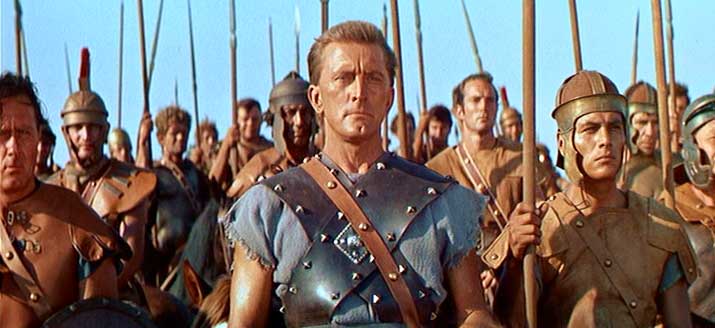
I came to think that perhaps many of us suffer from collective guilt. Russians, Germans, even Canadians (Bryan Adams? What were you thinking?) For my part, I realized that as an Italian I carry the collective guilt of the Roman Empire on my shoulders. It was us who killed Spartacus. We bear collective guilt for the death of the Thracian gladiator and his Hollywood good looks. As my Roman ancestors would say, mea culpa.

Now, let's start 2008 with less of an eye on the rear-view mirror, and more of an obsession about the future and what goodies it can bring. In Estland I am tired of old, cynical, funky politics. I want new blood, new ideas, and new accomplishments. There are so many things that could be better, fitter, happier, more productive. Why not greet them?

reede, detsember 28, 2007

the tsar's madman


No one lives for ever, not even great national writers. However, unlike many, great national writers leave behind immortal works of fiction. Your thoughts on the passing of Jaan Kross (1920-2007).

kolmapäev, detsember 26, 2007

ma igatsen ahju järele

Kui me kolisime eestisse veebruaris ma kartsin, et me pidime elama koos ahjuga. Eestlased ise arvavad, et ahi on maailma kõige mõnusaim asi. Aga kui me elasime enne eestis, siis meie korter oli Kalamajas Tallinnas, kus asub palju puumaju. Igal tänaval seisis üks või kaks maja, mis olid mustad, sest et maja põles üks või kaks korda. Ma otsustasin seal Kalamajas, et ahjud on tegelikult vastikud asjad, ja mina eelistan raadiatorit ahjudele.

Aga tagasi Tartus veebruaris, me leidsime, et ainult head kohad elada olid ahjudega. Minu arvamus muutus, ja edaspidi ma arvasin, et kui ainult üks maja põleb tänaval kus asub kümme maja, siis meil oli 90 protsenti võimalus elada koos ahjuga. 90 protsent on tegelikult täitsa hea ellujäämise määr!

Siis hakkasime elada koos ahjudega. Igal õhtul me tegisime tuli ahjus. Mina tõin puid korterisse. Ja panesime ikka meie paber prügi -- tualeti paberi rullid, vanad reklaamid, vanad Eesti Päevalehed -- ahju. Elu ahjuga on meie rutiin. On tavaline asi ahju kütta.

Praegu oleme külas New Yorgis ja meil ei ole siin ahjusid. Meil on ainult kaminad, kuhu me ei tohi vanad tualetti paberi rulli panna. Eriti hetkel, kui palju paberi jõulukingitustest on kumuleerinud, mul on päris suur vajadus ahju kütta. Ku ma näen need suured mäed pakkimispaberidest ma tunnen, et ahju on tarvis. Mu silmad kasvavad suuremaks iga vana kartongiga - ohoo, see sobib ahju. Aga ahjusid siin ei ole. Ainult kaminad ja keskküte. Mis on lahendus? Mis me peaks tegema meie vanade WC paberi rullidega?

Kas te saate kujuta ette, et ma pean elama ühe täis kuu ilma oma ahjuta? Kui raske on see elu.

[ENG] At first suspicious of Estonian wood heating, I now find myself missing it while spending the holidays in New York. The main reason is that -- with all the leftover wrapping paper around -- there are simply so many useful things to burn but no place to burn them. I find myself missing our Estonian 'ahi' for that purpose.

reede, detsember 21, 2007

sacre charlemagne

If you read enough books about European foreign policy, you'll encounter curious ideas forged in time. One such nugget is found in Anatol Lieven's The Baltic Revolution from 1993 which states that Estonia, Latvia, and Lithuania were attempting to rejoin the Europe of the 1920s and 30s, not the Europe of the 1990s.

At the Lennart Meri Memorial Conference in March, I heard Bruce Jackson, another East European expert, claim that the Europe Ukraine was attempting to join was the Europe of 1914 (before the assassination of Franz Ferdinand, of course).

These are interesting ideas. As Alice would have pondered in Wonderland, "curiouser and curiouser." But what do they mean? On the surface they are utter nonsense. Estonia, home of free wireless Internet, did not wish to return to the era of fascist Europe where life was broadcast by radio. Ukraine certainly doesn't wish to return to 1914 when it was a constituent part of the Tsarist empire.

But looking at Europe from this northern European perch, I might identify some eras in which Western Europe -- the arbiter of modernity -- is stuck. I would say that if some parts of Europe yearn to return to a fabled past, Western Europe itself is living with an image of itself that is outdated. Western Europe is stuck somewhere in the 1960s and 1970s, with these base national images of themselves, a tourist industry that still rests upon those images, and an image of eastern Europe as still lying beyond some civilizational curtain.

You can meet this version of Europe in any Western European capital. The Scots are still selling plaid and Sean Connery. The Danes are selling Tivoli, open-faced sandwiches, and Hans Christian Andersen. The Italians are selling the leaning tower of Pisa, the gondolieri of Venice, and Fellini. The Norwegians have Thor Heyerdahl, the Swedes have ABBA. And the French? They're still selling Serge Gainsbourg, even though he's been dead for 16 years.

Worse than the circa-1965 prism through which Western Europeans view the world, is the circa-1991 prism through which they view formerly communist Europe. For those who have come and enjoyed, the nightlife of Tallinn, Prague, or Bratislava are not to be missed. But for sadly too many, this half of Europe is a black hole, and empty space, someplace unknown and potentially threatening.

I think of all the times I have heard about Estonian women interrogated in passport lines about their intentions of entering country X. Then there are those provincial Europeans who have heard terrible stories about "Eastern Europe" and simply cannot believe that a person would live there willingly. They are baffled by the whole idea, even as they step over the local heroin addicts at the train station. One can imagine their shock when they arrive to Tallinna sadam and find out it doesn't look too different from the country they left behind. In some cases it looks even better.

For all these reasons, I think today's expansion of Schengen is a landmark event. A blanket of equality has descended on Europe. While Western Europeans might cringe in fear of Estonian drug dealers and Polish plumbers, it's about time that they were brought up to speed on the Europe too few of them know about. In a way, it's as if the Europe of 1965 has finally joined the Europe of 2007. Welcome to the present.

neljapäev, detsember 20, 2007

tallinn talvel

Another day in Tallinn, yet so much better than the rest. Some people think that summer is the season when eesti comes alive. But my favorite time to be in Tallinn is right around now -- jõuluaeg.

Tallinn in the off season is free of most of the hassles of Tallinn in suvi. The throngs of Yorkshiremen and Neapolitans thin out, and all that's left is silent Tallinnlased making their way through the heavy streets of Estonia's pealinn.

The air is usually clean and cool and it rolls right off the Gulf of Finland, blanketing every breathing soul in icy moisture. It is at times like these that I believe that the 'Talsinki' marketing scheme may have been correct. For the only other city where I have encountered the same emotional temperature has been Helsinki, just 80 kilometers away.

I brought my camera this time to record any monstrosities I could find in the city center. When I used to live in Tallinn five years ago, it seemed that every block housed a condemned building that was in dire need of being plowed under and turned into a trendy bar with Asian food, Brazilian music, blond hosts, and carpet on the ceiling.

But this time, nearly all the buildings in the center looked decent. And even that rotten wooden ship of a home at Sakala and Kentmanni has been gutted by fire and has a fence around it. It's time too has come to say head aega and to serve as the bedrock for a nordic sushi joint.

During the day, with half an hour to kill, I decided to head over the Jõuluturg on Raekoja Plats. I really didn't want to enter the Old Town just because I have been there so many times. But it was worth it. While I was trying to decide whether I should buy glögi from booth A or booth B, who should I spy but Rootsi Suursaadik Dag Hartelius, clad in informal sweater, gingerly making his way across the town hall square.

I wanted to ask him for an autograph and say that I had voted for him at least 10 times over the past few months, and that it was total crap that Koit Toome won because he was the best dancer -- but the New Yorker in me kicked in and I decided to leave Dag alone to the knitted wear and glögi, or glögg på svenska.

Instead I headed to the sõõrikukohvik for some pannkoogid meega and to enjoy the really terrible pakapikud in Eesti Ekspress' year-end edition. There's even one of Rene Van Der Linden. Häid Jõule!

teisipäev, detsember 18, 2007

tools of foreign policy

After reading through Chris Schüler's piece in The Independent which blends his trip through a neighborhood of Latvia with random facts about Estonia to synthesize a generic attack on 'the Baltic republics' in true "I'm a brave reporter in an unsafe place" British fashion, I got to thinking about how any random report can be used as a political weapon in the hands of foreign policy thinkers. (Hat tip to Ivan vs. Jaan by the way)

First, I would like to slime Schüler, not for insulting the fatherland of Estonia, but because he was unable to put several concepts together to better explain the situation for his readers.

Schüler writes about Estonia's large industrial ethnic Russian population brought here during the Soviet period. Then he writes about the collapse of the Soviet Union. Then he writes about high unemployment and drug use that has contributed to a high rate of HIV among Russophones in northeast Estonia. Then he writes about the high percentage of ethnic Russians in Estonian jails. And what's to blame for all of this? The Language Act.

You see, if all Estonia's institutions had Cyrillic lettering on their signs, everything would be better. Even though ETV offers news in Russian, most commercial forms are available in Russian, and even Postimees -- the newspaper of Jaan Tõnisson who encouraged the switch from German to Estonian in public life a century ago -- has a Russian edition (!), it's still not enough.

If Estonia was like Finland, then everything would be different. There would be no large unemployed minority in industrial northeastern cities that turned to crime and drug use to ease their pain and accidentally contracted HIV. Why? Because Finland kept the Soviet Union out of Finland.

If only he could have managed to connect the obvious dots of large migrant population + economic collapse = unemployment = increased crime and drug use and suicide, Schüler might have managed to serve his readers. But he didn't.

In his article he uses reports by Amnesty International and others to back up his interpretation. But that got me wondering about how Russian speakers were treated across the Gulf of Finland where they now make up nearly 1 percent of the population, putting them in striking distance of the Swedes (5.5 percent) for having their language coequal with Finnish.

It turned out that in the Council of Europe's latest report on Finland, published just last month, it was found that Russian speakers there are complaining about their level of support there too:
Representatives of the speakers informed the Committee of Experts during an "on the spot" visit that they have difficulties in developing a dialogue with the government regarding the status of the Russian language.

In addition, during the on the spot visit, the Committee of Experts was informed by the speakers about the possible closure of the Russian public library of the Institute for Russian and East European Studies. As a result, the books would be dispersed in different specialized libraries not open to the public.
Russians have difficulties in developing a dialogue regarding their status? The Finns are closing Russian libraries and dispersing their books to "specialized libraries" where they will be kept out of the hands of Russian speakers?

Did I mention that Finns like to wear rings with swastikas on them? They even defend their collaboration with Nazi Germany during the Continuation War in 1944? I know, it's really ugly up there in Halonen country.

One can only hope that the next time The Independent sends a reporter to Estonia, they'll wind up writing about Finland. Seems like a natural choice.

esmaspäev, detsember 17, 2007

the auld argument

Crap. I just finished several long days of writing a 12-page foreign analysis paper for school. My chosen topic was to explain why Estonia seeks to integrate with and identify as part of the Nordic community -- I know, how predictable.

Reading through the literature it really brought back splendid memories of arguing over the significance of different periods of submission to foreign powers in Estonia.

But after reading through many sources and weighing those in terms of different IR analysis approaches, I came to the conclusion about arguing the merits of Estonian Nordic affinity is something akin to arguing over astrology -- definitions are highly subjective and there exists no genuine test to say whether someone on the cusp is exhibiting traits more similar to Leo or to Virgo ...

What I did find out though is that the whole discourse has been bogged down in Ilves' Jõulumaa construction of a northern culture of workaholic, joyless alcoholics who like sitting in front of the Internet all day long. People, like me, sitting around trying to convince people that Estonians and Finns have stuff in common.

If anything the reason that the concept hasn't been warmly embraced in Estonia is because Estonians don't really embrace anything. They know who they are-- Estonians, and that's all they know. It took them awhile to warm up to Lutheranism. It took them a long time to figure out they were Estonians. I don't think they ever enjoyed the USSR in any capacity -- maybe the cartoons. And when they joined the EU? Yawn. Estonia is like a little northern island. Who cares what is going on on the other side of the Läänemeri or Peipsi järv? Tantsud Tähtedega is on.

But back to the main point. I discovered the reasoning behind these policies is quite deep. There is the economic factor of attracting investment from the ultra-wealthy Nordic countries. It makes sense to assuage their provincial paranoid selves about investing in the "Wild East."

Then there was the constructionist argument -- that if Russia is going to construct the former-Soviet Union as the "near abroad", then it made sense to construct Estonia as part of the West for security in the widest sense. It was just a post-Cold War region-building exercise.

Finally, the clincher that drives this policy -- Finland and Sweden have stuff and they are right next door. Question: What's the closest foreign capital to Helsinki? Answer: Tallinn. Question, what is the closest foreign capital to Stockholm? Answer: Tallinn. Given that basic geography, the fact that these are all relatively small European states sharing maritime borders -- the lifeblood of Baltic trade -- it kind of makes sense that Estonia might wish to pursue highly-integrated relations with both countries.

But more to the point, which one of those flags is your favorite? I am sort of partial to the one in the third column on the bottom row ... it's quite striking.

laupäev, detsember 15, 2007

the stalin show

I was browsing through the Singing Revolution website -- which is getting amazing reviews in the United States I am happy to say -- and found this interesting transcript of the meeting between representatives of the Republic of Estonia and the Soviet Union in 1939.

In it you get to follow Estonian Foreign Minister Karl Selter, Prime Minister Jüri Uluots, Ambassador to the USSR August Rei, and Multitasker Ants Piip as they try to negotiate with Soviet demands for military bases on Estonian soil.

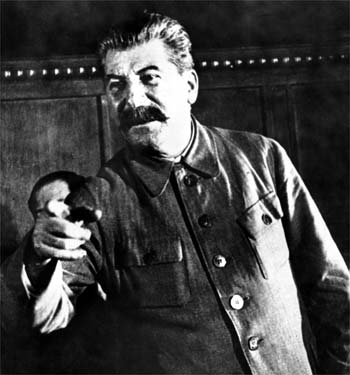
The best part is the encounters with Stalin, which give you insight to how he, like many bullies, used the combination of the threat of violence together with patronizing humor to massage his partners into giving in to his demands.

Russian Foreign Minister Molotov: Estonia is to give to the Soviet Union the right to keep in various places in Estonia for the duration of the present European war up to 35,000 of infantry, cavalry and air force, in order to prevent Estonia and the Soviet Union to be drawn into war, as well as to protect the internal order in Estonia.

Selter: Because this proposal is new and is presented for the first time, the Estonian government, of course, has not been able to take its position in respect to such wishes of the Soviet government. But without needing to consult my government about them, I can reply to you that this new proposal is unacceptable to Estonia. By form and substance the measures indicated in this proposal would mean a military occupation of Estonia by the Soviet Union, to which neither the Estonian people nor the government could agree under any circumstances. I find that our negotiations will become very difficult, if we do not confine ourselves to the limits, which both sides themselves so far had drawn for their position.

***

Molotov: The government of the Soviet Union insists upon this proposal. If you wish, Stalin himself can tell you that, as well as explain the proposal. Do you want to talk to him?

Selter: Yes, we do.

Molotov: (into the telephone) Comrade Stalin, come here. Mr. Selter and the other Estonian gentlemen are here with me. He and his associates argue against our new proposal. They call it occupation and other dreadful names. Come and help me to persuade them of the necessity of our proposal.
The minutes then go to Ants Piip's diary:

“In about 3 minutes Stalin enters the room with firm steps, clad in his garment of the well-known cut. He quickly shakes the hands of the Estonians, sits down at the place previously taken by Molotov, who changes over to another seat at the side of the table opposite to us.

Stalin gives permission to smoke.12 Selter introduces me to Stalin, mentions good humoredly that my name, Piip, means “tobacco pipe” in Russian and that I took part in the Estonian-Soviet peace conference.

Stalin remarks: “That’s good. Let us’ light the peace pipe again at this table. Or, maybe you prefer Russian cigarettes?” Molotov informs Stalin in greater detail of our arguments against the new Soviet proposals. Stalin cuts him short by saying impatiently: “What is there to argue about. Our proposal stands and that must be
understood.”
Then back to the minutes:

Selter: Your new proposal would mean a military occupation, because in accordance with it a foreign army of 35,000 men would be brought to Estonian territory and this foreign army would be stationed “in various places in Estonia” to protect the internal order in Estonia, i.e. it would engage itself with interfering in the international affairs of Estonia. In conjunction with that, all assurances about the preservation of Estonia’s sovereignty, the form of government and the economy would be only a dead letter.

The military occupation of an independent country, based on your motives, cannot be regarded anything else but punishment, in the present case a groundless and unjust punishment.

Stalin: Our new proposal is not intended to serve as a punishment. It is a measure of prevention. We do not know who helped the Polish submarine to escape from Tallinn. We, of course, are not guilty of that. Also we believe, that the Estonian government, too, is free of the guilt, but evidently there are certain international forces nestling in Estonia who are engaged in such matters. Also they have influence with the masses of the Estonian people.

You have General Laidoner who hates us. But he is a good general, brave general, a clever man of the old Russian school. He has great influence with your people. If you sign a treaty with us, some people will find such an act insufficient. Others will say, the government sold the country. Out of such a controversy troubles and diversions may follow. Such kind of danger must be prevented. It is for this purpose that a strong unit of the Red Army must be placed in Estonia. Then nobody would dare to undertake any trouble making.

***

The placing of Red Army units into Estonia as stipulated in today’s proposal is absolutely necessary. Otherwise the Soviet naval and air bases cannot be considered secure in the present time of war. This is a temporary war-time measure only. As soon as the war comes to an end we will take back all the troops mentioned in our proposal of today.
On the way out of the meeting with Stalin, he is quoted as saying:

“I used to have many Estonians working in my archives. Estonians are tough people, good workers. I remember, at the time when I was Commissar of Nationalities, in the Commissariat there was an Estonian girl-secretary. Wonderful worker. But Anvelt cheated me and swindled badly.”


After some deliberation and putting feelers out to Germany about procuring military supplies -- which are rejected -- the Estonian leadership agrees to a bases pact with the USSR.

After they sign the pact in the Kremlin, Stalin says:

Stalin: (turning to Selter) The agreement has been achieved. I can tell you that the Estonian government acted well and wisely in the interests of the Estonian people by concluding the agreement with the Soviet Union. It could have happened to you what happened to Poland.

Poland was a great country. Yet, where is Poland now? Where is Moscicki, Rydz-Smigly, Beck? Yes, I am telling you frankly—you acted well and in the interests of your people.


Piip notes in his diary:

Back at home, talks among ourselves lasted until 3. Talking about the outcome of the negotiations we found that there was no other way out. Though we had been drawn into the orbit of Soviet Russia, our people were saved from massacre. The future alone will show.


Ants Piip died in a prison camp in Perm Oblast on October 1, 1942.

kolmapäev, detsember 12, 2007

ametliku ajalugu

I recently picked up a book by Mart Laar called The Estonian Way or Eesti Tee. At first glance, it is a history book written by an Estonian holding a doctorate in history from the University of Tartu. Laar has authored many books on Estonian history, and has recently published three about the Second World War, Sinimäed 1944, Emajõgi 1944, and September 1944.

After browsing through the latter three, I found them welcome additions to the history of the eastern front during World War II. But in the first book, The Estonian Way, I was a bit confused -- this is the best word -- when I noticed that not only did Laar cover the period of Estonian history that included himself, but also addressed the actions of some of his longstanding political rivals, like Edgar Savisaar.

To me, this was both odd and normal. One could imagine any contemporary politician writing about themselves and their relationships with other politicians. But the historical backdrop gives the book the appearance of a history textbook that just happens to be authored by one of the major players in that history. It would be as if Thomas Jefferson wrote a history book about the American Revolution and ... oh, by the way ... he wrote the Declaration of Independence too.

What are we to make of these writings by a historian cum politician? Are they official history or just one version of history expounded by a restorer of the state? I think some in Estonia might easily confuse Laari ajalugu with eesti ajalugu. But Laar ajalugu is but one component of a healthy debate about the past. There have been great debates about history, and indeed attempts by certain political parties to enshrine parts of history in law. But most of these debates have only led to more debates, or, on occasion, symbolic gestures from the state.

In a reconstituted state, the efforts to find a definitive new interpretation of history is fleeting. Under Stalinism, a genuine account of Estonian history could not be written. Since the mid-1980s, various trends have been discussed and the debate has enveloped younger generations for whom these events are actually quite immaterial to their daily lives.

At the very top, the state cannot leave this interpretation alone to historians, because, as we have seen, historians can wear other hats too. I was recently impressed with a speech by President Ilves about the soomepoisid, Estonian students who volunteered to fight in the Finnish Winter War and Continuation Wars.

While few, even in Russia, question the state's tributes to the Estonian Army of 1918 that liberated the country from Bolshevik and German troops, the role of Estonians in World War II is highly controversial. Even at the supermarket, you can find books about "Estonian soldiers through the ages" and World War II is represented by three uniforms -- the Red Army, the Waffen SS, and, in between them, a plain-clothes metsavend guerrilla fighter.

In the thick of this, Ilves' approach stresses a) cooperation with Finland; b) personal sacrifice; and c) defense of democracy -- which seem to be recurring memes in his speeches, as much as Laar's work continuously references the partisan struggle as a symbol of Estonian resistance to foreign-imposed tyranny.

All of these values and ideas are part of a wider effort by Estonia's entrenched political generation to purify Estonians institutions -- it's army, it's parliament -- into a psychological unwillingness to surrender sovereignty or its values to external actors. Prime Minister Andrus Ansip struck a similar tone recently when asked about his decision to remove one controversial war monument from the city center last April. For him it was about reassuring the public of Estonian sovereignty -- in other words, pushing a button the Kremlin told him not to push to prove that he is capable of pushing Estonia's buttons.

But in the midst of all this use of ajalugu in politics, where does it leave, well, real ajalugu, the work of non-politically aligned historians digging through Politburo archives or examining the failure of Baltic cooperation in the 1920s? In the book stores of the US you can read about the American Revolution from multiple sides. I am sure there exist even books about the Quebecois interpretation of the American Revolution. Do these perspectives exist yet in Estonian historiography and are they as well known among the public to the extent of the more politicized history?

All countries have [and need] their Thomas Jeffersons. They need their critical historians too.

teisipäev, detsember 11, 2007

from estate to corporation

It should be clear to all Russia watchers now, that Vladimir Putin's real role in the state is not really president, nor national leader, nor will it ever truly be just prime minister, should he choose that position for himself.

No. Putin is chairman of the board of Kremlin, Inc. He is not the head of a country, but of a business. In light of this interpretation of his role in Russian politics, it makes sense that he has decided to back Dmitri Medvedev, only 14 years my senior, to be president of the geographically largest country in the world.

For, under the interpretation of Putin's Russia as a corporatist state, Medvedev will certainly be president, but in the sense of a corporate president -- the face of the company, the person you send to conferences and luncheons, the person whose face greets you when you open up the first page of the company's annual report. Putin will remain chairman and CEO. But Medvedev will be the investment-friendly face of the company called the Russian Federation.

Indeed, Putin's decision to select Medvedev to be the next president had an immediate impact on the stock market. It has been interpreted as a decision that favors business, not a popular endorsement from the masses. It should raise the value of Russian stock, given its recent slump in the wake of widely criticized elections.

In light of the history of Russia, I am beginning to see the Putin government as not the successor to the communist government of 1991, and only partially to the Yeltsin government of 1999. Instead, the Russian tricolor reveals for us the philosophy behind the machinations. The Russian flag first flew on the ships of Peter the Great. It was the flag of Tsar Nicholas II, the flag of a system of government saw Russia not as a country, but as one of my professors put it, as a large estate owned by the tsar.

So, in the past 90 years, we have seen Russia move from estate to collective farm and now to corporation. If we Russia watchers wish to understand better our eastern neighbor, perhaps it would make sense not to view it as a country or a nation, but rather as it is operated, as a corporation. And for those of you worrying out there, if you interpret Russia as a corporation, then the term "hostile takeover" takes on a whole new meaning.

pühapäev, detsember 09, 2007

jõuluaeg, millal sina tuled?

It reached me the way the best things do: by word of mouth. Epp's cousin's husband informed me yesterday evening that there would be a super sale between the hours of 10 pm and 2 am at Lõunakeskus, the gigantor shopping center on the edge of Tartu, where prices would be insane.

I was told that everything at Lõunakeskus would be 50 percent off and my wife informed me that this might be a good opportunity to do some Christmas shopping. I decided to wait until midnight to drive there though, thinking that I would beat the crowd. But it seemed that all of south Estonia had decided to show up at the same time I did. Automobiles were parked everywhere, and you could barely navigate the parking lot for fear that you might run somebody over.

Inside of Lõunakeskus I was shocked to see everything operating at midnight as it typically did during the afternoon. They were even serving food at the cafes. Estonian teens lingered while pushy older people with bags full of discount stuff elbowed their way through the crowd, all while the loud sound of eurodisco emanated from the ice skating rink which was covered in a blanket of mist.

I tried to get into Timberland, but there was a line outside the door. Instead I drifted through the throngs of holiday shoppers to Seppälä, lured by the promise of staring at advertisements featuring attractive Finnish models. Suddenly I was surrounded by cute pajamas and thoroughly modern dresses, bathrobes with hearts on them, and jackets with too many pockets and zippers.

The best part about the Finnish models is that most of them look like my wife. This happens to me all the time. I see a woman somewhere, like in an advertisement on a wall in a store in Lõunakeskus and I think, "Hmm, there's something about her that's different. I feel some strange connection with this person." And then it occurs to me: ah, she looks like like Epp. That would explain the cosmic connection. How embarrassing.

The only problem with being in Seppälä is that I just didn't want to buy anything. This feeling really scared me, because as I passed all the other shops filled with unruly passionate crowds, I couldn't think of anything I wanted to buy. Did my cousin really need another shirt? No. Does my daughter really need another box of colored pencils with Moomin Papa cartooned on them? No, though I genuinely like Moomin Papa. Does my naine really need another paper mache reindeer? Absolutely not.

I couldn't believe it, there were thousands of people going crazy at Lõunakeskus at midnight, and everywhere I looked, all I saw was useless crap. It was if some combination of Ebeneezer Scrooge and Mikhail Gorbachev had seized my soul, sucking all the Christmas capitalist American delight out that I knew as a child.

But wait. After waiting to get into Sportland I realized that there was one gift I wanted to get my daughter: a set of cross-country skis. I have a fantasy of loading up the Woody sometime in January and setting out with my tüdruk for Otepää to recreate the Olympic heroics of Kristina Smigun and Andrus Veerpalu in our own time.

The only problem was that I know nothing about cross-country skiing. And I was unsure, at 1 am in Lõunakeskus surrounded by south Estonian pagan shoppers, how tall my daughter was. Did she come up to my belly button or just my waist? I couldn't remember. And as attractive as it was to go home with a really great deal, I saw that the cross-country skis for kids didn't cost that much anyway, and I decided I'd rather buy the real thing than settle for any random set up lastesuusad just so I could go to Zavood one night and tell everyone about how I saved 100 krooni.

And so I trudged back to my car through the layers of mist and eurodisco, perhaps the only empty handed shopper in all of Lõunakeskus. I definitely felt less festive after encountering the hard candy of Eesti Christmas consumerism. Yet at the same time I felt refreshed that I still knew that the spirit of the season is not to be found at an ice skating rink at a south Estonian mall at midnight, but at home after sharing a few steamy cups of hõõgvein mixed with red wine, vodka, and everything in between, with your loved ones.

Terviseks!

kolmapäev, detsember 05, 2007

vahva kaart


There's a cool map in today's Postimees that divides Estonian parishes up by monthly salary. As expected, the southeastern and northeastern corners of the country are earning the least, while Tallinn's wealth has been spreading from Nõva to Vihula.

The only surprises? Toila in Ida-Virumaa is in the same category with the wealthiest part of the country, as are parishes on Hiiumaa and near Pärnu. Do I smell a summer house/Hamptons effect?

teisipäev, detsember 04, 2007

prints trubetsky

If you hang around long enough on the Internet, chances are you will eventually bump into monarchists, virtual oddballs who despise democratic republicanism and imagine a better world ruled again by kaisers, tsars, and queens.

It was during a fascinating exchange with one of these monarchists, that I was told that Estonia should actually be ruled by Maria Vladimirovna, the pretender to the non-existent throne of Russia.

I informed the monarchist that not only did the tsar abdicate in 1917, but Estonia would probably not support the restoration of the Russian empire or its monarchy.

I mentioned that the Swedish royal family typically plays the role of monarchy in Estonian society, as witnessed by the recent 375 anniversary celebrations of the University of Tartu. The monarchist responded by saying the Treaty of Nystad was still in effect, and that the Swedish crown had no valid claims to Estonia.

Shortly afterwards, the monarchist offered that given Estonia's feelings about the Russian empire, it might make sense to petition Empress Maria for Estonia to be made part of the Grand Duchy of Finland. I responded by saying that not only does Estonia not want to be part of Russia, it also doesn't want to be part of Finland.

The monarchist was puzzled by this and sometime passed before he contacted me again. This time he said he had a solution to the problem of satisfying his need for the world to be ruled by monarchs and Estonia's need to not be a part of the Russian empire.

He pointed out that Estonian punk musician Tõnu Trubetsky, the front man for the group Vennaskond, is the grandson of Władzimir Wałoc Trubetsky, a Ruthenian-Polish prince. It was Tõnu Trubetsky, the monarchist claimed, that would be the most appropriate prince for Estonia, while Tõnu's father Jaan would officially be the monarch.

I am not sure what to think of the idea of installing Trubetsky as prince of Estonia. But at least he's got the fashion part of princedom mastered.

pühapäev, detsember 02, 2007

connecting the dots

In Lennart Meri mythology, the former Estonian president was known for being able to assemble a mosaic of events happening simultaneously around the world and somehow be able to plot the right move in foreign policy.

Sometimes, I must admit, I wish there was someone like that around, a foreign policy savant with all the answers. That is because we are entering a season of uncertainty in Europe and abroad.

Next door in Russia the people are endorsing Putin in a national referendum to give him the moral obligation to lead the nation over Zyuganov and Zhiranovsky -- contain your chuckles. In the US, the real campaign is just about to start. And in the middle of this milieu you have Paavo Lipponen telling Estonia to start building relations with Russia now and to abandon hopes of security cooperation with Ukraine and Georgia.

It would be too easy to dismiss Lipponen's comments as Eurocratic spinelessness from the usual suspects -- the Finnish Social Democratic Party. But Finland is Estonia's twin brother, and Lipponen does have experience and he does have access to information. Maybe rather than being a coward, Lipponen is trying to give Estonia some advice -- that winter is coming, that it is time to insulate the windows, stack the wood next to the ahi, and launder the long-johns because it is about to get cold outside.

If we look decades ahead to the future of the Estonian state, what should we see? How will it remain secure even in the face of a hypothetical crumbling of current international security institutions? What will its options be? Will it someday be forced into the kind of accommodating relationship that Kekkonen's Finland had with the Soviet Union?

What is the smartest next step to keep the ship of state ship shape?

väike taani linn

In Tartu when you see someone you know walking down the street -- which basically happens every day -- you are sometimes encouraged to shout out "väike Tartu linn" to get their attention, inferring that Tartu is so small that such continuous bumping into one another is to be expected.

But what about Tallinn, that sprawling metropolis of 400,000 people? Does the "väike Tartu linn" situation occur there too? I am here to tell you yes, it does.

A "väike taani linn" moment can happen anywhere in Tallinn. When I first lived in Tallinn several years ago, I saw then TV host Alex Lepajõe at the Söörikukohvik on Kentmanni street. Then there was that time that then foreign minister Kristiina Ojuland was on our plane. I saw Juhan Parts at the cash machine at Hansapank, and, of course, I happened to cross paths with Arnold Oksmaa -- teine Arnold -- who is probably now used to getting odd looks in public.

But the best place to have a "väike taani linn" moment is at Stockmann in downtown Tallinn. This is where you will find basically every semi-famous person in Estonia picking up some pere leib and kotletid. Usually when I am in Stockmann, it's celebrities I spy. Sometimes Anu Välba. Occasionally Margus Saar. And for some odd reason I ran into the guys from Soul Militia one too many times.

Last week in Stockmann I saw my favorite Keskerakond politician, Olga Sõtnik, loading up on leib and kotletid after a laborious week of working for the people of Tallinn. The only reason I like Olga is because her last name reminds me of my favorite bakery treats, which are called Sotsnikud. If Olga was ever to add an additional letter to her name, she could potentially win more votes from people who also enjoy sotsnikud kohupiimaga.

Anyway, I am hoping to see Edgar Savisaar filling his cart up with blood sausages next time I am in Stockmann. Who have you run into in Tallinn? Feel free to share your "väike taani linn" moments.