kolmapäev, november 07, 2007

we interrupt this broadcast ...

Terrible things have happened in Finland today. An 18-year-old with a gun ... yes, you know the rest -- 7 people are reported dead.

Finland for Thought
has a discussion. Could it happen in Estonia? I guess the message here is that it can happen anywhere.

Yikes.

On the margins ...

I am working on several projects now related to the Estonian Swedish community. It may come as some surprise to you that they a) exist and b) achieved a cultural autonomy in accordance with the Law on the Cultural Autonomy of National Minorities this spring.

That law, adopted in 1925 and again in 1993, enabled citizens belonging to an ethnic group numbering more than 3,000, or members of the national minorities -- Russians, Swedes, Jews, and Germans -- to elect a cultural council to oversee institutions that preserve their culture.

People have said that discussion over the Swedish minority is a distraction from the more pressing issue of talking the Russian minority issue to death. But I am actually finding it quite interesting. In one area, I am confronted with the following questions: how are Estonian Swedes distinct from Estonians and are there some problems in interrelations between ethnic groups.

After turning over these questions, I came to the conclusion that Estonian Swedes do have a certain unspoken minority status in Estonia: they are marginal. No one writes about them. No one thinks about them. They exist, are deemed somewhat exotic, but then forgotten. They are simply unimportant. They are considered similar enough to Estonians to not be constructed as a social problem, and left at that.

I am interested in your opinions though about Estonian Swedes and Swedes. I am badly in need of some 'voices off the Internet' that can discuss how they are viewed in Estonia nowadays. The man of the street would question their existence. But now that they have cultural autonomy, they are definitely contemporary.

esmaspäev, november 05, 2007

Jumala Külm

A week ago I was carving pumpkins with American ex-pats. Now I am scraping ice from the car window. At 2.30 pm the sun hangs low in the sky, warning us of its eventual descent into the dark of December, and then, at the solstice, the climax -- a day mostly made up of night.

Some people are intimidated by the nordic latitude. To them it brings to mind the work of Edvard Munch and Ingmar Bergman. But nighttime is the time when many people are their most creative, and in a season made up mostly of night, the imagination is allowed to run wild with the thoughts that come out to play.

In winter, too, we drink more. It's a regional condition. Alcohol, chocolate, kodujuust (cottage cheese) -- they all supposedly contain the magic ingredients needed to survive the vast darkness. You also feel more alive. The cold shock of air keeps one moving. The local people have a saying -- there's no such thing as the wrong kind of weather, only the wrong kind of clothes.

In Estonia, I might paraphrase. There's no such thing as the wrong latitude -- simply the wrong kind of attitude.

Last night we watched Tantsud Tähtedega, again. The Rootsi Suursaadik Dag Hartelius was voted off the show, but he seemed relieved at the end. Perhaps the cold weather slowed his desire to samba in public. We'll never know. Let this be a lesson to you, Russian Ambassador Nikolai Uspenski. Learn to dance and speak Estonian, and everyone will love you. Anyway, now my sympathies are moving towards Koit Toome, who reminds me of a guy on spring break. He's that consistently happy.

As for the title of this post, it means 'heavenly cold' or something of that nature. I was approached by some Estonian Jehovah's Witnesses last week who wanted to know about my relationship with God. They asked me what I thought about 'Jumal' [mis te mõtlete jumalast?], to which I replied, "Noh, ma mõtlen, et täna on jumala külm."

reede, november 02, 2007

Lucas

Ed Lucas of The Economist has an excellent post over at his blog. It's comforting to know that as I trudge these leaf-littered paths of Tartu, the same things are on the mind of journalists that only stop into Tallinn once in a while for coffee, talk, and -- of course -- the requisite chillin' with Mart Laar.

Rather than clutter up his blog with my rambling thoughts and feed several of the hungry trolls who comb through Lucas' musings for signs of fascist sentiments or Russophobia, I thought I'd post my thoughts here and urge you to go read Lucas for yourself.

Lucas Excerpt One

A tasteful cemetery alone will not save Estonia. The current approach of smug passivity is a recipe for disaster. Policy towards Russia and local Russians needs pepping up, urgently.

I think one thing people fail to understand when looking at Estonia minority policies is that up until the Pronksöö, society achieved a very sensitive social equilibrium. It has kept two ferociously opposed camps -- the nationalist extremists and the Stalinist apologists -- in check.

When looking back in time, it's clear that the Intermovement to preserve Soviet rule in Estonia was terribly wrong. Estonia has benefited enormously from independence. Those chic shops that were looted in April would not be there if it wasn't for the efforts of the Estonian nationalists.

On the flip side, the Estonian right-wing discourse on minorities is also flawed and often counterproductive. The terms "occupant" and "colonist" are emotionally flagrant. They seek to elevate the status of the Estonian majority but in reality undermine it.

If we are to look at Estonia in 2007, the real reforms that are needed are not so much in language reform -- which has already been agreed upon and put into law -- but in values reform. Estonian values -- liberal democracy, high-tech innovation, European culture -- are being under stressed, while more right-wing values -- loyalty to the state, appreciation of historiography, fluency in the national language -- are overly stressed.

The solution is to craft a more integrative framework unique to Estonia that retains the position of the national language but enables minority enclaves in Narva, Sillamäe, Kohtla-Järve, and elsewhere to feel more comfortable in retaining their ethnic identity while embracing core Estonian values, like liberal democracy, fiscal transparency, high-tech innovation, and European cultural orientation. This will ultimately result in the kind of Estonia most people want anyway and to some extent this has already occurred. But certain right-wing constituencies -- among both ethnic Estonians and Russians -- continue to hinder this process to the detriment of society as whole.

Lucas Excerpt Two


A wider plan—suggested by Anne Applebaum—is to highlight positive aspects of Russian history that the Kremlin ignores.


This is interesting, particularly in light of Estonia's policy towards its past as part of the Swedish Empire. Swedish monarchs are invited to unveil memorials in Estonia. But what of Estonia's tsarist past? Is there nothing good there? It was Tsar Alexander I who ended serfdom in the Baltic provinces and re-opened the University of Tartu. These were indisputably positive decisions for Estonia. In Helsinki he is remembered with his own street, Aleksanterinkatu.

To what extent is he honored in Estonia? Too much of the Estonian discourse is influenced by the thinking that a Russian influence is a bad influence. But I think most Estonian intellectuals disagree. But could some efforts to honor the more positive moments in the tsarist past massage the soul of a St. Petersburg-dominated Russia, not to mention the local Russian minority? Who knows.

Some think that emphasizing the tsarist past somehow references Russian hegemony over Estland. I would disagree. During Tsar Alexander's rule, both Poland and Finland were parts of the Russian Empire. Nobody questions their sovereignty. Moreover, drawing attention to Estonia's tsarist roots reminds people of how exactly it was that the tsar was overthrown. His execution and the defeat of the White Army sent the first large wave of Russian exiles into Estonia who found a country more innovative, European, and democratic than the one they left behind.

In other words, addressing this past allows Estonia to air its core values in a roundabout way. President Ilves has already drawn on his own family's experience in some speeches to stress this version of Estonia -- as a sanctuary of liberal democracy.

Lucas Excerpt Three

PACE is a misleading moniker. The assembly should really be called DRAG. It is a talking-shop even less relevant to the continent’s future than the European Parliament. But it sounds important, and having the top spot will be a most useful pulpit for the Kremlin to denounce Europe for its hypocrisy, arrogance, weakness, Atlanticism, greed, malevolence and general failure to follow the constructive, reasonable and disinterested policies of the former German chancellor, Gerhard Schröder.


Ever since US Rep. Tom Lantos called Gerhard Schröder a political prostitute, his name has become synonymous with selling ones national interest out for personal benefit.

Indeed, if we can talk of Benedict Arnold today, two hundred years after his death, and the first word that comes to mind is 'traitor', is it possible that in the year 2207, someone might utter the name Gerhard Schröder and mean 'political prostitute'? Things appear to be trending in that direction.

Is PACE Chairman Rene van der Linden 'pulling a Schröder'? Is PACE turning into a 'Schrödocracy'? You be the judge ...

kolmapäev, oktoober 31, 2007

No more twisting in the wind ...

Geopolitically, Estonia is an odd duck. It's officially one of the Baltic trio, but it also finds itself coordinating with its glazed-over Northern neighbors while continuing to talk about Belarus with the Lithuanians.

That's because its national interests also intersect with Sweden and Finland and a prime example of this common interest is in the plan of Germany and Russia to lay the Nord Stream pipeline connecting the vast gas reserves of "Russia" (also known as Turkmenistan) with "Europe" (also known as Germany).

This project generated a sense of inevitability when it was first announced and an even greater sense of inevitability when Gerhard Schroeder officially became involved in the project. But Schroeder's decision to join up with Gazprom raised questions about the legitimacy of the project itself which is saying that it will be built by 2010, no matter what, even if they have to buy the Baltic Sea.

Estonia recently rejected Gazprom's request to survey its sea bottom, seeing the request as tantamount to giving the Schroeder bunch the green light to lay pipe in Estonia's territorial waters. Estonia was originally portrayed as a stubborn little pimple on the backside of Europe, but it stuck to its guns and began lobbying other Baltic Sea countries to ask Gazprom to evaluate a continental pipe, similar to Yamal, which runs through Poland.

But it seems that others have decided that Estonia has a point. Or maybe Estonia was just the first part of a broader Baltic Sea strategy for dealing with Nord Stream. Either way, Swedish Environment Minister Andreas Carlgren (above) said this week that Sweden is now taking a similar approach to Estonia's towards Nord Stream.

'In the information the company provided, it appears as if a more eastern laying would better avoid environmental problems and risks. It is now up to the company to show which other routes are possible from an environmental and risk point of view, and why it has chosen this particular route,' he added.

It is a good question as to why they would want to lay the pipe on the bottom of a sea rather than over land. Supposedly, it's those nasty Polish transit fees they are trying to avoid. Or maybe it's the threat from Polish environmentalists who could try to blow up the Nord Stream pipe should it go through the heart of the land of Kościuszko. Or maybe because they agreed to lay the pipe in the sea and ... it's just inevitable that they will do it, because Gerhard Schroeder is involved and he's a wealthy and powerful German guy.

Who knows? All we know is that Estonia is no longer standing alone in this debate and that Germany and Russia can no longer wave their fingers at the troublesome New Europeans for stalling their project. Sweden is now on board too. Everyone wants to know why they have to build it in the sea for more money and more possible damage to the environment, when they can just lay it over land for less.

esmaspäev, oktoober 29, 2007

Hartelius! Hartelius?

So I voted for Dag Hartelius last night during Tantsud Tähtedega. Actually, I voted for him three times. My vote(s), perhaps, led to the elimination of Kristiina Ojuland and her partner Aleksandr Makarov, who were pretty good, one of the better pairs in my opinion.

Should I be ashamed of my votes? Maybe, maybe not. I mean people voted for Luisa Vark and Andrus Varnik -- neither of whom I found interesting. I think I'd rather have Katrin Karisma back. Her Mrs. Robinson pairing with Veiko Ratas was somewhat more intriguing.

But what about Dag? Is he really a good dancer? Technically no, but he does have charisma. He smiles and looks like he's having a good time. Doesn't that count in our books even if it doesn't count for conservative judges like Jüri Nael? And what's up with the host Mart Sander? If he makes any more ironic facial expressions I might start to believe he's actually being serious.

Today though I feel confused.

Päeva komm

Things have wound down here on the political front since the days of Rene van der Linden's bungled trip from Tallinn to Vilnius. There's the usual hysteria in Tallinn over the BS, but what else is new?

The only thing really scandal worthy is the continuing back and forth between Robert Närska, a Tartu city official affiliated with Eestimaa Rahvaliit, and Prime Minister Andrus Ansip, the former mayor of Tartu and the leader of Tartu (and Estonia's) most popular party, Reformierakond.

The scandal got a full airing in the last issue of the weekly Eesti Ekspress. The issue is related to Ansip's days as a thirty-ish Soviet local government official in February 1988, when police dogs were used to disperse a pro-independence student rally in Tartu.

Närska, then also a local official, says that he met Ansip on the day of the demonstration, and that Ansip said the police should have used the dogs more aggressively to scare off the students. Ansip says he had nothing to do with that decision and that he wasn't even around Tartu on that day, nearly 20 years ago. Närska says that Ansip is lying.

What's this all about? It's about trying to weaken popular support for Andrus Ansip. But I think the timing of the scandal has been poorly judged. Ansip right now is the leader of the status quo, and the status quo for most Estonians is pretty good. So unless some bumpier economic forces intervene, this kind of back and forth is mostly useless.

Everybody knows Ansip is a politician. So that "you're lying, no I'm not" back and forth between Närska and Ansip is starting to take on flavors of the Vanhanen-Korhonen affair up in Helsinki. It's a distracting political soap opera, with little real impact on current national politics. It could only get worse if more people come forward and accuse Ansip of lying. By then I am sure Russia will have done something obnoxious again to make us forget all about Robert Närska and 1988.

As a side note, I just finished reading Northern Shores by Alan Palmer (2005). It's a historical overview of the Baltic sea region from the Viking era to present day. Some of the parts of the book are more interesting than others, especially his discussion of Swedish and Russian royal politics. I had no idea, for example, that Catherine the Great of Russia was a Baltic German.

What struck me though is that Palmer's description of World War II is pretty much the same as the official Estonian version. He singles out the fact that Estonians were not sympathetic to the Nazi German cause and that efforts to recruit Estonians to join the German army in 1943 were a failure. He describes how the Germans evacuated their leadership from Tallinn before the Soviets arrived in 1944, and the context in which the Otto Tief government was formed.

He is not overly sympathetic to the Baltic cause though. He details in quite chilling language how ethnic tensions in Latvia and especially Lithuania, where Jews formed larger proportions of the population during the independence period and first Soviet occupation years, contributed to the mass killings that occurred during the Nazi German occupation. So, it's no rosy, pro-Baltic detour down the avenues of 20th century regional history.

Nevertheless, it reaffirms that the Estonian interpretation of their role in World War II is mostly accurate. This raises a question for all of us in the West who love good historical non-fiction. When people like President Vladimir Putin call the Estonian historical interpretation 'revisionism', aren't they really calling Alan Palmer, let alone Winston Churchill -- whose six volume The Second World War (1948-1953) similarly describes events in the Baltic -- revisionists?

And if Putin is to call Churchill a revisionist, why are we so hesitant to tell him he is wrong and that he needs a refresher course in European history? Or do we just think that he is too dense to benefit from such 'fresh' information? My rubles are on the latter.

pühapäev, oktoober 28, 2007

Kaplinski Mesi

The skies over Tartu the past few days have been a milky gray, sort of the way your tea looks right after the billows of milk fill up the glass after hitting bottom. Tea is on the mind, for besides being under this gray weather, we are under other kinds of weather -- each of us a bit low.

I could tell the naine was a bit ill this morning as I descended the staircase because the odor of freshly chopped garlic was in the air. This creates an odd kinship between her and I. She isn't fond of tomato-base sauces, but we both appreciate küüslauk. And when she gets sick she has it around her at all times, as if sickness were a vampire come to drain her energy.

When we visited Laulasmaa spa earlier in the year we were similarly ill. Epp actually had a small plate of chopped garlic positioned near our pillows so that the cleansing fumes could fight the disease through the night while she got her rest. When I was cleaning out the room, I had to scan the sheets for individual slices of garlic that had fallen from the plate. It's just an Estonian thing, I am told.

Another companion is the aforementioned teas. In the United States, the local apteek is not stocked with medicinal teas with such exotic names as Icelandic tea, which brings to mind images of lichens scraped from the continental divide. Usually we reach for over the counter bottles of yummy fluorescent goo with names like Robitussin and Triaminic. We use that stuff sometimes here too, but with plenty of teas and, of course, mesi or honey.

The honey we have is in a huge jar and was made at the farm of prominent Estonian author Jaan Kaplinski. How did we get such honey without actually knowing the author?

Two reasons. First, Estland is a small country, and Southern Estland is especially small. Everyone knows everyone. Second, Kaplinski makes a lot of honey and is desperately trying to get rid of it so that his cellar isn't filled with jars. I wouldn't be surprised if Kaplinski stood on the side of the road where he lives handing the stuff out to motorists on their way to Võrumaa.

So I am eating Kaplinski mesi right now to stay healthy. Memm memm.

kolmapäev, oktoober 24, 2007

Unless, of course, the horse, the horse ...

So it's been six months since the April riots, the "Bronze night", and what have we really learned about Estonia? What have we learned about the integration process? What have we learned from all those broken glass windows and images of uncouth youths burning flags and yelling 'fascisti' for the Russian TV cameras?

I'll tell you what I've learned. I like Kaubamaja, that's what I have learned.

A lot of people don't like the overly geometric building on the corner of Riia and Turu Streets in Tartu. But I like it there. There is something so refreshingly 1980s about the escalators and all the teenagers gathering around at the foot of them: as if it was still cool to hang out at the mall.

And you know what Estonian kids, I have been watching you at Kaubamaja. See you thought I was just standing at the cash machine getting a few Koidulas and Jakobsons to buy some Regatt and Muretaigen for the naine and lapsed. But I have been keeping tabs on you eestlased, and I can see that you like Kaubamaja too.

I can see that regardless of your ethnicity, regardless of where your grandparents came from, and regardless of the fact that 63 years ago men stood on opposite sides of the river Emajõgi blowing the buildings that formerly stood on the site of Kaubamaja to smithereens, it really doesn't matter that much when someone just sent you an urgent text message and you must, absolutely must, text them back, maybe with an emoticon to let them know your message contains sarcasm and/or humor.

Today I had to suffer through another op-ed about integration in Estonia. Apparently, if we make a movie and show it to all the kids with shaved heads and bad attitudes in Tallinn, it will magically make them understand the history of the small piece of Earth upon which they tread. But in reality, it won't.

Why not? Because they've been spoiled by the Kaubamajas of Estonia. They take for granted the fact that their capital city doesn't look as much like a post-Communist shithole as it used to, and that's why they were quite content to smash windows. Because the ultra-wealthy government would pay for it anyway. So who cares when you're having fun, right?

No, they didn't respect the Kaubamajas of Estonia that night. But they didn't go home that night and vow to vote Arnold Meri into office at the next opportunity possible. And they also didn't heed the call to join the Kolevan Army and establish a Russian-speaking republic in Estonia. Instead they went to Kaubamaja the next week to buy a new puffy jacket -- discount price in the off season -- and continued to live their blessed life of fun times and Hesburger consumption.

Indeed, what I have learned from all this rioting followed by shopping is that 1940s were a long time ago. Mick Jagger was a toddler; we are talking ancient history. Yeah, Estonia was occupied by the Soviet Union, alright. But we don't have the push the envelope anymore. Every country on Earth knows that, except Russia, and their country is run by morons. But that doesn't concern us, because we don't live there and have about as much impact on their politics as their own people.

But there's more. Not only were the 1940s a long time ago, but so were the 1980s. Yes, there used to be a Soviet military installation on the outside of Tartu. These days though it's a used car market. I have been there. I almost bought a car there. Time moves forward. This year people will turn 30 that couldn't even shave in 1991, let alone get called up for duty in the Soviet Army.

Sometimes, mean people at the Guardian online say Estonia used to be part of the Russian empire. So did Alaska. What's it to you? Why aren't you defending your Alaskan compatriots? You want to know why? Because it's over. It's dead and it's not coming back no matter how many DoS attacks you launch against a bank. Why? Because their programmers really are smarter than you. Being part of the liberal West allows wealthy Swedish-owned banks to employ superior IT brain power. So there.

And that's sort of the beauty of the Estonian Republic, founded in 1918. Doesn't it all lead back to that moment? Beneath its ethnic overtones of a Finnic state, there is the reality that at every turn the Russian empire kept Estonia in the dark. Serfdom wasn't abolished here until 1816/1819! The Russian empire was a gigantic ball to which Estonia was chained for two hundred years. And look how far the country managed to run after it split the giant. The Kaubamajas, Selvers, Hell, even the Maximas speak for themselves. Mind numbing liberal democracy. Arguments over inflation and currency adoption. It's all so boring, and yet so beautiful.

Estonia is a boring Nordic country. I invite you, please, come to watch a youth concert in Suure-Jaani. How about sleigh riding in Tõrva? Bicycling in Kärdla? Sunbathing in Toila? Please come. Enjoy Estonia's dull rhythm of life and mouth watering Kalevi chocolate. Try one of the local beers -- Saaremaa, I think, is the most alcoholic of the bunch.

And don't ask me any more questions about statues or integration. Statues are made of metal or stone. Integration takes time and patience. But Kaubamaja? It's open daily from 9-21. The toidumailm stays open an hour later, in case you need to grab some meekook on the way home.


---------------------------------------------------------------------------------------------
* The title is in response to Flasher T's post which likened discussion of Estonia's problems with Russia to beating a dead horse. The photo is of Mr. Ed playing chess with his owner, Wilbur Post. The horse, of course, died in 1970. Wilbur though is still very much alive.

If one twin loses an election, does the other one feel it?

Where were you on the day you found out that Poland would be led by two men, the twin co-stars of the 1962 film The Two Who Stole the Moon, also known as Lech and Jaroslaw Kaczynski?

I don't recall where I was, but I knew that it was something totally awesome, something I just had to tell every human being in New York whose last name ended with '-ski.'

"Do you know that the president and prime minister of Poland are twin brothers?," I would ask.

"No, I did not know that," so and so Blahblahski would reply, usually giving me a weird look.

Well, friends, the era of the Polish Mary-Kate and Ashley has come to a close. Their 'Truth and Justice' party was trounced in the elections by the feel-good Civic Platform led by Donald Tusk, who does not have a twin.

Europe, meanwhile, has been breathing a sigh of relief. Unlike some countries, Poland is actually a country in the European Union that matters. When the Poles say nie, the Germans are known to make uncomfortable facial expressions in response, and I mean uncomfortable facial expressions that are different from their regular uncomfortable facial expressions.

But is it true what they say about twins? That they have some kind of deep psychic connection? I recall from watching GI Joe as a kid, that when Cobra's Tomax got hit, his evil twin brother Xamot often felt it.

We'll leave such metaphysical questions to the quacks and experts, but I have a feeling that when PM Jaroslaw's party lost the election, President Lech -- who will be in office until 2010 -- definitely felt it, psychic connection or not.

teisipäev, oktoober 23, 2007

Quote of the Day

"First there's Sweden, and then there's nobody, and then there's nobody, and then there's Finland" --

Swedish businessman commenting about level of his country's investment in Estonia during a conversation with me last night.

esmaspäev, oktoober 22, 2007

Curtains for Kalvītis?

Never before have Latvian politics seemed so interesting. Last week Foreign Minister Artis Pabriks resigned over the government's dismissal of Aleksejs Loskutovs, Latvia's anti-corruption chief. Regional Affairs Minister Aigars Stokenbergs was also dismissed related to that case.

But it seems a bit odd that the dismissal of one person could lead to the resignation of Pabriks, who is fairly well known outside of Latvia, as well as the throngs of protesters who called for Prime Minister Kalvītis to step down.

The Kalvītis government has been the most stable of Latvia's post-1991 governments. In the past five years, Latvia has had four prime ministers. Kalvītis has been the most successful. Come this December he will have been in office for three years.

A central plank of his government has been devoted to improving ties with Russia, casting Estonia as the more obstinate of the two in the border treaty issue, and making sure to smile for the camera in meetings like the one above. In fact, Kalvītis this week attempted to play the Moscow card in his attempt to stay in office despite calls for his resignation.

Underlying that improvement in relations with Russia has been allegations of corruption -- related to the Loskutovs affair -- as well as frustration with the government over dealing with Latvia's high level of inflation (11 percent). The selection of President Valdis Zatlers, an orthopedic surgeon, over the popular favorite Aivars Endziņš, also didn't help endear the Kalvītis government to its constituents.

It's odd that Latvia, though as close to Tartu as Tallinn, seems to figure minimally in Estonian domestic politics. I mean Latvia has been going through this period of rapprochement with Moscow at the same time that Estonian-Russian relations have sunk to a new low. I also don't see internal political changes in Latvia affecting Estonian politics.

Estonia is basically stuck with the coalition it has. The only room for maneuver would be for the Reform Party to dump its problematic partners in Isamaa-Res Publica Liit and re-ally with the Center Party. In this set up, Ansip would remain prime minister. Or Keskerakond could somehow attract SDE to form a left-wing coalition with the Greens and the People's Union. But that coalition would only have 51 seats -- not doable. Or Keskerakond could manipulate the rules of logic and ally with Isamaa and SDE.

Anyway you slice it, you come away understanding that Ansip's victory in March was pretty solid and he, or at least the Reform Party, isn't going anywhere anytime soon. Meaning that the Kalvītis show will be a purely Latvian matter for the time being.

laupäev, oktoober 20, 2007

Ode to Estlanders

I was reading Elu24 where model Beatrice and Eduard Korotin (above) argued that the reason people didn't vote for them in last week's "Tantsud Tähtega"(Dancing with the Stars) program was because they aren't Estonians.

This came as a bit of a shock to me because up until that moment, I had always thought that Beatrice was as Estonian as Ester Tuiksoo. She seemed to turn up at so many Kroonika events that I assumed that she was on staff. She at least seemed as Estonian as Stella K. Wadowsky.

I was then informed by others that Beatrice is actually a venelane. She apparently has a slight accent which is hard to detect because she is a model and is usually made available to others visually, not via audio. For example, I saw a photo of Beatrice on a billboard advertising Playboy at the Maxima supermarket today. She didn't say a word.

I don't know how else to say it, and I hate to be rude, but if you are born in Estonia and you speak Estonian, even with an accent, then you're tied to this country. You might have spoken Tagalog at home and be very active in your Filipino youth group, but something sets you apart from the other Filipinos ... you live in Estonia and speak the national language. You are one of the few, the brave, the sinine, must, ja valge.

For example, my friend in college grew up speaking Persian. His mother was from Iran. Except he spoke Persian in New York and had dreadlocks, smoked the ganj, and listened to Bob Marley. That is my friend was a New Yorker, not an Iranian, even if English was spoken in school rather than at home.

The problem with Estonia though is that these interesting mitte-eestlased have no names for themselves. The Ministry of Population Affairs is desperately seeking a term for them that is unique. I offer up Estlanders -- eestimaalased. Some people don't like this term because it is what the Baltic German nobility of the province of Estonia called themselves.

But I think that it is because of this history that it makes the most sense. Estlanders were not so much German -- there were also landowners of Swedish, Danish, Polish, and Russian origin. Instead they were people whose lives were tied to Estonia who were not indigenous to that territory. Estlanders. The name says it all.

Unfortunately, I have a feeling that Beatrice lost not because she is an eestimaalane, but because she didn't look like she was having a good time. Dag Hartelius and Katrin Karisma both looked like they were ready to suck down a few martinis and dance the night away. And nobody cared that Peep Vain's dancing partner is named Olga Kosmina because they kicked so much ass. But Beatrice looked a bit spooked, and in the end they were eliminated from the competition. The 272 comments on the website seem to agree with this interpretation.

Maxima ei ole minu sõber

Today I went shopping for food. I had just visited Aura Keskus to go for a swim, and so the most logical place to buy food was Maxima, right across the parking lot in the Zeppelin shopping center -- which is named after the German luftballoon, not the British rock group.

I have shopped at Maxima numerous times and somehow did not feel at ease. This is odd because it's layout and offerings are not too different from other large Estonian supermarkets, like Selver or Kaubamaja.

But what was it about Maxima that rubbed me the wrong way? I decided to look a bit closer and figure out why Maxima was putting me off. I realized after compiling my list of critiques that the main reason I did not like Maxima is because it is run by foreigners. And that was problem number one.

1. It's Owned by Lithuanians

In Maxima, my favorite Estonian brands were placed side by side with ones containing strange letters such as Ų and Č, text that looked like the author had his morning Maxima kool-aid spiked with acid. Who wanted to buy such things with names like vyšnia or obuolys? I wanted kirss ja õun.

2. Lack of Local Necessities

Because Maxima is owned by Baltic tribesmen, it is stocked aplenty with foodstuffs that they prefer, such as large blocks of generic "Maxima" cheese and all different varieties of pelmeenid. But when it comes to local products, they cannot be found. The Lithuanians think that if they only put a few different kinds of Wõro or Rakvere sausages out, they will meet the demand of provincial Estonians. But I wanted Wõro Grillsibula, not Metsavenna. The Metsavenna variety are too oily, the Grillsibula are just right. Moreover, important products, such as küüslaugu leivad (garlic bread, a must with beer) are hidden along side the Lithuanian products with the strange names. This faux pas leaves the Estonian shopper running for the nearest Selver.

3. Bad Disco

This is really the clincher. Every time I am in Maxima I am assaulted by loud techno music. The combination of my kid screaming for ice cream, a bunch of old ladies gathering in the center of the aisle to determine where they can find the nearest küüslaugu leiva, and the bad techno music is extremely deleterious to my shopping experience.

In a store based on Estonian capital, like Selver, I can expect to be serenaded by an orchestral version of Apelsin's 1981 hit "Aeg Ei Peatu". I can disappear into the frozen foods section and ponder whether I should buy Regatt ice cream or something else. I can weigh the difference between buying muretaigen and liivataigen(different kinds of dough). In Maxima they don't even sell muretaignas or Regatt! And they play bad disco.

Now I don't just want to insult Maxima. Their bakery is very good, they have excellent donuts, and they do carry a large variety of beer, wine, and hard liquor that is displayed in a very handy way -- right next to the checkout counters. Today I bought some more Staropramen. I think I am going to go crack one open right now ...

reede, oktoober 19, 2007

Haunted Tartu

I am working on a piece about ghosts in Tartu. I have a few tales up my sleeves, but if anybody is aware of anything spooky to recount, please drop me a line. I am supposed to submit my story this Monday, so time is of the essence.

neljapäev, oktoober 18, 2007

From the lips of Herbert Hoover

This is the second installment of material from the Kerten Commission's investigation into the Soviet occupation of the Baltic States in 1953. Earlier I quoted Johannes Klesment who was present during the seizure of power in Estonia in 1939 and 1940 and present at the high-level meetings where it was decided on how to respond to Soviet demands.

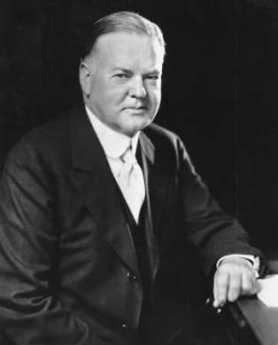
This time we turn our attention to Herbert Hoover, the 31st President of the United States, who held office from 1929 to 1933. Hoover is popularly remembered as a failed president because of his inability to effectively react to the stock market crash of 1929.

Hoover has been redeemed by more recent discussions of this history, but last year, for example, my cousin's husband called a neighborhood in Queens a "Hooverville" in reference to its shoddy condition, and to the economic conditions during Hoover's presidency. Let's just say that Hoover tops the 'best presidents' lists of very few American historians.

But Hoover was not a failed president in the sense of the corrupt Warren G. Harding or the useless James Buchanan. Instead he lived a life more similar to the first President Bush or President Carter. That is he was extensively qualified, he was involved in humanitarian missions, he perfected the job of civil servant, but he ran into trouble when it was time for him to lead.

It was in his role as director of the American Relief Association that Hoover was involved in delivering food and supplies to the Baltic countries during the First World War. In 1938, after he had been ousted from office, Hoover found time to visit Estonia and Latvia who had both invited him to thank him for the ARA Relief. It was these visits that Hoover gave an account of while under oath in front of the Kersten Commission in December 1953.

Hoover: During the years afterward I had many invitations to come to the Baltic States, Poland, and other countries. They wanted to express some appreciation for our services, but I was busy with other things, as you know, and it was not until 1938 that I responded to those invitations, 19 years after my previous experiences.

I then visited Latvia and Estonia. I did not go to Lithuania, although I made considerable inquiries as to how they were getting on. I was also interested in knowing what was going on in Russia because there was a constant migration back and forth, chiefly of skilled mechanics from the Baltic States going into Russia, for employment in Russian industry. These people were coming back and they knew all about details of life in Russia. I interviewed a great number of them and could give you something of the picture and contrast.

Mr. Kersten: We would like that picture.

Mr. Hoover: The problem you are working on bears directly in that direction. Russia at that time was drastically rationing all food and clothing. They had an entirely unstable currency, if you could call it a currency at all. You know the nature of the Russian government and the characteristics.

The Baltic States, in contrast, had a free economy. Their currency was stable, their currencies were convertible into gold, they were accepted all over the world. Their fiscal policies were completely successful,; their budgets were all balanced, their industries were thriving, their agriculture was making an astonishing progress.

The result was that the standard of living in the Baltic States was about as high as any standard of living in Europe, possibly outside of Switzerland and Norway.

Mr. Madden: Mr. President, what year was this?

Mr: Hoover: This was 1938. The contrast with Russia was so great that it became one of the menaces of the Baltic States. The Russian people were constantly attempting to escape from Russia into the Baltic States. The Russians had established a barbed wire fence over some portion of that border, I don't know how many miles, but in any event, they maintained a rigid picket line in order to repel their own people from escaping into the more prosperous Baltic States to live.

The contrast was enormous and I should say that those three states had made more progress from the very low beginnings they had had 19 years before, than probably had ever been made by any series of states on record.
***

The testimony later goes on to discuss how during the Sept. 1939 discussions between Nazi Germany and the Soviet Union, Germany was originally slated to get Lithuania, while the USSR would grab Finland, Estonia, and Latvia. Part of Lithuania was later purchased by the USSR from Germany, in cash. That is they had the cash to buy a strip of Lithuania from the Nazis, but not the cash to invest in their own people.

Towards the end of his testimony Hoover is asked if he has any hopes for the Baltic States regaining their independence.

His reply:

Hoover: When these three states came out from under the Russians in 1919, they had a flowering literature, they had great vitality in all of their racial qualities. Now, I have the belief that you cannot stamp that out of a people; you can't stamp it out of the Czechs, you can't stamp it out of the Poles, nor the Baltic peoples.

The only hope I can see is that some day, in some world cataclysm, those people can rise again as they did in 1919. That is the only solution I can see at the moment and it is the main hope.


He died in New York in 1964. His funeral was the third in three state funerals in a year, following the deaths of President John F. Kennedy and Douglas MacArthur.

teisipäev, oktoober 16, 2007

Putin farted: what does it all mean?

I know it's a crude way of putting it, but perhaps it sums up the international perspective best. Every news article I read about Russia tells me that its 'resurgent'.

Four examples, from today:


Time Magazine: "an economically resurgent Russia views the Iran standoff as another opportunity to reclaim some of the strategic ground it lost after the Soviet collapse."

Newsday: "She said the next president must juggle challenges posed by a resurgent Russia, an ascendant China, global terrorism and an unpredictable Middle East that threatens Israel and the world's oil-based economy."

Boston Globe: "He was insinuating that the US scheme for installing a missile defense system in Poland and the Czech Republic, far from responding to an eventual threat from Iran, was really a disguised element of a plan to encircle and humiliate a resurgent Russia."

BBC: "Scotland's tourism authorities have seized on the increasing wealth of a resurgent Russia as a source of affluent visitors in recent years."

Whoever chose that word out of Dr. Roget's Thesaurus at the Russian Foreign Ministry in Moscow should be promoted. Talk about stellar marketing. But beyond that there is something in the Western media that wants to build a Tsar out of Vladimir Vladimirovich. They like taking pictures of him walking strongly into meetings. Guys like us on the Internet think he's a clown. Russian teenagers parade to celebrate his birthday.

It's not just him though. Nearly every European leader, save Romano Prodi and Gordon Brown, has taken office in recent years amidst a PR blitz of sycophancy. Angela Merkel was similarly going to put Germany back to work and solve all of its problems. Nicolas Sarkozy is going to put France back into an Atlantic orbit. If Sauli Niinistö wins up north in the next presidential election, I am sure he'll revolutionize Nordic identity and look good while doing it.

But are these cults of personalities all they are made out to be? Am I glad Sarkozy was elected? You bet I am, considering Chirac had been in politics since before I was conceived, nay, before my parents even knew each other. Do I like Merkel? She seems pleasant enough, but having been in Germany during the 2001 campaign season, I don't even want to get immersed in German politics.

So what lip service should we give resurgent Putin and his Judo chop? Should we really believe that Russia is resurgent because it deported Georgians last year to "teach them a lesson" as a snarky commenter put it on Ed Lucas' blog. Why, didn't Russia back bloody separatist movements in Georgia in the early '90s when it was not "resurgent"?

Should we really believe that Russia is resurgent because it is complaining about Estonian citizenship policies or NATO membership, or trying to make Estonia look bad in the court of European public opinion? Hasn't it always been trying to do that, since the day after it signed the Treaty of Tartu in 1920? In the 1920s and 30s too the wealthy nations of Finland and Estonia were brutalized as 'fascists' in the Russian press. What's changed?

And that's sort of the ultimate point. What has changed? Russia has a leader who refuses to voluntarily surrender power to a democratically elected successor. Instead he'll find away to keep it himself.

Same as it ever was.

esmaspäev, oktoober 15, 2007

Jasmine ja Sass

We were strolling through Tartu one day when we happened upon a cat that had escaped its fenced-in yard and made it to another person's property. When we returned the cat we met his owner, Bruno, a Latvian man, perhaps in his 60s or 70s, who spoke fluent Estonian and was funny and good natured.

The only problem with our Bruno was that he insisted on calling me 'Jasmine'. At first I thought he was calling me 'Rasmus', which isn't a bad name considering someone just sent an e-mail to me addressed to 'Julian' -- whoever that is.

But no, when I listened carefully, I heard it again and again. 'Jasmine this' and 'Jasmine that'. Finally Epp stepped in on my behalf and politely told Bruno that my name was not 'Jasmine.' Fortunately, Bruno did not mistake me for a former NSync heartthrob. No, he turned to his wife and asked, 'But what was that princess' name?' 'Jasmine' came back her response. 'Jasmine,' he muttered to himself, and then we left it at that.

'Jasmine' is far closer to my name than what my wife's grandparents, Karl and Laine, call me. I am pretty sure that Karl knows my name is that of the saint. But to Laine I am 'Sass', which allegedly sounds close to my name, though I am not hearing it. 'Sass' is a nickname for Aleksander -- another one of Estonia's peculiar diminutives.

When forming nicknames in Estonia, usually they chop the front half of your name off and at 's' to the end. 'Peeter' becomes 'Pets', 'Toivo' becomes 'Toits', even 'Epp' can become 'Eps'. Then there are those more outrageous derivations. 'Andres' gets shortened to 'Ats', and, somehow, they make 'Sass' out of Aleksander.

This doesn't happen with all names though. Fellows named 'Hannes' are apparently stuck with 'just Hannes'. There will be no wild nicknames for them. But if Hannes Võrno is ever feeling sorry for himself, he can thank Taara that his name isn't Jasmine.

[The picture is 'Kaik Kerdub' by Annely Vassar (2001)]

reede, oktoober 12, 2007

An encounter with Johan Skytte

It was a brisk evening in the Danish village of Skagen in the fall of 2001 and my fellow students and I, as well as some teachers from my study program, were sitting around drinking alcoholic beverages in one of the few cafes in town that were open past 10 pm.

One of the 'teachers' was actually a librarian named Peter who was 60 years old and wore leather pants to work. In other words, Peter may have been old, but he was still 'cool'. And so I asked Peter a question that had been burning on my mind during the weeks I had spent in Copenhagen.

"Peter, why is that everytime I have a bit too much to drink, people ask me if I am Swedish?"

"Well," he replied. "The short answer is that Swedes like to come to Denmark to get drunk because the beer is cheaper here. But the truth is that Danes actually feel a bit inferior to Swedes. I mean they have Volvo and Ikea. What does Denmark have? The Little Mermaid?"

This was about as soul-searching as the Danish-Swedish dialog got during my time there. Most other times it was "damn drunk Swedes", "drunk as a Swede", "you have a beer in your hand, you must be Swedish" and, "Looks like a Swede threw up in the street again."

It got to the point that one time while walking home from a party in Norrebro I encountered a man staggering to the street after peeing on the wall of an apartment block. "Are you Swedish?" I asked him, quite convinced he must be. "No mate," he replied. "I'm Australian."

Eesti-Rootsi

Fast forward six years and here I am in Tartu in the midst of sügis, the Estonian season that roughly corresponds to the American fall and the British autumn. But unlike visions of crisp October days and Indian Summers, sügis is damp, wet, soaking ... märg. They put the 'ü' in 'sügis' just to capture the feeling of wading through slops of wet leaves. It was like this last week when I climbed up Toomemäe in Tartu to see a new monument -- the Johan Skytte memorial, recently opened with the help of Queen Silvia of Sweden (see above). It was the Swede Skytte who founded the university, 375 years ago this month.

While checking out the Skytte monument, I began to wonder why is it that here in Estland, the Swedish cultural influence is respected and memorialized in national historiography, but in places like Denmark, Norway, and Finland, Swedes are looked upon as Carlsberg-chugging, self-absorbed primadonnas who are too busy thinking about their perfect society to notice anyone else around them? The Danes and Finns and Norwegians say their jokes are all in good fun, but are they really?

The answer to this question is rooted in the geopolitical repositioning of the nascent Estonian state in the 1920s under the tutelage of respected political thinkers like Jaan Tõnisson, who was at the heart of the Baltoscandia idea -- linking the Scandinavian and Baltic states into a union that could counterbalance Russian and German influence.

Beyond that though there is the reality that the Estonian past feels truncated. There's the mythology -- 800 years of slavery -- but then the reality. How many Estonian stories have been passed down from the times of the Great Northern War? Some. Our tour guide through Tartu the other day basically took the side of Karl XII in the end. He was trying to be unbiased, but it was so hard for him to be.

But did the Estonians of the time feel that way? Remember, regardless of noblemen and armies, the Estonians were maarahvas -- people of the land. While the Swedish influence cannot be understated by academics or politicians or clergymen, it probably trickled down to the maarahvas in ways that they may have not noticed. There was probably not a rash of newborn babies named Johan in 1633, to put it simply. The Estonian mothers kept naming their kids Tõnu and Tiidrik.

Nagu Rootsi Kuningas

But one day in Tartu I met a man who had named his son Karl, Karl "nagu rootsi kuningas", he said as he smiled to me. It's kind of odd to think that people even today have warm feelings about the Swedish monarchy. Another friend, a Swede, told me that when he visited an old couple in Noarootsi, the walls were covered with photos of the Swedish royal family.

Now I admit the Swedes are nice looking people. That they are so ashamed of their own language that they insist on cranking out pop hits in English, rather than paa svenska, is ok with me also. But let's just say that if I named my future son Gustav, I'd be doing it for Gustav Suits, not for King Gustavus Adolphus.

Still I just can't put my finger on what it is about Skytte's people that still endears them to the locals here. I can only guess that if a drunk Estonian somewhere out there has to find an alleyway where he can relieve himself and finds himself beside a Swede engaged in the same activity, he feels a tinge of familiarity and camaraderie with his fellow traveler.

neljapäev, oktoober 11, 2007

Tour of Tartu

Today I was lucky enough to have a tour around Tartu guided by Heiki Valk, who had to cut short his tour because he was late for an archaeological dig. Despite our short time together, Heiki taught me many things about this city. I have lived here since February but I did not know that, for example.

1) The statue of Gustavus Adolphus behind the University of Tartu is not the original. The original was dismantled/blown up in 1950. When foreign human beings were allowed to visit Tartu without a KGB escort in the late 1980s again, academic contacts with Sweden were renewed.

It turns out that because the "Lion of the North" was such an imperialist pig, he was both beloved by Estonians (for granting extensive rights to the local peasantry) and disliked by Swedes, who prefer ABBA and Olaf Palme to conquering small nations. So it was not too difficult to find moulds of a contemporary statue of the old Gustavus Adolphus monument to part with, and they were very glad to loan one to Tallinn.

2) Kristjan Jaak Peterson only became famous after he died. It had really troubled me for some time that someone that lived to be only 21 years old could live on eternally as a national poet. Such is the tale of Kristjan Jaak Peterson (1801-1822), whose statue dominates Toomemäe.

Heiki recounted the tale of the ardent student Kristjan Jaak who made the journey from Riga to Tartu by foot just for the sake of learning, contracted TB and died. For workaholic Estonians, perhaps ignoring a cold to work some more, I am sure it is an endearing story. To regular joes, one has to wonder why he didn't just wait it out in Võnnu for a while.

Anyway, his diary and its soul-stirring poetry were discovered at a later date. Maybe one day your college poetry will make you a national hero too!

3) The Soviet time is still bad for real estate. On Jaani Street, past Tampere Maja, is a house where we once upon a time considered living. Epp warned me though that it used to be a jail and therefore it might contain disturbed souls given to mischief. We decided to look elsewhere in Tartu for a place to live.

In fact, as Valk pointed out, the building on Jaani Street used to be the site of the original university building. In 1941 though it was where some 193 people -- 170 men, 20 women -- were shot by NKVD and buried in the courtyard or thrown down the well. There used to be a memorial there to this act, but since the flats in the renovated apartment building were not selling well, it was taken down.

On the way home from the tour I met a woman who spoke to me in Estonian but seemed foreign. It turned out that she was a väliseestlane who had repatriated with her family. I asked her why she moved to Tartu instead of Tallinn. She said that part of her family was from Tartu, but that the real reason was because Tartu was so much better than Tallinn.

Sure Tartu was smaller and there were less big concerts headlined by aging rock stars, but Tartu still had a lot of restaurants, and Tallinn was simply 'vastik' -- not just because of the rampaging drunk teenage looters who went bananas over a statue, but also because of the rampaging drunk twenty- and thirty-something British stag party attendees who came to fight , funnel, and ... the other f word.

Standing there on Toomemäe with her looking out over the multicolored autumn foliage, I had to agree that I too liked Tartu better.