neljapäev, oktoober 11, 2007

Palo's exam plan bites the dust

I am not sure if this was given much attention by the Estonian media, but Rahvastikuminister Urve Palo's plan to make the section of the Estonian citizenship exams that deal with the constitution available in Russian was scrapped after consultation with SDE's coalition partners, Isamaa-Res Publica Liit and Reformierakond.

The story was placed prominently in the Russian version of Postimees, but was overshadowed by articles about storms, railroads, and other important things in the Estonian version.

Sometimes I feel that the citizenship issue is the third rail of Estonian politics. There are policies that have been set in place and nobody wants to tinker with them. Presumably, a Center Party with nothing to lose could promise non-citizens easier exams or just go ahead any give everyone from Nordkapp to Johannesburg the right to vote in Estonian parliamentary elections and win big at the polls. But that would make them look like cynical opportunists beholden to Moscow's interests. And besides, they already have those districts locked up electorally.

On the other hand, Isamaa and Reform have built their electoral base on right-leaning voters, many of whom vote, perhaps, in opposition to Center Party voters. They don't want to see their country turn into "Savisaarestan". And it is possible that once naturalized, those former non-citizens might not find a home in IRL and would feel more comfortable voting for other parties, like Edgar Savisaar's. So there's no political incentive for them to liberalize citizenship law either.

That leaves the Social Democrats who have three very interesting ministries under their control. Jüri Pihl has the Ministry of the Interior. Ivari Padar is the Minister of Finance. And Urve Palo is the Population Affairs Minister. For all other parties in Estonia, liberalizing the citizenship exams would be bad politics. But for SDE it could be beneficial. They would look good in the eyes of supranational organizations like the Council of Europe, they would look 'more European' to to a St. Petersburg-dominated Russia, and they would look like they did the Russian minority a favor at home.

That too would be opportunistic, but it might also be good politics. The current coalition government has said 'ei', but a future one could say 'jah'.

kolmapäev, oktoober 10, 2007

Shagging in Rovaniemi

Have you ever wondered what people do for fun up at the top of the world? How is it that the people of Rovaniemi, Finland, pass their short summers and long dreary winters?

The answer seems to be that they like to go out to the bar, bring home another warm human body, and .. either before or after sauna ... shag like there's no tomorrow.

How else can one explain the appallingly high number of victims of 24-year-old Ari Hakkarainen who has been accused of intentionally spreading HIV to unknowing partners in the northern Finnish city.

Hakkarainen looks like your regular Finnish Depeche Mode fan. He's got blond hair, symmetrical features, and an earring to boot. But according to Finnish authorities, he managed to seduce an unknown number of women, 22 (!) of whom have filed charges against him. Five have sadly tested positive for the virus.

Now, some male readers out there might think nothing of this number. But most of you will probably never 'know' 22 women during the course of your entire life. So my questions are, a) Is this just the way things are in Rovaniemi? or b) Does Ari have a secret he hasn't let on about (other than carrying a deadly sexually-transmitted virus)?

Your thoughts?

teisipäev, oktoober 09, 2007

Õnne 13: The First Season

[Actually it's "Eestlased Poltsamaalt" by Carl Magnus von Lilienfeld]

The Point: Sometimes I wonder about the veracity of Estonian nationalist mythology. The grand sweep of history is reduced to various invading armies, enemy occupations, et cetera, et cetera. Life was difficult in Estonia during most of the past millennium, yet at the same time life was difficult across Europe, not just in Estonia.

So what was life really like for the illiterate Estonian peasants of the 17th and 18th centuries? I would venture a guess that it was sort of like the Estonian TV show Õnne 13 except set during Tsarist and Swedish times.

There were village comings and goings, local displays of wealth and authority, the requisite backstabbing, a lot of drinking, some infidelity, and ... of course ... gossip. And I am sure that every successive generation had at least one lovable old fellow named Johannes who bore a striking resemblance to Kaljo Kiisk, may he rest in peace.

esmaspäev, oktoober 08, 2007

Marko vs. Rene

I never thought I'd live to see the day where IRL's Marko Mihkelson would turn his patriotic aggression on anyone not from the 'neighbor to our East' -- they whose name we dare not speak.

Yet yesterday, today, and tomorrow, Marko's Estonian ire has been fixated on a sexagenarian Dutchman by the name of Rene van der Linden.

The epic backdrop to this never-ending soap opera is that van der Linden, as chairman of PACE, one of the many dull acronyms that make sure Europe is European enough, has gone to Moscow and participated in their ongoing efforts to convince the world that the Estonians are Finno-Ugric barbarians, and, by the way, the human rights abuses in Russia pale in comparison to not being able to vote in Estonian parliamentary elections and holding a humiliatingly colored gray passport.

To add insult to injury, van der Linden came to Tallinn in September to tell them that their naturalization process was going too damn slow and that maybe they should make it a bit easier to get citizenship by, say, letting people born in 1931 be exempt from the language part of the citizenship exam, not just people born in 1930 and up. He also reiterated the red herring that some residents of Estonia cannot vote in municipal elections. It is true there are some in that category, namely me -- a person who hasn't lived here the requisite five years to do it.

Well, Marko has hinted in a previous article that Van der Linden is so Russia friendly because he has business interests there, and so over the past few days he has been backing up his claims by publishing translated notices from Russian business websites covering van der Linden's visits to the Vladimir region of Russia where Noble House Holding -- which he is affiliated with -- has significant investments.

Mihkelson is a respected member of IRL, but he's also lower ranking than Mart Laar or Juhan Parts. I wonder if he could be the front man for a more widely coordinated exposure of van der Linden's conflicts of interest. Or maybe he just likes to stay up late at night in his pajamas, trawling through Russian regional and business websites. Either way, it's non-stop entertainment.

Today Vandy struck back on the PACE's website urging "Marko Mihkelson to stop this slandering". In his public retort, van der Linden stressed that he has not, and never has had, any financial involvement in any company in Russia", he "is not, and never has been, a member of any supervisory or other board of any company having economic interests in Russia", and he "has never received any financial advantage, compensation or payment of any sort in Russia in relation to activities involving Russia.

That claim however does not jive with Noble House Holding's website. Noble House Holding not only declares that it's "your bridge to the Russian market" but that van der Linden is indeed the head of Noble House's supervisory board.

The period of the project realization is 5 years, the volume of investments is about EU 500 million. PACE President Rene van der Linden volunteered to supervise the construction works. It is he who is the head of the supervisory board of Noble House Group.
I wonder how long it will be until they scrub that one clean.

pühapäev, oktoober 07, 2007

Politkovskaja and civilizational cleavage

It's been a year to the day since Anna Politkovskaja was gunned down in a Moscow stairwell, allegedly for her activities as a journalist in Putin's Russia. The authorities have stressed a Chechen connection to the hit, and Politkovskaja was best known for her coverage of that conflict.

But it is perhaps more interesting that Politkovskaja's death has resounded more greatly in Europe and North America than in Russia. Here in the Baltic Sea region, the anniversary did not go unnoticed by Postimees, Helsingin Sanomat, or Aftonbladet.

While the political implications here are heavy and handily used by opponents of Putin's 'sovereign democracy', I would argue that Politkovskaja's death is being used by the West to reinforce an image of an inferior East that is not free, an East where one can be killed even for writing articles.

In the Cold War period, the image of the east became one of lower living standards and overwhelming political interference -- one-party states that were decades behind in development. In the new construct, Putin's Russia is the new east and the Baltic Sea region is part of the West. Whereas in the Baltic Sea region journalists need not fear the state, and media is seen as an integral part of the social contract between citizens and those that govern them, in Russia, the media is seen as less important, especially should it threaten the ultimate value, which is not freedom but stability.

It is this clash between values of stability in Russia and freedom in Estonia that could lead Russian Foreign Minister Sergei Lavrov to write to his Finnish colleague Ilkka Kanerva in May that Estonian society was disintegrating because youths broke windows and looted stores for two nights. Whereas in the West, such things are known to happen in Paris and Los Angeles and Copenhagen, in the east, such things are a sign of instability and question the legitimacy of the regime. Lavrov foolishly looked at Estonia and thought it was like Russia. It might be worth it for high ranking Russian officials to visit from time to time.

Therefore, Politkovskaja's death is important to us not because who she was or what she wrote, but because the circumstances of her death reinforce our opinions -- in Tallinn, in Helsinki, in London, in Ottawa -- that our way of life is the way of life, and none other. In Moscow though, images of youth clashing with police in Tallinn or Heiligendamm or Paris say the exact same thing, "Who needs the chaos of freedom, when one can breathe in the state-controlled air of stability ?"

laupäev, oktoober 06, 2007

Little Bastards

We have a bit of an orchard in our backyard here in Tartu. Several apple-bearing trees, some that bring forth golden apples, others green, and then there's the two or three trees in the corner whose apples mature into a ripe and ruddy red.

I was unaware of the apple trees in our backyard when we decided to move in, but then they burst forth in late spring, thousands upon thousands of orbs suspended by limp branches weighed down by their abundance.

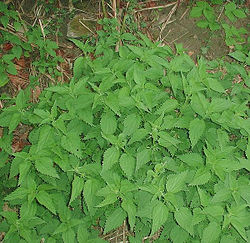
We would all go out on a summer day to gather up the hundreds of apples that had dropped over a week or so, only to walk out the following morning to see that hundreds more had fallen down overnight. On occasion, I would be picking up falling apples only to have one cascade down from the tree above and hit me ~plonk~ on the forehead. It was on one of these apple foraging missions that I met again a small Estonian plant known as nõges.

You see, originally I thought Estonian nature was harmless. In the New York woods where I grew up, nature was not so nice. There was poison ivy, which kept me home from school a few times, and if you didn't get that, poison oak and poison sumac had ivy's back to make sure your experience of the forest would be absolutely miserable.

On top of the rash-inducing shiny leaves of North America, there were also the many berries that one should not eat unless they planned on getting very sick and/or dying. When I was a kid, the most plentiful berries in the forest were not charming murakad. They were the ominous sounding bloodberries, which were only good for throwing at one another. And bloodberries always stained your clothing.

But I had yet to encounter anything as unsavory as bloodberries or poison ivy during my time in Estonia until I encountered nõges. I was reaching down to pick up an apple when ~ouch~ something stung me. It was those damn leaves. I had been stung by nõgesed twice before, both times in forests in Viljandimaa, but I had forgotten how similar to a bee sting it really was.

I looked at my hand. There was a red stripe from where the little bastard had decided to sink its little feelers into my flesh. After I hauled my bucket of red apples inside, I approached Epp, still rubbing my hand, and blurted out: "those leaves bit me!" to which she responded with wicked laughter and in a mocking voice repeated back, "leaves bit me", this time crying with laughter. I guess the way I said it was unusual. But that's exactly how it felt-

According to the trusty Wikipedia, kõrvenõges -- the kind of nõges that stung me -- is known as 'stinging nettle' in English. Apparently it is found in North America too, but it is far more common in Europe. If you want to see a photo of its tiny jaws, click here. So next time I'll keep my eyes peeled for the nõgesed in our garden. And if you happen to get bitten by a nõges, I feel your pain and I promise I won't laugh.

reede, oktoober 05, 2007

The end of democracy

I went to Tartu City Library yesterday to get some books. I went home with one I didn't intend to find there, but haven't been able to leave alone ever since. It's the Baltic States Investigation by the US House of Representatives in 1953, better known as the Kersten Commission, and features interviews, under oath, with many Baltic diplomats and eye witnesses to the chilling events that occurred in Estonia, Latvia, and Lithuania in the summer of 1940.

One of the more intriguing aspects of this book is that it allows you to be in the room with President Konstantin Päts and Prime Minister Johannes Vares-Barbarus when decisions are being made about Andrei Zhdanov's directives to the Estonian puppet government. The details emerge about just how the elections of July 1940 took place in the testimony of Johannes Klesment, who was a counselor to the government at that time:

[Minister of Interior Affairs] Maksim Unt was called to the Soviet Legation and I went home. On the next day he sent me his assistant, Mr. Vihalem, and Mr. Vihalem had a little piece of paper in his hand and he gave it to me. I remember it very well. There was written in the Russian language in green ink that the elections must take place on the 14th and 15th of July. It was after 10 days instead of 35 days as demanded by law.

I discussed this option with him. He himself was an assistant professor in the university. I asked him how he thinks we can do it. He said there was nothing to be done. I asked him who had written on this paper with green ink in the Russian language. He did not know.

The next day the President was called from his summer residence, which is about 100 miles from Tallinn. He was called back to Tallinn for a meeting of the cabinet ... then Mr. Vares, prime minister of the puppet government, said to the president on the last evening that he was ordered by Soviet special representative Andrei Zhdanov that the new election of the parliament will be arranged and these elections will be carried out after 10 days.

He asked the president to make some changes in the election law. The president looked at me and said "Mr. Klesment, can I do it?" I said "Mr. President, it is impossible. The president cannot change the electoral law because according to the Constitution the electoral aw is changed only by parliament, and by presidential decrees it cannot be changed."

He smiled again and looked at the prime minister and said, "Mr. Prime Minister, how can I do it? You hear what the counselor of the government has said.

Well, Dr. Vares was very unhappy. He said he had told Mr. Zhdanov last evening it was impossible to arrange the elections so quickly. The President said to him that it may be that Mr. Zhdanov is stubborn and he demands we arrange an election. We can do it according to laws. Later on, Dr. Vares proposed that the government itself change the electoral law. Then the other members of the puppet government -- one of them was a professor in the university, Prof. [Hans] Kruus, and he said a presidential decree cannot change the electoral law and if he couldn't, how could we do it?

It took a little time and then the pupper government decided that it would change the electoral law by cabinet order. And so it was done. The President wrote a decision that he will have new elections, and then the Cabinet, knowing that it is quite contrary to the constitution, decided to make a cabinet order and change the electoral law.
Klesment's testimony then goes into how the list of candidates was created for the illegal election on July 14 and 15, and finally how the parliament itself voted to join the USSR.

Rep. Charles Kersten: Were you present at the meeting of the parliament where the parliament took action on the incorporation of Estonia into the Soviet Union?

Klesment: Yes, I attended the meeting.

Kersten: State whether or not there were any Soviet troops or military there.

Klesment: Oh, yes.

Kersten: Right in the parliament?

Klesment: Yes, around the parliament, on the streets, and in the rooms of the parliament.

Kersten: While the voting was going on?

Klesment: Yes.

Kersten: Would you state whether or not they were armed?

Klesment: With arms, yes.

Kersten: Armed with what?

Klesment: With guns

Kersten: About how many Soviet troops were right in the parliament when this was going on?

Klesment: The parliament building is on a hill. There were Soviet tanks and so in front of parliament, and in the rooms of parliament, I cannot say exactly, but I would say there were 100 men, by all means, with guns and all. All the corridors are full of the Soviet armed soldiers and on the stairways and through the rooms.
Think of that next time you walk up Toompea to the Riigikogu building.

neljapäev, oktoober 04, 2007

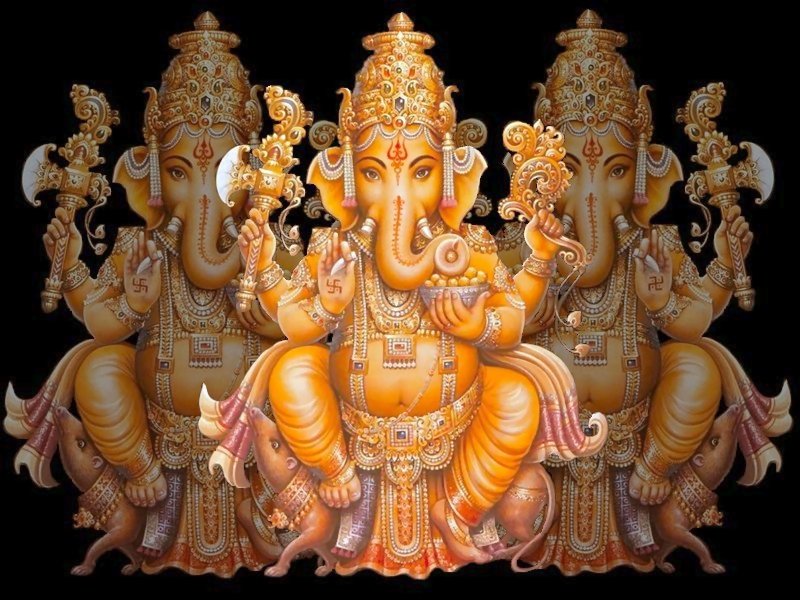
Hindu love gods lay it on thick

Well, you couldn't ask for better PR than this piece in the Hindu Business Line, which described Tallinn as an "elves town" and Estonia as an "island nation" (close, it's a peninsula) and "a land in the midnight sun, always ready to burst into song."

In summary, it encapsulates how Estonia portrays itself to the global audience. A synopsis:

1. Nordic, yo.

Due to its strategic location as a link between East and West, this Nordic nation has witnessed conquests since the 13th century.

The Nordic countryside is also dotted with ancient castles that used to be inhabited by the Teutonic knights.

2. Hi-Tek

Information technology companies such as Skype, which was recently bought over by the e-bay portal, and foreign investors such as Swedbank, Maersk, Galvexm, including the NRI-owned entity Tolaram Group have a presence here.

3. Note to self: Assimilate

What is remarkable about the Estonians is their ability to assimilate cultures and influences of other nations, make the most of them and at the same time retain the distinct Estonian essence.

4. History comes alive

With a solid town wall made up of 26 defence towers, within it are housed a Dominican St. Catherine’s Monastery founded in 1246, the 600-year-old Gothic Town Hall, the world’s oldest functioning pharmacy, and the 159-metres high Oleviste Church which was recorded as the highest structure in the world in the 16th century.

5. Unfriendly visa regime

However, Estonia, like the other regions of the Baltic Sea, has one obstacle that visitors have to overcome — its visa policy.

The Baltic Sea region countries give extremely short-term visas, making it difficult for first- time visitors to discover and explore over and above the stay they have planned.

kolmapäev, oktoober 03, 2007

Why Doudou Diene is Wrong

According to a Valgamaalane interview with President Toomas Hendrik Ilves, Doudou Diene, the United Nations Special Rapporteur on contemporary forms of racism, racial discrimination, xenophobia and related intolerance, told him that Estonia should adopt another official language.

Apparently Diene is busy drawing up a report where official languages should be determined on the size of a minority population. Ilves' response was predictable:

“If Diene recommended that several official languages should be adopted in Estonia, I will recall that there are 4 million Turks living in Germany. Why doesn’t that country have several official languages?”
Ilves is right to point out that the rest of Europe currently does not follow similar norms. But I think that the comparison to Turkish immigrants in Germany is misleading. If Estonia really wants to point out why Diene and others are wrong they should look farther west, to the Canadian Province of Québec.

Québec only has one official language, French, even though 8 percent of its residents are native English speakers (and it was 14 percent in 1951). English speakers have been living on the territory of Québec for a long time, even longer than the Old Believers have had their villages on the shores of Lake Peipsi. So why does Québec only have one official language?

Because if
Québec was forced to adopt English as an official language, thousands of guys with fleurdelisé flags would go apeshit and proceed to start blowing things up, let alone tearing down bilingual traffic signs. In another words it would be a politically and socially destabilizing event that would have severe repercussions for, say, Québec's status in Canada.

It would be a bad political decision that would do more harm than good and perhaps make gentlemen like Doudou Diene look bad for giving out such foolish advice. I know he means well, and solutions like these look great on paper, but they fail to factor in such important things as history amongst other things. And if the Quebecois had reasons to have one official language, the Estonians do too.

teisipäev, oktoober 02, 2007

How It's Done

Does PACE Chairman Rene van der Linden deserve to be fired? Social Democrat Deputy Leader Sven Mikser thinks so. Mikser told AFP today that van der Linden's consistent errors during his whirlwind Baltic tour in September were cause for sacking.

""He has compromised himself so much that we think he should be removed from his post," said Mikser, who as a Social Democrat and one time Center Party member is not exactly a rabid, Russian-hating Estonian nationalist.

It would be tempting to view the Estonian response to van der Linden's visit, which included a very long letter from Riigikogu Speaker Ene Ergma, as being typically defensive. But then there was the visit from Council of Europe Commissioner Thomas Hammarberg this week who, unlike van der Linden, had actually done his homework.

Also, as opposed to van der Linden, Hammarberg retained a respectful tone throughout today's press conference at the Estonian foreign ministry, and made several critiques -- Estonia's prisons need to be updated and are not in standard European conditions, and citizenship laws can be eased to make citizenship more attainable for non-citizens.

How so? Hammarberg said that the "age-out" option for citizenship acquisition should be lowered from its present level (all adults born before 1930) to a level younger (those aged 65 today, for example, were born in 1942). He also said that babies born to non-citizens that are eligible for citizenship should receive it automatically, rather than having to have their parents apply for it. Both tweaks in current laws should be able to ease citizenship requirements Hammarberg said.

Hammarberg also said that after his discussions with Foreign Minister Urmas Paet and Population Affairs Minister Urve Palo that he felt there was consensus in the current government that such reforms could be adopted. He also praised (!) the Estonian government for its efforts thus far.

And because he made his critiques of Estonian policies respectfully and with some praise for the government, he was listened to. Meanwhile, van der Linden's Wikipedia profile is growing longer by the hour. His suggestions may not be implemented, but at least Hammarberg left Estonia the man less scorned.

Nagu kaks tilka vett!

Aging Swedish-born Italian film star Anita Ekberg ....

Best known for: La Dolce Vita (1960)


And deposed former president of Estonia, Konstantin Päts.

Best known for: Mutual Assistance Pact with USSR (1939)

esmaspäev, oktoober 01, 2007

Tymoshenko

According to various reports, Yulia Tymoshenko's party, the well-named Yulia Tymoshenko Bloc is leading as the votes are counted in Ukraine's most recent parliamentary election.

Tymoshenko is described as "pro-West" in many articles. I find this an intriguing concept. In the post-Soviet space, there appear to be two models of development, pro-Moscow and pro-West. Pro-Kremlin countries, like Belarus and Kazakhstan, are wholly undemocratic entities. They are, as my friend would put it, "loyal stooges" of Vladimir Putin. One guy gets in power and stays in power. Lukashenko came to power in Belarus when I was in ninth grade. I am now nearly 28 years old. That's the kind of nonsense I am talking about.

"Pro-West" on the other hand seems to mean western integration, ie. integration into western economic structures like the European Union, and western defense structures, like NATO. My interpretation of Russia's dislike of these institutions, particularly NATO, is not that it bears the hand of the United States, but because it makes it more difficult to meddle unilaterally in adjacent countries.

NATO membership for Georgia, for example, would be a headache for Moscow because it would no longer be able to tinker in Georgian domestic politics in the middle of the night, for example, by dropping unexploded missiles in fields near the breakaway province of South Ossetia. It would internationalize politics near Russia, bringing in unsavory actors such as Dutchmen, Brits, or Americans to figure things out.

But beyond these superficial structures of western integration, I think there might be a more personal basis for Tymoshenko's western leanings -- the reality that without Ukrainian democracy she would not have the status that she has today. Perhaps Leonid Kuchma would have handed the state over the Viktor Yanukovich. In any case, females don't seem to dominate in the pro-Kremlin post-Soviet space.

Tymoshenko's beauty appeal has certainly helped her. If I had to vote in Ukraine, I would probably vote for her because certain biological twitches would make it less possible for me to examine the issues. A Ukrainian cab driver told me once that she is a corrupt oligarch, like the rest. But ... just look at her. Does she look like the kind of woman that would steal your money?

[Pausing for the sake of irony]

One has to wonder, is this how women voters feel when presented with a male candidate? In my country I have heard some rather vulgar remarks about John Edwards and Barack Obama -- women's locker room talk about two men that want to be our president. Unfortunately, when I was actually in the men's locker room back in the '90s, we never talked about Hillary Clinton.

One more reason I like Tymoshenko is that she has managed to irritate Sergei Lavrov, foreign minister of a joke country called the Russian Federation. I have some genuine unhappy feelings about Russia these days, not least because Andrei Piontkovsky, a famous Russian analyst, is on trial there for writing a book.

What does this all mean for Estonia? Estonia has played an active role as a mentor to Ukraine through a concentrated effort from the ministry of foreign affairs, particularly under the auspices of NATO. Indeed, I sometimes feel that Estonia's head is more often in Tbilisi, Chisinau, and Kiev than it is closer to home in Hell-stinky, Stockholm, and Riga, not to mention Haapsalu, Pärnu, Häädemeeste -- you get the picture.

Ukraine's continued adherence to democracy shows that maybe that presence has paid off, or that Tallinn's efforts have not been in vain. Maybe one day Ed Lucas at The Economist can add Yulia Tymoshenko to his list of eastern European leaders that matter, right next to Vladimir Putin and Toomas Hendrik Ilves. Or maybe not. Your thoughts?

laupäev, september 29, 2007

Vana Meremees

I have only been to Saaremaa once in my life. I was warned by my wife that I was entering a special zone within Estonia, where all the people lack a sense of humor. That is, Saarlased were allegedly principled to the point that principles came before all other things: eating, laughing, sleeping: if it was against their principles, then it wasn't for the Saarlased.

We traveled to Kuressaare by bus and ferry. On the ferry we met up with an acquaintance of Epp's who knew that we had only recently been married -- this was 4+ years ago. So we took the time to get acquainted, all the while loading our mouths with Kalevi chocolate that we had bought on board the ferry to pass the time.

"So you are in Italian?" Epp's friend asked.

"Well, actually I am an American," I said.

"But your name is Italian," she pressed on.

"Well, both of my grandfathers were Italians."

Even this is not true. It's more complicated than that. Both of my grandfathers were born in America, but were the children of Italian immigrants. So my maternal grandfather didn't learn to speak English until he was seven years old or so. What do you consider such a person? In America you'd call him "first generation."

This happened to me elsewhere in Europe. In the Dublin airport while trying to get a place booked to sleep for the night, the Irish lady behind the counter asked where I was from. "New York," I replied. "But before that?" she asked, pointing at my surname. "Oh ..." I said. "Um ... Italy."

In Kuressaare, Epp had an interview with a painter. I took some photos for use in the article, and then was sent away to spend some alone time while the serious interviewing took place. I decided on a nice pub with a windmill motif where they were playing sea shanties over a PA -- songs about meremees [sailor] this and meremees that and "oh meremees, meremees, meremees" blah blah blah.

The sunset in the distance was gorgeous. The castle at Kuressaare was also impressive. Yet it was so hard to drink my õlut in peace without being reminded of the meremehed in all their glory.

Later on though we got to meet one of these Saaremaa sailors when we went to the place where we were staying. It was a two-home property converted into a guesthouse. The house in front was where the guests stayed, while the smaller house in the back was for the owner and his wife. Such arrangements are common all over western Estonia, perhaps in eastern Estonia too. I forget the name of our host, but for the sake of this story we shall call him Arvo.

Arvo was very interested in us. He was about 55 years old, slightly balding with a curly mustache, and Finno-Ugric eyes. He also had been, at one time, in the Soviet navy, and showed us a photo of himself in one of those familiar Cold War costumes, still sporting a mustache, but with more hair.

Arvo said that he was going to go out fishing that evening and that if we wanted to come we should dig up some worms so we could catch some fish. This made my stomach crawl but made Epp -- then about five months pregnant -- unusually excited. Arvo departed from the home to run an errand, and Epp set about digging into the earth to try and find some bait for our evening adventure.

Maybe it was the beer in my stomach or my simple repulsion at snakes, slugs, slimey things of that nature, but I began to feel oddly queasy at the notion of collecting worms, and then at the notion of dropping them in the sea, catching some gilled creature, chopping off its head, soaking it in butter and dill and eating it down to the bone. Why not go to the supermarket and buy something there instead?

Epp was really annoyed by my lack of enthusiasm in worm hunting. And you can imagine that she was also despondent when Arvo returned and informed us that his wife had told him he had spent too many nights out fishing and that there was no way Arvo was going anywhere in a boat tonight.

So instead Arvo invited us back into his home. I guess his wife was visiting friends, so it was just us and this old sailor who looked like Robert Shaw's character from Jaws. Like most Estonian homes, the interior of Arvo's was all wooden. He stood bent over a stove, pouring frozen prawns into boiling water out of a bag and adding dill for additional taste. Then while the prawns steamed on the stovetop, he returned to talk to his guests.

My Estonian skills were not so good at the time, and his language took on that muddy, gurgling sound that you hear in south Estonia. Allegedly, Saarlased have a rolling, Scandinavian accent due to their proximity to Gotland, but I wasn't hearing it from Arvo. Instead he continuously referenced me by calling me "the Yankee" when he talked to Epp, presumably about our life.

Then he began to talk to me and his words became more clear. He said that:

"You don't look like an American. You look Portuguese."

I informed him that I wasn't Portuguese but had Italian roots.

"Ah, Italian," he answered. "There is an Italian from Sicily coming here tomorrow to visit," he said.

Just what I needed. A Sicilian to chill with because 80-odd years ago men bearing my name escaped from the impoverished boot of a European peninsula. Still, Sicilians were likely to be friendlier than most Estonians you meet at the supermarket. And, like me, our Sicilian friend had probably also started shaving when he was 12 years old. So we might have some things in common. When the prawns were ready we ate them gladly.

Arvo drank a "cup" of coffee that was really the size of a large bowl with a handle. I just couldn't believe he was going to drink that much coffee at 9 PM. But I gather that caffeine is a drug, and you need more and more to get the same high. After years of drinking it by the cup, Arvo had moved on to drinking it by the bowl. I was terrified to imagine what could be next.

During the conversation Arvo also asked me about my impressions of Estonia. One question I get asked often is what words did I learn first. The problem is that I learned some Finnish words first. One sentence I learned in Finland was "Minä olen mies" which translates too -- the exact same thing in Estonian. When I tell Estonians this, they usually say nothing.

But Arvo also asked me an unusual question: is there anything you don't like about Estonia. I was afraid of insulting his country, but I had an answer on the tip of my tongue. I explained to him how as wonderful as Estonia was, the folk music, particularly the songs about sailors, were driving me a little crazy. "Ah," he replied sympathetically. "I can see how that might get annoying."

Minding your 'Õ's and 'Ö's

One reason I felt good on Saaremaa was that many people had told me I had a Saare accent. That is, I found it impossible to make the Estonian 'Õ' sound, which is hard to phonetically represent in English. It's sort of a very tight-sounding combination of 'e', 'o', and 'u'. Instead I said words with more of an 'Ö', which is supposedly how Saarlased say them. So if anyone ever wondered about my strange Estonian accent, I could just tell them that I was from Saareemaa.

Before we went to bed after eating the prawns, I was sent out for a late night snack. I walked along the water towards the castle, and stopped in a shop that was still open. Epp had requested a certain kind of open-faced sandwich, but I was hungry too. I looked at the signs, and decided I would have the one with the salted ham on it, the one with the Italian-sounding name: forelli sai. I ordered perhaps six of these forelli sandwiches and headed back, passing a campsite where tourists were out sitting in lounge chairs and drinking beer.

As their words drifted into my ears, I determined that they were not speaking Estonian, nor Russian, nor German. That was Italian, alright. These were Italian tourists. And once again I was reminded that Estonia is indeed part of Europe, and in summer time, the European tourists flow into Estonia like any other natural part of the European Union.

When I got back to our room at the old sailor's guest house, I opened the bag to discover that what I mistakenly thought was some sort of prosciutto was really smoked fish, a food that I am not too fond of. I was scolded for buying so many forelli sai, but Epp ate them all in the end.

You see, Epp doesn't mind sitting in front of the TV, holding a smoked fish by its tail and consuming the animal like corn-on-the-cob. If we visited Greenland, I am sure she would have no problem downing seal blubber if it was handed to her. For me though, I might have to hold my breath before leaning in to kiss her after she has feasted on whatever creature from the bowels of the sea.

The next day on the way out of town we stopped in a cafe for some coffee and met up with a friend of Epp's who now lives on Saaremaa. Out of the corner of my eye I spied the Sicilian, on his way to meet Arvo at his guesthouse, and maybe, if he was lucky, to dig up some worms and go out fishing this very evening.

The Sicilian did not look like me though. He was about a quarter of my size and smoking a cigarette. "That's right," I thought to myself. "Most Italians are short!" The Sicilian was immersed in writing a postcard, perhaps to his home village of Corleone, about the exotic land he was visiting where people listened to accordion music ad nauseum and drank bowls, not cups of coffee.

I decided that I of all people should not randomly break the spell of Saaremaa for some Italic backslapping. So I slipped out the door with my wife, and left our Sicilian to continue along his merry way. I hope he enjoyed his stay in Kuressaare as much as I did.

Tatrahelbed, sült, ja piimasupp

These were the darkest days of early February, and every morning in our apartment on Kentmanni Street in Tallinn I would awake to the active sound of my then girlfriend's feet on the floor, the sound of water boiling, and most of all the sound of Vikerraadio.

"Viker ... viker ... viker raadio", softly blared from the ancient (1980s) radio in our kitchen. Then old ladies with names like Laine or Ene would take to the air to wish each other happy birthday. Of course I didn't know what they were saying at that point. But the many mornings of listening to Vikerradio built up some sort of sound backlog in my head -- familiarized my brain with Finnic intonations.

From the kitchen would then springforth Epp, [students'] coffee in one hand, steaming bowl of tatrahelbed in the other. I had never drank 'students' coffee' until I moved to Estonia. Rather than boiling a pot like they did it back home, she would simply drop a tablespoon of ground coffee in a cup, pour boiling water on top of that, let that settle, then add milk, and voilla -- student's coffee.

But drinking ground coffee was the least of my concerns. What was on my mind was the tatrahelbed, which was, as usual, salty. That's right, in Estonia people eat salty porridge. And I was supposed to eat a lot of it. Salty bite after salty bite. Oh, how I yearned to drown it all in maple syrup. But I played along, trying to eat the mountains of salted porridge until one day I had enough.


"Do you think you could put raisins in it this time?" I asked demurely.

"But I don't think raisins will go with the salt," Epp responded.

"Well maybe you could put raisins and sugar in it, instead of salt?" I asked.

"But tatrahelbed is supposed to be eaten with salt, and sometimes some meat [you fool]," she retorted.

After some more pressure she gave in and gave me my tatrahelbed with raisins and sugar, set aside especially for me before she adds her salt, and it's been that way ever since. And oh, how I eat it all. It tastes good. I just had some yesterday. Tatrahelbed has a mellow taste that counterbalances the sugar. And you can never add enough raisins. Yum.

My revolutionary action of eating tatrahelbed with sugar and raisins did not go unnoticed in Estonia though. Epp quickly introduced the concept to her friends, all of whom gulped in disgust at the very idea of eating tatrahelbed with sugar and raisins. "How gross?" They must have thought. "Everyone knows it's supposed to be eaten with salt, and maybe [if you are lucky] some meat."

Sült

If anyone was gulping with disgust though, it was me the first time I laid my eyes on homemade sült, Estonia's popular jellied meat dish. This was the morning after I first met my father-in-law. I was seated at the family table. Everyone was digging in. And then it was presented: sült.

It's taken me various amounts of times to learn certain words. But I learned the word sült in one take. It stuck with me -- strike that -- it has haunted me ever since. The clear jelly surrounding the pieces of meat from unknown animals. The texture of the glimmering surface. Who knew what animal, let alone what part of the animal this stuff came from. It could have been chilled pig brains for all I knew. I was certain, however, that the shimmering, quivvering 'pie' in front of me was not pancakes and syrup.

Everyone smiled and loaded their plates. Everone except for me. I was appauled at myself. "I should be willing to eat this gunk to satisfy the curiosity of my new relatives," I thought. But every burst of cross-cultural bravery was extinguished the moment I took another look at the pieces of pig flesh floating in slimy goop. So I weasled out of it. I let everyone take second helpings, and loaded up on bread and cucumber instead.

When we visited Estonia after we had moved to New York our daughter Marta was then about 10 months old and eating solid foods. I'll never forget how awkward I felt holding her in my arms in the gray air of Tallinn in September, feeling that she would always be able to fit into this place, and I would always stick out like a sore thumb. I would always be a foreigner. She could change nationalities as she pleased.

Anyway, I was sent to Säästumarket down the street from our old apartment in Kalamaja to buy some badly needed Estonian food. We had survived for too long with out Tere! Pudding and that Latvian cheese with the long name and weird letters -- I could eat a whole chunk of that stuff in one sitting. Also on my grocery list for Säästu was one container of sült. I figured I could pick it up, so long as it was enclosed in plastic.

When I got back to the room I watched in horror as my wife opened the lid and began to share the contents of the gooey meat jam with our ten-month-old. And she ate the whole thing! It was then I knew that my child indeed carried with her some heavy duty Estonian genetic material. This was going to be 'their' thing, the same way that Marta and I could enjoy fresh mozzerell' together in solitude. It was official. My daughter liked sült.

Piimasupp

One Estonian dish I expected to hate but wound up consuming with abandon is piimasupp, especially piimaklimbisupp [milk dumpling soup]. Epp once said that there can never be enough dumplings in piimaklimbisupp. Very wise. Very wise.

Whereas Estonian breakfast porridge is salty, Estonian milk soup -- usually consumed at lunch or dinner -- is sweet. Sometimes it is made with noodles, rather than dumplings, to great effect. Just add cinnamon and you are done. This is sort of indicative of a trend in Estonian cuisine as a whole, to take something that makes sense [soup] and add something that doesn't make sense [milk] to it.

Like this one time in London, where we were sharing a house with some Lithuanians for a few weeks, I decided to make pasta and the sauce, which means boiling down many tomatoes, garlic -- you get the picture. Because Brits call pasta "päästa" I had to scrounge for my ingredients. But I was working hard, and Epp got impatient. She began throwing frozen french fries into my sauce.

I was devastated. She had ruined my intricately crafted sauce with some base, useless food: fried potatoes. It took me several moments to regain my compsure while she assured me that the combination of fries with sauce would be quite good. And you know what -- she was right! It tasted damn good. I began to trust this woman.

What's on the Menu?

The reason I am telling you all of this is because one day in New York I was asked one of those questions you get asked when you have lived in a country that nobody has ever been to. Right up there with "what's it like?" and "what language do they speak?" is "what kind of food do they eat there?"

To which I replied, "salty porridge." This was followed by universal looks of horror and disgust, then a cautious, "what else do they eat?"

"Well they have this thing called sült. It's kind of like a jellied meat," I continued. "Jellied meat!?!" they reacted in horror. Now they started laughing. Like I was making it all up. "Anything else?" my colleague laughed, giddy with the knowledge of the disgusting new foods he had discovered.

"Milk soup." I answered. "Oh this is too good to be true," the colleague chuckled. And he wrote it up on the board in marker above his desk, "Estonian menu" it read, and below it "salty porridge, meat jelly, and milk soup."

As far as I know that menu is still sitting up on that board to this day, amusing my colleagues whenever they walk past it.

neljapäev, september 27, 2007

Tehtud!

Juhtus ühe suve päeval. Mina ja mu naise venna sõber Kusti töötasime koos meie kodus. Selle päeva töö oli värvimine. Ja kui kõik aknad olid värvitud, ma ütlesin Kustile, "Noh, tehtud."

Kusti naeratas natukene aega ja ütles minule, "Tehtud, või? Nagu Savisaar?" Ta löi tema rind nagu ahv ja naeris. "Tehtud!, nagu Savisaar." Mina olin segaduses, aga siis ma mäletasin, et üks kord keegi kirjutas oma blogi midagi Savisaarest. Midagi nagu see:

Savisaar opens another highway that was funded from the overflowing budget and thumps his chest with "Tehtud!"
"Kas on tõesti nii," ma mõtlesin, "et iga inimine eestis teab see 'Savisaar-tehtud' nali?"Ilmselt jah. Ma nägin täna Äripäeva ja seal oli Savisaare nägu ja üks suur sõna -- Tehtud!

Ja teine kord ma nägin Anu Ansipit Kroonika kaane peal. "Ma ütlesin mehele hästi tehtud" oli Proua Ansipi tsitaat. Ma imestasin, et kui Reformierakondlased saavad kokku, nad tsiteerivad Savisaart. On suur 'tehtud-pidu', nagu nii:

Ansip: "Noh Lang, kuidas on su ministri töö?"
Lang: "Tehtud!"
Ansip: "Ha ha ha. Nalja nina! Ha ha. Ha ha.
Lang: "Ha ha. Tehtud! [Ta joob veel A. Le Coqi] Ha ha.
Ja mina peaks ütlema, et me kasutame ka 'tehtud!' kodus. Võibolla Epp küsib minult. "Noh, mees, kas sa tooks puid sisse?" Ja ma vastun, "Tehtud!" Epp ka kasutab tehtud. Oleme suur 'tehtud' perekond. Aga teie? Ja kas teie kasutasite seda sõna 'tehtud' enne Savisaare reklaami?

ENG: Center Party leader Edgar Savisaar is widely known for using the term "tehtud", which means "done" or "finished" in Estonian. It's a reference to a real quote from Savisaar that ironically refers to how he finishes things.

kolmapäev, september 26, 2007

Talve Tähistamine

The days are getting shorter and chillier here in Tartu. It's still brisk autumn weather -- sunny, comfortable, and clear -- but all know where this is heading, straight into the abyss of the Estonian winter.

A family member recently brought back with her from the UK a Brit by the name of Mick. Mick and I got on well enough at a family gathering where such questions were put forward as, "how difficult is the language?"

I had a bit of a sinking feeling after that one. Does this guy really want to learn the difference between otsima (to search), otsustama (to decide), and ostma (to buy)? Better not to let on about the up-hill skiing event ahead of him and let him find his way through the Estonian linguistic forest on his own.

Then there was the question about the winter, ie. how bad is it. That is another one to ponder. Let's just say it's more mild in Estonia than it is in Inari, Finland, right? More sweltering than Murmansk! Positively sunny compared to Nuuk! But yeah, it is a tad rough. I have never been one for extreme sports. Extreme weather on the other hand ...

Blue, Black, and White Butt

When I first moved to Estonia, it was the winter of 2002-2003. It was one of the coldest in recent memory. I spent the flight over learning my Estonian numbers, committing to memory that üheksa followed kaheksa, and not the other way around. At the airport I was greeted by my lady in waiting, clad in white snow boots. I, on the other hand, was wearing leather shoes, which were soaked deeply by the time my luggage rolled across the black ice to Kentmanni street: our new home.

I started out my career in Estonia doing private English lessons. We would get an appointment and I would be sent out to somewhere near Kadriorg by foot, someplace with a menacing name like Raua or Kreutzwaldi. There's something about dead 19th century writers with German names that don't exactly make you feel warm and snuggly inside.

Anyway, the lessons were a breeze compared to actually getting there. The ice was thick and black and if you didn't look where you were stepping -- whoomp! -- there it was. My butt was many different shades of black and blue that winter. Blame my boots or blame the ice. Every evening -- and sometimes during the afternoon -- I would fill the tub up with hot water and let it soak into my pores, restoring my composure in this frigid environment.

I recall I had just gotten a copy of Caetano Veloso's debut album from 1967, good Brazilian music, and walking up through the old town to find the office of Edelraudtee for my newest job -- freelancing articles for The Baltic Times. Yet no matter how sunny and cheerful Caetano crooned with his friend Gilberto Gil (as always) behind him, Baltijaam still looked melancholic. The Brazilian infusion was just not doing the trick. I would have to try harder.

We went to visit Epp's Aunt Salme in Õismäe, a neighborhood of Tallinn. This was where the Estonian history -- much of which I had remained blissfully unaware -- began to soak in. While looking through her old photo albums, I saw photos of an even more icy landscape. "Where were these taken?" I asked. "In Siberia," she replied. "Siberia!" I exclaimed. "What the heck were you doing there!"

When winter finally retreated though, halfway through April, stuff started to happen. People were nicer. Old ladies chipped away ice on the sidewalks, that thick black ice which took a good three weeks to finally melt and reveal there was indeed pavement down below. Later that spring, my Baltic Times relationship earned me a place in a car with Urmas Voolpriit, the singer-guitarist for Blind, on our way down to watch Vaiko Eplik, then with Ruffus, and Vanilla Ninja, then a four-piece, perform the songs of Eurovision.

There was a lot of beer consumed that night, and several pit-stops on the road back from Paide to relieve ourselves of the huge weight of consumed Saku, or was it A. Le Coq? Anyway, Eplik was a fairly interesting character -- still is. He spoke fluent English, with a bit of a British accent as well, and asked me, the American about global affairs.

"What is Bush doing in Iraq, man?" He said. "That war is just not cool. Those cats have got to cool it out." Anyway, after an evening with Urmas, Vaiko, and other Estonians who probably had named like Siim or Indrek, my mind began to thaw. It was if that whole Estonian winter thing had just been a long, dark dream. Estonia was actually kind of cool.

Pöff!

By the following winter of 2003-2004, we were expecting a little bundle of joy. We had also decided to leave behind the Soviet apartment blocks of Tallinn -- and you've got to say 'Soviet' like you would say 'stinky diaper' -- and move to Kalamaja, a neighborhood of wooden homes northwest of Baltijaam.

Ah, wooden homes. How sweet it was to see houses that looked like real houses, not just these faceless apartment buildings with their rows of windows and ancient mustachioed dwellers. The winter, too, was not the frostbitten hell it had been the year prior. The snow was soft, and I didn't slip on the ice more than two times.

In fact, winter didn't really show up until Dec. 21. Right on time. In the weeks prior to Christmas there was something extra -- Pöff, the black nights film festival. For days it seems we went to the movies. We saw Oliver Stone interview Fidel Castro, and saw a film about the making of Dogville because the actual Lars von Trier film was sold out. There was something so equivalent between Lars von Trier's world and the world I saw in Tallinn in winter. Make of that what you will.

Because my wife was pregnant she had cravings. And she was craving hamburgers. So we ate McDonald's every day for quite a few days. The little baby inside her -- soon to be called Marta -- had a strong developmental need for two all-beef patties with melted cheese, et cetera, et cetera. Anyway, winter entered peacefully and regally.

After the child had been born, we settled down to a placid existence of eating chocolate and cottage cheese -- both of which I later learned produce serotonin in your brain, that stuff you miss when it's not that sunny outside. We did not eat them at the say time mind you. They were consumed separately.

And even though it was dark outside, and sometimes cold, there were other remedies, like Laulukarusel and alcohol, of course. Nothing could beat away the winter blues like a cold bottle of Saku Originaal (strong) especially if you had some küüslaugu leiba to keep you thirsty. This was an especially mõnus time in our lives. And it happened during an Estonian winter. So much for being dark and depressing.

I was later told that the winter of '02-'03 had been especially nasty, and the '03-'04 winter was more normal for Estonia. I believed them.

Itching for Eestimaa

When we moved this past winter it was cold on the American front too. We lived in a section of Queens right on the ocean. On one occasion I went to throw out the garbage and was attacked in the little alleyway beside our house. The wind blew the gate shut, knocked me off my feet and then tossed over the two garbage cans, which went sliding along on the ice.

Because of weather-related delays we had to spend a day near the Warsaw airport, which was damp and Slavic -- ie. they served a lot of fried meat, cheese, and dough. We finally flew into Tallinn, which emerged from beneath the cloudy skies just the same as it had ever been, with Olaviste Kirik looming above all others.

Then there was the train ride to Tartu. When we finally inched into Tartu that evening, who knows how long after we left New York, it was snowing. As the taxi cab made its way down from the railroad station -- now finally being renovated -- you could see that Tartu was being covered by a blizzard. The snow sheeted in from all different sides. And you felt that you were no longer in a car, but more of a sleigh on wheels.

We were back in Estonia, and I suddenly felt the itch again for a rather strong bottle of local beer and some küüslaugu leiba. Not to mention a little Laulukarusel. If some little brat named Matthias from Raplamaa could serenade me with his rendition of "Tule Metsä" I would be just fine.

This winter I hope to take up cross country skiing, and to fully appreciate the Estonian national sport of uphill skiing. What gets you guys (and girls) through February in Eestimaa?

esmaspäev, september 24, 2007

Quote of the Day


“I drew attention to this in Estonia. Millions of people have no status. It is unbelievable that there are so many people living in civilized countries and having no status. We shall take the issue to the Council of Europe. Those countries must observe minority rights”

-- Rene van der Linden, President of the Parliamentary Assembly of the Council of Europe, in Lithuania today.

According to the Estonian Ministry of the Interior, as of July 2007, out of the total Estonian population of 1,342,000, 8.5 percent, or roughly 114,000 people are still stateless.

laupäev, september 22, 2007

Otto Tief: A Swell Guy

The Economist has called the short-lived reestablishment of independence in Estonia in September 1944 " one of the many forgotten anniversaries of the 20th century."

Those familiar with Estonian history will know that on Sept. 18, Jüri Uluots, the acting president according to the Estonian constitution, appointed a government in the wake of the German retreat, headed by Otto Tief.

Uluots and Tief were a full generation younger than the men deposed by the Soviets, like Konstantin Päts and Jaan Tõnisson. They were also much younger than those who managed to find success in the war. Finnish Commander-in-Chief Carl Gustaf Mannerheim, for example, was 77 years old in 1944. British Prime Minister Winston Churchill was 70.

Uluots and Tief were aged 55 and 56 respectively. They both had helped to form a korporatsioon called Rotalia as students in St. Petersburg in 1913. Tief fought as a soldier in the Estonian Independence War, and after Estonia attained independence they both held mid-level roles in government, business, and academia. Uluots became prime minister only in 1939.

It's important to note what happened to the 1940 government that was deposed in the coup. It might give you a sense of why Uluots preferred to work underground during the Nazi occupation, rather than openly oppose it. There were ten ministers, including Uluots in the government formed in 1939. By 1943, only two were alive -- Uluots and Education Minister Paul Kogerman, although Kogerman was still in the gulag. All the others were either executed or had died in prison camps.

So, to make an apt comparison, the situation in 1944 would have been as if Toomas Hendrik Ilves had been deported, and Mart Laar, Jaak Aaviksoo, Rein Lang, and even the rest of the boys had met grisly ends in Soviet prison courtyards or camps. In their place would be gentlemen like Ivari Padar and Urmas Paet and Juhan Parts to hold everything together. Yet having spent a lifetime as guys like Tõnisson and Päts and others duked it out, how successful would they be?

The answer is not very successful. Their government was again overthrown when the Soviet's entered Tallinn on Sept. 22, 1944. 63 years ago today. They then tore down the blue black and white flag from Pikk Hermann, and Tief's exercise in the futility of democracy when up against totalitarianism was complete.

Yet the Tief government makes a swell historical dagger these days, doesn't it? And when historians like Mart Laar and Tõnis Luukas are making the people's decisions, the historical daggers will be kept sharpened on the nearest book case.

Otto Tief's government speaks to one thing: a belief in the process, even in times of great pressure. A belief that the constitution matters and should be followed. A belief that order will always rebuild itself out of chaos. These are great human ideas, not just Estonian ones.

So next time you drink to Julius Kuperjanov and Kristiina Šmigun and Gerd Kanter, remember to raise a pint for Otto Tief. History screwed him for the rest of his life. But for the rest of our lives, he will be redeemed.

neljapäev, september 20, 2007

More Nord


Estonia says 'ei' to geological survey by Gazprom.

Mart Laar collects respect, future votes.

Baltic Times says Russia doesn't deserve anything from Estonia.

Buck is passed back to Finland.

Russia is unhappy. What else is new.

Does Savisaar look better to the EU?

Your thoughts?

kolmapäev, september 19, 2007

Between Filet Americain and a Borsch Heart Attack

Rene van der Linden, the president of the Council of Europe's Parliamentary Assembly has told Estonia that it needs to speed up the rate of adoption of Estonian citizenship by the ~115,000 Estonian residents that remain stateless as of this year.

As much as I dislike van der Linden's glasses, tie, haircut, name, and ... well, just about everything about him, and wouldn't cry too much if he slipped on some Filet Americain and fell down a wormhole in time from which his Muscovite friends could never pull him out, he has a point.

His point is that given current rates of citizenship adoption, it could take 20 years until the last babushka in Sillamäe gets her navy blue passport embossed with the three blue lions of the seal of the Republic of Estonia. One must also wonder if Estonia's current citizenship laws leave people feeling more alienated from the republic rather than more "with it."

Foreign Minister Urmas Paet says Estonia shouldn't force its citizenship on anyone. He's right in that regard too. Imagine if Estonia had given citizenship to everyone that was in Estonia in 1991. That would mean that some guy who a) came to Estonia in 1989 and b) left Estonia for Australia [illegally] in 1992 would be the property of the Estonian embassy in Sydney. That, dear friends, would be really dumb.

Next year Mihkail Margelov (right) will probably take over as president of PACE. Nagu van der Linden, Margelov on tropp. Whereas I would not cry if van der Linden disappeared into a wormhole, with Margelov I would not shed a tear should the gel in his hair catch on fire, causing the rest of his body to spontaneously combust. While the smell would no doubt be nauseating, it would oddly smell better that the nonsense that is certain to erupt from his mouth as head of PACE.

But that is Estonia isn't it? Stuck between Filet Americain and a Borsch heart attack. I could see one way Estonia could speed up citizenship -- it could make the constitution part of the citizenship test available in all languages cited in its Law on Cultural Autonomy for National Minorities -- Swedish, Russian, and German. One could add Finnish too, as Ingrian Finns have set up a cultural autonomy in Estonia.

Oh, what a huge concession, I know. Tests on constitutions are difficult as it is. But this would send a message to PACE. That message. There are other minorities in Estonia. Other minorities, like Estonian Swedes, who are far smaller and at a far greater risk of losing their culture and language, unlike the Russian Estonians who are not at a similar risk. So why should one minority be protected more than any other? Also, isn't school reform taking care of the lack of Estonian fluency in Estonia? So why should Estonia bother with the 'carrot-stick' approach when it comes to citizenship?

I really don't think this concession will result in an avalanche of citizenship acquisition. Some don't even want citizenship because, for example, they want to be exempt from army service. But if it does help more people get citizenship fine. The more people that are tuned into the process, the less perhaps they'll listen to people like Mihkail Margelov and Rene van der Linden.

And believe me, I will be so very glad when they shut up.