pühapäev, juuli 22, 2012
aegna notes
Aegna is an island in the Bay of Tallinn, one of Estonia's many islands (1,520 is the official count), but one of a handful that caters to travelers. It's a fairly recent tradition of mine to visit a new Estonian island every year. Last year, we ventured to Kihnu for my wife and daughter's double birthday. This year we picked something a little less touristy to visit together.
The boat to Aegna leaves from the Kalasadam ("The Fish Harbor"), which is situated beside the Linnahall, a Soviet monstrosity if there ever was one, that occupies prime real estate. Nine years ago when I was penning stories for the seminal regional newspaper, The Baltic Times, I wrote a piece about the possibility of a Tivoli-like theme park being erected on the site. Today, the vast hall, assembled for the 1980 Olympics, is in even more terrible condition, graffiti everywhere, small weeds writhing out of the cracks of the crumbling concrete. And for too many, this is their first impression of Estonia.
The trip to Aegna takes about an hour and 15 minutes. It was choppy both ways -- several passengers got sick. I saw one person yack in a garbage can, and a grown, fit woman lying in the floor with her hands over her eyes. But I managed to keep my breakfast down and was rewarded with a pretty island of thick forests, boggy patches, sandy soil, well-kept paths, uprooted pines, silence and serenity.
I think Aegna's greatest asset is its abandoned military installations, most of which date from the First World War. When Epp heard this she was truly impressed, because 1915 seems like a very long time ago (even though my grandmother was born a month after the Armistace and she's still alive). But, still, so much has happened since then, that walking among military ruins from 1915 is a bit like looking at those photos of Titanic lying at the bottom of the sea, that same, "Men really lived here? Who were they? What were they thinking?"
I've seen a few too many scary movies (and read too many Stephen King books) but these thoughts were racing through my head when I ventured into the forests to check out the beach battery installation alone. This may sound creepy, but the farther in I went, the more thoughts came to me, as if I could not see the shadows of the men who lived in those buildings, but instead feel their feelings, moods, sensations. I didn't see anything, but I felt lots of things, most of them somber, a few ominous.
Maybe it's because I recently read A Farewell to Arms, and something was similar, those men sitting on the Italian front so long ago, waiting for something to happen, those men sitting on this little island in the Baltic so long ago, waiting for something to happen.
There are several sandy beaches in Aegna, and this has to be the place's best-kept secret. While others drive down to Pärnu for the full effect or even tough it out at Pirita Beach in Tallinn, Aegna's beaches were, at least on that windy day, completely deserted, and we had one all to ourselves. We barely made it there, because wild strawberries abound, and my Estonian entourage went into foraging mode, as Epp (and Kaja and Anna) think that it is their duty to consume any and all wild strawberries they can find. I told them, "Look, you can't eat them all!" And Epp replied, "What do you mean, I can't eat them all?"
Like I was challenging her foraging skills or something.
esmaspäev, juuli 16, 2012
wild and crazy guy
| They weren't from Estonia (or Scotland) |
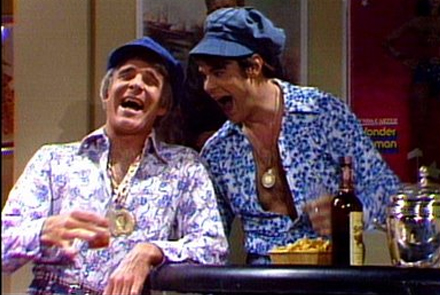
Then I marched up to the departure gate for the Estonian Air plane headed for Tallinn. Ah, Estonians! I figured I probably knew one or two of them, maybe one was my wife's cousin. We'd have a swell time, swapping funny stories about ridiculous dialect words and making jokes about Silver Meikar. So there I was, standing with my nth foamy Tuborg in hand, ready to embrace just about anybody with that aquatic-Finnish-meets-stern-German face, all wound up, like those swinging Czech brothers in Steve Martin and Dan Ackroyd's Wild and Crazy Guys 1970s SNL routine, and what do these Estonians give me but the silent treatment and awkward body language.
Nobody said a word, neither to each other, nor to the idiot in the corner with the beer in his hand. They sat as rigid as washed-up, sun-dried driftwood, not a bony elbow touching another's. It was painful, dreadful; so severe and austere was the ambiance that I had to go hide myself away amongst the Danes for some more mirthful exchanges before boarding my flight back to that sparsely populated morgue of a republic on the other side of the Baltic Sea.
I share this tale so that my dear friend Flasher T at Antyx will grasp the nature of the North American critique of Estonian interpersonal relations that has set off many a philosophical treatise. This depends on the nature of the observer. I always thought of Vikerkaar or Mingus as middle North American cads accustomed to "have a nice day" sweety talk at ye olde greasy spoon, but I am from New York, actually Long Island (which is worse), where people are notoriously rude to each other. Yet even those tortuous interactions with, say, your local Department of Motor Vehicles official, do not find equivalence in the 19th century schoolhouse demeanor of the Estonians, who sit in agony at Copenhagen departure gates, as if an unanticipated hiccup could earn them a switching in front of the class.
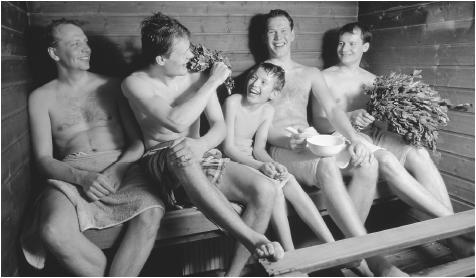
With a birch branch, of course.
So I was silenced at the departure gate, took the quiet flight back to Tallinn, and tried not to chat up the taxi driver out to Vikerkaar's house (though failed). When I got there, Vikerkaar's son came out and shot me with a toy rocket launcher and Vikerkaar launched into a soliloquy about the lackluster quality of Estonian journalism. The afterglow of my trip wore off, we downed tea (not beer) and I started to feel less like a "wild and crazy guy" and more like an exhausted father of three with a permanent resident's card, thanks be to stiff Estonian civil servants everywhere.
kolmapäev, juuli 11, 2012
outliers
| Our daughter Maria (right) and our friend's son Remi: the few, the proud, the babies. |
I owe it all to my sixth grade teacher, of all people. We
were assigned to give a report on different countries and I had my fingers
crossed for Scotland so that I could write about blood feuds and kilts, but I
drew Iceland instead. Oh, Iceland, lovely Iceland, desolate lunar island in the
middle of the North Atlantic, glaciers and the stink of sulphur. The project on Iceland sparked my interest in peculiar northern countries, a few twists in the road and I'm here. That was back
in 1992, when the population of Iceland was about 260,000. Today, its
population is nearly 320,000. That's right. In 20 years, Iceland has gained 60,000 new people.
Why does this interest us? Because in slightly more than
half that amount of time, Estonia has lost more than that number. The
preliminary census figures released in May showed that there were 1.29 million
people resident in the country as of Jan. 1. That's down from 1.34 million in
2000, and 1.56 million way back in 1989. These days people in Estonia keep
their fingers crossed for a month when they break even or even register
population growth, if only by a few dozen new babies. It's a national
preoccupation.
What's going on here? You are not going to convince me that
Iceland has better weather, or its more centrally located, or it has a more
diverse economy or less tumultuous history. It may have not been ravaged in
multiple continental wars, but its population was decimated time and again by
famine, volcanic eruptions, and plague. And even during this current Great
Recession, where Reykjavik was ground zero, Iceland's population has continued
to go up, while the Estonians, who are congratulating themselves for averting
the worst of the crisis, continue to see their population decline, albeit at a
slower rate than in previous years. "Estonia has proven itself as a country," says Prime Minister Andrus Ansip, except in the bedroom, I would like to add.
How can this be? Someone
must be to blame. In Estonia, some blame the women who emigrate in greater numbers
compared to the men, the women who settle in foreign lands and work in foreign
economies and make foreign babies. Some blame the men who expect the women to make them food and do their laundry, forcing them to seek happiness elsewhere. Still others blame the Soviets for knocking Estonia off
course, because Estonia and Finland were on equal footing in 1940, and now Estonia
has fallen behind, and its population declines while Finland's continues to
grow. Or maybe it is just the hyper-individualistic Estonian attitude, that one
must serve his or her own interests before society's. It's every man for
himself!
I honestly don't see the population decrease firsthand. I
am surrounded by babies. I have a new baby, our neighbor has a new baby, my
wife's cousin has a new baby and her stepsister has a new baby. My pal Sven's
got five kids under 13. He deserves the Maarjamaa rist! If somebody's to blame for population decline, it's not us. But who is it then? Who is selling Estonia short? And why? There is this feeling in Estonia that we are leaking water, and someone must put a stop to it, before the tünnisaun runs dry.
reede, juuli 06, 2012
up from the skies
| It didn't happen here. |
It didn't happen here. There was no Estonian Watts, no Estonian Woodstock, no Estonian Stonewall Rebellion, no Estonian women burning bras. Or were there? It's hard to tell, given the population's desire to glance beyond The Sixties to The Forties, a truly contentious time in Estonian history that few have truly digested (nor it seems ever will). From what I have been able to piece together, The Sixties in Estonia arrived in The Seventies, with prog rock groups like Ruja, the "Estonian Beatles." Maybe it was the heady year of 1968 that started to shake things lose, so by 1980 you had The Letter of 40, this vast national reawakening climaxing in the summer of 1988 with the Singing Revolution.
But then, to make Estonia's "Sixties" understandable to those of us familiar with the American counterpart, then we should look beyond our own details -- civil rights, Vietnam, feminism -- and see Estonia's period of reassessing its values and ideals as one of national survival. I find it interesting that in the 1970s, the heart of the Soviet era, my wife's mother gave her children the oldest Estonian names she could find. That wouldn't happen today. The film Nukitsamees (1981) to me embodies the values of this era - a spooky film about witches with a fluid plot that if looked at through Western lenses, seems quite psychedelic. To think it was made only 12 years after the highly structured "classics" Kevade and Viimne Reliikvia.
To me, this shows that Estonia indeed was going through its own era of redefinition, its own "Sixties," just in its own, Estonian way.
esmaspäev, juuli 02, 2012
prangli dialogue
| Prangli Island, where the blood is neither tip top nor superluks. |
"Maybe," I answered. Then I asked the taxi driver in Estonian if it was an island, perhaps the fabled Prangli Island, center of an excellent short story by the reclusive writer Vello Vikerkaar. That story, "The Inbred Bastards of Prangli Island," hinted at the lack of genetic diversity on Prangli, which prompted the following question.
"You're not from Prangli, right?"
"No," the driver answered, looking in the rearview mirror.
"Good. So, is it true that all the people who live there are relatives?"
"Well, yeah," he said. "You are stuck on an island, you want to keep the property in the family, so you wind up marrying your cousin. I mean, who else are you going to fuck?"
"You could go to Helsinki," I suggested. "Just row up to the port in the middle of the night, steal some women, and head back to Prangli. You know. Pirate style!"
The driver laughed. He thought I was kidding. "But, you know, we Estonians on the mainland are not inbred. We've been invaded so many times! Germans, Russians, Danes, Swedes, Poles ..." he counted them out on his fingers so as not to forget, "... our blood is tip top!"
At this point I chuckled, not because Estonians are so proud that they carry the genes of a motley crew of rapists in their blood, but because they overuse the terms "tip top" and "superluks" in everyday speech. Both are English borrowings ("superluks"="super luxury"), and both are used to describe material things: a new car might be tip top, a swanky apartment could be superluks, but this was the first time I have ever heard a person refer to his blood as being tip top.
Estonian genetic diversity was one of the selling points of the Estonian Genome Project, which billed the small country's genetic heritage as being as heterogeneous and representative of the larger European population, just as the older Icelandic project was sold on that small country's homogeneous population and tip top genealogical records, making it possible to trace rare diseases over many generations and, ultimately, identify the variants causing those diseases. But that's marketing. I honestly have no idea what real genetic impact Estonia's assorted invaders had on the local population.
Estonians were somewhat confused when it emerged in recent years that they were more closely related, in terms of genetics, to Latvians and Lithuanians, than to their linguistic brothers the Finns. "But Estonia has the euro!" they told themselves. I know, it makes no sense to me either. Still, it might explain why Finns just seem weird in any context, because, well, they are. At the same time, Finns are genetic outliers, meaning that Swedes are no more closely related to them than Estonians are. Or, rather, Estonians and Swedes are the Finns' closest relatives, but other northern Germanics (Danes, Norwegians) are the Swedes' closest relatives, and Latvians and Lithuanians are the Estonians' closest relatives. (Got that?)
I bring this up because an Estonian relative recently complimented my mother on my family's fecundity: I have aided in the production three new Estonians, and therefore deserve a medal, or something like that. Even though I am a foreigner, and have thus polluted the Estonian genetic well, it's okay because, hey, they speak Estonian, and two of them have blue eyes. This upset my mother, as you can imagine, who reminded the relative that they were American citizens too, and I had to wade in later, after the fact, and explain the Estonian psyche to her using American equivalents, such as, "This relative is very conservative, the Estonian version of a Tea Party activist, pay him no mind."
That got me thinking. Does every bit of Americana have a counterpart? If a relative can be the Estonian equivalent of a Tea Party activist, and Jaan Kaplinski can continously remind me of Peter Fonda, then surely there are other parallels as well. That's another post. But I have wondered from time to time what the poor Estonian geneticists will do if one of my offspring shows up in the biobank and they start picking up variants associated with Mediterranean populations, leading to some backward hypothesis -- "Maybe there was a Greek in the Teutonic Order?" -- when, all along, it was just little old me and my wanderlust.
Or maybe it will be cause for celebration, a vindication of the big theory that the Estonians are genetically diverse, that there is no risk in breeding with your neighbor, so long as he or she is not from Prangli Island. I can just see the beaming geneticist's face as she holds up a vial marked with my surname, the flash in her eyes as she yells out to her colleagues to share the good news. "Our blood really is tip top," she cries out in the lab, "superluks!"
laupäev, juuni 23, 2012
saksamaal
| Who's the boss? |
"No, no. That's Russland," I told the baker, "not Estland." "Yes, but they are all speaking Russian in Estland," she told me. "No, they speak Estonian in Estland. It's like Finnish." "Oh, yes, they spoke that long ago, but now everybody speaks Russian," she answered. "No, I live there, trust me, most people speak Estonian," I continued. "Well," the baker harrumphed and put her hands on her hips. "That's not what I learned in school. I learned that they all speak Russian." "But they don't. They actually have a lot of German words in Estonian, kviitung, kassa, treppe ..." "That's not what my teacher told me," the baker fired back. "Kuulge, kui te tahate ma võiks rääkida teiega eesti keeles," I shouted over the counter. That really frightened her and she sort of waved me away back out into the square.
It's funny because the Rathausplatz in Nuremberg looks a lot like the Raekoja plats in Tallinn. Here, I am reminded of the anecdote about the German who booked his flight to Estonia in anticipation of visiting some kind of little Russia and was disappointed upon landing to find himself still in Germany. But the Germans don't seem to know these things, and this begs the question, who wrote the post-war history books in Germany? In an effort to expunge all imperial urges from the German national character, were all mentions of the German people's historical legacy in the east cleansed from local memory?
Modern Germans may not know a lot about Estland, but they seem to know a lot about football. Last night's football/soccer game -- Germany versus Greece -- had the aura of some ancient war. The national anthems were played and the cameras slowly panned across the faces of the brave warriors who had come to battle over national pride by kicking a ball around on a field. The squares of Nuremberg were thronged by people wearing patriotic garb watching screens positioned outside of every bar, including a large screen in one particular square where tents were set up to provide the masses with their choice of alcoholic beverage. Each time the ball came close to the Greeks' goal, the crowd gasped and some even began to cry, only to let out a disappointing sigh when the ball was kicked beyond the goal into the crowds.
This reminded me of the time I fell asleep watching Italy play Brazil in the summer of 1995 and woke up an hour later and the score was still 0-0. An exciting game that was. Yet, eventually Germany did score, and then Greece scored, and it was a game. "There's a political element to this game," a friend yelled in my ear. "The Germans are pissed at the Greeks because of the crisis, and the Greeks are pissed at the Germans because of the terms of the bailout," he said. "But the Greeks are a bunch of lazy pieces of shit," he went on. "They sit around and smoke and eat stuffed grape leaves and then expect to retire at fifty with a nice fat pension. Well, that's not going to happen anymore ..."
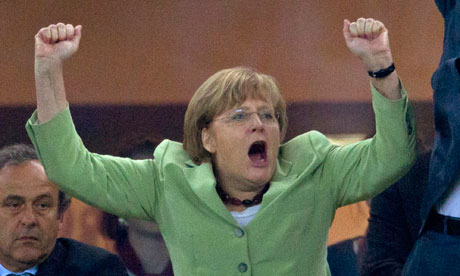
I'm not sure if the rest of the Germans on the square felt the same way, but there was no shortage of national pride each time they scored. My God. The close ups on the sweaty faces of the players, the hair in their eyes, like Henry V's bloodied men at Agincourt. And then there was that woman dancing around on the sidelines who I was convinced was an impersonator of Angela Merkel until my friend informed me that it was actually the Chancellor. She was in on it too, every dance another thousand votes locked up for the next election. Look at Angie go!
This is it how Germans do nationalism these days. They are too busy winning football matches to worry about who speaks what language in Estland. If their high school teacher told them that everyone in Estland speaks Russian in 1988, well, it must be so, actual person who lives in Estland telling them otherwise right in front of their face in 2012 be damned. And there is a sort of unquestioning rigidness in the German character that perplexes me, this odd tick that makes them believe their teacher over the man in the store, or follow rules simply because they are rules. But who is making these rules, eh? Is it the same chap who's been writing these history books? Tell me please, oh Nuremberg baker woman. Who is this faceless Saxon pied piper that so many so enthusiastically follow?
Bitte schön.
esmaspäev, juuni 18, 2012
satori in copenhagen
| Ring! Ring! An Illumination! |
Yes, bring it on, bring me some more Tuborg Classic, reignite that youthful hunger for carousing and destruction. And then, when sobered up, back in Estonia, I yearn for those ladies and gentlemen on bikes, the bells but a sad nostalgic song, like one of those post-new wave anthems that were designed to make you cry: "Bizarre Love Triangle" by New Order, "How Soon is Now?" by The Smiths, "Enjoy the Silence" by Depeche Mode -- And there's a reason these songs are still being played in Copenhagen.
Oh Denmark! You gave Estonia your three lions, you gave Tallinn its name and Harjumaa its flag, but you came too many centuries too early, long before bicycles were the fashion. If there is an ancient tapestry depicting Valdemar II (The Conqueror) riding his bicycle into battle in Lyndanisse, politely ringing that bell to any Finnic pagans who stand in his way, it has long since been lost or disappeared into the archives of some invading country.
Here in Viljandi I long to ride my bike everywhere, but there are too few occasions, it is something that must be selectively done, "Today, I will ride my bike!" You must don your helmet, proceed to fine designated recreational areas. Everything you need is in walking distance, and if not, it's within driving distance, But biking distance? Does such a concept even exist?
Even when I lived in Estonia the first time, in the dreaded and dark winter of 2003, there were young eestlased around trying to ignite a cycling revolution. It was hard and still is. In Tallinn, my cyclist friend informs me, things become more and more "human" every year, meaning there are more cyclists, him seeing driving around in some blinged-up "I've made it!"-mobile as the post-Soviet form of neanderthal grunting, a sort of knuckle-dragging, hunched-over sashay before learning to walk upright and straddle a bike. Terrible. But I do see old grannies in Setomaa riding to the store with their long skirts fluttering in the wind. How I love those scenes. If only there were more of them!
In Viljandi, I am lucky to see people riding bikes around the town center, usually young ökoinimesed or poets or artists. Sofia Joons passed me on a bike a few times with a cheery hej hej, but that doesn't count because she's Swedish. The bikes do not dominate because the infrastructure isn't there to support a bike-dominated society, you see, one needs specific lanes for bicycles before one can lead a cavalry of cyclists into battle against pedestrians and automobiles. If only the infrastructure was there, I might use my bike every day, because most of the destinations that are within "walking distance" and "driving distance" are actually within "biking distance." Bumping over cobblestones and crumbling cement and asphalt is fun, you know, but it won't provide you with that thrilling "Valdemar II (the Conqueror)" feeling.
esmaspäev, juuni 11, 2012
tweety bird
| I'm a sweet little bird in a gilded cage. |
One can imagine Toomas Hendrik Ilves, a quasi-latinate name to be sure, toga, laurel leaf crown, creeping up beside some public Palatine latrine under light of moon, sharp implement in hand, to express his frustration with the pronouncements of some contemporary economist who has drawn his ire. The sun dawns on the scribbled words -- what was the Latin word for "wogs" again? -- but, alas, who cares, the media reacts, from any hill one can hear the diapason of the city state's echo chamber. Scandal! Twittergate! Panem et circenses!
Maybe such scenes really did occur, but if they did, they were just as meaningless then as they are today and forever will be, not to mention shameful. Paul Krugman's visiting and revisting of Estonia was just a play in the larger game of economic heads smashing themselves against each other. It has little to do with Estland or its people. GDP numbers and other metrics of scoring international gymnastics do not reflect the true health of this country, they cannot, for a man can be an excellent employee in fantastic shape and still blow his brains out at the end of the week.
At the eye of the swirling storm that is the Great Recession is a question of soul, that is, America's ailments are not caused by Wall Street but by sheer gluttony, that blight of the American soul, that metaphysical corrosion that manifests itself in malaise, lethargy, obesity. Estonia's crisis of the soul will not be navigated by men with charts and graphs, but will end when the common man or woman abandons his envy for his or her neighbor -- the large, moose-like neighbor, in particular -- and moves beyond the ideal of catching up to one of achieving simple excellence.
Consider this. Even in the darkest days of Tsarist rule, the Estonians bred like rabbits. But in today's online world, they can barely find time for sex, what with all the late-night Twittering and Skypeing. Yet Estonians in the mid-19th century were pumping them out, Jüri, Mari, Jüri, Mari. It was a demographic deluge. Today there's barely enough new citizens to break even. The Estonians of yesteryear wore rags, spent candlelit nights chewing leather to soften it for future shoes. And this was the context in which the country's people became awakened, not in spite of the poverty, but because of it, because the people knew their land and loved it for what it was because it had made them and it was theirs.
So, my fellow Romans, put aside your Twitter and your Huffington Post, extinguish your flame wars, discard your graphs. If Paul Krugman wants to write about Estonia, that's fine, but he must come here first, he must walk its fields, shoulder its timber, swim in its lakes, dance with its widows, and, above all, be barred from conversing with its political leaders and Ministry of Finance functionaries. Every nation has its problems, sure, but shadow boxing on the Internet is no way to solve them. There must be better ways.
neljapäev, mai 24, 2012
nothing's shocking
The most shocking thing about the Reform Party's financing scandal, is that nobody is shocked by it. The Estonians around me believe that the giving of party contributions from unnamed or unknown sources to circumvent laws barring corporate donations to parties has long been an "open secret." So, I suspect another game is being played out behind the awesomely named* Silver Meikar's display of "honesty" -- an internal one among members of the Reform Party.
But nobody is shocked by it. My impression is that the majority of citizens living in Western democracies have an unwavering belief that their political institutions are corrupt, perhaps not as corrupt as in our "large neighbor to the east," but corrupt nonetheless. In the US, it is a variety of monied bogeymen, from the Koch brothers on the right, to George Soros on the left, who are seen as the puppet masters of policy. The UK scandal embroiling Rupert Murdoch's media empire has not shocked us either. In fact, I suspect a great many people believe that the phone hacking scandal is just cover for some deeper injustice committed in the name of wealth and infotainment. The only thing that shocks is how blatant the corruption has become.
What is interesting to watch in Estonia is the degree to which the popular media has covered the scandal, and it has received a lot of attention. My sense is that the popular media is to a large extent in at least covert support of the ruling establishment, which has been, for the past 13 years and in various guises, the liberals and the conservatives. As the first Laar government of 1992 to 1994 established the economic and social outlook of the state, this perspective has come to be seen overtime as the "Estonian" perspective, that is that Estonia by nature supports liberal economic policies and has a conservative national identity, and to question these policies and viewpoints is to, in some way, become opposed to the Estonian ideal.
A critical dilemma has developed in recent months for the status quo. The Estonian Social Democratic Party, led by Sven Mikser, has become the most popular party in the country. This was unthinkable years ago, when the very word "social" would induce Communism-scarred Estonians to nausea. SDE was historically the third or fourth party of Estonian politics, after whatever incarnations the conservatives and liberals found themselves in (Reform, Pro Patria, Res Publica, Union of Pro Patria and Res Publica) and Edgar Savisaar's Centre Party. But financing scandals in the "green monster," as Centre is called, plus internal divisions have torn apart the party, especially this year when many significant members resigned their membership. Centre has never gotten much love from the Estonian media, anyway, which is one of the reasons why Savisaar attempted to build his own media operation. The Centre Party "refugees" have not aligned themselves with any political party since, but SDE has become the only game for anyone who disagrees with the ruling coalition.
With SDE as the rising in Estonian politics, the Estonian media faces an interesting decision. Will it support -- between the lines, of course -- the emerging power, or will it continue to support the status quo, the coalition of the liberals and the conservatives? Will it make a financing scandal surrounding the elite a big deal? Could it use such information to drum up enough opposition to send the leadership into opposition?
As a journalist, I can tell you, it does not hurt to be in the good graces of the regime. You have articles to write, they have messages to send: it's a mutually dependant relationship. I have watched other journalists try to take down the authorities mano-a-mano, but they fail, because one semi-alcoholic reporter is no match for a mayor or minister with an army of salaried henchmen. Even the vaunted Woodward and Bernstein had their whistleblowing "Deep Throat," and so were part of an internal struggle taking place within the Nixon Administration. Yes, they were acting on a mission to "serve the people," but, as journalists, they still became soldiers for the faction that was disgusted with the nation's leadership.
That's why I find this scandal and the attention it has received interesting. Why Silver Meikar? Why now? What else is going on behind the scenes? That's what I want to know.
* Silver Meikar must have one of the best names in Estonian politics, right behind Andrus Ansip, also known as "Undress, Unzip." For those who don't know, it is pronounced "Sil-ver May-kar," which sounds like "Silver maker," as in, "Here is a man who will make you silver," a sort of Bond villain a la Goldfinger. But English speakers unfamiliar with Estonian pronunciation might read the name as "Silver My-kar," as in, "My car silver, you want go for ride?" Either way, a cool name.
| Ritual de lo habitual |
But nobody is shocked by it. My impression is that the majority of citizens living in Western democracies have an unwavering belief that their political institutions are corrupt, perhaps not as corrupt as in our "large neighbor to the east," but corrupt nonetheless. In the US, it is a variety of monied bogeymen, from the Koch brothers on the right, to George Soros on the left, who are seen as the puppet masters of policy. The UK scandal embroiling Rupert Murdoch's media empire has not shocked us either. In fact, I suspect a great many people believe that the phone hacking scandal is just cover for some deeper injustice committed in the name of wealth and infotainment. The only thing that shocks is how blatant the corruption has become.
What is interesting to watch in Estonia is the degree to which the popular media has covered the scandal, and it has received a lot of attention. My sense is that the popular media is to a large extent in at least covert support of the ruling establishment, which has been, for the past 13 years and in various guises, the liberals and the conservatives. As the first Laar government of 1992 to 1994 established the economic and social outlook of the state, this perspective has come to be seen overtime as the "Estonian" perspective, that is that Estonia by nature supports liberal economic policies and has a conservative national identity, and to question these policies and viewpoints is to, in some way, become opposed to the Estonian ideal.
A critical dilemma has developed in recent months for the status quo. The Estonian Social Democratic Party, led by Sven Mikser, has become the most popular party in the country. This was unthinkable years ago, when the very word "social" would induce Communism-scarred Estonians to nausea. SDE was historically the third or fourth party of Estonian politics, after whatever incarnations the conservatives and liberals found themselves in (Reform, Pro Patria, Res Publica, Union of Pro Patria and Res Publica) and Edgar Savisaar's Centre Party. But financing scandals in the "green monster," as Centre is called, plus internal divisions have torn apart the party, especially this year when many significant members resigned their membership. Centre has never gotten much love from the Estonian media, anyway, which is one of the reasons why Savisaar attempted to build his own media operation. The Centre Party "refugees" have not aligned themselves with any political party since, but SDE has become the only game for anyone who disagrees with the ruling coalition.
With SDE as the rising in Estonian politics, the Estonian media faces an interesting decision. Will it support -- between the lines, of course -- the emerging power, or will it continue to support the status quo, the coalition of the liberals and the conservatives? Will it make a financing scandal surrounding the elite a big deal? Could it use such information to drum up enough opposition to send the leadership into opposition?
As a journalist, I can tell you, it does not hurt to be in the good graces of the regime. You have articles to write, they have messages to send: it's a mutually dependant relationship. I have watched other journalists try to take down the authorities mano-a-mano, but they fail, because one semi-alcoholic reporter is no match for a mayor or minister with an army of salaried henchmen. Even the vaunted Woodward and Bernstein had their whistleblowing "Deep Throat," and so were part of an internal struggle taking place within the Nixon Administration. Yes, they were acting on a mission to "serve the people," but, as journalists, they still became soldiers for the faction that was disgusted with the nation's leadership.
That's why I find this scandal and the attention it has received interesting. Why Silver Meikar? Why now? What else is going on behind the scenes? That's what I want to know.
* Silver Meikar must have one of the best names in Estonian politics, right behind Andrus Ansip, also known as "Undress, Unzip." For those who don't know, it is pronounced "Sil-ver May-kar," which sounds like "Silver maker," as in, "Here is a man who will make you silver," a sort of Bond villain a la Goldfinger. But English speakers unfamiliar with Estonian pronunciation might read the name as "Silver My-kar," as in, "My car silver, you want go for ride?" Either way, a cool name.
teisipäev, mai 22, 2012
maramaa
![]() |
| His master's voice. |
Each morning, my daughter and I pass this statue of August Maramaa and his unnamed dog. My daughter is four years old and very curious and she knows that Maramaa is dead, so she always asks me how he died. Maramaa was mayor of Viljandi in the 1920s and 1930s, and had great plans to turn Viljandi into a summer resort, some of which were realized. But, oh, you know the rest. Do I really have to tell you how he met his end? Fine. Maramaa was arrested by the Soviet authorities in 1941 and deported to Siberia, where he died in a prison camp near Kirov, on the day after Christmas.
How to explain this to a four year old? I told her that he was sent to a prison camp far away, to Siberia (the very word sounds remote and ominous, even to a child's ears). "But how did he die?" she inquired. The answer to this question, I honestly do not know. Was it disease? Probably. My impression is that the men in the camps were worked to death, that is that they did not receive adequate nourishment for the work they were assigned to do, and thus quickly dropped, like flies, as they say. Maramaa was 60 years old when he died. A man of that age cannot expect to last very long in a Siberian prison camp in winter.
My poor daughter. She doesn't know who the Soviets were, she knows nothing about class struggle or Nazi racial theories, or Estonia's first president Konstantin Päts, the "father of the nation," the attempted 1934 rightwing coup that led to his rule, and the subsequent liquidation of the state in 1940. How am I supposed to explain any of this to her? Fortunately, she only asked one more question.
"How did the dog die?"
"The dog died happy," I said. "He lived a long, fulfilling life."
"He?" she raised an eyebrow. "Don't you mean she?"
"Yes, I meant she."
"Yeah, I thought it looked more like a girl dog than a boy dog," she said. "I could just tell."
teisipäev, mai 08, 2012
book of the dead
| Heaven looks a lot like New Jersey |
And has been ever since. My wife is the bearer of bad news. I've gotten used to it. "Michael Jackson died." "Oh, really?" "The Polish president's plane crashed." "Jesus." "Bon Jovi died of a heart attack." "That's weird. Last time I saw him, he was in pretty good shape." I spent half of that morning adjusting myself to a world without Bon Jovi, only to learn later that it was a hoax when a dated photo of the rocker surfaced holding a sign, "Heaven looks a lot like New Jersey."
I've gotten used to digesting bad news. I just sort of let it bang around my head like a pinball for a while. Then it dissipates or hides itself somewhere in the folds of my brain. I forget about it. Sometimes though it nags at me. It won't go away. After the 9/11 attacks, it took me a good week until I had a regular morning. When a childhood friend committed suicide, it took about three gray days of living his last moments vicariously in my imagination before I told myself it was his choice and I had to move on. But when I received news of Adam Yauch's death this week, it chilled me to my core.
A lot of this resonance is contextual. Yauch, as rapper MCA of the Beastie Boys, emerged from the barren, broken cultural landscape of the 1980s, a sort of Mad Max-like universe of passe musical trends and hairstyles. He was the scuzzy, uncouth youth with a two-day old growth on his chin, a "beard like a billy goat." His life apparently consisted of drinking "brass monkey" (a blend of orange juice and malt liquor), girls, skipping school, smoking reefer and playing video games. In short, he was like pretty much every person's older brother on the block.
When he experienced some kind of spiritual awakening in the early 1990s, the audience was perplexed. The inside sleeve of their 1992 album Check Your Head was a psychedelic pastiche of faces and objects. I would sit in my room and stare at it. All of a sudden, 13-year-old kids everywhere had to learn how to pronounce, "Namaste." (Is it 'nam-ast'? 'Nam-asty?') The Beastie Boys turned post-everything junk culture on its head. They sifted through the garbage, found precious relics and cleaned them off, restoring their meaning. By the time Ill Communication came out in 1994, we became used to samples of Buddhist monks chanting. One track on the album was "Bodhisattva Vow." Can you imagine, millions of American youths listening to a song called "Bodhisattva Vow"?
The West was no stranger to dabbling in Eastern philosophies but their local messengers were less convincing. At that time, America Gigolo actor Richard Gere was better known for awful rumors involving rodents than any search for enlightenment.Yet here you had a gentleman who wanted to call the Beastie Boys' first record Don't Be a Faggot! organizing Tibetan freedom concerts. And the people followed. One of the most active student groups on my college campus was Students for a Free Tibet. Ask yourself, would any of those people had been there if it hadn't been for Yauch's very public awakening? Would Estonian rocker-turned-activist Roy Strider be out there in the hills of Nepal surveying the hills of Tibet from afar?
I saw Yauch speak once. It was not what I had expected. While he was passionate about music and religion, he came across as aloof, even shy in a public speaking role. He was prematurely gray, of slight build. I had the impression that all the fighting he did for his right to party in his youth had worn him thin. Or maybe it was the vegan diet. People loved him though. At the end he came out and held his two-year-old daughter and waved to the crowd and smiled and everybody cooed. I recall I saw the late Senator Paul Wellstone speak around that time. He was passionate. Now they are both gone. One died of cancer, the other in a plane crash. Stupid deaths for inspiring people.
On its face, fate seems ridiculous. These are alternate futures that were not supposed to happen. It reminds me of a "choose your own adventure" book where you wind up facing almost certain doom at the end of one chapter and have the option to go back to an earlier chapter and start all over again. But we don't have that option. These past few days I have found myself pondering Yauch's untimely demise, and his spirituality, even more. It bugs me and it won't go away. Did he really believe in that Tibetan Buddhism stuff? I wonder. Can one really trust in the universe when it continues to bombard us with such awful news?
reede, mai 04, 2012
joo, joo, joo
| Terviseks! |
Then when it's all over I swear never to drink again, which is why the bottle of Bailey's my sister-in-law brought me for Christmas is still sitting on the kitchen shelf. I may imbibe some limoncello from time to time, but for the most part, I put most of my wine in the tomato sauce. "I don't drink because I don't have time," I told the older woman. "Well, see," she said. "You foreign men don't have time to drink."
I don't think she's right. I know plenty of relatively sober, responsible local males. But it's true, I don't drink that much. This is probably because, as I have aged, I have witnessed the deleterious effects of alcohol on fellow human beings. Some have real health problems, others just balloon up. Either way, it's pretty obvious that it shortens one's lifespan. Public authorities alert us to this all the time, but we tend to ignore it, look right past those signs that say, "Drinking is bad for your health." But it is! Those signs are actually correct!
I am not going to start any temperance campaigns here in Estonia. I have already pissed off enough people. But that impulse is there. Driving my niece home one morning, I passed a group of men sitting outside a supermarket drinking beers. "Oh look, the drunks are already out ..." I said. "What makes you think they are drunks?" she asked. "They are men drinking beer outside a store at 10:30 on a Sunday morning," I said. "That means that a) they couldn't wait until they got home to drink and b) they couldn't even make it until lunch without a beer. What else do you call such people? They are drunks."
This reminds me of a conversation I had with my brother's middle-aged bachelor friend about the film Smokey and the Bandit. He has a TV in his car so that he can watch Burt Reynolds (the bandit) escape Jackie Gleason (the sheriff) while he drives around town. In the film, the very cute runaway bride Sally Field hops a ride with Reynolds. "She's so cute!" I told my brother's friend."She's a slut," he answered. "No she's not!" I protested. "She's Sally Field. She's the flying nun. The flying nun is no slut." "Let's get this straight," my brother's friend said. "She's a woman who ran away from her husband-to-be and is now riding around with Burt Reynolds, who is a criminal," he said. They he nodded to himself and repeated the verdict, "She's a slut."
Crass? Sure. Misogynistic? Perhaps. But my brother's friend taught me something that day. Sometimes we have to just call things what they are. And even if they haven't descended to the lowest rung of drunkenness, those guys outside the store are not normal. I wouldn't catch one of the fathers of my daughters' friends hanging outside a store on a Sunday morning drinking. And could you imagine if it was me drinking out there? What would they call Giustino? You know exactly what they would say. He's a drunk!
I told my niece that morning of my secret plan, to round up all of Estonia's alcoholics and deport them to Piirissaar, that tiny spot of land in the middle of Lake Peipsi. "I will be a bonding experience," I said. "They can all dry out together!" But she spotted the hole in my sinister plan immediately. "But Piirissaar is so small," she said. "I don't think they would all fit."
laupäev, aprill 28, 2012
eat your heart out, truman capote
| Which one of you will be the next one of us? |
Tuglas is important in another way. He founded the Estonian Writers' Union in 1922, helping to enshrine his own significance in perpetuity. He's the granddaddy of the literary scene, the cool cat in the corner with the cigarette holder and the first edition of Voyage au bout de la nuit. In case you are interested, Tuglas is the smart-looking chap at left above. And the thing about Tuglas, is that he has become the model for Estonian writers who fancy themselves as being culturally significant. Each one is like a mini-Tuglas, primping and affecting the posture of a 1920s man of letters.
The main problem for these neo-Tuglases, though, is money. Epic poems are not selling as well as they used to sell. Instead, the Estonian top tens are thick with cookbooks by sexy celebrity witches like Nastja, translations of hits from abroad that have since become a major motion picture (see The Girl with/who ...), and, worst of all, Petrone Print's Minu series books, many of them written by people who are neither writers nor have expressed nor will express a desire to join the Estonian Writers' Union, ever.
To join this union requires consent from the majority of members of the union's steering commitee. I know this because Epp applied and was rejected. Somebody in the Estonian Writers' Union really doesn't like her. For one, she's written several bestsellers of dubious literary merit (a recent Sirp review of Minu Ameerika III mostly centered on the question of whether she had produced journalism, literature, or some peculiar mix of the two, and did not manage to answer that question). Two, she managed to peddle her own literary success into a career in publishing. The number one and number two books in the Apollo chain of bookstores right now are Minu Supilinn and Minu Sitsiilia, respectively.
Here I am reminded of Truman Capote's famous quote about the success of Jack Kerouac's On the Road, which Kerouac claimed he wrote during three caffeine-infused weeks. "That's not writing," said Capote, "that's typing." And that's probably how Estonia's neo-Tuglases feel about Minu authors. They are not real writers. These books are not literature. What are they then? Well, we just can't say right now, but it warrants further study ...
Forgive me, but I don't care who the damn author is, be it a woman who works on a cruise ship in Oman or an activist who likes to take his dogs to Mongolia, so long as the book is good. One of the reasons I like Kerouac is because he was from a working class Catholic family and because his first language wasn't even English -- it was Joual. And the literary establishment had its knives out for him too. He was called a "slob running a temperature" and an "imposter" and his book was dismissed as a "sideshow full of freaks."
Most of my favorite writers have run similar gauntlets. Some might argue that it is this irreverance that makes them truly great. And yet there is that sting, the pain of being cast out, excommunicated, not deemed worthy of belonging. When Epp inquired from a union member (and best-selling author) about how one gains access to the Estonian Writers' Union, she was informed that gaining acceptance to the union depends on "who you drink and sleep with." So, apparently I'm to blame for all of this.
I actually did come across some neo-Tuglases on a spree last summer. It was like something out of A Clockwork Orange. There were strange gentlemen dressed like Zorro alternately falling down and trying to stand up outside a liquor store. One writer passed out across from me, snoring on the table. The other passed on my wife in my presence and ordered another bottle of wine. But they are members of the union. They have what it takes, and therefore access to its perks, like the keys to the writer's retreat at Käsmu where Estonia's finest can channel the ghost of Tuglas surrounded by lush forests and pristine bays.
These local squabbles intrigue me because I am not an Estonian. I relish it the same way Northerners enjoy tales about Southern family feuds. Those silly country people! Look at how they all hate each other! Isn't it adorable? I have the luxury of having another homeland. And, truth be told, I fear trying to crack into the American literary scene for the same reasons that one might be intimidated by the Estonian Writers' Union. Just take the Estonian situation and multiply it by 300.
I've thought of joining the Estonian Writers' Union, sure, but I doubt they'll accept me. For one, I am not an Estonian. And for two, I've been sleeping and drinking with the wrong person. That's all fine with me though. I don't want to belong to any club that will accept people like me as a member.
reede, aprill 13, 2012
barbarians at the gate
| They call this cuisine. |
It all came out over dinner. I agreed to make something
quick, put the penne to boil in one pot, the broccoli and garlic and olive oil
to simmer in another. When the meal was ready my children lined up like youths
in a 19th century British orphanage. I ladled a serving on to each
one's plate. Then the eldest made for the refrigerator
"What do you need?" I said. "I'll get it for
you."
"Ketchup," she answered.
"Ketchup? For what?"
"For the pasta."
"Are you joking?"
"No." And she proceeded to grab the handle on the
refrigerator door, so I stepped in front of it.
"No child of mine puts ketchup on her pasta."
"But I want to!" she cried, and then she pushed at
me. I held the refrigerator door tight but she had her hands on it and wouldn't
let go.
"Who does that anyway? Who puts ketchup on their
pasta?" I asked while we struggled.
"Our babysitter does! She does it all the time."
I let out a sigh. "But the babysitter is an
Estonian," I said. Both children looked up at me with inquisitive Finno-Ugric
eyes. "Estonians are ..." I wanted to say barbarians, but I stopped
myself … "Estonians don't know how to cook pasta so they boil it until it
turns to glue. They don't know how to eat it, so they cut up with forks and
knives. And they think that ketchup and tomato sauce are the same things
because they are both red." I made a sad face and shook my head. "But,
look, it's not the Estonians' fault," I said. "They just don't know
any better."
"Are you done now?" the eldest one asked.
I nodded.
"Good, so now can get the ketchup, please?"
"Fine, you can eat your pasta with ketchup," I
said. "But not in front of me because I want to be able to eat my meal
without throwing up."
Neither child seemed fazed as I left the room to eat alone.
A minute later, the eldest called out to me. "Daddy, there's something
wrong with this ketchup! It's too spicy." I returned to inspect the scene.
"Oh, well, look at that. That's just too bad," I said, holding up the
bottle. "This is curry ketchup. Looks like we don't have any real ketchup
left." The child had pounded a large circle of the reddish slop onto one
side of her plate, I saw. Fortunately, most of the pasta had been spared.
I used to kid my Irish friends growing up about putting
ketchup on their pasta, but the truth was that the local Italian communities
had a civilizing effect on the other ethnic groups, so by that time they were
at least putting some kind of bottled sauce on it with a name like Prego or Ragu.
I am not even sure when the idea even crossed my mind that one could put
ketchup on pasta. Maybe I thought it up one day, the way a child tries to
conjure monsters or aliens. Imagine that. Imagine if someone would be so gross as to eat pasta with ketchup. Could you imagine?
I first saw it done with my own eyes in Denmark. The young
man in the dormitory sat across from me in the communal kitchen. When I saw
that he was eating spaghetti I thought him refined. But when he reached for the
dreaded red condiment, and then pounded it all over the luscious steaming noodles,
my heart plummeted like a pigeon egg off the Empire State Building. It was an
act of desecration, like trying to fix a Mac Book with a chainsaw. It just
wasn't done. But at least that barbarian wasn't my own kid!
I learned all these things as a child. I remember my mother
teaching me how to twirl the pasta. It would take her hours if not all day to
make sauce. Which is why I find the idea of just pounding some preservative-filled crap onto imported pasta to be so shameful. My internal sense of
culinary superiority has gotten me in trouble elsewhere in this land. When
asked by a tabloid about what I didn't like about Estonia, I said the obligatory
consumption on all holidays of pork by products and beer. I was trying to be
original! Everybody bitches about the weather. For this I was labeled a
"health fascist" and accused of spitting in the eyes of the Estonian
people by insulting their cuisine.
Cuisine? I thought. These poor lost Estonian souls actually think that
their sausages and beer are cuisine? But I didn't say anything else. I laid
low. I still want to be able to walk down the street and avoid eye contact with
my neighbors in peace, like everybody else, you know. And I guess I should be less
judgmental. Let the kids have their ketchup. Lead by example. Deeds, not words.
This is my lot in life. Had I married a
German, I'd be up to my neck in sauerkraut and bratwurst. An English and I
would be sneezing tea and farting crumpets. A Greek and I would be stomping
grapes and slaughtering goats. And it could be worse, right? They could be
eating their pasta with mayonnaise!
neljapäev, märts 15, 2012
soome
| "And the best part is that my wife actually thinks I'm working!" |
Then there are those very fun places where you just add emphasis to the second sound in the word, like Soome, Taani (Denmark), Rootsi (Sweden). Or maybe I've got this all wrong. I'm not a linguist. But I usually know what I am doing when I am speaking, and if you just say Soome, it means Finland, but if you stress that second 'o' in Soome, it means "to/into Finland." Minu tütre lasteaia kasvataja kolib Soome, "My daughter's kindergarten teacher is moving to Finland."
This was the main message of the most recent parent-teacher meeting at her preschool, her lasteaed. Her husband has been working in Finland for a while it seems. Now they are ready to rent an apartment and the teacher, the kasvataja (literally, "grower," because it is a garden and she is tending to the children) and her two children will move there next month.
Finland is a long way from Viljandi. It's a two hour drive to Tallinn. Then you have to take the ferry to Helsinki which, depending on the season, is another hour to two hours. And a lot of Estonians who make the journey don't stay there at the docks in Helsinki. They leave for work in other parts of the country. Two hours to Tampere. Two hours to Turku. Three hours to Jyvaskylä. This is the distance the Estonians must travel for decent paying jobs.
A lot of people "commute," meaning that they work in Finland during the week and return home for holidays and weekends with their local families. But others just stay. Our babysitter's daughter lives in Finland with her husband and children. When I asked if her daughter had married a Finn, not an uncommon occurrence, I was told, "No, she simply lives there."
Recently a young African immigrant who somehow found himself married to a hairdresser from Mustla, a tiny picturesque village close to Võrtsjärv, the big lake in the middle of south Estonia, complained to local authorities that he had no job. He was shamed in the local newspaper. "People go from the village to the town for work," the local authorities said, "the town doesn't come to the village." And, he followed, "half the village works in Finland anyway!"
It's normal, you see. Working in Finland is normal. Half of the village does it. The young African should follow the crowd, get a job at a saw mill. Head north, young African, head north. That's how everybody else copes. Bring your wife and offspring later. There are plenty of heads in Porvoo that need dressing.
I've seen quite a few charts comparing Finnish prices and salaries and Estonian prices and salaries. The idea is that the Finns are earning quite a bit more than their Estonian counterparts, but the Estonians are often paying more for the same goods (many of which are produced in Finland or owned by a Finnish parent company). I am not sure of the veracity of these charts or the reason for this phenomenon. All I know is that my brother-in-law has been working in the UK for the past nine years because his local salary would be jama, "bullshit."
This puts all kinds of pressure on the Estonian families that stay together. I say, "stay together" because a plurality if not majority of the kids I know around here do not live with their fathers, though I think that most of them know the identity of their sirer and spend weekends with him, wherever he may be. I rarely see these fathers, but I am told that they exist.
Often the mothers remarry, but then that new guy's gone too, off to Oulu or Espoo to do something that pays more than whatever he can find to do in Viljandi. The backbone of this country is strong, independent women. They are raising the children of its absentee fathers, minding its stores. This is not a critique of those fathers like my neighbor who must work abroad. They do what they must do to support their families. It just is how it is. It is normal, and few now manage to see it as abnormal, nor think it will change.
Since I am naive, I still wonder about things. I question the Soome status quo. Why can't those same Estonians do those same jobs in Viljandi? Sure, Viljandi is rather out of the way, but Tampere isn't exactly the center of the universe either. Sure there are only 1.3 million Estonians, but there are only 5.2 million Finns. They all need jobs too. So why do they need to vacuum up good Estonian workers to do jobs in Finland that could be done a few kilometers where those good Estonian workers actually live, at least some of the time?
What is it that the Finns are doing right that the Estonians are doing wrong? Is it a question of management, capital, knowhow? Is it a question of infrastructure? For 20 years Estonians have been sold on the idea that the invisible hand of a free market economy will make all right in this land, and that a Nordic welfare state would only cripple the development of the country. And yet this invisible hand has been picking up Estonian guys and chucking them at other countries with big Nordic welfare states, starting with Finland.
This is not to go off on some ideology-poisoned tangent. I have already admitted my ignorance. The purpose of this post is to learn more, not to lecture. And not everybody's father works in Finland, by the way. My daughter's classmate's father is different. He works in Sweden.
teisipäev, märts 06, 2012
in the balance
| What will become of us if the future of Europe is not certain or if we are bombarded by news of uncertainty from all directions? |
Putin is like every Russian complex wrapped up in one little man, a geopolitical pig in a blanket. He's got that annoying knack for demanding respect. "Do you respect me? Do you respect me?" To which one can only answer, "Not really."
It's the pride thing that gets me. His latest tirade against Estonia was hilarious. "How can we accept that, due to their status as non-citizens, one in six Latvian residents and one in thirteen Estonian residents are denied their fundamental political, electoral and socioeconomic rights and the ability to freely use Russian?" asked Putin.
One in 13! It's probably more like one in 14 or one in 15 by now, because there are 94,000 stateless persons left. But still. This guy is the president of the world's largest piece of real estate, and he's got his knickers in a bunch over that poor 13th guy in Estonia who can't vote in parliamentary elections because he hasn't managed to apply for some country's citizenship in the past 20 years? Putin can't be serious, can he? Maybe all of those protests have made him delirious. He must know the writing's on the wall. Some people are saying he may only last a year into his new term before he retires to some tropical isle to cavort around with Berlusconi and underage girls and Napoleon's ghost.
But ... back to Estonia. At home in Estonia, we are worried, not because of Putin's psychotic reactions, but because the people are abandoning ship. As Ilves said in his Independence Day speech: "Our own attitude towards our fellow countrymen is not a smaller concern. We cannot get far by looking for and emphasising mistakes and by being jealous of and mean to others.
"The state is often not better either," he went on. "The return of the people is hampered by the rigid attitude towards the problems of those who arrive or return, be it the continuance of children's studies, finding a vacancy in a nursery school or granting a residence permit to a spouse who is a foreigner. The system must adapt to the changed behaviour of the people, not try to adapt the people to the system."
The process of finding a slot in a nursery school is complex. I've tried to figure out how it has happened that in a state where one in 10 persons are unemployed, and the government is providing parental renmeration to encourage baby making, it is a challenge to procure for one's offspring a convenient spot in an uncrowded nursery school.
Mean jealous people, living in a rigid system that does not adapt to their interests. Doesn't sound like a recipe for success, does it? To make things worse, droves of women are leaving the state to settle with foreign men, some of whom are quite swarthy. Women's magazines celebrate the phenomenon in every other issue. Nothing sours the gullet of a proud Estonian more than to see the flower of Marjamaa under the creeping arm of some guy who wouldn't know Vahur from Vahukoor.
Foreigners! Stealing all the good Estonian women! Eating all the good Estonian food! Breathing up all the good Estonian air! (Thank you, David Chappelle) And that's not all. There's also the trouble of municipal and regional government reform. We yearn for some Päts-like dictator to rise from the misty bogs and run all the backwater politicians out of their sinecures, cutting Estonia's regional governments to reasonable size. Out of many, four. None of this voluntary reform. No. Make it simple! Põhja, Ida, Lõuna, Lääne. North, East, South, West. Four regions. There you are. Tehtud. Jõgevamaa, it was swell knowing you ...
I went to the supermarket looking to get some books on nursery schools or regional government reform, but all I found were some Minu series books and a new thick treatise on the life and times of Harald Nugiseks. Nugiseks is 90 years old and his claim to fame is that the Nazis awarded him the Knight's Cross in 1944. I would like to meet Mr. Nugiseks. Seems like he has stories to tell. I even saw an image of him in a magazine flanked by two other aged Estonian women, the trio smiling, as if he was still getting play for earning that Knight's Cross all those years ago.
I always wonder who buys the Nazi merchandise for sale in Estonian supermarkets. It's not officially packaged as such, but let's just say if you laid it out in your nearest Duane Reade in New York City, you'd be in hot water with the Anti-Defamation League. But there it is. The compact disc of old fight songs. The SS recruitment poster calendars. The Nugiseks coffee table book. None of it showcases any overt allegiance to the Führer. The calendars invoke the fatherland, as in Estonia, not Germany. It does annoy me though. How much of my life have I wasted on the Internet defending this country from detractors, only to be greeted in the supermarket by some commemorative book about a Nazi war hero?
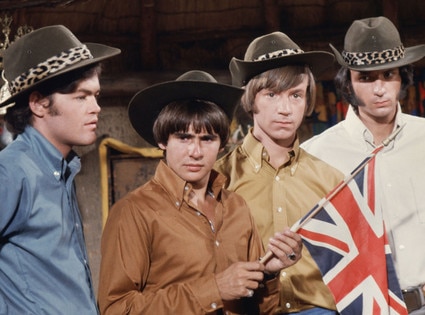
Nugiseks, like the other SS vets, claims to have been fighting for Eesti in enemy uniform. I won't question his explanation. Still, those were the Führer's uniforms. Those were the Führer's military decorations. But, whatever. It's Europe. If you can buy Mussolini aprons in Rome, you can buy a Harald Nugiseks coffee table book in Viljandi. In the meantime, how's that municipal reform going? Found a nursery school spot? How's that 13th guy in Estonia making out? Damn shame about Davy Jones, right?
The more time I spend in Europe, the more I feel like some hopeless partisan on the front in the Spanish Civil War. On my right are the Falange, the CEDA, the Alfonsists and the Carlists. On my left, the Basque and Catalan nationalists, the CNT/FAI and UGT unions,
What will become of us?
kolmapäev, veebruar 15, 2012
nationalismo
![]() |
| But how do you feel about Russians? |
"Olaf Palme - good or bad?" "Good, mostly. I mean his principles were good, but I didn't like how he carried himself, you know." "Carl Bildt - good or bad?" "He's not bad, but he's certainly not honest." "Ah, you mean like the financial investments?" "Yes, I don't trust him. He's always up to something."
Okay, fine. At some point when those around us heard our conversation, especially those parts concerning social democracy, one Estonian offered her support for the Estonian social democrats. Another announced her undying support for IRL. "Well, I have nothing against Russians," said the Estonian social democrat. "Not our Russians, the ones who live here." But the IRL supporter wasn't moved. There are still integration problems, she said. And I was holding my face in my hands, because this is Estonian political discourse.
Are Russians really the biggest political issue facing Estonia today? From what I have read, one fifth of the country lives in poverty. Unemployment is higher than 10 percent. But put a social democrat and a conservative together in a room and they talk about Russians.
One such "burning" issue is the pending merger of the Estonian social democrats and the Russian Party. The latter supposedly wants to table discussion on the Soviet Occupation and leave it to courts or historians or whomever, which prompted an outcry, because Occupation denial is the same as Holocaust denial ... or so the line goes.
That the Holocaust should rear its ugly head in this matter is rather interesting, and, I believe, telling. All of the issues that factor in the domestic debate about loyalty, citizenship, language, and nationality, are intertwined with postwar ideas of nationalism, among them collective guilt. There are righteous nations and guilty nations, all of whom are defined by what role their citizens played in the crime of the century. The Holocaust here is a metric of humanity: the Americans are naturally good, Hiroshima and Nagasaki aside, because they defeated the Third Reich. The Germans and their collaborators, including some Estonian nationals, are inherently bad, given the blood on their hands and in their veins. The only way out is to atone for the sins of your forebears. Atone and you will be set free.
I think collective guilt is at least partially based on totalitarian ideas, be they of the Nationalist Socialist persuasion or the Soviet one. How else could one explain the extermination of Jewish children or the deportation of relatives of "class enemies" to Siberia? Surely, Jewish children could have been raised Christian, or the children of class enemies turned into loyal party members ... but the central idea here is that being an enemy of the state is genetic: the Jewish children will grow into adult Jews, the children of class enemies will grow into class enemies themselves, so they had to be liquidated, one way or the other.
It's a ridiculous and racist idea if you think about it, but here in the present we've been gratuitously using collective guilt since 1945. It's been passed down, from generation to generation. Little do the little German babes born at this very moment in Osnabrück and Heidelberg and Potsdam know, but they are all guilty of something.
And that is what the Estonian Russians most fear: the stigma of being "occupiers" because their family was removed from Donetsk to Tallinn six decades ago. This is what troubles them about the 'O' word. It's not the legal question of what happened in Estonia in the summer of 1940, it's the shame of accepting the yoke of collective guilt in perpetuity.
I think the whole context for these ideas is flawed. There are no righteous nations and no evil ones. There are evil men who give orders to do evil things, but this is a matter of following orders rather than genetics. There is no Nazi or Commie gene. I don't think that Germans, as a people, are responsible for the crimes of their grandparents. I don't think that Estonians, as a people, are responsible for war crimes some of their forefathers committed, either in the service of the Führer or the Comrade or just for the hell of it.
Finally, I don't think that Russians, as a people, are responsible for what the leaders of their predecessor state decided. They may say it was wrong, as a moral judgment, but their guilt is no greater than yours or mine, because we are all related, no matter how distantly. This applies to national greatness too. I may be an American, but I didn't free the slaves and I didn't put a man on the moon. I didn't invent baseball or the personal computer any more than I dropped the bombs on Japan. Why should any of us should bear collective guilt or collective pride for anything we ourselves did not accomplish? I shouldn't blame a Japanese national for Pearl Harbor any more than I should congratulate him for writing Norwegian Wood or creating Nintendo. Just because he shares some ancestors with the men who did write Norwegian Wood or create Nintendo, does not mean he gets to take credit for their greatness. I didn't write The Sound and the Fury did I?
Here I am reminded of football games where the fans of the winning team sit around and congratulate each other: "Hey man, we won." I appreciate your loyalty to your teams. It is good to be loyal to something. But, unless you were on that team, you didn't really win anything. Likewise, the Russian Federation, founded in 1991, did not defeat fascism in Europe. This is a crap idea anyway. Franco was a facist. He was in power in Spain until 1975. Salazar ruled Portugal until 1974. So, Europe was not rid of fascism in 1945. The idea is bogus, propaganda, a myth. The Russians did not defeat fascism. Some of the dwindling numbers of veterans who fought for the Red Army did defeat nationalist socialist Germany, but Vladimir Putin, Sergei Lavrov, and the rest of the gang weren't alive and therefore defeated nothing. Someone should send a diplomatic cable to that effect.
Nationalism is a nice idea. In the collapse of the old multinational empires it became the only viable option, a Poland for the Poles, an Iceland for the Icelanders, a Montenegro for the Montenegrins. Imagine it: your own flag, your own official language, your own seat at the UN, your own bikini team! It's wonderful. But it has its limits. And in a country where one-tenth of the population has no job and one-fifth lives below the poverty line, it should definitely not be the dominant question in the public discourse.
kolmapäev, veebruar 01, 2012
shakespeare and company
| Tere Tulemast! |
Here the cursed Soviet legacy is actually blessed, because the Soviet legacy is what puts Tallinn on the map, allowing it to rise above other expat havens like Paris or Prague or wherever those no good traitors mill about these days. Ooh, you've got your haute couture and your bustling sex industry, but we've got our Soviet legacy. Estonia is indisputably the most successful of the republics once under direct Soviet control. Number three on the Press Freedom Index, baby! And it sits right beside scary Russia, which means a faint whiff of danger is always in the air. Russia is a dormant dike. You never know when it could burst.
The Estonian foreign community has always been plagued by Baltic solidarity. That is, it never made economic sense to have an English-language newspaper solely for foreigners living in Estonia. It always had to be peddled down the Baltic route, a "pan-Baltic" newspaper or magazine or online news resource, which meant that so much effort and print had to go in to constructing a Baltic identity ("What do Balts think about each other?") or comparing the three countries ("How are Lithuanian wines different from Estonian wines?") That's what I want to know.
Fortunately, the community now has its own used bookshop. It's called Slothrop's and it's in the Old Town of Tallinn, located at Müürivahe 19. I believe the effort is a month old. I am unsure of the origin of the name. I am guessing it is in homage to a character in Thomas Pynchon's Gravity's Rainbow, which I never read but my college roommate adored. He even befriended a homeless saxophone player who had dreads and paint on his face who called himself Gravity's Rainbow. "Gravity" and my roommate would sit around playing music and talking about Thomas Pynchon. Gravity liked to drift between Mexico City and Washington, DC, which, being a street person, he said was the most dangerous city in which he had lived: "People in Mexico City will rob you," he was fond of saying, "But in DC they will kill you."
Here I have a faint memory of jogging over a bridge at night near a memorial for the USS Maine and looking down to see two homeless men groaning in a heap of garbage.
But enough of this digression. Slothrop's is open from 11:00 - 18:00, Monday through Saturday. "We also are looking to buy books from you!" the shop claims on its website. "If you have English-language books, bring them by and we'll take a look. We are especially interested in non-fiction." Fine. I've got loads of books I'd like to unload on any willing taker. And, I'm told, I can get rid of them in exchange for store credit. This means that I might not have to stock up on books in the US or pay exorbitant prices for English-language titles at one of Estonia's larger book chains.
As everyone says in Estonia everyday Eesti on nii väike - Estonia is so small. So it's going to take more than bored vodka tourists to make this thing turn. It's going to take you, and me, and Mingus, and Scott Abel, and Kris Rikken, and Flasher T, and that guy next to Balti Jaam who is throwing up on himself as I type this. Come on, The Sound and the Fury is only €5. You get stream of consciousness for €5! I think I'll take it. But what we really need is a Slothrop's imprint, something along the lines of the Obelisk Press. If only I had some contacts in the publishing world.
pühapäev, jaanuar 22, 2012
kaksteist kuud
"And he puts his cocaine in the microwave. I mean, who does that?" Los Angeles, Los Angeles. It's such a ridiculously stupid city. People would rather spend hours in traffic than get behind some kind of comfortable and effective public transportation scheme. And I am one of these people. I am one of these people sitting at a table in an Ethiopian restaurant hearing about the exploits of an entertainer with a $500-a-day cocaine habit. "There were lines going everywhere. I mean here, there, on everything."
I like stories like this because it makes me feel as if I am rather normal, like I've made out okay in the stinky stanky tarpits of life. I've never even done lines. I credit Melle Mel's "White Lines (Don't Do It)," but also just the idea of doing an expensive, addictive, and often life-threatening drug doesn't make sense to me. It's like heroin. Let's count the casualties. And this is something you will pay to do?
Hell yes. South of the border a drug war is ongoing. In fact, it's now referred to as The Drug War, so as not to be confused with the War on Drugs. As it was explained to me at the Ethiopian restaurant, the armies of the drug lords are stronger and more effective than those at the disposal of the central government. The enemies are carved into pieces. When they recently found a human head in a plastic bag near the HOLLYWOOD sign, it was thought at first to be related to Mexico's drug war, though it's more likely some local out to get national attention (and they all are). Should demand for Mexico's wares diminish in the Estados Unidos, the revenue base of the drug lords would similarly decline. But until then, more heads and hands and feet, more entertainers with $500-a-day cocaine habits, more traffic.
The Ethiopians eat with their hands. Their beer isn't half bad either. Better than Saku, not as good as A. Le Coq, easier on the gut than those jars of brown stuff the Setos sell from the back of their cars during the Setokuningriigi Päevad. One downside to knowledge of the Estonian tongue is the inability to speak about Estonia without using Estonian words or expressions. Like Setokuningriigi Päevad. It translates as "Seto Kingdom Days." But that just sounds clumsy and awkward. How else could you say it? "Days of the Seto Kingdom"? Just as bad. How about Viljandi Paadimees, the "Viljandi Boatman." That also sounds odd to my ears. And it doesn't matter how you translate it, because Seto Kingdom Days and Viljandi Boatman don't mean anything to anyone outside of Estonia because nearly all people on Earth are unaware of the existence of the Seto people, let alone their kingdom, and they have never heard of Viljandi, and therefore are completely ignorant of its mystical Boatman!
They do know about Kaksteist Kuud. This means "twelve months" in Estonian, but is interpreted by English-speaking ears as "cocks taste good." Everyone knows about Kaksteist Kuud. Go to some small Polynesian island and raise the blue black and white flag of the Estonian republic and you'll see the little naked children throng the shores shouting out, "Kaksteist kuud! Kaksteist kuud!" They've all seen the YouTube clip where the smarmy backpackers get pretty Estonian girls to say it over and over again.
Listen, even at the lowest points of my sad and alcoholic pre-marital life I did not stoop to the levels of these YouTube clip-uploading cafoni. Cafone is a southern Italian dialect word. It means a disreputable or ill-mannered person. I was once called this by an older person when as a teenager I ordered three hamburgers at lunch. But now I am calling you all out. It's time to let it go. Just as MTV retired "Ice Ice Baby," it's time to retire Kaksteist kuud.
But you know they won't let it go. No one will. Our friend recently was injured in Viljandi. She was walking down the street when someone dropped a couch on her head from a second-floor window. Just a minor concussion. But still! Our friend was hit in the head by a couch. I don't know why some part of me still believes life could be some other more rational or sane way. Couches falling from the sky. Microwaved cocaine. Kaksteist kuud. When the plane landed in New York it was snowing. Our driver was an old man, half my height. We listened to Dean Martin or Frank Sinatra all the way home. "Papa loves mambo, Mama loves mambo ..."
People keep inviting me to all kinds of events. One journalist wants to interview me about jealousy in relationships. Someone wants me to give a presentation at an assembly of Estonian teachers on the local education system. Sometimes I would just like to scrap it all and start playing João Gilberto tunes in some club somewhere. Or even Dean Martin. I could sing like Dean Martin. At this point, why not? In a way, it makes perfect sense.
esmaspäev, jaanuar 09, 2012
mart bryson
I've got a year's worth of reading sitting on my shelf: 1Q84 by Haruki Murakami, Down and Out in London and Paris by George Orwell, The Island by Aldous Huxley. Then there's At Home: A Short History of Private Life by Bill Bryson, inspired by his own home, a former Church of England rectory. And those are just a few of the titles before me.
I haven't managed to read any of these books. Not only do I lack the time, but I also can't decide where to start. Fortunately, my subconscious has been providing me with some suggestions. It happened the other night that I dreamed that I lived in a house right beside Bill Bryson's rectory. I went to knock at the door, and after exchanging some kind words with his English offspring, Bryson appeared at the door and began speaking to me ... in Estonian.
Not only did he speak to me in Estonian, but he had the air of a mad professor about him, like Dr. Emmett Brown in Back to the Future, that hyperactive hum to his speech, but instead of spouting random facts about 19th century English life, he was spouting random facts about the Battle of Narva and Forest Brothers while I tried to engage him in some kind of normal, "Hi, I'm your new neighbor." As he spoke, he kept looking up, his eyes fluttering behind his glasses in manic excitement, as if God was speaking through him. And then I realized that it wasn't Bill Bryson before me. It was "powerful" Estonian Defense Minister Mart Laar!
Or some combination of the two, call him Mart Bryson or Bill Laar. I had never seen the link between the two of them until they were meshed in my dream, but now when I look at them, side by side, it seems so obvious how much these two men share. Perhaps they descend from the same brainy, burly, random fact spouting Viking, who after pollinating Estonia, had some ribald adventures in East Anglia, chattering on about some fascinating overlooked facts about Valhalla to his tired fellow Vikings along the way.
Laar's actually on my mind because of the leadership struggle in his party, Isamaa ja Res Publica Liit, officially called the Union of Pro Patria and Res Publica. Watching the other contenders declared and undeclared speak to Estonian journalists on ETV recently was like having oneself dipped in liquid nitrogen. I cannot even mimic the stiff body movements and drone-like speech of the other heirs apparent to the machine at the top of which Laar still sits. Compared to them, Laar's fondness for looking up while he talks and occasionally moving his hands, if only to refresh his e-mail, make him look like some kind of fiesta-loving, ultra charismatic Latino Estonian.
So my dreams are infused by books on my shelf and ETV, with a touch of some classic films starring Michael J. Fox. Fine. But then as we stood in Mart Bryson's doorway, we watched a stealth helicopter land in an adjacent property and a firefight ensue. It was SEAL Team 6, come to rub out Al-Qaeda instigator Osama bin Laden!
"You knew that Osama bin Laden was your neighbor all along and you didn't tell anyone?" I asked Mart Bryson as we watched the neighboring compound go up in smoke. "Well, I'm glad they took him out," he said, polishing his glasses. "That jerk doesn't take good care of his lawn." Then he shook his head and continued to chatter on about Hirmus Ants and the Battle of Tannenberg Line. When I awoke, it occurred to me that I have spent far too much of my time reading online news.
I haven't managed to read any of these books. Not only do I lack the time, but I also can't decide where to start. Fortunately, my subconscious has been providing me with some suggestions. It happened the other night that I dreamed that I lived in a house right beside Bill Bryson's rectory. I went to knock at the door, and after exchanging some kind words with his English offspring, Bryson appeared at the door and began speaking to me ... in Estonian.
Not only did he speak to me in Estonian, but he had the air of a mad professor about him, like Dr. Emmett Brown in Back to the Future, that hyperactive hum to his speech, but instead of spouting random facts about 19th century English life, he was spouting random facts about the Battle of Narva and Forest Brothers while I tried to engage him in some kind of normal, "Hi, I'm your new neighbor." As he spoke, he kept looking up, his eyes fluttering behind his glasses in manic excitement, as if God was speaking through him. And then I realized that it wasn't Bill Bryson before me. It was "powerful" Estonian Defense Minister Mart Laar!
Or some combination of the two, call him Mart Bryson or Bill Laar. I had never seen the link between the two of them until they were meshed in my dream, but now when I look at them, side by side, it seems so obvious how much these two men share. Perhaps they descend from the same brainy, burly, random fact spouting Viking, who after pollinating Estonia, had some ribald adventures in East Anglia, chattering on about some fascinating overlooked facts about Valhalla to his tired fellow Vikings along the way.
Laar's actually on my mind because of the leadership struggle in his party, Isamaa ja Res Publica Liit, officially called the Union of Pro Patria and Res Publica. Watching the other contenders declared and undeclared speak to Estonian journalists on ETV recently was like having oneself dipped in liquid nitrogen. I cannot even mimic the stiff body movements and drone-like speech of the other heirs apparent to the machine at the top of which Laar still sits. Compared to them, Laar's fondness for looking up while he talks and occasionally moving his hands, if only to refresh his e-mail, make him look like some kind of fiesta-loving, ultra charismatic Latino Estonian.
So my dreams are infused by books on my shelf and ETV, with a touch of some classic films starring Michael J. Fox. Fine. But then as we stood in Mart Bryson's doorway, we watched a stealth helicopter land in an adjacent property and a firefight ensue. It was SEAL Team 6, come to rub out Al-Qaeda instigator Osama bin Laden!
"You knew that Osama bin Laden was your neighbor all along and you didn't tell anyone?" I asked Mart Bryson as we watched the neighboring compound go up in smoke. "Well, I'm glad they took him out," he said, polishing his glasses. "That jerk doesn't take good care of his lawn." Then he shook his head and continued to chatter on about Hirmus Ants and the Battle of Tannenberg Line. When I awoke, it occurred to me that I have spent far too much of my time reading online news.
Tellimine:
Postitused (Atom)