neljapäev, jaanuar 31, 2008

suusakultuur

Yesterday on my way into the center of Tartu, I met a younger relative of my wife's named Ken who was walking up Jakobi street towards his school.

Ken is about 12 years old and he keeps changing every time I see him, getting older, wiser, et cetera. He and I stopped to chat, and he informed me that he was on his way to a school field trip, a school field trip to Otepää, the 'winter capital' of Estonia, where he and his classmates would be forced by their instructors to ski and enjoy themselves.

Can you imagine? Skiing as part of the curriculum? Another cousin, a few years younger than Ken, also must fulfill physical education requirements by going skiing right here in Tartu. It's almost a chore. Something she has to do, no matter how badly she wants to stay at home watching Pokemon, or whatever kids are into these days. Estonian kids must ski, even if there's no snow.

Every winter I have spent here, save this one, has been polar. It's been freezing and the ground has been continuously covered with thick dark ice and fresh snow well into March. But this winter has given credence to rising global anxiety about 'climate change'. It has snowed several times -- most of November saw Tartu blanketed with a rich layer of white stuff -- but January has been more like an darker and very moist incarnation of October.

But that doesn't mean that the Estonian kids get a free pass. Instead they just keep the snow machines at Otepää working at night to ensure that every bus load of Estonian boy and girls has the opportunity to enjoy their homeland's bounty of winter sporting activities.

Epp -- my wife -- says that being forced to ski has killed her desire to go skiing again in the future. Every morning during the winter season the children of Karksi-Nuia, the community in southern Estonia where she grew up, would have to board the bus with their skis, school bags and other accessories just so that Estonia could be the land that skis.

And to think, I was going to buy Marta -- our eldest daughter -- a pair of cross country skis to take advantage of our proximity to Otepää. But with unseasonal weather like this, snow machines or no snow machines, I am starting to think it's better to rent than to buy.

This post has been corrected to reflect my wife's experience with skiing in school.

statelessness in decline

Not sure if any of you readers care or noticed, but the number of stateless people in Estonia continues to decrease.

According to the Ministry of the Interior's Population Registry, as of January 2, 2008, there were 112,422 residents with undefined citizenship, or 8.2 percent of the population.

Over the past five years the number of stateless persons has decreased by about a third. In 2003, 12 percent of the population was stateless. In 1992, 32 percent of the population had no citizenship.

One consequence of Estonia's citizenship policy is that 8 percent of the population holds the passport of another state, mostly the Russian Federation, Ukraine, or Finland. Around 84 percent of the population of Estonia holds Estonian citizenship.

Recent efforts to liberalize some of the requirements, such as making the portion of the exam that deals with the constitution available in Russian language, assigning citizenship automatically to newborns that qualify rather than requiring an application by the parents, and allowing more seniors to wave the linguistic requirements of the citizenship test, have not been adopted by the ruling government.

I wonder when and how Estonia will declare itself to be statelessness free. Is it possible they will forget to count some old pensioner living at the end of a hallway in Narva somewhere? I guess anything is possible. The authorities have estimated that Estonia will cross the threshold of having zero stateless residents sometime around 2015.

I am gathering that in combination with free language lessons and school reform, mortality is also playing its role in this process.

esmaspäev, jaanuar 28, 2008

beibekultuur

We don't subscribe to the Estonian tabloid SL Õhtuleht, but I am bombarded by the images it places on its front page every day in varying circumstances. Usually the photos consist of either horrendous car crashes or Estonian babes, though last week there was a photo of a dead dog that had starved to death.

This post, however, concerns itself with the babes. As you may have heard, during the 1990s former President Lennart Meri initiated the search for Estonia's own Nokia -- that is a product it could use to define its existence in the international marketplace. Like many an eestlane, he drew his inspiration from the lump of lingonberry ice cream to our north, Finland.

Some extremely lazy jobud (jerks) responded by saying that Estonia's Nokia was already in existence and, uh, ripe for the picking. The lowest hanging fruit, if you will, was its natural resource of bodaciously blond women who are hotter than Raquel Welch's character in One Million Years BC and Jane Fonda's character in Barbarella combined.

Now, I have paged through many a historical photo from the Estonian ärkamisaeg of the 19th century, and I didn't notice any string bikinis, expensive manicures, hoop earrings, or eye liner. The photographic evidence from the 1920s and 30s is similarly devoid of the trappings of modern Estonian babe culture.

Therefore, the idea that beauty is part of Estonian national culture does not convince me. It's a new phenomenon. And perhaps ever since Meri enshrined the Eesti Nokia mythology in popular culture, some Estonian women have been enthusiastically heeding the call of the reactionary jobud who argued that it was their duty to put Estonia on the map by absorbing themselves in the details of babery.

For me, this babe culture is both fascinating and superficial. How am I supposed to react to the posturing of the Estonian Amazon woman? Is my jaw supposed to uncontrollably drop in salivation as I blurt out, "th-th-th-th-there goes Estonia's Nokia!" And if I don't, is there something wrong with me? As a foreigner in Estonia you hear all the time about "the women, the women." And yet, when you are actually here for a long time, is it possible that all this babe focus could get ... kind of annoying?

To make matters worse, I have noticed that I have spent a few seconds too long reading about the skiing exploits of Estonia's Kristina Šmigun in Postimees before I rip it up and load it into the ahi.

It was during one of these fire preparation sessions that I came to the conclusion that I had some sort of 'thing' for the Olympian. Not a bad thing, nor a naughty thing, not even an Eesti Nokia thing. Just a thing. I pay more attention to her than to Andres Veerpalu. Let's leave it at that.

But here's the question. Why is Kiku, who doesn't subscribe to the beibe kultuur, more interesting than whomever is pining for their 15 minutes in SL Õhtuleht? Could it be that having two gold medals is more impressive that merely having two bronze boobies? And if you put the two together, well, you just might have Estonia's Nokia right there.

Estonian women are capable of amazing things. As the old anecdote goes, a Saaremaa woman is supposed to be able to run a farm, raise 10 children, and take care of an alcoholic husband. And yet for the international masses they are too often defined by the babe culture than by their own accomplishments.

Estonia has weathered the feminist tumult of the past half century with some interesting results. It didn't go through the Western feminist revolution because of its inclusion in the eastern bloc. Hence its feminist discourse differs from neighboring Sweden and Finland.

And yet it has preserved a form of gender equality from the 1920s and 30s that rivals other nations. issues that pester other countries, like the number of females with higher education, do not apply here. And here in Estonia, this duality is reflected in the prevalence of the babe culture along with the fact that women play leading roles in politics, science, the arts, athletics -- everything.

What are we to make of this? Have things not gone far enough, as some Finnish politicians might think, or are things just right? And what is 'right' anyway?

This piece has been improved from a previous version.

pühapäev, jaanuar 27, 2008

varbla matus


Last week we drove out to Viljandimaa to visit Epp's grandparents, Karl and Laine. Karl just turned 80 a few weeks ago, and he was in good spirits despite dozing off several times during our little party for him. Laine is pushing 80 and is quite active. During the visit she allowed us to borrow some old family photos, including the incredibly sad one above.

It's of a funeral for 1-year-old Voldemar Landmann, Laine's older brother, who died in 1929 in Varbla Parish. Had he lived, he might be like Karl, dozing off at a party somewhere, surrounded by younger generations of relatives, collecting a state pension, and watching the Estonian version of Who Wants to be a Millionaire? on ETV. But that was not to be.

If you look closely you'll see that there is an open casket. To this day, Estonians see nothing wrong in taking a group shot with the recently deceased. I never quite figured out who was in the right when it came to this cultural peculiarity.

Are Estonians more in touch with the cycles of life, and so comfortable with death that they commemorate funerals with group photographs? Or are they simply insensitive and enamored with technology, snapping photos of kittens and coffins alike with an itchy finger so that they can upload them to share with friends?

I am not really sure, but it is sometimes uncomfortable to flip through a family photo album with Estonian friends, only to see their grandma there, laid out on display in a church and surrounded by mourners. It sort of ruins the moment. On the other hand, you are photographed at birth, and at your wedding. Why not at your funeral too?

reede, jaanuar 25, 2008

tuli

Remember how I wrote that I missed our ahjud? Well the novelty of bringing firewood into the house is wearing off.

It's not that don't I enjoy a little pyromania now and then, it's that you have to start the fire, then wait, then maybe it goes out, then start it again.

Once you are lucky enough to get the fire going, you must observe it all times to make sure you add more wood before the first batch is reduced to embers. And if you live in a house like mine, where you might have three going at the same time on a cold night, you become preoccupied with your ahjud.

We have a huge stack of old Postimees issues in our kuur. But it seems there's never enough kindling for the fire. And I have burned through some pretty sentimental issues of Postimees or Eesti Päevaleht. Yesterday it was the issue about Jaan Kross' passing. A few weeks ago it was Juhan Peegel who went up in smoke.

I also tried to get the sauna going, to no avail. I had to crouch down and keep feeding the sucker old copies of Postimees and cardboard and basically anything dispensable I could burn. And yet the cold dampness of the sauna kept extinguishing my efforts.

In this environment, one can feel for the gentleman above for taking advantage of an old wooden home in Kopli in Tallinn, recently gutted by fire, that was demolished yesterday by authorities who have become sensitive that that area of the nation's capital is something of a tinderbox.

I know he looks desperate making off with his booty of Kopli siding, but it is winter and he needs a bit more fuel for his sauna. I hope you understand.

kolmapäev, jaanuar 23, 2008

our two cents

I find it a bit interesting some times that three of my favorite blogs in the region are authored by Americans, former Americans, or people who have lived in the United States for extended periods.

There's Finland for Thought, authored by Phil of Baltimore, Marginalia, authored by the Chicago-born Peteris, and All About Latvia, run by Aleks -- now back in Riga -- who spent around a decade in Indiana.

Sometimes I wonder if we have been raised to cause trouble wherever we go: molded at an early age in the spirit of Tom Paine, who started one revolution in the American colonies, then left to France where he started another one. It's as if we will always be creatures of the enlightenment, two centuries after its expiration date.

And it's not just here on the Baltic rim. I've had passionate arguments with people about Russian politics, people who defend Putin and scorn Estonia, until I find out that they too are Americans who just happen to have been brainwashed by the Russian mass media before The Singing Revolution came to the local movie theater.

May I ask the question, who are we to judge or dictate or explain? How many times have I found myself buried in an argument over Estonian language laws only to realize that I never wrote them and I can't even vote here! And yet those other Americans hiding behind their laptops project all the attitudes they have gleamed from their adopted home media towards me. What a spectacular waste of time!

It is a bit funny how we manage to elbow our way into the public debate, no matter where we are, though. It must be a talent one acquires through watching Looney Tunes and eating peanut butter and jelly sandwiches. Now Estonia has a president who might at anytime burst forth a quotation from John Locke. Lithuania too. Should anyone be blamed or thanked instead?

I guess we'll just keep doing it like we've been doing it.

esmaspäev, jaanuar 21, 2008

sauna katastroof

And finally we were home. After a flight from New York to Warsaw -- which was delayed, like most flights on LOT Polish Airlines -- we had a relatively smooth trip up to Tallinn, despite landing in a snow/sleet/rain storm.

This was followed by sloshing through the pouring rain from Tallinn to Tartu -- so deliriously tired, I couldn't tell whether I was awake or asleep (don't worry, I wasn't driving).

After all that traveling the one thing I desired most was a shower to wash the grime of journeying by air from my body. But there was just one problem. My brother-in-law Aap, who had been house sitting for the past month, informed us upon arrival that the water hadn't been working for about a week.

You see, during a recent cold spell, the water pressure in the house literally blew the shower off the wall of our sauna. The metallic pieces lay strewn across the floor, and Aap decided to turn off the house water so as to keep it from continuously blasting from the sauna wall.

How he managed to live without running water for a week is a mystery to me. Did he brush his teeth? Did he order in coffee? How did he flush the toilet sans eau? Had he been holding it all this time? I decided that the guy was from Mulgimaa and that it was better to leave such questions unanswered.

Luckily for us the torumehed were able to come the next morning to install a new shower in the sauna and I was fortunate to be blessed with a good old fashioned case of irregularity from my travels, meaning I wouldn't have to use the compost heap for some ... more compost.

But I still can't get that image out of my head -- of the shower head exploding from the wall due to a cold snap. Could it happen again? While I am standing in front of it? Is this a regular occurrence in Eesti land? Who knows.

teisipäev, jaanuar 15, 2008

hella hella

It's an odd thing, but sometimes Estonian and American cultures cross-over in unforseen ways. Sure there's the small linguistic coincidences -- Estonians call pizza pitsa -- but then there are the bubbles of mixed meanings that appear out of thin air.

Today, I received an e-mail from a woman named Hella, and I realized that 'hella' is also a New England slang word that adds emphasis, as in "Teddy got hella laid in Martha's Vineyard."

In New York nobody would say something is 'hella cool', but up in Boston, the Sam Adams beer is 'hella refreshing', the recent study in The International Journal of Rural Psychology is 'hella intriguing', and the pizza in Cambridge is 'hella good', only one stage below 'wicked' -- the ultimate expression of joy for any Red Sox fan.

Whenever I read or hear the name of someone whose first name is 'Hella' I automatically expect that a) their last name will be the noun that is intensified; and b) the rest of their commentary will be your usual irritating Masshole fare, along the lines of "Yankees suck."

If an Estonian person's name is Hella Must, I therefore assume she is extremely dirty. If her name is Hella Lemmik, then she's my absolute favorite. And if I hear the name Hella, warning bells go off preparing me to hear a tale about a catastrophic journey on the T -- the Boston area's mass transit system, bereft of the letter 'r'.

These are subtle linguistic detours that few in the world are bound to experience.

neljapäev, jaanuar 10, 2008

the estonians are not the french

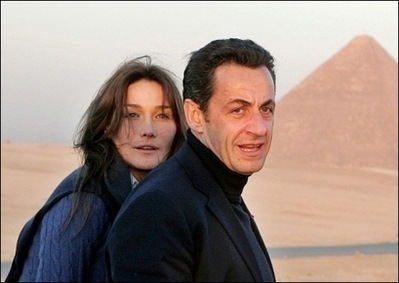
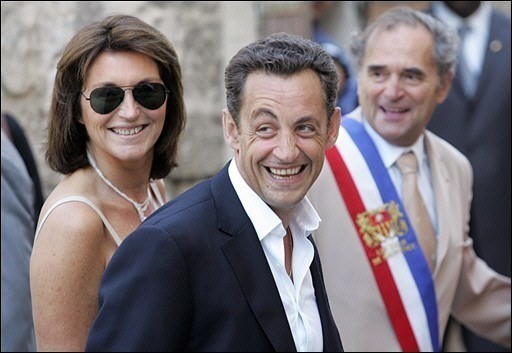
First French President Nicolas Sarkozy is estranged from his wife, Cecilia. Then they reconcile while he campaigns against Ségolène Royal. Then they divorce after he wins. The next thing you know he's holding Carla Bruni's hand at Euro Disneyland. And nobody bats an eye. Why? They're French.

Watching the French president woo his actress/songstress/Euro Disneyess has made me insanely jealous for something similarly exciting to transpire in Eesti land. Unfortunately Estonia, with its wholesome culture of family values, Uncle Milty, sinine must valge, and Vanilla Ninja is not France.

I tried to imagine a high profile politician plotting such a move. What would happen if Andrus Ansip left Anu Ansip for Anu Saagim? Or if Mart Laar ditched his family for someone younger and more artistic, like Kerli Kõiv? Maybe we should expect to see Jüri Pihl holding hands in a tender moment at the Kumu art museum with Blacky sometime soon?

But that's not to be and, I must admit, when I even think of an Estonian soap opera involving politicians and celebrities, it sort of makes me want to barf. Despite their stinky cigarettes, cheeses, and snails, French people can get away with that kind of thing. Estonians, with their sprats, hapukoor, and more hapukoor cannot.

French people are sexy. Estonian people are (mostly) cleanly. There is a difference.

kolmapäev, jaanuar 09, 2008

decisions, decisions

Something weird happened after Barack Obama won in Iowa last week. People around me started trying to figure out who he was, in a historical context.

Is he a visionary Franklin Delano Roosevelt, who, like Obama, rocketed to the presidency in 1932 after serving only three years as a governor of New York at a similar age (he was 50, Obama will be 47)?

Is he a soulful James Earl Carter who came out of nowhere in 1976 to give people hope after eight years of Nixon-Ford, Watergate, and Vietnam?

Or is he some wild combination of Bobby Kennedy and Martin Luther King, Jr., two men that greatly inspired the generation of Hillary Rodham Clinton, and two men whose ghosts haunt them every time they see Obama give one of his speeches?

I will confess that at least three people told me they were anticipating Obama's assassination should he win the nomination because the US "isn't ready" for a "person of color" to move into the "White" House.

I found this talk extremely depressing because as I walk around the southern tip of Manhattan island, I can't help but notice that Barack Obama looks more like the America I grew up in than the one people claim he is too different to lead.

At school I have had friends and acquaintances of every background, often times mixed. If you bump into any random human on Pearl Street, it's likely they have a story that begins in as odd a place as Honolulu, Hawaii and leads to Indonesia before stopping in Boston and Chicago.

This is what they call the "generational divide" in politics, and Obama has played his hand well by distinguishing himself from all the things about American politics that have made this younger amorphous and multicultural "generation" -- if such a diverse and abstract group of people can be recognized under one heading -- tune out altogether.

Who wanted to fight about the Swift Boat Veterans for Truth in 2004 when they couldn't even remember that war themselves? Who wanted a political bloodbath over Roe vs. Wade from 1973, when all of us, including Obama, entered adulthood with it in force? America, over the past 20 years or more, has been so bogged down in mind-numbing arguments over "faith" or "guns" that large swaths of younger Americans have remained apolitical because, like they have said on numerous occasions, they really don't care.

And so to them, including myself, seeing Barack Obama speak, someone who looks like someone I might work with during my life, someone whose history of an extended family matches so many families I know, and someone who was a tyke in 1968 -- a year in which he is allegedly stuck -- is as tired of Boomeritis as we all are, its refreshing and dangerously appealing.

I want to look away because I am afraid the man with the pretty words may sell me something we both know he cannot sell: hope in a better future. Change. Who can sell these things? Nobody. Because if you look at the history of the US, change in the form of a presidential candidate does not come often and if it does, it is because it was packaged that way. Thomas Jefferson was an old hand in American politics by the time of his Revolution in 1800. Was it really a revolution then?

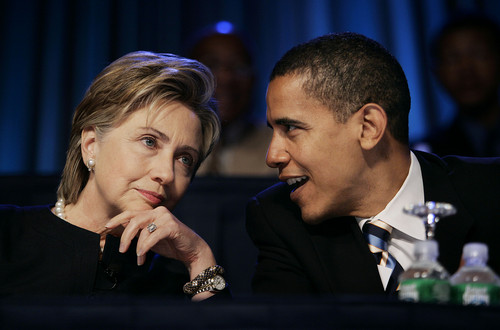
As engaging as I find Sen. Obama, I have a hard time listening to 30-second clips of Hillary Clinton because she is telling me everything I have heard from Democrats all my life.

She is an appealing candidate, because you figure after eight years sharing a bed with Bill Clinton -- and our spouses do know us, at least most of the time -- she would be best to inherit the groaning apparatus of American foreign policy.

And yet I cannot listen to her. I respect her somewhat, but listening to her speak, I find myself wondering if Teddy Kennedy wrote the script. I know that to some people Teddy Kennedy is a dirty word, but I think he represents Massachusetts, warts and all, to the hilt.

And I hear the same promises from her that I would hear from John Kerry or Al Gore or Bill Clinton or Mike Dukakis or Walter Mondale. I hear about universal health coverage. I have heard a lot about that in my life and I don't expect to see it happen, even if Hillary becomes president. Even with Democrats controlling both houses of Congress. There are just too many institutional tripwires to stop that kind of change.

But beyond that is the arrogance, not coming from her but coming from her husband who called Obama's political rise a "fairy tale" in a demeaning way. It's an arrogance that says "we know better than you." But did Bill Clinton really know better? His record was either hit or miss and blame it on the Republicans. His professional hacks -- Paul Begala, James Carville -- alienated so many young voters that they were able to turn comics, like Jon Stewart or Stephen Colbert into folk heroes.

Given a choice between real politicians or comedians, younger people would probably choose the latter. This is the legacy of the Bush-Clinton-Bush years, years of non-ending arguments over what the definition of 'is' is. People would put more faith in Colbert for President than they do in Hillary for President.

So, to summarize, voting for Hillary Clinton would give some younger people icky feelings, feelings that might dissuade many young people from voting for anyone at all, except perhaps a comedian-cum-talk show host.

Barack Obama would also give them icky feelings but in a different way: of actually in believeing in something again for a few minutes, only to be let down again. I mean how many times can you put a quarter in the slot machine before you realize that today is not your lucky day? Some of us just never win. Ever.

Barack Obama: he inspired one part of America and scares the other part. Hillary Clinton, she embodies a different part of America and turns the other part off from politics. Who is the better candidate? Decisions, decisions, decisions ...

esmaspäev, jaanuar 07, 2008

sisuliselt sisu

Minu kallis naine was recently on the phone with a friend when she used a word I hadn't heard before: sisuliselt.

Estonians like to pepper their sentences with lots of tegelikult (actually), üldiselt (generally), põhiliselt (basically), põhimõtteliselt (principally), and tavaliselt (regularly). Sometimes I feel that every other word out of our niece's mouth is tegelikult, it's like the Estonian 'like' -- unapologetically overused.

But sisuliselt caught my attention because it contained the magic Finnish word 'sisu' which means something like 'determined' or 'resilient' or 'having guts'. The Finnish blogs are often chattering on and on about sisu, like it was the magic ingredient in life.

The Estonian meaning of sisu, though, is no easier to define. Aare.pri.ee, the väga kasulik eesti-inglise-eesti sõnaraamat defines sisu as 'content' -- the stuff that's inside stuff. The same online dictionary defines sisuliselt as 'in essence' or, as I would put it, 'essentially.' So, sisuliselt, the meaning of suomen sisu and eesti sisu are not that far apart.

The real divide, other than the Gulf of Finland, seems to be how they use the words. For Finns, it's the word. For Estonians, it arouses similar emotions to the word värk, which literally means 'stuff': ie. no emotions whatsoever.

Anyway, in either sense of the word, who do you think has more sisu -- Tarja or Sauli? And if anybody can better explain what these words mean, well, that's what the comment section is for.

laupäev, jaanuar 05, 2008

burn baby burn

The Estonian economic miracle may have built Tallinna kaubamaja and brought skyscrapers to downtown Tallinn. It may have built dozens of geometrically ambitious homes in Viimsi Vald, the luxury suburb north of the city. But if the flat tax is bringing investment to Estonia, somebody clearly forgot to steer the investors to the Kopli district of Tallinn.

When we went apartment hunting years ago we entertained the prospect of relocating to Kopli or North Tallinn, but then realized that the place was some sort of 24-hour, open air Soviet museum. The sharp contrast between the modern city center and these downtrodden neighborhoods is indicative of the kind of wealth gap that exists in a country that is constantly trying to grow the pie, rather than readjust the size of each piece everyone gets.

Standing there among the half burned homes and crumbling tenement blocks I wondered how these neighborhoods would finally turn out. Would the Estonian business elite wait until the last stateless pensioner died, then knock it all down to build a marina and a golf course? Would proponents of social democracy sweep in, salvage what they could, tear down the rest, and erect affordable housing?

The solution, it appears, is neither. Instead nature, and by nature I mean fire, has been taking its course on this less well off section of Tallinn. Over the past few days there have been a number of fires in the neighborhood, and according to Urmas Tooming we can expect it to continue.

neljapäev, jaanuar 03, 2008

meanwhile, in iowa

UPDATE: Well it looks like Barack Obama and Mike Huckabee are the winners tonight. As you may have sensed from reading below, I feel pretty ambivalent about the presidential candidates on both sides, though I feel the Democrats have superior candidates. I am really glad I am not an Iowa voter who had to be first to choose.

But Obama's "victory" seems a tad misleading. In the end each of the top three candidates got around a third of the vote, which actually tells us very little. I am glad there's a race though. If Clinton had waltzed right through the nomination process, I probably would have tuned out all together.

As for the Republicans, it appears that for the first time since 1976 there will neither be a Bush nor a Dole on the ticket. Or maybe Huckabee will choose Neil Bush as his running mate. Who knows.

****

I haven't written much about the US presidential election this year because a) this is a blog about Eestimaa and b) I haven't paid that much attention to the topics of Barack Obama's Kindergarten essays. But it's on the global mind, so why not discuss it.

To understand my perspective, you must grasp that I am 28-years-old, and the first presidential election I recall with crisp, almost like yesterday clarity, was between George Herbert Walker Bush and Michael Dukakis in 1988.

That is to say that the contests of 1972 (Nixon versus McGovern) or 1980 (Reagan versus Carter) don't weigh heavily on my mind. And in some ways that might endear me to Senator Barack Obama, because he too has been calling for a new American dialog that isn't stuck in 1968.

But for me, the most important factor is foreign policy experience, and for that reason, even though I like Senator Obama, if I was in Iowa I would *probably* be supporting Hillary Clinton. I used to like the relatively youthful Clintons in the '90s. Like I said, my country was run by Ronald Reagan, a man who was older than my grandfather, until I was 10 years old. But overtime I have tired of them, Chelsea, Socks the Cat, discussion of Bill's extramarital affairs, and, who could forget the Bridge to the 21st Century? Yuck.

But still, Hillary perhaps has the greatest experience. Among the Democrats I would trust her decisions over Senators Obama and Edwards because quite frankly, Hillary spent eight years traveling from country to country to meet and great the global elite. Hillary's done shots in Estonia. Hillary has visited the hospital where my first daughter was born in Tallinn.

I don't necessarily feel a strong affinity for her, nor do I enjoy listening to her speeches, but I do not fear her or find her incompetent. She's been my Senator for the past seven years and partially due to her political sensibilities and partially due to the disorganization of the New York Republican Party, she managed to do her job with limited criticism. Some have criticized her as "too liberal", but Hillary was once upon atime a supporter of Barry Goldwater.

This is not an endorsement of her, and I am actually quite torn between Clinton, Edwards, and Obama, but if I got in that tent, foreign policy experience would be on my mind.

In terms of the Republican side, their party is undergoing a period of disarray, mostly due to Bush's policies, but also due to generational changes in the party. The Republican generation of 1994 -- Tom DeLay, Rick Santorum -- has aged out of office. The "Contract with America" is done. The days of "America, applie pie, and Oliver North" are aged and sepia-toned.


So who is best to lead this motley crew of religious conservatives, 'don't tread on me' gun owners, Wall Street investment bankers, and 'blow 'em all to hell' foreign policy hawks?

The short answer is that I have no idea. I will say that in 2000 I went door-to-door in New Hampshire on behalf of Sen. Bill Bradley and of all the Republican voters I met, the John McCain supporters were the most convincing. That's not to say that Yankee Republicans aren't terrifying in their own 'fire and brimstone' way. But I respected them. I cannot say as much of the New Hampshire Bush supporters who chased me off their lawn.

Another "Yankee Republican" is Rudy Giuliani -- 'America's mayor.' People credit Giuliani for cleaning up New York City. It's endearing to see an Italian-American do so well. And yet Rudy's tenure at Gracie Mansion in New York was riddled by a police brutality scandals not to mention his high profile divorce from Donna Hanover and his use of police escorts for his then mistress, now wife Judith Nathan. There's just so much "New York only" political baggage to Giuliani that I just don't see him winning the nomination. In New York he could win, but in New Mexico? No.

A final Yankee Republican is Mitt Romney. His religious beliefs (he's a Mormon, a follower of a religious sect founded by a New York treasure finder in the 1820s after he translated golden plates written in "Reformed Egyptian" text) have raised eyebrows among some, but we'll leave that aside to just say that Romney can't even win his own state -- Massachusetts -- and he was never really popular there (he served one term).

In terms of the others, everybody loves Ron Paul. I liked Ralph Nader in 2000 too. I mean he was a wonk. He asked plenty of great questions. And in the end we wound up with George W. Bush. Paul has around $20 million in his "war chest" -- I have read that he may launch an independent campaign. Then there's Mike Huckabee. He's from Arkansas and enjoys preparing red meat to feed to religious conservatives during stump speeches. I have nothing else to say about him.

So if I was in the Republican tent, I'd probably have to choose McCain based on my foreign policy concerns. After all, it was McCain who did shots in Tallinn with Hillary.

e-land

It happened to us again. Asked to explain where we lived in the US, the anxiety of telling them, "Estonia" crept in the back of our minds. I have been there, others have too -- one old acquaintance has actually done business there on behalf of big pharma -- and yet, I must confess, I feel like I am pulling their leg every time I say it, because to Americans "Estonia" sounds like a made-up place name.

Not that they know much about other places. We are frequently asked what language is spoken there, to which we reach for the common sentence, "Estonian, it's like Finnish." But the truth is, unless you are from Minnesota or North Dakota, you probably have no idea that Finnish is different from Swedish. The real nerds will acknowledge that they know Finnish, Estonian, and Hungarian are related. That's true, except Hungarian is quite distantly related to the Finnic languages. So don't try using Hungarian in Estonia.

Maybe proponents of renaming Estonia "Estland" in the English context were right to some extent. There's nothing bad about "Estonia", but for some reason it sounds uncomfortable to English-speaking ears. As a weird thought, maybe it's because English, under its Latinate skin, is a rich Germanic language, a language of Jutes and Angles and Norsemen who did not defecate but skīta, who did not "consume" but etan, and who preferred a good fukka to "intercourse."

To our English ears, "lands" sound familiar -- a known quantity. Greenland, Iceland, Ireland, Scotland, Holland -- these are places we intuit more easily, even if we don't have a drop of English blood in our veins. Placenames that end in "ia" -- Bulgaria, Slovenia, Albania -- these are rendered in the Latin-based form, a language brought over by the Norman aristocracy that has become the manner of all sophisticated speech for most discourse, yet at the same time lacks the intimacy of the Anglo-Saxon and Norse vocabulary.

The distance in how we understand and react to language may have its root in those handful of politicized centuries where French-speaking Normans and English-speaking inhabitants of Great Britain slowly created a new tongue. "Lands" were places of antiquity that the common people knew. "___ias" were far-off provinces that only the upper classes concerned themselves with. Or maybe I am just full of crap. What do you think?

esmaspäev, detsember 31, 2007

collective guilt: collective future

I am in the US for the holidays and that means late night, alcohol-fueled debates about World War II and slavery. In an odd moment of compassion for our krautrock-loving German friends, I came to understand what a sad lot in life it is to be German and live with collective guilt for something you had no role in nor chose in utero to be associated with.

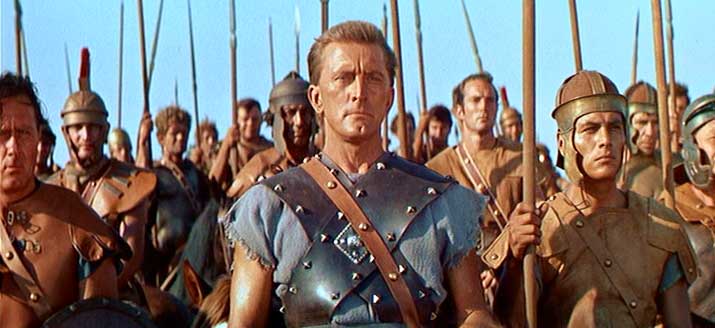
I came to think that perhaps many of us suffer from collective guilt. Russians, Germans, even Canadians (Bryan Adams? What were you thinking?) For my part, I realized that as an Italian I carry the collective guilt of the Roman Empire on my shoulders. It was us who killed Spartacus. We bear collective guilt for the death of the Thracian gladiator and his Hollywood good looks. As my Roman ancestors would say, mea culpa.

Now, let's start 2008 with less of an eye on the rear-view mirror, and more of an obsession about the future and what goodies it can bring. In Estland I am tired of old, cynical, funky politics. I want new blood, new ideas, and new accomplishments. There are so many things that could be better, fitter, happier, more productive. Why not greet them?

reede, detsember 28, 2007

the tsar's madman


No one lives for ever, not even great national writers. However, unlike many, great national writers leave behind immortal works of fiction. Your thoughts on the passing of Jaan Kross (1920-2007).

kolmapäev, detsember 26, 2007

ma igatsen ahju järele

Kui me kolisime eestisse veebruaris ma kartsin, et me pidime elama koos ahjuga. Eestlased ise arvavad, et ahi on maailma kõige mõnusaim asi. Aga kui me elasime enne eestis, siis meie korter oli Kalamajas Tallinnas, kus asub palju puumaju. Igal tänaval seisis üks või kaks maja, mis olid mustad, sest et maja põles üks või kaks korda. Ma otsustasin seal Kalamajas, et ahjud on tegelikult vastikud asjad, ja mina eelistan raadiatorit ahjudele.

Aga tagasi Tartus veebruaris, me leidsime, et ainult head kohad elada olid ahjudega. Minu arvamus muutus, ja edaspidi ma arvasin, et kui ainult üks maja põleb tänaval kus asub kümme maja, siis meil oli 90 protsenti võimalus elada koos ahjuga. 90 protsent on tegelikult täitsa hea ellujäämise määr!

Siis hakkasime elada koos ahjudega. Igal õhtul me tegisime tuli ahjus. Mina tõin puid korterisse. Ja panesime ikka meie paber prügi -- tualeti paberi rullid, vanad reklaamid, vanad Eesti Päevalehed -- ahju. Elu ahjuga on meie rutiin. On tavaline asi ahju kütta.

Praegu oleme külas New Yorgis ja meil ei ole siin ahjusid. Meil on ainult kaminad, kuhu me ei tohi vanad tualetti paberi rulli panna. Eriti hetkel, kui palju paberi jõulukingitustest on kumuleerinud, mul on päris suur vajadus ahju kütta. Ku ma näen need suured mäed pakkimispaberidest ma tunnen, et ahju on tarvis. Mu silmad kasvavad suuremaks iga vana kartongiga - ohoo, see sobib ahju. Aga ahjusid siin ei ole. Ainult kaminad ja keskküte. Mis on lahendus? Mis me peaks tegema meie vanade WC paberi rullidega?

Kas te saate kujuta ette, et ma pean elama ühe täis kuu ilma oma ahjuta? Kui raske on see elu.

[ENG] At first suspicious of Estonian wood heating, I now find myself missing it while spending the holidays in New York. The main reason is that -- with all the leftover wrapping paper around -- there are simply so many useful things to burn but no place to burn them. I find myself missing our Estonian 'ahi' for that purpose.

reede, detsember 21, 2007

sacre charlemagne

If you read enough books about European foreign policy, you'll encounter curious ideas forged in time. One such nugget is found in Anatol Lieven's The Baltic Revolution from 1993 which states that Estonia, Latvia, and Lithuania were attempting to rejoin the Europe of the 1920s and 30s, not the Europe of the 1990s.

At the Lennart Meri Memorial Conference in March, I heard Bruce Jackson, another East European expert, claim that the Europe Ukraine was attempting to join was the Europe of 1914 (before the assassination of Franz Ferdinand, of course).

These are interesting ideas. As Alice would have pondered in Wonderland, "curiouser and curiouser." But what do they mean? On the surface they are utter nonsense. Estonia, home of free wireless Internet, did not wish to return to the era of fascist Europe where life was broadcast by radio. Ukraine certainly doesn't wish to return to 1914 when it was a constituent part of the Tsarist empire.

But looking at Europe from this northern European perch, I might identify some eras in which Western Europe -- the arbiter of modernity -- is stuck. I would say that if some parts of Europe yearn to return to a fabled past, Western Europe itself is living with an image of itself that is outdated. Western Europe is stuck somewhere in the 1960s and 1970s, with these base national images of themselves, a tourist industry that still rests upon those images, and an image of eastern Europe as still lying beyond some civilizational curtain.

You can meet this version of Europe in any Western European capital. The Scots are still selling plaid and Sean Connery. The Danes are selling Tivoli, open-faced sandwiches, and Hans Christian Andersen. The Italians are selling the leaning tower of Pisa, the gondolieri of Venice, and Fellini. The Norwegians have Thor Heyerdahl, the Swedes have ABBA. And the French? They're still selling Serge Gainsbourg, even though he's been dead for 16 years.

Worse than the circa-1965 prism through which Western Europeans view the world, is the circa-1991 prism through which they view formerly communist Europe. For those who have come and enjoyed, the nightlife of Tallinn, Prague, or Bratislava are not to be missed. But for sadly too many, this half of Europe is a black hole, and empty space, someplace unknown and potentially threatening.

I think of all the times I have heard about Estonian women interrogated in passport lines about their intentions of entering country X. Then there are those provincial Europeans who have heard terrible stories about "Eastern Europe" and simply cannot believe that a person would live there willingly. They are baffled by the whole idea, even as they step over the local heroin addicts at the train station. One can imagine their shock when they arrive to Tallinna sadam and find out it doesn't look too different from the country they left behind. In some cases it looks even better.

For all these reasons, I think today's expansion of Schengen is a landmark event. A blanket of equality has descended on Europe. While Western Europeans might cringe in fear of Estonian drug dealers and Polish plumbers, it's about time that they were brought up to speed on the Europe too few of them know about. In a way, it's as if the Europe of 1965 has finally joined the Europe of 2007. Welcome to the present.

neljapäev, detsember 20, 2007

tallinn talvel

Another day in Tallinn, yet so much better than the rest. Some people think that summer is the season when eesti comes alive. But my favorite time to be in Tallinn is right around now -- jõuluaeg.

Tallinn in the off season is free of most of the hassles of Tallinn in suvi. The throngs of Yorkshiremen and Neapolitans thin out, and all that's left is silent Tallinnlased making their way through the heavy streets of Estonia's pealinn.

The air is usually clean and cool and it rolls right off the Gulf of Finland, blanketing every breathing soul in icy moisture. It is at times like these that I believe that the 'Talsinki' marketing scheme may have been correct. For the only other city where I have encountered the same emotional temperature has been Helsinki, just 80 kilometers away.

I brought my camera this time to record any monstrosities I could find in the city center. When I used to live in Tallinn five years ago, it seemed that every block housed a condemned building that was in dire need of being plowed under and turned into a trendy bar with Asian food, Brazilian music, blond hosts, and carpet on the ceiling.

But this time, nearly all the buildings in the center looked decent. And even that rotten wooden ship of a home at Sakala and Kentmanni has been gutted by fire and has a fence around it. It's time too has come to say head aega and to serve as the bedrock for a nordic sushi joint.

During the day, with half an hour to kill, I decided to head over the Jõuluturg on Raekoja Plats. I really didn't want to enter the Old Town just because I have been there so many times. But it was worth it. While I was trying to decide whether I should buy glögi from booth A or booth B, who should I spy but Rootsi Suursaadik Dag Hartelius, clad in informal sweater, gingerly making his way across the town hall square.

I wanted to ask him for an autograph and say that I had voted for him at least 10 times over the past few months, and that it was total crap that Koit Toome won because he was the best dancer -- but the New Yorker in me kicked in and I decided to leave Dag alone to the knitted wear and glögi, or glögg på svenska.

Instead I headed to the sõõrikukohvik for some pannkoogid meega and to enjoy the really terrible pakapikud in Eesti Ekspress' year-end edition. There's even one of Rene Van Der Linden. Häid Jõule!

teisipäev, detsember 18, 2007

tools of foreign policy

After reading through Chris Schüler's piece in The Independent which blends his trip through a neighborhood of Latvia with random facts about Estonia to synthesize a generic attack on 'the Baltic republics' in true "I'm a brave reporter in an unsafe place" British fashion, I got to thinking about how any random report can be used as a political weapon in the hands of foreign policy thinkers. (Hat tip to Ivan vs. Jaan by the way)

First, I would like to slime Schüler, not for insulting the fatherland of Estonia, but because he was unable to put several concepts together to better explain the situation for his readers.

Schüler writes about Estonia's large industrial ethnic Russian population brought here during the Soviet period. Then he writes about the collapse of the Soviet Union. Then he writes about high unemployment and drug use that has contributed to a high rate of HIV among Russophones in northeast Estonia. Then he writes about the high percentage of ethnic Russians in Estonian jails. And what's to blame for all of this? The Language Act.

You see, if all Estonia's institutions had Cyrillic lettering on their signs, everything would be better. Even though ETV offers news in Russian, most commercial forms are available in Russian, and even Postimees -- the newspaper of Jaan Tõnisson who encouraged the switch from German to Estonian in public life a century ago -- has a Russian edition (!), it's still not enough.

If Estonia was like Finland, then everything would be different. There would be no large unemployed minority in industrial northeastern cities that turned to crime and drug use to ease their pain and accidentally contracted HIV. Why? Because Finland kept the Soviet Union out of Finland.

If only he could have managed to connect the obvious dots of large migrant population + economic collapse = unemployment = increased crime and drug use and suicide, Schüler might have managed to serve his readers. But he didn't.

In his article he uses reports by Amnesty International and others to back up his interpretation. But that got me wondering about how Russian speakers were treated across the Gulf of Finland where they now make up nearly 1 percent of the population, putting them in striking distance of the Swedes (5.5 percent) for having their language coequal with Finnish.

It turned out that in the Council of Europe's latest report on Finland, published just last month, it was found that Russian speakers there are complaining about their level of support there too:
Representatives of the speakers informed the Committee of Experts during an "on the spot" visit that they have difficulties in developing a dialogue with the government regarding the status of the Russian language.

In addition, during the on the spot visit, the Committee of Experts was informed by the speakers about the possible closure of the Russian public library of the Institute for Russian and East European Studies. As a result, the books would be dispersed in different specialized libraries not open to the public.
Russians have difficulties in developing a dialogue regarding their status? The Finns are closing Russian libraries and dispersing their books to "specialized libraries" where they will be kept out of the hands of Russian speakers?

Did I mention that Finns like to wear rings with swastikas on them? They even defend their collaboration with Nazi Germany during the Continuation War in 1944? I know, it's really ugly up there in Halonen country.

One can only hope that the next time The Independent sends a reporter to Estonia, they'll wind up writing about Finland. Seems like a natural choice.