esmaspäev, september 17, 2007

The [Short-Lived] Occupation of Bornholm

Bornholm is a Danish island in the Baltic Sea off the coast of Sweden. Like many Danish territories, it possesses its own miniature nationalist outlook including its own flag, dialect, and icky feelings towards the mother land.

My friend down the hall when I lived in Copenhagen was named Andreas and he hailed from this island. He was one of the few Danes that were nice to me and let me into their highly guarded world of Depeche Mode infatuation and private vodka consumption. He also loaned me his Monty Python collection. So I am forever indebted to Bornholm.

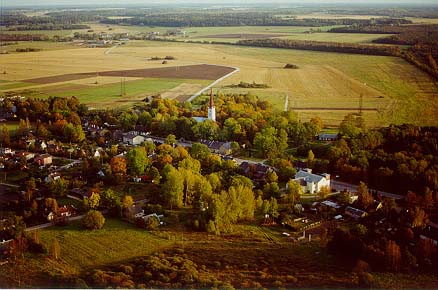
Iga tähes, the reason Bornholm is important for Estonia, apart from cultural and geographic similarities, is because the Danish response to the Soviet 'liberation' of Bornholm from German forces in 1945 questions the Soviet narrative of liberating Europe from Nazi German occupation.

In the former captive nations, the common interpretation is that the arrival of Soviet Russian troops in 1944 and 1945 was not a liberation, but an exchange of totalitarian regimes. The current Kremlin line is that this interpretation is 'rewriting history', and that countries that do so are illegitmate, is undermined by the Danish response to what happened on Bornholm.

Denmark was occupied by the Germans following an ultimatum to allow German troops to be stationed in Denmark in April 1940. The official line was that Germany was 'protecting' the Danes from possible British occupation. Bornholm served as a listening station for German troops, and came under attack in May 1945.

The German commander of the installation at Bornholm refused to surrender, and Bornholm was bombed on May 7 and May 8. As the official Bornholm website puts it, the Russians landed and occupied the island, with it being a full 11 months before they left again.

The Danish state has acknowledged on many occasions that it does not view the Soviet presence on Bornholm as a liberation, but rather a military occupation. In any case, ahead of the Potsdam conference, the Soviets decided to act like good boys and began withdrawing their troops. In April 1946, the last Soviet occupation troops in Bornholm left the island.

Still, the situation at Bornholm shows that Western European countries interpreted Soviet military presence on their territories at the end of the Second World War the same way that Eastern Europeans did -- as a political-stability threatening, military occupation.

Someone should remind Rene Van Der Linden, the chairman of PACE, of Denmark's response to Soviet occupation as he attempts to eat his words to Russia Today from May during his visit to Tallinn this week.

laupäev, september 15, 2007

The Secret to Looking Finnish

After some basic research, I have come to the conclusion that the secret to looking Finnish is a) wearing spectacles, preferably with dark frames to emphasize your intelligence; b) sculpting perfect unisex haircut to avoid traditional gender stereotypes.

Don't believe me? Try here, and here, and here, and here, and also here.

That's it. It's a two-point plan. As for looking like an Estonian, just stuff a potato under each cheek. And remember to smile for the camera.

neljapäev, september 13, 2007

Päeva Komm

There is some international intrigue afoot if you read between the lines of recent articles detailing the Estonian government's response to a request by Gazprom to survey the Estonian sea floor for the laying of the Nord Stream pipeline.

The first comes by way of Forbes, which reports that the Estonian government is split on the proposal, with Mart Laar-led Isamaa-Res Publica Liit solidly against the proposal, while Andrus Ansip's Reform Party in favor of allowing a survey by Gazprom.

Late last month, Eesti Ekspress discussed that the only way that Ansip's government could fall would be a collusion between IRL and Edgar Savisaar's Keskerakond. While doubtful -- Savisaar is the villain that gets IRL voters to the polls -- it noted that Edgar has lodged most of his recent attacks against Ansip, and has been quiet with regards to Laar -- who Keskerakond voters deride as a 'chipmunk'.

Finally, there is your typical, bitter, vitriolic column in Regnum that notes that Foreign Ministry Chancellor Matti Maasikas (above) was recently in Moscow and has changed some very strategic language in Estonia's longterm political goal to have Russia recognize that Estonia never voluntarily joined the USSR and that the state is not de novo, but founded in 1918.

Maasikas supposedly dropped the 'o' word (occupation) from his lexicon and instead pressed for recognition that Johannes Vares' government in 1940 was in no way legitimately elected, and that Johannes Lauristin's trip in August to request entry to the USSR was organized by Moscow. Ie. Estonia joined the USSR on a 'non-voluntary basis'. The column ponders whether or not Maasikas' change in language denotes a change in official foreign ministry policy towards Russia.

My thoughts:

* The Reform Party may see the Gazprom offer as a way to redeem itself among the business classes in Russia and Germany after the April riots and also as a way to consolidate domestic power. They might be returning to their roots as the party of Milton Friedman-loving financial managers. It's all about the Benjamins for Reform, or rather, all about the Carl Robert Jakobsons.

* It is also could be looking to score a foreign policy goal -- recognition of 1918 statehood from Russia by softening some of the scary occupation language. Allegedly Russia doesn't want to admit it more for threat of compensation claims rather than nationalist pride.

* I personally don't think Ansip will fall because of this deal. If anything IRL could walk away from the government to remain the party of 'principles' ('principles' are very important to a segment of the Estonian voting public). That would mean Keskerakond would rejoin the government,as was originally predicted before the elections. Finally, don't forget that Ansip passed up Laar for the foreign ministry position.

On the other hand, controlling the defense ministry and economy and communications is a swell catch. In my opinion, Juhan Parts of all people had performed exceptionally well. For whatever reason, I find myself agreeing with most of what he says about the economy. Perhaps there is political life left in him afterall.

kolmapäev, september 12, 2007

Nõid

Toomas is a middle-aged Estonian man who lives in an apartment in Annelinn, a section of apartment blocks in Tartu. I don't know much about his past, other than that he has several children and he is originally from the Tartu area. In fact, since most conversations have taken place in Estonian, and he is mostly a listener, I am not quite sure what to make of him. But he has had some influence in our lives, for he is a 'witch' in loose terms, and when my wife is stuck on a question, once in awhile she will pick up the phone for his expert opinion.

I have gone to Toomas' place several times. I have to say that I am a cynic and have limited belief in witchcraft, sorcery, God, et cetera. But during one occasion Toomas 'fixed' my energy levels. Basically after niceties and downing some free alcohol, I was told to close my eyes while he went to work. I had had a rough patch before this visit, and sure enough the pendulum went swinging wildly when it went into my 'energy field.'

'What happened to you?' he asked astonished. Apparently the pendulum doesn't do that that often. But after some time getting the energy levels readjusted I have to say I felt better. And I have felt better ever since. In fact, I haven't really gone through a serious bout of depression (knock on wood) since. Is that all his doing? I don't know. Maybe the guy is magic.

A more typical conversation happened this year concerning real estate. We told him where we were looking, and mentioned Supilinn, a neighborhood of wooden homes and unpaved roads along the river in Tartu. "Don't go to Supilinn" he strongly advised, pointing out that the energy was extremely bad in this place. And you've got to agree that a patch of Tartu that *still* doesn't have paved roads -- either by choice or not -- is perhaps under some wicked spell. I curse the place every time I have to drive through it, that's for sure. Well, we didn't move to Supilinn.

We are not the only people Toomas has contact with. His schedule is often booked with ladies bringing him their ethereal troubles. He even has a sense of humor. Apparently some women conspire to have their energy levels made stronger than their husbands, so that they can have the upper hand in household decision making.

This reliance on witches seems peculiar when given the fact that Estonians allegedly never truly Christianized. In fact, the only time I have visited churches in Estonia has been out of historical curiosity. Some place blame on the Soviet dark ages for wiping out spirituality. But this is not the case. A great deal of Russian-Estonian homes I have entered have various Orthodox icons on display. They endured the Soviet era as well, yet they still conspicuously show their religious adherence. Not so with the Estonians.

I have been told that witches or soothsayers still play a role in Estonian spiritual life and have even seen a program on TV about it. There are also monuments in Estonia to older witches, like the Äksi nõid, Hermine Jürgens (1892-1976), which spell out that witchcraft in Estonian social life may have deeper roots, perhaps going back to the pre-German period.

Whatever the case, my experiences with Toomas are just scratching the surface. I am sure there is much more to be learned about Estonians and witchcraft.

esmaspäev, september 10, 2007

Vähemusrahvus

Flasher T of Antyx this morning e-mailed me professional footage of rampaging youth in Tallinn from April. I was reading the comments and recalling some of the more heated debates I have had on the Interweb about said events and Estonian language policies in general.

One, issue that recurs is the question of status. That is, the very large Russophone community is actually OK with the strategy behind most Estonian language policies -- like school reform -- but they just want some kind of formal recognition or status within society. This is driven home by rightwing-thinking Estonians in the blogosphere who will point out that Russians are not an official minority in Estonia, and therefore deserve no special protection or coveted status.

But when I read the Law on Cultural Autonomy of National Minorities, it seemed quite plain to me that the Republic of Estonia actually does recognize national minorities, several to be precise:

(2) National minority cultural autonomy may be established by persons belonging to German, Russian, Swedish and Jewish minorities and persons belonging to national minorities with a membership of more than 3000.
It seems quite clear to me that the Estonian state recognizes that national minorities are Germans, Russians, Swedes, and Jews according to the text of the document, available in Estonian here. Being a national minority gives one the right to form a cultural autonomy.

What is interesting is that the infamous Amnesty Report from 2006 deletes this reference to Russians several times. Namely here:
According to Article 1 and Article 2(2), a cultural autonomy may be founded by Germans, Swedes, Jews or by any other minority consisting of more than 3,000 persons.
And here:

According to Article 51 of the Estonian Constitution, in localities where at least one-half of the permanent residents belong to a national minority, everyone has the right to receive responses from state agencies, local governments, and their officials in the language of the national minority. While this provision in theory provides some minority language protection, it is worth noting that it only applies to national minorities, i.e. citizens considered to have long-standing ties to Estonia (including Germans, Swedes and Jews), and thus does not apply to a large portion of the Russian-speaking minority population.
Isn't that weird that Amnesty left out that one, very important ethnic group when describing the law in its report? Hmm. I am not alleging anything. Just pointing it out. They do have a good point, that stateless persons, some 120,000 people, should have that same right to cultural autonomy. I am not saying I agree or disagree, but it should be pointed out that Amnesty's Report isn't 100 percent trash talking on behalf of the Russian Foreign Ministry.

Anyhow, because Flasher is an Estonian citizen and both Russian and Jewish by descent, it turns out he can take part in two whole cultural autonomies, rather than just one. Only in Estonia, folks. Only in Estonia.

reede, september 07, 2007

Capitals of Culture

Estonia is trailing Finland in yet another category. This time it's in preparations for being a European Capital of Culture in the futuristic sounding year of 2011. Both Turku and Tallinn will be cultural capitals that year, and Turku's plans are already solid, while Tallinn's appear lame.

From The Baltic Times:

Sir Robert Scott said he had concerns about Tallinn’s Cultural Capital budget, and said the program lacked input from the city’s minority – meaning Russian – community.

Further, he expressed concerns about the content of Tallinn’s program, which was “unclear in its European dimension,” lacked involvement from “new Estonians,” and did not show any new examples of culture. Mikko told
The Baltic Times she had her own concerns about the program, which focused entirely on Tallinn’s medieval history, rather than showcasing the city’s forward thinking.

Ah, so the Tallinn planners thought they could dress up Edgar Savisaar for a night out at the Brotherhood of Blackheads, hand out some nuts, with a perfunctory performance from Vanilla Ninja, and all would be right and cultural in Tallinn.

There's a couple of riddles wrapped in this enigma though. For one, Scott needs a history lesson. Namely, Tallinn medieval culture isn't the culture of the maarahvas. It's the culture of the Hansa League, of German-speaking merchants. One does not need to be an 'old' Estonian to celebrate Tallinn's medieval culture. 'Newer' Estonians too own medieval homes in Vana Tallinn. There's actually little dividing the two groups on that front.

But here's the other part of it. So much of Tallinn is selling the city as a tourist destination. And one must wonder if the planners thought that that was all this designation is good for -- a way to draw in more tourists to experience medieval Tallinn. Tallinn does have a strong cultural output, but it's not the first thing you think of when you think Tallinn.

In my opinion, they should hand the whole damn event over to Vaiko Eplik and Chalice and let them run it. That would truly be a swell event. Until then, it's back to the drawing board. Turku though seems to be on the right track:
At the same cultural committee meeting, the Finnish city of Turku – which will jointly share the title of Cultural Capital with Tallinn in 2011 – was praised for its preparations. “Turku is very good. If we are not very good or even better, we will be marginalized,” Mikko said.
Ouch. Not only are the Finns wealthier and better fed than Estonians, they also plan better events. Turku is a lovely city. I highly recommend the boat bars on the canal. Whatever you do though, don't fall in the water! In a way though, they are in a better position to host this kind of event. Turku is less dominated by medieval architecture and the tourism industry. It is also home to a well respected university. These are the kind of ingredients that make good cultural capital planning.

So, like I said, give the event over to Eplik and Chalice. Or just hold your heads and cry, because the Finns did it better one more time.

neljapäev, september 06, 2007

The Danish Straights

This week, President Ilves and Proua Evelin will jet off to Copenhagen to spend some luxury time in the Danish capital on an official visit.

When I lived in Denmark six years ago, the tabloids were often ablaze with steamy photos of Danish royalty, along with some extra spicy stories on the personal lives of the royalty in the other Scandinavian kingdoms, ie. “Prince Haakon of Norge and Prince Frederik of Danmark got juiced on a booze cruise between Oslo and København last week.”

It is for this reason that I am delighted that Estonia’s president will get to visit with Hendes Majestæt Dronningen Margarethe II, the queen of Taani, during his visit. Ilves and others in the Estonian foreign ministry have made it a point to push Estonia’s Scandinavian ties, although for Danes, Finland, let alone Estonia, seems labyrinthine and foreign — populated by Finnic tribe people who like to get naked and whip themselves with birch branches.

Let’s make no mistake here though, Danes and Estonians are both part of the pagan, vodka belt of northern Europe. While Estonians perhaps have more in common with the Icelanders and Finns in this regard — a culture built more on subsistence, rather than ordered monarchy as they had/have in Sweden and Denmark — the truth is that Danes are perhaps even more pagan than Estonians.

What do I mean by that? I mean that Estonia, Finland, and yes, also Iceland too, have national cultures built on historic epics and folk cultures – sagas, kalevala, kalevipoeg and ruhno songs — where as Swedish and Danish cultures, indeed, Scandinavian-ness, has more of an imperial face meaning 1) multiculturalism adopted to accommodate rule over various provinces; 2) public space shaped to reinforce legitimacy of monarchy – royal parks, societies, institutions, etc.

Despite this, the pagan edge is still strong in Denmark, and it rears its ugly head every time booze is allowed to flow freely, i.e. every night. I once attended a party in Roskilde where, presumably after a pig roast, the poor animal’s head was left rotting on a path in the center of the university complex. The tender animal lover in me decided that a pig’s head belonged someplace more discrete, like under a bush. It took a great deal of courage to pick that sucker up by its ear and move it. The Danes might have played naked co-ed football with it later for all I know while listening to electronic music.

That’s Denmark at the pagan level, but as far as we know, pig roasts and Tuborg consumption are not in the cards for Härra Ilves. Instead it will be open-faced sandwiches, coffee, sugar cookies, little mermaids, Dannebrog (no doubt the subject of a high-brow Estonian-Danish joke at some opportune moment) and Scandinavian royalty at its finest.

Ilves will be talking about Nordic-Baltic integration, NATO, and the European Union. Ilves is a great example that if you believe in something enough you can become it. Of all the leaders in Europe he is one of the few, and American-educated at that, that seems the most generically “European”. I'd also put Sarkozy in that box, as French as he is. Gordon Brown though looks like a character from Monty Python's Flying Circus, specifically this character.

Like so much discourse in the nordic countries, there is a dull rhythm to talks over institutions that center around defense cooperation (sending Danish experts to teach in the Baltic Defense College) or economic cooperation (creating more Danish-owned, Estonian-powered IT hybrids like Skype).

It is important though. Despite rampaging anarchists or pissed off rioters, Danes and Estonians have created societies that some hope to emulate. Whether it is through their ‘free healthcare’ or ‘wired cities’, both Taani and Eesti use their positions — small, entrepreneurial, educated — to create progressive policies.

These are the kinds of things Ilves will be talking about while munching on smørrebrød.I have no doubt that he will get along fine with the Danish straights.

Ma Waene Tardo Liin

So much of Estonian history telling and retelling focuses on four years, 1918, 1940, 1944, and 1991. Everything else is often boiled down to the nationalist refrain of "800 years of slavery". But was it really 800 years of pure slavery for the Estonian nationalist soul that only began to thaw with the writings of Kristjan Jaak Peterson?

The poetry of Käsu Hans, an early 18th century poet says no. Hans was an Estonian poet from Tartumaa who is famous for his lengthy metric lament, "Oh! Ma Waene Tardo Liin" (Oh, my poor Tartu city) which was written in 1708 during the peak of the Great Northern War between the Swedish and Russian empire that scarred Estonia so deep that it took decades to recover demographically.

In other words, a lot of Estonians were killed. Ever wonder why so many Estonians look the same? Because there were so few leftover at the end of the Great Northern War. While Käsu Hans' writing is interesting because it a) dispels the myth of Estonians being intellectual zeros during the Age of Enlightenment, and b) provides a stirring account of one of the most destructive eras in Estonian history, the real gem in his poetry is the language. Here's an example:

Oh! ma waene Tardo Liin:
Mes sündi nüüd siin minnoga
Perratu ma olle siin:
Kes woib mo päle Kaeda?
Mo Pat mulle teggi sedda,
Et mul johtu ni suur Hedda,
Sedde pea nüüd tundma siin,
Oh! ma waene Tardo Liin.

Can any of you decipher this Estonian, 300 years after it was written?

teisipäev, september 04, 2007

Kevade

On a cool fall day, we sat down and watched Kevade (1969) on ETV. I have been consuming more Estonian film output recently. Only last month we enjoyed Jan Uuspõld Läheb Tartusse. So it was quite a jump to go from that film, where the ghost of Georg Ots guides Uuspõld to Tartu, to Kevade, which is a romantic and honest film about a school in Palamuse village in current day Jõgevamaa* at the end of the 19th century, based on the works of Estonian writer Oskar Luts.

If you drive around Tartu you are likely to bump into a statue of Luts, who lived from 1887 to 1953. His home is now a museum at the start of Tammelinn, a wealthier neighborhood of large wooden homes southwest of the center. But for all the black and white images and busts of Luts' head, the film version of his novel Kevade (Spring) really helped to understand why Luts' work is important to Estonians to this day.

The main character is Arno, a romantic teen who has a semi-platonic, semi-yearning thing for Teele, a girl who attends the same school. Factor in Tõnisson, a rotund youth with an appetite for fighting with Baltic German school boys who is Arno's friend. There is also Joosep Toots, pictured at left, who is the 'Tom Sawyer' of the bunch, always -- and quite humorously -- getting into trouble.

I am told that this Toots character has become something of a part of the Estonian dialog. A person who acts according to Toots' credo of "There are many things in the world that people shouldn't do, but they do it anyway!" becomes themselves a Toots. If there are several of these kinds of alpha individuals, they can be referred to as Tootsid, in the plural.

Halfway through the film, Jaan Imelik shows up with his kannel and bouncing locks of golden hair, making him an instant favorite among the girls, including Teele, which pushes Arno into fits of jealousy. Because Arno never had a romantic relationship with Teele, his jealousy towards the attentions he gives Imelik helps capture the awkwardness of youth quite well, and carries the film.

A final character in the film is the amazing landscapes as Jõgevamaa turns from winter to spring. Too often Jõgevamaa itself is a beautiful, forgotten corner of Estonia, eclipsed by Saaremaa or Läänemaa. The black and white of the film captures the light from Christmas candles or the sheets of descending snow, and when put together with the characters themselves helps to light a fire under the ass of Estonian national identity. I am told that one of the reasons Kevade is still so popular is that it expressed the moody nordic landscapes and golden moments of silence cherished by Estonians at a time when Estonia was quite deep in Soviet winter.

Anyway, the acting is excellent and it's still a great film, nearly 40 years on. Highly recommended.

* In Luts' day Jõgevamaa was actually part of Tartumaa. The Estonian Declaration of Independence from Feb 24, 1918, describes Estonia as "Harjumaa, Läänemaa, Järvamaa, Virumaa, with the city of Narva and its surroundings, Tartumaa, Võrumaa, Viljandimaa, and Pärnumaa with the Baltic islands of Saaremaa, Hiiumaa, Muhumaa, and others where the Estonians have settled for ages in large majorities."

Modern Estonian counties, like Raplamaa, Põlvamaa, and Jõgevamaa came into being when Estonia was divided into rajonid following the establishment of Soviet rule.

esmaspäev, september 03, 2007

Sotsid Show Up in Ida-Virumaa

90 percent of anything in life is just showing up and doing your job. If you are motivated enough to get out of bed, wash yourself, floss your teeth, and grumble into the office, you'll probably keep doing what you've been doing. Hell, you might even get a raise.

This secret of success has been known to Keskerakond in Ida-Virumaa county for a loooong time. Just look at the stats. In the March 2007 elections, Keskerakond got 55.2 percent of the votes. No other party performed as well in any other county in Estonia.

But what is the real secret to Kesk's success? The charisma of Edgar Savisaar? It's appealingly bland platform? No, they simply show up and tell the people of Ida-Virumaa, 70 percent of whom are native Russian speakers, that they care.

That's why everyone should be watching the Social Democrats right now in Ida Virumaa, because they are about to copy Kesk's strategy and could actually give the people more than a smile and a handshake.

First came Minister of Ethnic Affairs Urve Palo's Aug. 23 promise that citizenship requirements would be made easier, primarily by making the test on the constitution required by stateless persons to naturalize available in Russian.

This week Social Dem head and Minister of Finance Ivari Padar will accompany Palo to Ida Virumaa to meet with the heads of Kreenholm in Narva. Finally, Eesti Päevaleht reports today that the maavanem position in Ida Virumaa may soon be filled by a Social Democrat, Randel Länts.

The Sotsid traditionally do well in Võrumaa, Padar's former stomping ground, and Hiiumaa. In Ida Virumaa they poll behind the rest of the country where their support hovered around 10 percent in the last election. But given the reach out to Ida Virumaa voters, I wouldn't be surprised if that number climbs in the municipal elections in 2009, followed by the next round of parliamentary elections in 2011.

Tallinn Baby!

My wife is in the publishing business. My folks had to leave on a jet plane. For these two reasons I ventured forth on Friday to the capital city of Tallinn, a place where I used to live but that now feels big and threatening as the Tartu vaim devours me.

We have a lot of Kroonikas on our living room table. Occasionally I glance through them and think, "so that's Tallinn, everyones drinking and getting laid and wears a lot of make up."

The reality is that Tallinn is big and gorgeous. The Raekoja Plats is the perfect place to soak in the spires of Olaviste and Niguliste churches. The beer flows freely. There are foreigners of every stripe, Finns saying "jo", Russians saying "da", Americans saying "yeah", and Brits saying "fancy a cup of tea then, Piret?"

I met two of these sodding limeys at McDonalds at midnight. I asked one if he was waiting in line in Estonian, to which the answer came back "English." Not "I'm sorry mate, but I am from Manchester. I know a lot about baggy, but not a lot of Estonian." No, he just said "English" like he was ordering a language from me. Douche bag. Glad we split with them in 1776.

I was later told that Estonians don't start random conversations with guys at McDonalds at midnight. Well, why not exactly? It's not like we were in the men's room. Hmm.

But you know, Tallinn doesn't really feel like Estonia to me. Estonia is sitting in Viljandi, drinking A. Le Coq, thinking about how I still haven't met Epp's Uncle Vello after five years of being in the family and wondering if he really exists or if everyone is just pulling my chain. Ah, olla Viljandis, kus terve elu on paradiis!

In Viljandi, I feel like the woman you meet knows things. She knows about potatoes and mushrooms and farm animals. She could fix your car. In Tallinn, she knows about pants, and make-up, and Kroonika. Not to stereotype the Tallinnlased, but the women there do seem to spend an awful lot of time sucking fumes in the nail salon. Not everybody, no. I used to give English lessons to Reet Aus.

Reet Aus is not your typical Tallinn babe. She is a very cool fashion designer. After attempting to teach her and fellow fashionista Anu Lensment, I had some astonishingly unmanly thoughts like, "maybe fashion isn't so bad" and "clothing is kind of interesting." We are talking about inspiring people here. Wholly un-nail-salon-fume sucking Tallinnlased. There are good people in Tallinn. There are. There are a ton of babies. Little Marguses and Andruses and Kadris and Katris and Katis. The town is awash with statuesque blond babes pushing baby strollers.

But there are also bad people in Tallinn. Drunks. Nail-salon-fume-sucking ho-bags. Politicians. Stupid fucking idiot drivers. Brits in town for the stag party demanding English at McDonalds at midnight. The cowboy boots thing is played out but I see the young ladies strutting down the avenue like they were in a J. Geils Band video. What is going on in the minds of these Tallinnlased? Helsinki is twice its size and perhaps more, yet it's comatose and Tallinn is always hustling and bustling. It's an amazing city.

Well, well. The reason I was at McDonalds at midnight ordering a McLavash was because I was out of my mind drunk. This was not all my doing. No, our very lahe peremees continued to fill my cup at the evening's soiree. This has happened several times before in eesti. The older generous host refills my glass until I get bombed. The bloodthirsty Roman in me cannot resist. I have to drink it all.

You know, they say alcohol does different things to different people. In the Americas the natives called 'firewater' and it continues to destroy many of their lives. But Estonians are so used to drinking that their bodies are perhaps 2 percent vodka at birth. If an Estonian gets smashed, he might do the Safety Dance. If I drink the same amount, I feel like Roberto Begnini.

So I was wasted. Skull fucked, if you will. Things were blurry. I was eating a McLavash and heading towards D Terminal. The next morning I was still alive.

Yay me.

But back to Tallinn. I can't put my finger on it. It's run by Estonians. But it wasn't actually built by Estonians. It was built by Hansa merchants. It has a spirit, perhaps several. One is certainly money, as the BMWs attest. Another is fashion, as the cowboy boots back-up. A third is politics, as the glimpse of Juhan Parts at the ATM proves. And a fourth is tourism, as the Brit-friendly bars bring forth.

Finally, there is the spirit of history. Of globalized merchants in the days of the 17th century, Swedes that were actually Germans and before that French. Russians that were actually Germans who were actually Dutch and before that Spanish Jews. Tallinn was and is part of the global framework. It is a spot on that worldwide net of dollars and cultures. Estonian politicians talk often of restoring the pre-1940 republic. But Tallinn in many ways has been restored to a time long before the days of Jaan Tõnisson and Konstantin Päts.

neljapäev, august 30, 2007

How I Learned to Stop Worrying and Love Tammsaare

School time is almost here and with it the long delayed and highly controversial Estonian 2007 school reform, whereby all incoming tenth graders in Russian-language high schools will have one course in Estonian language. This year's course is, appropriately, Estonian literature.

If you ask any eestlane with a pulse these days who the Estonian national writer is, they are likely to respond that it is Andrus Kivirähk, the 37-year-old author of the infamous novel Rehepapp where Estonian serfs are portrayed as the greedy masterminds behind naive landowners.

Estonians enjoy the image of themselves as the backstabbing, crafty, downright evil people portrayed in Kivirähk's book, but the truth is that his scheme borrows from characters in the master work of Estonian literature, whom every 16-year-old Maksim and Darja in Ida-Virumaa will come to know intimately this autumn, Tõde ja Õigus by Anton Hansen Tammsaare.

As an Estonian who lives through the 1905 revolution as a young man, the establishment of the Estonian state in near middle age, and managed to check out just two months shy of the June 1940 Soviet takeover (lucky fellow), Tammsaare painted in this national epic a vision of his young country coming into being. It is still an important work, important enough that Tammsaare is still regularly name dropped -- though ironically -- by those in the arts.

However, he is less famous for his sweeping tale of Estonia's birth than for his portrayal of regular country Estonians, the maarahvas, who are the same swindling, double-dealing bastards depicted in Rehepapp. This is how Estonians see themselves. National self-deprecation is part of being an Estonian. It's all there in the literature.

Anyway, as part of the Haridus ja Teadus Ministerium's evil plan to make all Russian-speaking teens in Estonia miserable, other subjects in Estonian language will be added so that by 2011, the 20 percent of Estonian pupils who attend Russian-language schools in Estonia will have 60 percent of their upper education in Estonian, condemning them to a life of alcoholism, mulgipuder consumption, and ironic references to Tammsaare.

It is hoped that other than the difference between the words 'puder' and 'põder', the school reform might teach them a bit more about what exactly it means to be part of this tribe called Estonians.

esmaspäev, august 27, 2007

Setomaa Hämmätüs


For Estonians, the border region of Setumaa is of deep cultural importance. It is viewed as a region of dislocated Finno-Ugric-ness, perhaps on par with the Finnish reverence for Karelia as something more Finnish than Finland proper. Setumaa plays this role in the Estonian mindset, a region populated by Setu -- who speak their own variety of Baltic-Finnish -- that is in someways more Estonian than just plain old Estonian.

Setu are considered people that have kept true to their roots more than the people of Tallinn of Tartu, and it is for this reason that people from these cities, as well as others in Estonia, got into their cars and traveled south to the village of Lüübnitsa this week to celebrate the Setu and to load up on onions.

We were among the many that went to Lüübnitsa. First we traveled south to Räpina, which is a pleasantly Estonian town, dominated by a Selver and a bus station, and then onwards through Võõpsu to the gravel road to Lüübnitsa. For Estonian roads, this one was crowded, and as we got near we could see why. Cars were parked on both sides of the road straight up to the little village which actually overlooks the waters of Lake Pskov, a section of Lake Peipsi.

Sibulla Paradiis

As we discovered during an earlier trip to the Old Believer's villages north of Lüübnitsa -- Kasepää and Kolkja -- this week, the cash crop of the Peipsi region is onions. The Setu festival at Lüübnitsa proved no exception. People walked through the streets with baby strollers brimming with freshly bought onions. The dominance of onions in the marketplace is such that you really can't decide who's got the best, so you just randomly pick a seller and buy from them. In our case in Kasepää, the seller happened to be an attractive young woman. What luck!

The Old Believer's villages on Peipsi and the Setu villages have some things in common. They share the Orthodox religion and all its peculiarities -- babushkas, priests with long, dark beards and robes, and the Slavic habbit of building villages in tight groups of buildings, as opposed to the spread-out 'villages' you will find in Western Estonia of one homeowner per kilometer.

The greatest difference, of course, is the language. In Kasepää they speak Russian as they have been doing since they first arrived in Estonia in the 18th century to escape Orthodox Church reform. They also know Estonian, as my experience with the seller proved. But they speak Russian, with a slight accent, or even perhaps their own dialect. Where the urban Russian-speaker of Narva has a very straightforward "Da" for "yes", the old ladies of Kasepää said theirs with more 'ä', as in 'Dää'.

The Setu language, sometimes considered an off-shoot or sub-group of Estonian, is actually its own tongue. The linguistic similarities are such among Baltic Finnic language groups that even I can watch Finnish TV and understand what they are saying, or hear a Karelian song and know what it's about. Rather than having distinct border lines, the languages flow into one another, from Estonian to Ingrian to Karelian, or from Estonian to South Estonian to Võro to Seto.

Despite these similarities I still needed a translator when I tried to order food at the Setomaa Farm Museum in Värska, a Setomaa town right on the border with Russia, where we visited after we had enough folk music and onions at Lüübnitsa.

The top of the menu was dominated by a strange substance called suulliim, which I roughly translated to "suu" (mouth) and "liim" (glue). "Hmm, mouth-glue," I thought. "Not sure if I want to try that." Then there was oa-liha hämmätüs, which was total gibberish to me. 'Hammastas' in Estonian translates roughly as 'he bit', as in Andres hammastas mind (Andres bit me).

I was later informed that suulliim is 'külm supi' (cold soup) while 'hämmastüs' is 'kaste' (sauce). So much for Estonian helping me out there! They also sold sõir, the famous south Estonian cheese, which, quite telling, is also the Russian word for cheese.

Piiri Probleemid

One interesting factor that comes into play in Setomaa is the nearness of Venemaa, the mighty Russian bear, whose land stretches from Lake Peipsi to the Bering Straights. In fact, part of Setomaa lies on the Russian side of the border. In the years 1920 to 1945, a good chunk of what is known as Setomaa was in Petserimaa, which was later added to the Russian SFSR in 1945.

During the Soviet era this division of land meant relatively little. But since 1991, and the restoration of independence this arbitrary line through the heart of Setomaa marks the boundary between the European Union and the Russian Federation, making it difficult for Setus from Petseri Rajon to travel up to places like Lüübnitsa to sell their onions on special occasions.

During the run-up to the signing of the border treaty with Russia in 2005, then President Arnold Rüütel addressed those concerned about signing over Setomaa to Venemaa forever by saying that Setu from the Russian side of the border could be 'repatriated' to Estonia. However, like a lot of things that came out of Rüütel's mouth, I am not sure if that ever happened.

neljapäev, august 23, 2007

Nord Stream: The Dumbest Idea Ever

There is a fine article in the International Herald Tribune today that reveals that the boys at Gazprom are trying to think up ways to reroute the underwater pipeline from Russian-occupied Vyborg to Germany so as to piss off as few important European countries as possible, while dicking over some less important ones, like Estonia.

According to the article, there are plans to move the pipeline north of the Danish island of Bornholm because Poland and Denmark have yet to agree on a maritime border and also because "somebody" -- also known as the the two countries overseeing the Nord Stream project -- dumped a sh*tload of ordinance south of Bornholm about 60-odd years ago.

More complicated is the path through the Gulf of Finland, where the magnanimous soomlased have determined that their huge swath of the gulf is too rocky for some stinky Russian-German pipeline, and that they'd rather have it in Estonian waters, even though Estonia and Finland are allegedly brothers, and brothers don't ok gas pipelines in their sibling's backyards do they. Do they?

In all, this project may now cost about 6 billion euros to complete. Or the Germans and Russians could just admit that there are a few countries in between them, and spend a lot less money to pipe their gas through Belarus and Poland. Which would you choose and why? Personally, I might face the fact that building an undersea pipeline through the international waters of several EU countries is just not worth it.

Giustino Läheb Tallinnasse

On August 21 I had to travel from Tartu to Tallinn to pick-up my jet-lagged folks from Tallinna Lennujaam. The last time I had made that journey was in the rain, and I have to say it felt more like Luke Skywalker's life-threatening trip into the Death Star in the first Star Wars film than any pleasant sojourn across the Estonian country side.

Estonian drivers, as previously discussed, are jerks. They pass people just for the sake of passing them, and often do it in groups (!) even in the face of oncoming traffic. So I was hoping that Tuesday would be a rain free day, but when I opened my eyes, Tartu was at the eye of a thunderstorm that lasted all morning.

I waited for the nasty weather to disperse but it never did and I decided to take a different, less life-threatening route to Tallinn, through Jõgeva. I would take the road to Jõgeva north, take the fork towards Tallinn at Järve-Jaani, and connect with route 2 somewhere after that. I knew it would add time to my journey, but I figured that the peace of riding alone through Täbivere was worth the extra 45 minutes.

It took me 20 minutes just to get out of Tartu and onto the road leading to Jõgeva, but once I got on it, I couldn't believe my luck. Somewhere south of Jõgeva the rain disappeared, and there wasn't a car to be seen plying the smooth roads of Jõgevamaa. I was so overjoyed at my luck I boasted to my wife on the phone about the good luck I was having. I guess I spoke too soon.

As I made my way north, I began to hit patches of gravel roads that hadn't been paved yet. Slowly these roads became longer in stretches. And I began to doubt the intelligence of my decision to go via Jõgeva instead of Põltsamaa and Paide. Another issue that reared its head was that I was traveling through an extremely unpopulated part of Estonia, with limited signs, lots of forests, and several intersecting counties. One moment I was in Jõgevamaa, then Lääne-Virumaa, then Järvamaa, then back into Lääne-Virumaa.

At one point the road to Tallinn was blocked. There was literally a big sign that said Tallinn with a red 'X' through it. Instead they put me on the road to Rakvere. So I kept heading north, thinking that at least I could get to the Tallinn-Narva road if I got lost and take that into Tallinn. Then I wound up back on a road that allegedly was heading to Tallinn. At all times these roads were empty. I envisioned myself in my own film. Rather than Jan Uuspõld Läheb Tartusse, it was Giustino Läheb Tallinnasse.

That's why when I began to feel the urge to spring one, I began to ponder, Could I just park my car in the middle of the road and pee right there? Was that allowed? I ask this question because I know that public urination is regulated in some countries. For example, one time in Helsinki, I got off at a random bus stop, just to spray some random bush and wander around lost for an hour or so. I was later informed that there are strict laws against peeing on bushes in Finland, and that the Finnish Secret Police could have caught me and -- needless to say -- I could have been subject to unspeakable acts of torture at the hands of guys named Pekka and Jaako.

After several kilometers of debate, I decided that I was willing to risk a run-in with KAPO just to take a leak on the side of the road. I pulled into a place called Ambla Vald, in the northern reaches of Järvamaa, parked near a bus stop, and relieved myself. This was a very interesting place to do it, because Epp's father's family is originally from Ambla Vald. For centuries, people looking like Epp had wandered these roads, perhaps taking a minute to pee in private not to far from where I was unloading my bladder. It was a true historical moment, as if all the streams of our family's Eesti past had been combined into one.

As I headed north I began to wonder if there actually was an end to this huge expanse of fields called Estonia. There were small villages, but they all looked the same. Plus I hadn't seen a sign for Tallinn in quite sometime. I was afraid that I might turn off the road and be in Narva, or even worse, Latvia. Finally a sign said Aegviidu. That looked sort of close to Tallinn on the map. But I wanted to get straight across, from Aegviidu to Kehra to Jüri and then north to the airport. The map said it was possible, but I would have to go through small Harju villages like Peningi and Vaskjala.

The windy roads did not prevent me from speeding like a devil as I could taste the sweet asphalt of the Tallinn-Tartu road in my mouth. First Lükati, then Peningi, then Kalesi, then Aruküla, then Pajupea, Vaskjala, and finally, Jüri. Finally the large box-shaped stores of the Tallinn metropolitan area began to appear. I have to say that I was surprised that Harjumaa was as empty as most Estonian counties. I zoomed along north to the airport, boldly passing every automobile in my way.

When I got to the airport, my folks were there. Two of our relatives had come up to keep them company while I had been pissing in Ambla Vald. And as the sun shimmered on Ülemiste Järv, nobody seemed like they really believed my 'bullshit' story that there had been bad thunderstorms in Tartu, and that's why I had to take the Tartu-Jõgeva-Aegviidu-Peningi-Tallinn road.

pühapäev, august 19, 2007

Chillin' with Nashi


I usually don't embed YouTube videos on this blog, but for this translation of an interview with Nashi-in-Estonia Kommisar Mark Sirõk from Thursday's Eesti Ekpress, I thought After the Fire's 1983 hit, "Der Kommisar" wholly appropriate.

Sirõk is between a rock and a hard place in life. He loves Russia, but he lives in Estonia, where mostly Estonians live. He wants to lead a consequence-free youth movement, as it is in Russia, but he finds himself in Estonia, where if you help incite a riot, you can actually go to jail.

Mark found himself in this situation after the nonsense in April, where young Russian fantasies of confronting 'fascists in Estonia' -- also known as Russian-speaking policemen and women -- came true for two nights before the authorities turned off the tap and prohibited sales of alcohol, which strongly reduced the bravery level of these grandsons of the Red Army.

When he's not out shacking up with Nashi cuties, Sirõk enjoys wearing Hawaiian t-shirts, listening to Tchaikovsky, and fighting the good fight against fascism, which is obviously rearing its evil head all over the world right now. Politically, he leans towards Keskerakond,I have decided to just translate some key sections of Mark's interview, and I recommend having the YouTube playing while you read for the full effect.

Do you acknowledge the Estonian state and constitutional polity?

Yes, naturally. I support all of what is written in the constitution. But I don't like the rewriting of history. History is what it was, not what is written by Mart Laar. Right now is this moment when Estonia forgets its own old heroes and searches for new ones, but I think it will come to remember both.

Does the 24th of February mean anything to you?

Yes, this is Estonian Independence Day.

Have you celebrated it?

I have gone to watch a parade. I really like it when something is happening in the city. In addition to Estonian holidays, we also celebrate Russian holidays.

What kind of republic is Estonia?

Generally speaking, this is really a democratic state, but after the April events ... At school the director said to me, do you want to shut up or get expelled from school? Then this came to my mind, that what kind of country is this, what kind of democracy, what kind of freedom of speech?

Did you vote in elections in Spring?

No, my birthday was a bit later.

But will you go next time?

I don't know exactly, but I hope so.

What party do you support?

It's hard to say at the moment, but when I think about it, then I would support Keskerakond.

Why?

Their politics are more or less normal. They aren't from the right and aren't from the left. They defend the interests of both Estonian and Russian speakers.

***

Are the Soviet Union and European Union similar?

Also in the Soviet Union they had freedom of movement, like they have in the European Union.

Sirõk's Nashi companion Roman Jelfimov answered the question this way --

Every union means that a part of independence is lost. Are we agreed? Some decisions are now made in Brussels, not in Tallinn. Of course, they both have their own pluses. Let's discuss this more after 10 years.

Is Nashi an anti-Estonian movement?

Not at all. We are anti-fascist, not anti-Estonian.

kolmapäev, august 15, 2007

Mida?, NB!, ja Korp!

Mida?

In case you haven't noticed, I don't look like an Estonian. That's because most of my blood comes from here and here, and also a bit here and here. But today, standing in the supermarket at Eedeni Keskus in Tartu I was approached by an older lady who saw me joyfully kissing my daughter's cheek while my wife went to hunt down some taignas(dough).


"Oi, kui kena," she said. "Mis tema nimi on?"

"Tema nimi on Anna," I replied.

"Mida?" She said looking at me with curiosity.

"Anna," I said.

"Mida?" she replied.

"Anna, nagu Anna Haava," I tried again. Anna Haava was a famous luuletaja (poet) for whom several streets are named in Estonia.

The old women looked puzzled, perhaps not remembering who Anna Haava was, but finally digesting that the kid's name wasn't Kadri.

"Ah," she said. "Väga armas."

NB!

On August 16 and 17 the foreign ministers of Eesti, Läti, Leedu, Soome, Norra, Rootsi, Island, and Taani will meet . The five 'Nordic' [rich, cradle-to-grave welfare giving] countries and the three 'Baltic' [less rich, ok, poor, your on your own, don't ask me for free dental] Baltic states, will be meeting in Turku, Finland as the Nordic-Baltic 8.

The last time they met was last August in Norway. Fortunately for all eight FMs, the menu this year will likely include fish and potatoes, as it did last year, and the year before that, and the year before that. Topics of concern will likely include energy issues, including the grotesque plan of Germany and Russia to build a giant gas pipeline right next to Estonia, Finland, and Sweden's most awesome coast lines.

Ed Lucas has of late been recommending that Georgia join NATO ASAP to prevent its descent into the pre-2003 Kremlin hell hole where everybody is Russia's stooge. May I suggest that the boldly dressed FMs of the Nordic countries do something reasonable -- think about making one or all of the Baltic countries part of the Nordic Council. This would address the reality of Estonia's inclusion in the nordic space, and allow the right-thinking trio of Fredrik Reinfeldt, Anders Fogh Rasmussen, and Matti Vanhanen, to do away for once and for all with the idea that social democracy is the nordic countries and nothing but.


Korp!

Finally, I am currently writing my last piece of August before I head off into a sunset of vacation time. It's a freelance story for The City Paper about Tartu korpi life and the extent that it influences Estonian political and business culture.

While the Korp! life is certainly interesting -- imagine rules for drinking beer! -- I am having a hard time getting to the bottom over whether or not it pays to be in EÜS if you want to be Minister of Agriculture one day or not. The Korpid have been telling me that they are apolitical, but I didn't see a lot of Keskerakond symbols around election day here in March.

It would be very helpful if you contacted me or told me in the comments section what you know about the influence these ancient institutions have on the wheels of Estonian life. Is it all it's cracked up to be? Is the feuding (EÜS vs. Sakala) for real or just for giggles? Do the female corporations matter? If you join EÜS will you get to get wasted with Tõnis Luukas in the basement? And what's up with those hats? Let me know what you know. Then we can go and tell the world.

reede, august 10, 2007

Lauristin

So I have decided to chart a new course with this blog and present the viewpoints of others in the Estonian media, translating segments of their work into English for the benefit of readers who do not know Estonian, as well as for the benefit of mina, a person who needs as much linguistic exercise as possible.

The first piece I would like to make available is an Aug 11 op-ed by Tartu professor Marju Lauristin, which generated 732 comments at last count, dwarfing the amount of commentary spawned by funnyboy writer Andrus Kivirahk's piece on suveteater, and encouraging the kind of 'kurat' and 'tibla' talk that accompanies any article containing a quote from the dark lord, Vladimir Putin.

A Family Affair

Before we get to the actual arvamus (opinion), it is important to know who exactly Lauristin is. Lauristin is the daughter of Johannes Lauristin and Olga Lauristin, two Estonian communists that served in the Eesti NSV government. In fact it was Johannes -- a statue of whom you can find in the basement of the Museum of Occupations in Tallinn -- who went to Moscow in 1940 to request admission to the USSR on behalf of the Republic of Estonia. Olga held various positions in the Eesti NSV government in the late 1940s and early 1950s.

The popular interpretation of Estonian communist participation in the overthrow of the Estonian republic is often boiled down to the idea that they were but simple idealists who were cynically used by the Stalinist state. This interpretation makes sense when one considers that the June communists of 1940 were poets and intellectuals, rather than the Soviet mafia that dominated Stalin's USSR.

Indeed, there is a Huey Newton meets Mao odor to the relationship between the Estonian left and the USSR. It is important to remember too, in these days of right-wing government, that many prominent Estonian politicians in the pre-war era were left wing. For example, August Rei, who set up the exile government in Oslo, was a staunch social democrat.

Anyway, it was because of Lauristin's background, rather than in spite of it, that she -- an academic -- was able to speak with extra gravitas about rejecting the Soviet Union and putting Estonia on the path to restoring independence. Imagine Laidoner's son speaking out against Estonian independence or Ronald Reagan's son speaking in favor of stem-cell research. Here was living proof that Estonian communism was dead.

Lauristin helped found the Popular Front in Estonia -- which organized the Baltic Way in 1989 -- and served as minister of social affairs in the early 90s. Since then she has returned to the world of academia, publishing influential books like 1997's Return to the Western World. These days she remains a 'thought leader' -- someone who is still obviously capable of stirring the public discussion about important issues.

It is also because of this background that one commenter replied to the following piece by saying, "Well, you are your parents' child."

Arvamus

Lauristin's arvamus from Aug. 11, is entitled "Estonians' Intolerance Feeds the Russian Propaganda Machine." It is a heavy-duty work to translate which sent me to my dictionary only to find out the word in question translates as 'coherence.'

Her main point is that despite Estonian language acquisition, Estonia's Russian community is isolated in Estonia by a lack of government initiative and a majority that is suspicious of its entrance into politics.

"During the years that integration monitoring has been done it has been shown that citizenship and Estonian language utilization by foreigners helps grow a positive attitude about Estonia inside, but this has not been brought together among at the same time tolerance and openmindedness," she writes.

"For Estonian-speakers and those that are not originally from Estonia that have gotten Estonian Republic citizenship, the Estonian community's views have been encumbered by distrust to the deepest root of Russian-speaking residents' participation in Estonian economy and politics," she adds.

She goes on to say that this mistrust, along with the failure to address problems in the Russian-speaking community have furthered this division among Estonia's residents.

"There is no need to wonder that growth of knowledge of Estonian language is for Russian-speaking resident a big letdown and their motivation grows weaker to apply for citizenship," she writes. "Although the necessity to draw more attention to community stability and social coherence has been spoken about for years, integration's social side has not first of all been able to mitigate risks like drug addiction, HIV, and level of unemployment."

In a very long section, that I am hesitant to translate, she goes onto to describe how the Bronze Soldier controversy widened this division, where ethnic Russians feel more distant from ethnic Estonians and ethnic Estonians believe that they must take a more hard line stance (kõva käe) in reaction to the youth shouting 'Rossija, Rossija'

Lauristin's solution is that Estonia must make a strong effort to counter Russian propaganda in Estonia. She calls Estonia's current response of not responding to the onslaught of negative information about Estonia manufactured by the Russian Foreign Ministry "submissive and cynical."

"Estonia should not downgrade the Estonian answer to this propaganda capmaign and high-pressure effect, when one significant aim is to influence Russian compatriots in Estonia," she writes. "Estonia needs a professional propaganda response strategy. The Estonian central media can certainly be widened so that it supports the needs of most Estonians and non-Estonians."

Lauristin writes that "the opinion, that we should not answer what the Russian media does to Estonian Russian consciousness (and at the same time also what Russian media tells to Western journalists), is submissive and cynical."

She argues that in "the Russian-speaking auditorium (especially for the young) they are offered in their mother language the possibility for discussion that is emotionally charged and interesting via audio visual messages that create Estonia (and Estonian short-term and long-term history) and other images while it brings Russian propaganda. In this place it must not be allowed to forget that in the Russian auditorium there are not only Russians. The audio visual output also influences nationalities."

In conclusion, Lauristin says that it "must be argued that the biggest thing is that the non-Estonians that live in Estonia do not believe Russian politicians nor wait for Russia to solve their own problems. The Estonian government needs to make all possible, that that our Russian-speaking compatriots are not receptive to Russia's propaganda war."

teisipäev, august 07, 2007

Let's Change the Topic, Shall We?


As a denizen of the Interweb, I have spent more time than I would like to admit battling Russian nationalists, Kommisars of the Net if you will, who are ready to spring into action at the drop of the name 'Estonia', or to deflect all criticism of Russia by pointing to Estonia in order to fight over Baltic citizenship policies, rather whether or not next year's presidential election in Russia will be free and fair (it won't).

After talking to these gentlemen and ladies at length, I thought I would provide you all with a tutorial on how to flip their arguments on their head, and move the discussion into territory so foreign to them, they will find themselves actually agreeing with you because they have no idea what you are talking about.

I have decided to divide the lessons I have learned into three handy points that may help anyone who cares about the future of this country engage publicly and confidently parry any thrusts from Stalinist apologists in the electronic public space.


Talking Point A: 1918 is the Year One

Estonians have tried so many times to get Russian nationalists to 'see their perspective' on World War II. This only encourages them to commence with a smear campaign linking Estonia to Nazism. In fact, this is a major effort of the Russian Foreign Ministry as part of its effort to weaken Estonia's attempt to undue the Soviet criminalization of resistance to Bolshevist power. They call it rewriting history. We all know that if Estonia really rewrote its history, the 'revision' would be much less depressing.

The answer is not to attempt to fight back, but rather to draw all arguments back to the Treaty of Tartu, and Estonia's declaration of independence in 1918.All arguments -- about citizenship, about legal continuity, about Russia's policies towards Estonia should continuously reference 1918.

Why is this helpful? For one, Russian nationalists are World War II buffs, but I have found that they know very little about the founding of the communist state in 1917-1920. They know the Great Patriotic War like the back of their hand, but they are sketchy on the power struggles of the teens and 20s. This was a time when Lenin sent Adolph Joffe to sign Bolshevist Russia's first foreign treaty with Estonia. It was a time when Leon Trotsky was managing red forces.

All of these characters -- Trotsky, Lenin, Joffe -- were communist intellectuals. The nuances of Soviet politics at that time are totally lost on the black and white version of the Great Patriotic War dished out every year by Putin. The idea of these political characters passionately debating the future of Russia is anathema to the Russian Federation of today. I mean when was the last time Putin name-dropped Leon Trotsky?

1918 also works because it stresses, above all, Estonian independence. There are no Estonians in Finnish uniforms, or Estonians in German uniforms -- just Estonians in Estonian uniforms. It also underscores Estonia's connections to Finland and Britain. The fact that Estonians fought Germans too, decreases the 'anti-Russian' tone of the debate. It's all about Estonian independence in 1918. There's no way they can argue with that because, quite honestly, it's too boring for them. Finally, the constant referencing of 1918 also makes Estonia look unique. When is the last time a foreign minister got up and babbled on about the war, no, not that war, the one before that war? Who can get worked up over 1918 in 2007? No one.

Talking Point B: Go on the Offensive on Minority Issues.

No matter what the discussion is about it will always touch on the fact that some Estonian residents don't have citizenship. Here it is important to know your facts, above all, that only 8.5 percent lack citizenship and decreasing. But I find the best to shut up this criticism is to agree.

Yes, it is unfortunate that there are stateless people in Estonia. Yes, Estonia is working hard to decrease the number of stateless people in Estonia. Yes, you would be very happy if there were more ethnic Russians involved in the political process. Yes, you would be ecstatic if tomorrow all the stateless people in Estonia magically naturalized

They'll reference the Amnesty Report. Point out that no report has criticized Estonia's unilingual state policy. None. Say that Amnesty has a right to make a report, and that Estonia is a democracy where such reports will be discussed and, if warranted, their decisions will be implemented.

The rightwing Estonian approach is to attack Amnesty or Rene Van der Linden or whomever. This doesn't work. The best approach is to reassert that Estonia is a democracy and that it welcomes international reports like those of Amnesty International. And Estonia very well can choose not to do anything Amnesty says. It's just the polite, PR way, of dealing with criticism.

Talking Point C: Estonia as part of the Nordic Space

As with discussions about 1918, Russian nationalists don't know jack about Nordic politics. They perhaps have no clue who Carl Bildt or Tarja Halonen or Anders Fogh Rasmussen are. As far as they know, Estonia is just some random, little Eastern European country where they hate Russians and love fascism.

One rhetorical trick I like to use is to constantly draw Estonia into the Nordic space and Russia's relations with those countries. Constantly link Estonia to Sweden and Finland. As discussed in an earlier post, Estonia really does have strong links to these countries. I mean -- other than one portly Aruban -- Swedes have been the only foreigners to represent Estonia in Eurovision -- twice.

Oh whatever, convincing you all doesn't matter. What matters is that the constant linkage to the Nordic economy -- which conveys a sense of stability from Tierra del Fuego to the Bering Straights -- changes the dynamic of the discussion. Estonia is no longer small and vulnerable and backwards. It's a player of one of the most elite economies in the world. And it's no longer a question over one country they know little about, it's a question about a lot of countries they know little about.

The more Russian nationalists are forced to think of Estonia as an extension of Sweden and Finland, the less apparent their route of attack will be. Because Estonia is 'near abroad' (meaning they can do with it whatever they damn well please) and Finland is just 'abroad' (meaning they know little of it). Constantly drawing Estonia into a paradigm where it is part of the 'abroad' and no longer the 'near abroad' will confuse your opponent. Talk about "we here in the nordic countries" and they won't have anything to say.

The point is to get them to shut up. By talking about 1918, stunning them by appearing to agree on the minority issues debate, and talking about Finland all the time, you just might achieve this very desirable result.

laupäev, august 04, 2007

Remont

In my life I come into regular contact with three Estonian guys in their 50s -- Andres, Tiit, and Toomas. Andres is my father-in-law or my äi, and Tiit and Toomas are my wife's uncles. Andres and Toomas are in the construction business. Tiit is a composer and musician. Andres dwells in Karksi, Toomas lives in Viljandi, and Tiit is a Tallinlane.

They have some things in common. Each was married at age 21. Each sports facial hair. Of the three, Tiit is the tallest, while it's a toss up over who is sturdier -- Andres or Toomas. They don't look like triplets, but you can tell they are brothers. And one salient factor that no doubt is the bread and butter of their brotherly relationship is that they all are involved in some serious renovation or remont projects in their homes.

It would be interesting to ask them when the remont will be finished. Because, in all honestly, I don't think that their work will ever be done. This is because the point of remont is not to finish it, but to keep doing it. This is Estonia, and in Estonia, remont is one of the national pastimes, along with drinking õlut and explaining Estonian history from the 13th century to unsuspecting listeners.

Euroremont

Part of that long history includes an Estonian epoch that ran from the early 1990s to the early 2000s when the Swedish-owned banks ended it by blessing Estonia with generous lending schemes. This period was known as a time of mass Euroremont, when households were cheaply outfitted to look as if they had been renovated, but actually were every bit as fall-apart as before, this time only with a 'new' linoleum floor designed to look like genuine mahogany.

The 'point' of Euroremont was to make your apartment look like any old apartment in Europe. The problem was that many Estonian apartments were in rambling early 20th century wooden homes or crumbling Soviet-era tenement blocks. Solution? Linoleum disguised to look like wood. Styrofoam paneling designed to look like saw-cut moldings.

While searching for apartments to buy in 2003, the wife and I met many an apartment that looked gorgeous from a distance, but when you touched the paneled wooden ceiling, it gave way to reveal that it was actually styrofoam. That wooden floor was actually just a piece of linoleum cut to fit the room. Often, it wasn't even glued down.

Tõeline Remont

Beginning somewhere around 2003-2004 a huge wave of genuine remont hit Estonia. Living in Kalamaja, an older section of Tallinn, I could watch as each week a new crew of motivated eestlased would descend upon a ruined old wooden home, perhaps partially burned, with the requisite commune of an extended family of cats living beside it, and within weeks the structure had been salvaged, repainted and was ready for Finnish-manufactured appliances.

This switch to genuine remont came at a time when, encouraged by Estonia's forthcoming European Union accession, Scandinavian banks felt extra frisky and basically loaned money to anyone with a pulse residing in the territory of Eesti. You're a drunk with no hope that wants to buy a shiny new apartment? Here, have a bag of money. Construction firms bought old wrecks, made them shiny and new, and sold them to people that -- thanks to the happy-go-spendy banks -- could 'afford' to buy them.

This period sort of coincided with a lot of good feelings in Estonia. Estonia was in the EU, which made it European. Estonia was in NATO, which made it safe. And Estonians -- usually young and urban -- were moving into genuinely refurbished apartments -- the physical proof that communism was crap and capitalism is, as Austin Powers would put it, 'smashing.'

One lucky building to be washed over by this typhoon of tõeline remont is the Tartu train station, which up until a few years ago looked so condemned that if a person sneezed inside it, the whole rotting shitbox might easily come down. Today, as you can see in the above photo, it's all coming together, your tax dollars at work.

A side issue that sometimes comes up is that Estonian neighbors who co-own homes cannot decide on what color to paint their house. Sometimes it happens that one extra motivated neighbor decides to paint his 'half' of the house, while another, less motivated neighbor, decides to leave his at it is, resulting in houses that are painted yellow on the bottom, and blue on top.

A National Preoccupation

As mentioned earlier, Estonians are pleased as punch to have so much renovation work to do. Even though Estonians never attend church ever, except to perhaps snap a photo of a dead relative, Estonia's Lutheran churches are still hard at work beaming workaholic impulses to Estonians in a three county radius.

In Tallinn, it is Olaviste Kirik that receives the workaholic impulse from Taara -- through its renowned steeple -- and then retransmits it to Estonians all over Harjumaa, urging them subconsciously to get back to work. In Tartu, no one can resist the call of the Jaani Kirik, making them pick up another task as soon as the previous one is finished.

Each morning as Estonian men sleep off the previous night's booze intake, the magic of Lutheran Estonia comes alive, striking them with the urge to cut wood and turn over the earth in the backyard for a new potato patch. Don't believe me? I drank kurati palju beer with our friend Kaja's father one night two years ago, followed by endless consumption of Saku gin long drinks.

The next morning the first thing I heard was Kaja's Issi's saw. The dude was cutting wood at 8 am in the morning! He couldn't resist it you see. He was in range of the Ilumäe Kirik and had been awakened to do remont.

Ehitus Service

The new temples of worship for the remont-obsessed, workaholic Estonians are not Lutheran churches though. Instead they have names like Ehitus Service or Decora or K-Rautakeskus. In Tartu all three of these Home Depot-like stores are within five minutes of one another, and all three are consistently servicing their eager customers, especially on the weekend, which is prime time for remont projects.

Inside you'll meet fellow remont addicts, many of their partners pregnant, as they mull over which shade of green they want to paint the floor of the esik in their new apartment. Even in Estonia, loading up the shopping cart for future remont projects is an international affair. See the Ukrainian guy trying to explain himself to the Estonian clerk. See the Polish guys loading up their van with wood. See the dumb American guy trying to ask whether or not the paint he is about to buy is oil based.

One often overlooked part of the Ehitus Service experience is the fabulous music they play there. If I only had a kroon for every time I heard Robbie Williams sing 'She's Madonna', I'd take all of you blog readers out there to Hesburger!