reede, jaanuar 16, 2009

knives out

If 2007 was the year of the unruly Tallinn adolescent, and 2008 was the year of the suddenly unemployed construction worker, 2009 may very well prove to be the year of the disgruntled pensioner in Estonia.

As previously mentioned, this is a year of two elections: the elections for European Parliament in June, followed by municipal elections in October.

Soon after the new year had been celebrated with caution from the Estonian President, Estonia's political parties were jockeying to draw first blood.

The scandal of the month belongs to the activities of Minister of Social Affairs Maret Maripuu from the Reform Party who has been criticized for her inability to fix an IT glitch that deprived state support to pensioners for months.

The Center Party is leading an effort to force Maripuu to step down, while the Social Democrats, who have also criticized Maripuu's performance in the past but are part of the ruling government, have taken a 'wait and see' approach. Prime Minister Andrus Ansip has defended Maripuu, but said it will take some time to sort out the ministry. Perhaps he thinks that Maripuu's departure would be a trial run for his own.

This of course takes us back to the March 2007 parliamentary elections, in which Ansip's Reform Party scored a very narrow victory over Edgar Savisaar's Center Party. Reform won 31 seats in the 101-member body, while Center took 29 seats. The conservatives, IRL, won 19 seats, SDE took 10, and the Greens and agrarian People's Union took 6 seats apiece.

Reform had been in the ruling government with the Center Party since April 2005, when Ansip took over as PM. After the '07 elections it was believed among the Keskerakondlased that Ansip would flirt with the more ideologically similar IRL party, with whom it has always had a fractious relationship, but ultimately choose to partner with Kesk because it already was in the government and it would be easier to manage a two party "grand coalition" than a menage a trois of conservatives, liberals, and social democrats.

When Ansip deprived IRL leader Mart Laar of the coveted foreign ministry, the Keskid assumed that this would end the negotiations with Reform and that Ansip would come runnin' back to his old pal Savisaar. That didn't happen. Instead, Urmas Paet kept his post as FM, and Laar instead took no position in the government, deciding to play the role of party elder instead. The Center Party suddenly found itself in opposition -- and they were actually favored to win the '07 election.

Ever since that moment, the Keskid have been laying the ground for their return in the '09 election season. With most analysts predicting that economic growth will return to Estonia sometime in early 2010, the time would be ripe to seize power by September in order to take credit for the expected uptick in '10, riding that to electoral success in the 2011 parliamentary elections.

What is Keskerakond's strategy? Lay the economic crisis at the feet of IRL and Reform. It's their die-hard idelogical subservience to liberalism that has gotten Estonia in this predicament, and only Edgar Savisaar with his common sense and empathy for the common man can steer Estonia out this crisis.

Savisaar's opening salvo was a high-tech Christmas card where one could pick their name from a list and watch a paternal, pre-recorded Savisaar standing beside a bonfire in the forest say something like, "Saamuel, be a good person and take some hay to the animals, and remember to give Christmas presents to the children this year."

That was Savisaar showing his solidarity for the common man. Now comes the attack on Reform and IRL to paint them as out-of-touch liberal elitists (with an entirely different meaning from the 'limosine liberals' of American political discourse) who are too busy giving the people bread and circus of the erection and removal of monuments than to even pay the poor pensioners (most of whom live within a cat's whisker of abject poverty) on time.

In Tallinn, nearly every bus stop shows a large green poster blaming Reform and IRL for the souring of the Estonian economy. There is also a website advertised for those increasing numbers of discontented voters, www.protest2009.eu.

Politically, it is interesting that Kesk has decided not to blame SDE. Perhaps they harbor fantasies of forming a ruling center-left coalition with Finance Minister Ivari Padar's party. The only problem is that SDE has said that they would not be willing to partner with Kesk if Savisaar is the PM. And even if Kesk, SDE, the Greens, and the People's Union pool their votes, they'd still only have 51 seats in the Riigikogu -- not exactly the 60 seat majority that the current coalition has.

I can only guess is that Center intends to play hard and drive Reform's poll numbers into the gutter, delegitimizing Ansip's '07 win. It's already working. 35 percent of those interviewed in a December poll favored Center, compared to 29 percent for the ruling Reform party.

Those who ridicule the Center Party as the party of the marginalized Russophones might have a hard time explaining those numbers. Non-ethnic Estonians make up only 30 percent of the population in total, and a third of them hold foreign passports. No, there are plenty of Estonians who support Härra Savisaar's party -- among them the disgruntled pensioners who are increasingly featured on the covers of local newspapers, but also ... prepare to be shocked ... the local business community.

In the past, the business community -- a good deal of it controlled by Swedish or Finnish capital -- approved of Estonia's devotion to liberal economic policies. Having grown up under the thumb of nordic social democracy, these entrepreneurs welcomed Estonia into the fold and lobbied for its EU membership -- perhaps hoping to export Estonia's policies back into Finland or Sweden one day. These days, though, you can see them lining up behind former PM and businessman Tiit Vähi, whose critiques of the Ansip government are regularly published in the Swedish-owned business daily Äripäev.

And so it could be that an odd coalition of disgruntled pensioners and angry businessmen may eventually bring about a change of administration in Stenbock House in 2009. I am not sure how to prepare myself for a possible Savisaar administration, but I am starting to think I should brush up on my knowledge of life of another wily patrician from the center: Urho Kekkonen.

laupäev, jaanuar 10, 2009

mods, rockers, hippies, and ... skinheads?

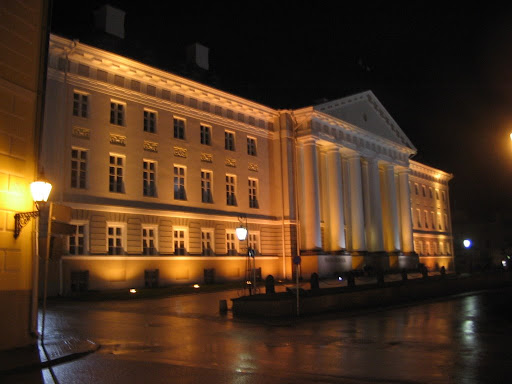
I recently received a letter from the University of Tartu alerting me that the Regional Security Officer at the American Embassy in Tallinn would be in town to discuss an "event" that occurred involving an American student; an American student of African heritage.

Of course I didn't go and meet the officer. I had wood to load into the ahi and ice to remove from my windshield. I had a bad feeling though that another student of non-European descent had fallen prey to the skinheads of Tartu.

I have heard several second-hand stories of black or Asian students accosted late at night by purposefully bald-headed gentlemen who feel it is their personal duty to ward off such undesirable persons from their City of Good Thoughts. Usually, nobody gets hurt. The message, though, is clear. You may recall how the efforts of the purposefully bald allegedly caused the Dutch ambassador and his Cubano* male partner to leave Tallinn three years ago.

What to do? In these situations I pity law enforcement. You can't really arrest people for being purposefully bald or listening to message-driven heavy metal music or having tattoos. If you choose to decorate your living room with swastikas, that's your prerogative. The politsei have real business to attend to, like stopping crazy drivers on the Tartu-Tallinn road.

And besides, how do you know the purposefully bald gentleman in question might be a threat to society? He could just be a Hare Krishna. And if you try to track down a perpetrator, who has perhaps fled to the secret lair of the bald, how could you identify him? "What color eyes did he have?" "Blue." "What color hair?" "Skin."

But then students from outside Estonia come to visit the land of free wireless and online voting and they get harassed by some genuinely scary dudes. I once was held up for cash by a very intimidating purposefully bald man dressed in leather in Tallinn. He explained to me in Estonian, then Russian, then Finnish, and finally English (I was too amazed by the tattoo on his face to respond) that I should loan him some money. I obliged him; he seemed threatening, even though our ancestors both come from Europe.

Another time a pack of prematurely bald young men passed me on the street, one gave me the evil eye, to which I answered back a boisterous "tere päevast!" I secretly ponder what is the position of the baldheaded on persons of Mediterranean background. Did we spend too much time in the kiln of the creator or were we baked just right? In any case, we are probably low on the list: I mean, who has time for pestering paesans when there might be an unsuspecting Indian student on the next block?

I really have no idea what the solution is here, and I am not sure the Regional Security Officer at the American Embassy would know either. Without a crime, even a hate crime, there is no criminal. And even if you haul the perpetrator before the court, it's only one person, not an entire way of thought, that is on trial. As a resident of this city, I genuinely empathize for those people who are darker than blue. At the same time, I feel powerless when it comes to finding solutions.

esmaspäev, jaanuar 05, 2009

if the glove does not fit

I promised that I would not post on the trial of the four Bronze Soldier "defenders" until there was a verdict in the case, and today there was a verdict: not guilty.

The four -- Dmitri Klenski, Mark Sirõk, Maksim Reva, and Dmitri Linter -- had been charged with conspiring to foment the two nights of unrest in Tallinn in April 2007 in response to the removal of that statue to a military cemetery.

While some Estonians may have authoritarian impulses, the truth is that this country is as permissive as its nordic neighbors, and the BS riots were no exception.

The government didn't rip the statue out of the ground and dump it in the Narva river in indignation at the execution of almost all their predecessors by the Soviet state in the 1940s. No, they invited Lutheran and Orthodox clergymen to purify the ground and did DNA testing on the soldiers' remains to return them to their families.

The stone platform for Mr. Bronze was carefully assembled brick by brick in his new home at the military cemetery, only lacking the hammer and sickle halo that adorned the monument at Tõnismägi. "Careful with those bricks," Minister of Defense Jaak Aaviksoo perhaps muttered to his subordinates during the removal. "We want to make Härra Pronks' new surroundings as comfortable as possible."

The violence and alcohol-fueled looting that followed the removal has inspired many fingers to be pointed in a variety of directions. Some blamed the stubborn Prime Minister Andrus Ansip and his eager helpers Rein Lang and Jüri Pihl for stirring Tallinn's beastly youth to burn flags and steal Sprite.

Others blamed the nauseating 24-hour coverage by state-owned Russian TV news programs for creating an intense atmosphere of unease where any hiccup or sneeze near the monument was repackaged into propaganda and broadcast to the hungry masses.

I personally blamed demographics. The more Estonian Tallinn gets (55 percent of Tallinn residents identify as Estonian today), the less the city's residents wanted to deal with a May 9 celebration in the town center for eternity. They didn't necessarily want to remove the statue, but they also didn't necessarily care if it was gone either.

The state prosecutor's office, though, blamed Sirõk, Linter, Klenski, and Reva for organizing what was an extremely unorganized event. They had to put someone on trial, didn't they? They couldn't put themselves, ITAR-TASS, or the Estonian Statistical Office on trial. The four activists' path to the court room was clear.

If anything, they could have tried them for poor decision making or lack of organizational skills. But, in the end, the effort to tie recorded phone conversations and e-mails with urban anarchy didn't wash with the judge. In some ways, I am pleased that Estonia has demonstrated that it has a functional judicial system, where a citizen put on trial, even one as disliked as Klenski, can walk out of the court room with a big, clown-like smile on his face.

I am also pleased that this event/circumstance/situation, barring any appeals, has run its course. Sirõk can go back to school; Klenski can go back on ETV to crow in his overdone Estonian; and Linter and Reva can go back to doing whatever it is they did before. Your 15 minutes are up for now fellas, but don't worry, if Deep Purple can still get gigs in Tallinn, so can you!

laupäev, jaanuar 03, 2009

an encounter with the godfather

Wintertime is the time to be in Lõuna Eesti. Tallinn may have the medieval flavor, kitschy bars, and money-leaking tourists, but Tartu and environs have the winter sports, attractive Olympic gold-winning athletes, and somewhat less-attractive wannabe athletes as well.

Tartu also has the ice and snow, and the strange appearance of the sun during the past few days has meant that young fathers like myself who wish to spend quality time with their daughters have ventured forth, sled in hand, child in tow, to the Tartu Spordipark for some rigorous kelgutamine -- sledding.

All would be well, except yesterday my naine and lapsed had an encounter with Priit Pullerits, the godfather of Estonian journalism, a Postimees editor and columnist who provides his fellow maarahvas with crucial insights into winter sports and integration.

Pullerits, as you may recall, in 2007 raised the important question of why gay rights groups choose to parade down main thoroughfares, rather than gather beside lakes. But yesterday, he had something else on his mind: why were all these abominable tykes on sleds crowding up his cross-country skiing trails!

You see, the Tartu Maraton is just weeks away, and the Tartu Spordipark is the ideal place to train for the marathon, a 63-kilometer test of endurance. Kiddies on sleds may be useful inspiration for those journalists who wish to encourage Estonian population growth or stress the importance of exercise for today's Internet-loving slothful youth, but when the Estonian godfather of journalism straps on his suusad [skis], he means business and y'all better get the hell out of the way.

Fortunately, I wasn't there to witness Pullerits scold the children for interrupting his marathon training, but I did quiz our friend Mart, who was present for the scolding, about it. "So did you fight him?" I asked Mart, a calm man of Seto extraction who teaches nature restoration. "I beg your pardon?" he replied politely. "Did you fight Pullerits when he told you your kids couldn't sled on the course?" I asked again. Mart smiled to himself and responded in the negative.

Today we went back to Tartu Spordipark and were pleased to see that no one had heeded Pullerits' advice to stay completely clear of the cross-country skiing tracks. On the other hand, there were now so many skiiers that the kids and their sleds had migrated to a lone hill unfrequented by would-be Marathon participants. Besides, what responsible parent would let their kid sled in front of a Marathon man like Pullerits anyway? That would be a recipe for disaster.

And though the problem appeared to have been solved -- kids and sleds get their one hill, Pullerits and other ski-heads get the rest of the park -- someone had posted a large red and black sign at the entrance to the Spordipark that proclaimed that sledding on trails designated for skiers was strictly forbidden. "Ah," our friend Helen pointed out when she saw the sign. "I can see that our friend Pullerits has been here."

teisipäev, detsember 23, 2008

here's €1.7 billion, next time be more careful

Just two days shy of Christmas, jõuluvana, also known as the International Monetary Fund, decided to present Estonia's southern neighbor Latvia with a gift worth €1.7 billion.

The aid is part of a broader €7.5 billion package for the lätlased, which includes financing from the EU, all the nordic countries except Iceland, the Czech Republic, Poland, and the World Bank.

Despite horrible Eurovision entry after horrible Eurovision entry, jõuluvana has taken pity on poor Latvia, and the country will continue to peg its currency to the Euro. In explanation of its gift, the IMF attributed Latvia's problems to "years of unsustainably high growth and large current account deficits" that have "coalesced into a financial and balance-of-payments crisis."

Hmm. That sounds vaguely like the scribblings of that open-faced sandwich-loving analyst from Danske Bank, Lars Christensen. Poor Lars. So many people said he was wrong, but he was actually right, though the ability to forecast economic upheaval is hardly a skill that wins one friends.

In Estonia though, unlike in Latvia, there is moderate faith in the government. The Ansip malaise has morphed into the Ansip apathy. It is not that the people are apathetic about what is going on around them. I think instead they are resigned to the leadership that fate has dealt them. If not the stubborn liberal Ansip, the ardent patriot Laar, and the pig-farming social democrat Padar, then who? Savisaar?

The Mayor of Tallinn himself has been active as of late. He even sent me a Christmas card. It is hard to make sense of Härra Savisaar. Once in awhile he says something relatively cognizant, but most of the time, I have no idea what he is talking about. From my foreign perspective, he appears to be desperately throwing ideas at the wall, hoping one will stick. But Savisaar was last prime minister in 1992, and he wasn't even elected to that position. He's about as shiny and new as Color Me Badd.

President Ilves meanwhile has cautioned against the rise of economic populism while reassuring us that Estonia has seen worse in its history. Next year will see two elections in Estonia, with European parliamentary elections in June and municipal elections in October. If anyone were to play power politics in Estonia, some time before either of those elections would suffice. True, true, and indeed.

And so we sit eating sauerkraut and gingerbread, patiently awaiting what 2009 will bring us, a year for which nobody, including Lars Christensen, has forecast good news. For the rest of 2008, I am looking forward to more tasty küüslaugujuust and the final episode of the historical drama Tuulepealne Maa. How about you?

neljapäev, detsember 18, 2008

suurepärane

My Estonian language has progressed to the point that I am able to get by in daily life without needing to switch to English or relying on my own personal interpreter to explain things to a confused cashier.

This benefits me greatly, as many Estonians think they know English but construct sentences that are equal in absurdity to the ones I have spoken.

One fellow mixed up the words "mean," "mind," and "think." "What do you mean about the apartment?" he asked. "I don't mean anything," I replied. "Oh, I am sorry, what do you mind about the apartment then?" These are the kinds of exchanges that only Timothy Leary or Noam Chomsky would appreciate.

In regular life, I am a bit clumsy anyway. This is why I write, because it is so much easier than talking. I might be physically standing in line waiting to buy some groceries, but, mentally, I am miles away. In New York, this can get me into trouble, like at a deli, where the guys take your order in the local accent. "Soyawanbaloneynmustadonroi?" [Do you want bologna and mustard sandwich on rye bread?] And if you don't answer with a snappy response or a quip about A-Rod, they look at you like you are from another planet.

While living in New York, still a city of immigrants, I developed fairly perceptive ears. Two guys could approach me on the street and say, "Gabba gabba hey?" and I would respond, "Right, just hop on the J and get off at Delancey and Essex." I would think little of their accents. Jamaican, Korean, Kaliningradian -- who knows and who has time to care?

Here in Eesti though, they just think I am hilarious. I went to visit Epp's Onu Tiit the other night, who has infamously bad diction. While Onu Toivo, usually lubricated by a few beers, has excellent diction and is a joy to listen to because I can understand every word, Tiit is a lõuna eesti mumbler.

Toivo would say, "Juu-stiin, kas sa tead, et sa räägid niiiii hääästi eeesti keeelt? Iiniimesed on elanud siiin üümbes 50 aaastat ja mitte üüks sõõõna!" Tiit, meantime, would say something like "J'n, t'd 't, s' r'g'd ni' h's'ti 'est' k'lt blub blub blub blub blub viiskend blub blub blub." Even though these two wild and crazy guys have their own linguistic idiosyncrasies, they are still considered "normal." I, on the other hand, am abnormal.

"Justin, kas sul kitarri on?" asks Ave-Liis, Tiit's daughter.

"Jah, on olimas," I respond. It should be olemas, "O-leh-mas," but I said olimas, "O-lee-mas," by mistake; a slip of the tongue caught too late. This prompts a chuckle and a repetition of my mistake. "Ol-i-mas, Ol-i-mas," she teases. I suddenly know how those poor first-generation Sino-Americans feel when they are ridiculed for substituting the letter 'R' for the letter 'L' and vice versa.

Inside the house, where I meet cousin Tomi for the first time, I notice his cheeks ballooning in suppression of laughter as he listens to a Yankee speak his language. I remember another cousin, Ken, now in his early teens, fighting a similar urge to burst out laughing as he heard me try to mumble like the best of them. Estonians, the sober ones at least, are usually reserved and not prone to fits of giggles. But have me speak to them and they are one "olimas" away from losing all control.

Yesterday at Tartu Kaubamaja, I engaged another acquaintance, whose cheeks grew equally rosy as I rattled through my accented words and awkwardly constructed sentences. [I use a lot of English constructions: "Have we met before?" is "Oleme kohtunud enne või?"] And then I crossed the boundary by wishing Häid Jõule [Merry Christmas], to which I received a terse "Jah" and a dry "suurepärane" [wonderful] in response.

I complain to Estonian friends, but they assure me that my language is suurepärane, and that they too have bad English accents [which is probably correct, though I don't notice their accents that often]. And even if I say it right, I still get it wrong. I remember walking into a friend's place in Tallinn and exclaiming "noh, kuidas su käsi käib!," only to be met by reticent stares. "You didn't say anything wrong," my friend said later. "It's just the way you said it."

There is a great scene in the film 101 Reykjavik where one of the main characters has a chat with his foreign-born brother-in-law in Icelandic, then makes fun of his foreign accent behind his back. [Hlynur, the 30-ish main character in that movie, is also shiftless and has an absent, alcoholic father -- oh, the similarities between these two, small countries!] With so many encounters like these, I can't help but wonder if I have become that guy.

pühapäev, detsember 14, 2008

hõberebane

It happened on Friday morning in front of the national library on Tõnismägi in Tallinn. The wintery air was crisp, the heavens a lucent grey.

And out of a black car stepped a familiar, medium-sized older gentleman wth impeccibly groomed white hair.

It was Arnold Rüütel, the third president of the Republic of Estonia, and, at one time, chairman of the supreme soviet of the Estonian SSR.

I read somewhere or another that Rüütel was referred to as the hõberebane -- the silver fox -- for his well-coiffed ambiance and political savvy. Maybe some British expert like Anatol Lieven wrote it somewhere. Anyway, I tipped my hat to Härra Rüütel, who responded with a kind acknowledgement of my presence.

For some reason, a sizeable proportion of Estonian males begin to resemble Santa Claus in old age. Rüütel was one of these jolly fellows. He looked as if he might have had a sack of toys stashed somewhere and some gingerbread up his sleeves. With a wrinkle of his nose, Rüütel was on his way, saying, "noh, noh, jah, jah!"

I approached our car and told my abikaasa about my experience. "I saw the silver fox!" I said. "Who?" she answered. "Arnold Rüütel!" I responded. "Oh," she shrugged, reading a newspaper. "That's nice. Will you bring another box from the car?"

Throughout the day, I encountered a similar lack of enthusiasm as I related my Rüütel encounter. I couldn't understand why nobody cared. This was Arnold Rüütel. He had danced with Dubya; he had told Gorby to stick it. He was the silver fox. Our friend stopped by and I told her, slightly fudging the Estonian.

"Kas sa tead, et ma nägin hõbedane rebane täna hommikul? [Do you know that I saw the silvery fox this morning?]," I said, hoping for some response.

"You mean the silver fox," she replied dryly. "Rüütel," she said, spitting the word out. Then she shrugged and changed the subject.

Later I told Epp's cousin Jaanus about the encounter at the dinner table:

"Jaanus, do you know who I saw this morning?" I asked.

"Who?" he asked earnestly.

"The silver fox!" I exclaimed.

"Where?" he asked enthusiastically.

"In front of the national library," I answered.

"You saw a silver fox in front of the national library?! That's incredible," laughed Jaanus. "I didn't even know we had silver foxes here in Estonia. I wonder how one wound up in the center of Tallinn!" he continued.

"No, not a silver fox," I said, "the silver fox. Arnold Rüütel."

Jaanus suddenly looked disappointed, scratched his chin, and looked at his wife. "He's called the silver fox?" he said, laying his utensils beside his plate. "I never heard that before."

His wife Lemme also looked puzzled. "Silver fox?" she toyed with the phrase. "I never heard him called that before either." And then Jaanus and Lemme shrugged and changed the subject.

kolmapäev, detsember 10, 2008

nõukogude naine

The other day, an acquaintance dropped off a batch of newspapers and magazines, including a treasure trove of old copies of the Estonian woman's magazine Nõukogude Naine [Soviet Woman].

Several years ago I stood in the office of Eesti Naine in downtown Tallinn and asked the editor if she was the first editor of the publication, which I assumed was only a decade old, like the magazines Anne or Stiil.

"Oh, no," she replied. "I might be editor number 13 or 14." The publication Eesti Naine was actually launched in 1924. After the Soviets took over, it became Nõukogude Naine, a publication of the Estonian Communist Party.

Nõukogude Naine
may have published some copies in 1940 and '41, but, according to the party, it was launched in 1945. It reverted to being Eesti Naine in 1989. The first issue of that year says that it is a party publication, the fourth issue makes no mention of it, and later issues no longer use 1945 as the start date of the publication, but 1924.

I have read somewhere before a mention of the "Brezhnev stagnation." This was a period, from approximately the late 1960s to the mid 1980s when the Soviet Union forever lost its ability to keep up with the West. From the vantage point of 2008, it is hard to gauge what this really means. Some Estonian homes look like they haven't changed much since the 1930s, aside from a laptop here and a television set there.

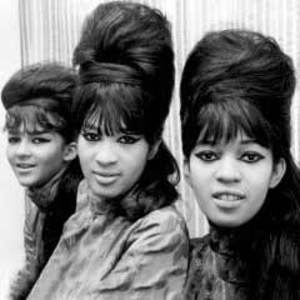
Looking at copies of Nõukogude Naine, though, you can witness stagnation in the form of clothing and hair styles. If you picked up an American magazine from 1966, you might be greeted by a beehive hairdo, while a 1976 issue might have a woman with a shag, and the 1986 issue might be framed by shoulder pads and exorbitant amounts of cosmetics. In Nõukogude Naine, though, the women mostly look the same, year in, year out. They care not so much for looks, but for hard work in service to the state.

One evening last week, I met with our friend's mother, a grandmother who was in town to spend time with her grandchildren -- friends of our daughters'. Vanaema complimented me on my Estonian language skills, and informed me that her first foreign language was Russian. She had learned it in Siberia.

I was surprised, because most of the deportees I have met are in their seventies or eighties. But this Vanaema was only 5 years old when they deported her family in 1949. I asked her how it happened, and she then launched into a long tale of how the secret police had first picked up her brother and then went to get her mother, with the kid sitting in the car to drive the hopelessness of the situation home.

They were marked for deportation because her father was a member of Omakaitse -- the equivalent of the Estonian national guard. Many Estonian men, young and old, were in this organization. My wife's great-grandfather, then aged 50, and his immediate family were also deported because of his membership in this organization. According to Vanaema, her mother was forced to sign a paper by the police saying that she willingly went to Siberia.

They were deported at night. She said they traveled by armed convoy to the train station -- apparently, the Soviet troops were getting picked off left and right by bandiitid -- forest brothers. The family was put into a cattle car and shipped east for two weeks until they reached their destination. They didn't return until the late 1950s. There would be no Happy Days for their family. The father, who had been sent to a separate camp, also made it back, but in bad shape. He didn't live long after his return. At this point Vanaema -- and Estonian grandmas are pretty stoic -- started to cry.

"You don't have to keep going if you don't want to," I said. "No, I have to tell the story so that people know what happened to us." She said that when she has told some foreigners about it they ask, "Well, why didn't you call the police? But it was the police that were doing it!" At that point, her two tiny grandchildren, who seem so far removed from this sordid tale to almost render it surreal, ran up, and the ghosts of the past faded into the shadows. The conversation switched to lighter fare.

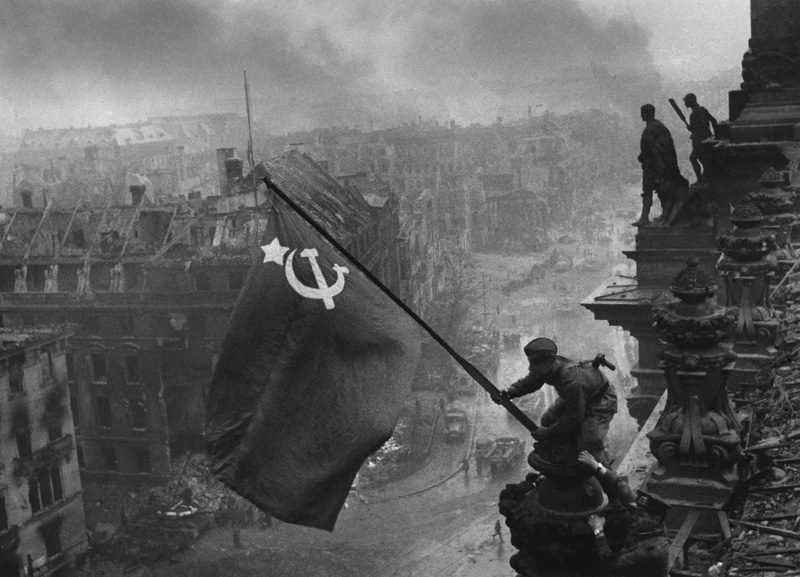
In the May 1976 and May 1985 editions of Nõukogude Naine, there is the same photo -- of the Soviet soldier hoisting his banner aloft from the burning rooftop of the Reichstag. This is a "victory photo" -- meant to reinforce faith in the state leadership. Almost every state has such symbols. But how real could they have been to women like this Vanaema? Nõukogude Naine may have "officially" launched in 1945, but many of its readers into the 1970s and 80s must have started reading it back when it was Eesti Naine.

It was a social reality built on an illusion -- that history started only 30 or 40 years previously. Before that, it was some messy mix of workers' uprisings and secret meetings where Estonian communist martyrs like Viktor Kingisepp were in attendance. I wondered what it would be like if one Estonian political party took over the state today. It would be like the free party papers we get in the newspaper, Eesti Eest -- the Isamaa-Res Publica Liit publication, or maybe Kesknädal -- the Center Party weekly, except all magazines and television programs would be like that. Marko Mihkelson's gardening tips. Ain Seppik's baking secrets revealed. The thought is almost too much to bear.

I first heard about the deportations from a deportee. It was my wife's Aunt Salme. I had opened some of her photo albums, and seen photos of earthen shacks in what appeared to be the tundra. It was from her stint in Siberia, she had explained.

Salme had been deported in 1949 for being the daughter of a prosperous farmer, Estonian War of Independence veteran, and national guard member. These connections made her a prime candidate for servitude in the eastern wilds of the Union. Earlier this decade, she received a medal from President Arnold Rüütel for surviving the ordeal.

Salme took an interest in her family, and usually had some questions for us written out on a sheet of paper before we would visit. She wanted to know about my job and to see our children. She had a reputation for being an organizer within the family.

We last saw her in early summer -- we took our youngest daughter to her Tallinn apartment. Salme said she wanted to see the girl who has the same name as her mother before she runs out of time. Our daughter, though, slept most of the hour or so that she was there. But at least she got to see her, because Salme passed away last week.

When I think of Salme's story, the story of Vanaema, and the story of many of those Eesti Naine, then Nõukogude Naine, then Eesti Naine readers of years past, I can't help but feel a bit befuddled. These women are no different than the young women of today, except life dealt them unfortunate circumstances that they ultimately had to digest and live with.

Why did they get the booty end of the stick? Why did they, of all people, have to travel to Siberia via cattle car, their families broken, their property confiscated, their health imperiled, only to come home to a fresh issue of Nõukogude Naine that made no mention of their very immediate history?

When Nõukogude Naine reverted to Eesti Naine, suddenly the Soviet crypts were opened. In the pages of the 1989, 1990, and 1991 issues there are photos of cultural societies from the 1920s and 30s. There are stories of the anguish of the 1940s, spilled across the pages. In recent years, the personal memoir has become one of the most appreciated literary vehicles in Estonia. One can read Imbi Paju's Memories Denied or Leelo Tungal's Comrade Child to start. For some reason, most of the authors happen to be women.

esmaspäev, detsember 08, 2008

what's the matter with kohtla-järve?

The other day I asked a typically boisterous friend about her hometown. Noh, kus sa oled pärit?

"You mean, like, where I was born?" she answered. I replied in the affirmative. Then she grimaced, and blurted out ... "Kohtla-Järve."

The funny thing, is that I have seen that look of "please don't kill me because I am from Kohtla-Järve" before. Last summer, another friend similarly confessed her origins, with the same startled hesitancy.

I have driven through Kohtla-Järve. In the Estonian psyche, or as much of it has rubbed off on me about how eestlased view the place, Kohtla-Järve is one of these Soviet labyrinths of apartment blocks, poverty, and Russophones, where if you ask for milk in the store in Estonian, you might get carbonated water or eggs. Since there are no water parks or medieval buildings, it is undeserving of a visit, and so nobody goes. But when I drove through, it looked pretty normal. Why, they even had their own Selver.

Intrigued, I pulled our friend aside and asked her why she made "that look" about her hometown. She at first denied having made a look, but launched into a long tale of a small village called Järve that had blossomed into a Soviet factory town home to "Homo Sovieticus" -- Russians, Ukrainians, Georgians, Kazaks, Koreans, and every other nationality under the sun of Stalin that had been uprooted and replanted on conquered Estonian soil.

With little connection to the actual place where Kohtla-Järve was located, the logic went, its first and second-generation residents cared little for its upkeep, and "the city" -- actually a grouping of several, geographically distinct islands of settlements, went downhill after 1991, hit hard by the collapse of the Soviet state-planned economy.

The population censuses from the second half of the 20th century tell the story of Kohtla-Järve's rise and fall. In 1934, there was no city of Kohtla-Järve. In 1959, the city claimed 40,000 residents. By 1979, KJ was home to 87,000, and in 1989, 92,000. Today, 20 years later, around 44,000 people live in Kohtla-Järve, one fifth of whom are older than 60. How low will Kohtla-Järve go? I don't know, but I expect Pärnu to to replace Kohtla-Järve as the fourth largest city in Estonia -- after Tallinn, Tartu, and Narva -- within a few years.

According to our knowledgeable and very young friend, who -- surprise, surprise -- has no intention of returning to her hometown, KJ is dominated by an aging class of Keskerakond politicians and little old ladies who adore Tallinn Mayor Edgar Savisaar and represent reliable votes in parliamentary elections [indeed, KESK won 55 percent of the votes in Ida Virumaa, compared to rivals Reform, who garnered only 15 percent support in the March 07 parliamentary elections].

That may represent her political interpretation of Kohtla-Järve's political life, but it does not seem like a sustainable dynamic for the future. Eventually, Kohtla-Järve's geriatric voting class and the politicians they favor will pass from this Earth. And then what? Sadly, neither of our Kohtla-Järve-bred friends will be there. Nor will KJ native and former Estonian Foreign Minister Kristiina Ojuland. Like so many Kohtlakad [or whatever you call residents of that city], they have simply moved on.

kolmapäev, detsember 03, 2008

not bad.

There is a surprisingly readable story in Spiegel Online about the "NATO-Russia" border, as if NATO was a great power with its own leadership, flag, and military ... oh wait, never mind.

Predictably summoned is the metaphor of Narva, the two castles opposing one another on the Estonian-Russia border, the one on the left symbolizing the Catholic and, later, Protestant West, the one on the right symbolizing the Byzantine, and later Orthodox, East. Except the city on the left is inhabited by people of the city of the right's persuasion. The world lacks ordnung, as writer Walter Mayr learns:

In the city of Narva, where Stalin had apartment buildings and factories built over the ruins of blown-up Baroque houses, 96 percent of residents are ethnic Russians. Only 40 percent have an Estonian passport. To this day, almost one in five city residents have no citizenship to this day, while the rest have opted for Russian citizenship.

There is an interesting correlation in the minds of some writers and readers between citizenship and loyalty: as if passports were handed out in Narva from the back of the lorry, the situation would change. I would like to remind those who would read, that most of those on trial for the pronksöö riots are Estonian citizens. But I will accept that citizenship serves here as a metaphor for national influence. The Estonians, I suppose, are free to do as they like with their own citizens. The Russians, as we learned in Georgia, feel the need to protect theirs, wherever it suits their geopolitical interests. And the stateless? Under whose dominion do they fall?

Spiegel's Mayr is definitely not the first to play with these ideas of Estonian apocalypse. But what frustrates me is the extent to which local officials play along.

See Mart Helme, former Estonian ambassador to Moscow and patron of the Estonian National Movement, describe Narva as a ""frozen and hungry fifth column," full of Kremlin spies waiting "to creep out into the streets and provoke clashes because Estonia troops are incapable of staving off the Russian army as it marches into Narva."

Now witness Narva City Council head Mikhail Stalnukhin conjure up a South Ossetia situation for Narva: "Such a scenario can only become reality," Stalnukhin is quoted as saying, "if people in Estonia interested in seeing it happen make the preparations. In other words, if a genocide takes place first."

Comments like these make Andrus Ansip and his rival/partner Edgar Savisaar look like adorable, centrist teddy bears. Grown-ups are desperately in need to calm Helme's déjà vu vision of Baltic eclipse and Stalnukhin's nutbar allusion to genocide. And in walks Foreign Minister Urmas Paet, "a man with a typically Nordic mix of a gloomy and placid temperament, " to assuage the the working people of Narva's concerns over the war in Georgia:

"For two hours, speaking in Russian, I attempted to explain to the angry workers why the Estonian government supported the Georgians, not the South Ossetians," says Paet in his office in the Estonian capital Tallinn. "We have a communication problem with the ethnic Russians in our country, and that must change."

What I have found interesting in recent months, is how Estonia has suddenly become a focal point of those describing a "new cold war," while Latvia, where even more people are stateless, where even more people belong to ethnic groups other than Latvian, seems to have been forgotten. Is it just strategically unimportant? Is the focus on Narva as a future possible site of discontent just part of an amazing spin-job launched from the Estonian Foreign Ministry to squeeze NATO for more support? Is Kaval Ants picking the master's pockets?

President Ilves now appears, sans colorful descriptions, to address the shortcomings of the alliance to which Estonia so proudly belongs. The American writer Tom Bissell once described Ilves as Estonia's "bow-tied and owlishly appealing president." I like that word "owlish." I'll make sure to use it sometime:

Says Ilves, it is high time to clarify how much Article 5 of the NATO Treaty would be worth for Estonia in an emergency. Article 5 describes the obligation of alliance partners to protect a fellow NATO country in the event of an "armed attack." But, as even Ilves knows, NATO is not responsible for domestic conflicts within Estonia.


Hmm, fearmongering much. Or just being prepared? If I make it to Narva one of these days I'll make sure to bring along some protective nordic walking poles to fend off any domestic conflicts at the Kerese Selver or occurrences of genocide at the local Swedbank office. A dispute over the last six-pack of Jõuluporter could trigger World War III! But, in all, a pretty fair piece with some honestly included. Not bad.

esmaspäev, detsember 01, 2008

15.30

15:30, or 3:30 in American parlance. That's the time in recent days I have decided to close the curtains in our home. It's not that it ever really got "light" outside, but by half past three, it's dark enough that our neighbors can easily see inside, and we'll have none of that.

I am somewhat proud of myself this year, because that overwhelming desire to have a glass of wine or bottle of beer every evening has yet to set in.

Last year, I easily found out why alcoholism reins supreme in northern Europe. The pressure of light deprivation makes alcohol consumption an easy out. It's not that I became a drunk in anyway; it's that I consumed more during the winter and then, as soon as the snow melted away and the sun came back out, the consumption noticeably stopped.

If Estonian summer, with its infinite possibilities of endless daylight and open terrain, embodies opportunity for self-realization and enjoyment, winter is the opposite. Instead of wanting to be outside, you find yourself asking, what's the point of leaving the house at all, unless it's to buy some more food and ... alcohol? The days of late November and early December pass by into a fog of grayness that brings to mind the smokey moors of Monty Python and the Holy Grail.

I begin to wonder if my generation's lust for extreme experiences has manifested itself in some peculiar way by my choice to domicile in a northern country. Some guys bungee jump off bridges; some ladies pierce their tongues and eyebrows; I currently live in the environmental equivalent of a submarine.

At the moment, I am not exactly happy in the, "warm up the feijoada and grease me up, it's time for Carnaval!", kind of way, but I am also not depressed in the, "I wanna listen to the Depeche Mode album alone!" kind of way, which seems to be a common condition among many Estonians. I feel pretty normal. Normaalne. See. I have adjusted, and with limited need for alcohol or chocolate to balance my outlook.

In fact, I feel more creative than usual. I feel like writing and reading and making mixes of my favorite tunes. Maybe we will even steal away some time to go to Pöff, the Black Night's Film Festival. This year it is taking place also in Tartu and in such far flung Estonian locales as Kärdla and Jõhvi.

Yes, in a time of endless darkness, the dividing line between sleeping and waking is even more blurry. Films taking on superior meaning. If it feels like you should be tucked in and in bed by 7.30 pm, then how exactly do you feel at 9.30 or 11.30 pm? I'll tell you how you feel, you feel like eating gingerbread, drinking glögg, and watching Singing with the Stars [Laulud Tähtedega]. Oh wait, Glögg has some alcohol in it.

Well, while Itching for Eestimaa does not condone alcoholism, it does condone the judicious use of glögg, movies, and other guilty pleasures to see you through the darkest time of the year. What special recipes do you have for making it through what can be a trying time?

reede, november 28, 2008

for sweden ... in time

SAS wants to buy the Estonian government's remaining 34-percent stake in Estonian Air, the national air carrier. And the Estonians are considering the sale. According to Prime Minister Ansip, the airline "lacks vision" and is not worth another round of state financing.

It is not unbelievable that the deal will be done. I had once suspected that when the Estonian well ran dry for Scandinavian companies, they would hand the firms over to someone bigger -- the Germans or the Russians -- and head for warmer climes.

The truth , though, is that in the current global financial situation, there are no hotter places to invest. And the Scandinavian firms have pumped so much money into the Estonian economy that they are more likely to wait out the current recession for a time when their investment is returned.

If Estonian Air turns into SAS Estland, then it will follow the trend of Scandinavian owners taking more direct and visual control over their Baltic subsidiaries. When I first moved to Estonia in 2003, I could have strolled down to central Tallinn and enlisted to services of Estonia's two largest banks, Hansapank and Eesti Ühispank, to hold my money.

At that time, those banks were owned by Nordic companies -- Swedbank and SEB, respectively, but as of this autumn both companies have been remade in the images of their parent. Hansapank became Swedbank in autumn -- a sign of the bank's commitment to the market, said outgoing CEO Jan Liden, and I am personally unsure of just when Ühispank morphed into "Skandinaviska Enskilda Banken."

The other day we were dispatched to Ühispank in downtown Tartu only to find no trace of of the company. In its place was SEB instead. Even inside of SEB I had a hard time finding anything on it that said "Ühispank." And I have made the switch to speaking of "Swedbank," rather than "Hansapank," with little effort. Those around me speak of "SEB," pronounced "se-beh" in Estonian, as if it had always existed.

I am interested to see how this latest round of Swedification develops. Some reports say the government is inclined to sell, others say that it is inclined to buy SAS out. Either way, 2008 has seen a significant change in the domestic marketplace. The old brands are no longer there, and the presence of the "new boss" in the Estonian economy is evermore apparent.

teisipäev, november 25, 2008

puhkusel pärnus

And so it came to pass, that I was given time off from work. Weary of another flight, I pleaded with my mercurial spouse to spend it within the borders of the Republic of Estonia. All I wanted was to get away to the west coast of Eesti, where I could indulge in saunas and swimming pools and maybe get a massage.

While the spa Eden of Saaremaa seemed like the immediate target, like true mainlanders we decided that the ferry ride to Muhu was just asking too much and settled on Pärnu instead. Pärnu, pop. 44,000, is the fifth largest city in Estonia, located on the country's southwest coast. It's also the "summer capital" of Estonia, which made our choice of visiting during the first major blizzard of the year somewhat unique.

The road from Karksi to Pärnu was tiring. I was already beat from driving from Tartu to Karksi and the roast pork, sauerkraut, and kohupiimakook didn't help. There are few signs of humanity in between the two places, other than the occasional rullnok driver speeding past you. You hit the town of Abja-Paluoja then stretch through the woods past the lights of Kilingi-Nõmme. This is my wife's family's neck of the woods. Every family story is decorated with strings of vowels that denote a place where one or the other of them have lived or worked or taken a dip in a lake.

According to travel guidebooks, south Estonia is just another band in the layer cake of "the Baltic countries," but in my mental geography, we were at the bottom of Estonia, and maybe something bigger. With south Estonia also begins the zone of Baltic-Finnic languages that stretches north past the Arctic Circle. Sami, Karelian, Vespian, Finnish -- it all started a bit south of Häädemeeste.

We pulled into Pärnu at night in the snow, and headed to Terviseparadiis -- "Health paradise" -- a modern-looking spa right on the beach. In the cold wind, five flags flapped from atop flag poles in front of the spa -- the flag of Terviseparadiis, the EU flag, and the flags of Estonia, Finland, and Sweden. The interior design of Terviseparadiis seemed to adhere to the aesthetics of the nordic tourist: futuristic metallic furniture, wood-laminate hotel-room flooring, and bossa nova elevator music. They didn't even have an Estonian Bible in our hotel room, though there was a copy of the Uusi Testament in Finnish.

The next day I finally got my long-awaited massaaž, which, as the signs indicated, is also called hieronta in Finnish. In fact, this spa-in-Pärnu experience was taking on visit-to-foreign-country-like undertones. Did you know that the Finnish word for keefir is "piimä"? I learned that at breakfast, where I found comfort in the muesli and toast while Finns and Estonians around me indulged in marinated fish, because that's what these people eat to start the päev/päivä.

The massage did the trick; it hurt a bit too. Writing for a living kills your back. You pray for the day when you get to lay flat in a room with Eastern meditation music on and a silent masseuse by your side kneading her elbows into your spine. I'm told that Pärnu is famous for its mud baths. Though I'd love to try it, it wasn't on our agenda for this trip.


After breakfast we moved from our Scandinavian cocoon at Terviseparadiis to the aptly named "Estonia" spa down the street. From the window in our new spa we could look out on the snow-covered roofs of downtown Pärnu. Architecturally, Pärnu is a treat, with the same eye candy as Haapsalu. The streets offer up curiosity after curiosity. There are at least two really nice churches, the Lutheran Eliisabet and the Orthodox Katariina. This being agnostic Estonia, I suspect the churches more fan the passions of touring choirs, than they do the beliefs of local people.

The Estonia spa had an extensive swimming area with a variety of saunas, including a "salt sauna," where one takes handfuls of salt from a wooden bucket and smears it all over their body to facilitate the discharge of toxins from the skin. While Terviseparadiis catered to the Estonian, Finnish, Swedish, and English tourist, Estonia was clearly for the Finns. The flags of Estonia and Finland were on display in the reception area, as was a poster for a dance where one Juhani Markola was set to perform.

Middle-aged Finnish women tend to look a lot like President Tarja Halonen, which may explain some of her every woman appeal in Estonia's northern neighbor. Middle-aged Finnish men? Well one old guy kept staring at me in the hotel lobby, perhaps suspecting that I was not of Baltic-Finnic origin. I reached for one of those handy expressions I learned on YouTube. What were those phrases they were always saying to one another? Mitä vittuu sää mulkoilet siinä? Perkele? Ugh. Why was it that the only phrases I knew in Finnish were inappropriate? I decided to leave Old Man Suomi to his Ilta Sanomat instead.

In the changing room for the bathing area though I was greeted by an older gentleman who was the spitting image of the Estonian entertainer Tarmo Leinatamm. He began speaking to me in a language that sounded like someone had loaded Estonian sentences into an open blender. From the various bits and pieces that spurted forth, a mosaic containing meaning could be constructed. He had gone somewhere. A sauna. Something about women.

He then tried communicating with another guy in the room who told him directly ma ei saa aru -- I don't understand. But Finns are a stubborn sort, and they insist in speaking their own language in their little brother country, much like the Russians next door. He just kept at it, and sooner or later the Estonian guy figured out what he was talking about and told him something I didn't understand and Tarmo Leinatamm's lookalike disappeared into the showers.

"What language was he speaking?" I asked the Estonian guy for confirmation. "Soome keel," he shook his head in response. "Yeah, I couldn't understand him. I though he was speaking some really weird Estonian." The Estonian guy gave me a look that said, "no shit." Then the unbelievable happened. Another Estonian guy came in and they had a conversation. Two Estonian guys having a conversation in Pärnu spa. Imagine that.

It then dawned on me that a minority need not actually be resident to influence the psychology of a city. The steady flow of tourists from Finland meant that any given time of the year Finns were a de facto minority in Pärnu. This explained why not only the spas made sure to create a linguistic environment in reaction to this reality, but even some signs in downtown Pärnu were in Finnish. "Tervetuloa Pärnussa," I thought to myself. See, even I was picking it up.

The main walking streets in downtown Pärnu revolve around an artery called Rüütli. Estonian street names follow a familiar pattern. Every former Hanseatic city in this country -- Tallinn, Tartu, Viljandi, and Pärnu -- has an ensemble of medieval street monikers: Rüütli [knight], Munga [monk], Lai [wide], and Pikk [long]. Estonia seems unique in that political figures are rarely honored with street names: there are no Päts streets or Tõnisson boulevards. What I like are the names that distinguish a city. In Sillamäe, for example, one could stroll up Gagarini street to where it meets Geoloogia. In Pärnu, you could walk from Malmö street to Nikolai street in a few minutes.

Walking around downtown Pärnu reminded me of two other places I have visited -- the French Quarter in New Orleans and Turku in Finland. Like the French Quarter, there was a dizzying array of 18th and 19th century homes painted in candyland colorschemes, many of which were for sale. Unlike the French Quarter, there were no mounted police or dealers purveying ganja. And also, no city-destroying hurricanes, though flooding in January 2005 caused 23 million euros worth of damage here.

Some of Pärnu's architecture reminded me of Turku, but it was also its placement away from the center of national social life that evoked memories of Turku's quiet streets and maritime ambience. While Tartu is a powerhouse of elite building in Estonia -- the prime minister, minister of justice, minister of culture, minister of education, and minister of defense all call it home -- Pärnu seems refreshingly apolitical, as if all the drama of Estonian life was far away. It is very much a west coast city. Still, this is the birthplace of the country. The state was declared from the steps of the Endla Theater on Feb. 23, 1918. The theater, sadly, has not survived.

We left Pärnu in a lull in the second wave of a snow storm that caused up to 35,000 homes in Estonia to lose power. The road back from Pärnu to Kilingi-Nõmme resembled a confectioner's best work; the naked white birches guarding the sides of the roads; the ground covered in shifting snows driven by strong winds that, interestingly, made the journey possible. The wind cleared the roads of the loose powder, allowing our vehicle to coast along at around 70-80 km for most of the journey.

We passed by many small villages where there were no lights in sight; presumably, they had no power. One had to really respect the value of wood heating in these occasions. No matter what happened, there was always a stack of puu next to the house that could be used for heating and cooking purposes. The roads were clear of most traffic. I was lucky to get stuck behind a few vans that left deep tracks for me to surf all the way up into Viljandi.

Coming into Viljandi was a mess. The reliance on roundabouts killed commercial traffic. These large, 18-wheelers were the main victim of the snow storm. They were unable to make the bends and were here and there abandoned at the side of the road. At no point did I really think that we weren't going to make it. Fortunately, Estonia is mostly flat. This helped a great deal in allowing us to coast home in the wake of other travelers.

While there was a shortage of road traffic, there was also a preponderance of pedestrians. Viljandi seemed alive with people, even more alive then during the summer months. And this was a Monday night! Even out in rural communities we saw the reflectors of people braving the harsh winds to walk from one point to another. The chaos of an early winter had reinvigorated people. The desire to cuddle up with a fresh batch of piparkoogid and some hot glögg was overwhelming.

We finally pulled into Tartu several hours after we had left Pärnu. On the way in, we passed our friend Pille who was coming back from Veeriku Selver, a supermarket, with her kids on a sleigh. Epp rolled down the window and yelled out "väike Tartu linn!" and when Pille, a woman deep into her 30s, looked back, she wore the same jubilant expression as her three-year-old daughter Roos.

neljapäev, november 20, 2008

eclipse of a foreign ministry

The Social and Humanitarian Committee of the UN General Assembly adopted a document on Nov. 18 voicing "deep concern" over the "glorification of the Nazism movement and members of the former Waffen SS organization”, as well as “opening the monuments, memorials, and holding public demonstration glorifying the Nazi past, Nazi movement and neo-Nazism.”

The Russian Foreign Ministry sees the adoption of such a resolution as a great achievement, but the probable passing of this document next month by the General Assembly will have no impact on my life in Estonia and will go unnoticed by my colleagues, friends, relatives, and others with whom I have day-to-day contact.

Why? Because, contrary to the line from Sergei Lavrov's Russian Foreign Ministry, there is no mainstream revival of Nazism in Estonia. There are extremists, yes, but there are also extremists who think Russians should control all the land from Paldiski to Narva, even if Russians don't dwell in most of that territory. I believe such extremists exist, and are paid too much attention, in all countries.

I have found that in Estonia, there is actually very little interpersonal discussion of the Second World War, as most of Estonia's political and media elite are of a post, post-war generation and they are tired of it. These are people born after the Khrushchev era for whom World War II and its aftermath are as distant and foreign as Vietnam will be for my children. It makes for good pub discussion, but little else. The current economic crisis is relevant. WWII? Not so much.

Now, there are political forces within Estonia that wish to honor the personal sacrifice of Estonians, most of whom were drafted, who served in the Estonian Waffen SS. As far as I can tell from reading books, such as Eesti Leegion, authored by former Prime Minister Mart Laar, there is no open, official embrace of the German Third Reich or its values, other than its value of anti-Bolshevism, which is a value embraced also by the Russian Federation today.

Also, because Estonia is a pluralist society with a parliamentary democracy, that means that there are also political forces that do not seek to pass such sense resolutions, or who share the same interpretation of history as others. The controversial vote to remove the Bronze Soldier statue, for instance, passed by 2 votes in Estonia's 101-seat parliament, the Riigikogu. Resolutions to proclaim the Estonian SS as freedom fighters in Estonia failed. The monument to those who fought against Bolshevism in Estonia, erected by the local authorities in the West Coast town of Lihula was removed.

I have Estonian friends and colleagues who think the portrayal of the Estonian SS as freedom fighters is BS. They too are entitled to their opinion. It's nice to portray ever Estonian citizen who ever lived as acting in the state's interest. Some have even tried to rehabilitate the June 1940 puppet government that first told the people upon coming to power that Estonia would remain independent, and yet voted to join the country to the USSR the next month, with hundreds of Red Army and Navy personnel in the Riigikogu chamber to make sure the vote went the right way. They were naive, idealistic Estonian communists, the argument goes, not cut from the same cloth as their comrades next door, for whom human life was incredibly cheap.

These arguments go back and forth from time to time in the editorial pages of Estonian newspapers. Estonians are voracious consumers of historical works and their media caters to this interest with article after article about anything that ever happened here, from the diet of the peasantry in medieval Danish Estland to 1930s agricultural trends. Perhaps there is a new book out, or a domestic "thought leader" has something to share about his interpretation of the past. Were the people under consideration heroes, villains, or in the wrong place and the wrong time? You be the judge.

That's how I think we should deal with history. The Russian foreign ministry has other ideas. They don't think you should evaluate your own history by yourself. They think that they should tell you what the correct version of history is, and they will use all avenues, such as the UN, to do so.

This is what Sergei Lavrov's foreign ministry spends its time doing: telling the Estonians they don't know their heroes from their villains; telling the Latvians that they are confused about their past -- your state wasn't founded 90 years ago, those extremely rapid 22 years from 1918 to 1940 were "short-lived" -- just a blip, a two-decade-long lost weekend not worthy even thinking about. Ukraine, there was no Soviet effort to specifically wipe your nationality off the face of the Earth. Besides, you are "not even a state." If you only ascribed to the official, Lavrovian view of history, then everything would be in order.

What sad is that most of this is such a waste of time, for Russians, Estonians, and all others touched by political campaigns to rebrand history. The modern Estonian historical narrative is the same narrative that existed, in exile, during the years of Soviet rule. The reason that it emerged in Estonia proper the late 1980s, is because Gorbachev's policies allowed people for the first time since 1940 to openly discuss their national history.

And because 22 years are not really just a blip, but a whole generation's worth of time, there are plenty of people alive today, such as my wife's grandparents, both of whom saw one or both parents deported, who can explain what they witnessed and what happened to them. You cannot shut history up Lavrov; it has a way of talking whether you like it or not.

US former Secretary of State Henry Kissinger writes that Russia's main dilemma in foreign policy has been that it has yet to produce one truly gifted diplomat. Despite all of Kissinger's associated baggage, I think he may be right.

teisipäev, november 18, 2008

tarbijakultuur

It's getting cold again, which means we renewed our subscriptions to Postimees and Eesti Ekspress -- both for the pleasure of staying up to date on Estonia's goings on and for our many fireplaces -- this Tartu city house is heated by ahjud, let's not forget.

Sometimes when I pore over the pages of Ekspress or Postimees, I recall the anecdote of the great Brazilian Caetano Veloso, who used to visit supermarkets not to stock up on groceries, but for the sheer aesthetic pleasures of being surrounded by mountains of glistening fruit and vegetables.

In Estonia I similarly cannot let go easily of banking advertisements, such as the one above, for a new card from Nordea. Must alati sobib, the seductive card holder whispers to you from across the pages, "black is always fashionable."

I contemplate her black plastic bank card along with the reklaamid for various real estate deals and buckets of Rakvere saslõkk on sale at the local Selver with the voracious eye of a stranger. It is beginning to dawn on me that Estonianness is defined just as much by consumption of local and regional products as it is by song festivals or Kalevipoeg.

In fact, the way that the characters of Kreutzwald's epic Kalevipoeg -- which many Estonians cynically dismiss as a fraudulent imitation of the Kalevala -- have again become relevant is as the motifs of various chocolates sold by AS Kalev. I may have not read one verse about Kalev and his wife Linda in Estonian, but I have devoured Kalev and Linda chocolates on many occassions.

For the uninitiated, there is whole universe of advertising containing Estonianness for you to become acquainted with over time. The cute ladybugs of EMT; the wholesome expression of the childhood character Lotte, who will sell you anything from cookies to bed sheets; the savory pop of anyone of Eesti's young singers: Ines, Lenna, Liisi, Birgit; and the real life images of the living Estonian legends who come wrapped inside the advertisements in the guts of the media.

And now to the news. The Estonian media at this point seems to be asking a lot of questions, yet finding few answers. There are several ongoing debates:

Topic One: concerns the fact that Estonia's entire financial sector is essentially owned by Sweden and Finland [see above reklaam]. Is it a cause for concern? Some, say jah, others say ei. Is Estonia's banking sector still owned by Pekka Põder and Svensson as of me writing this? Jah.

Topic Two: concerns can Estonia improve relations with Russia? God knows, they keep turning this one over and over again, hoping to unpick the lock that will open the door to both respect and Russian ruble-fueled bling. Tiit Vähi, former peaminister and suurettevõtja, thinks Estonia should just remove its preamble to the stalled border treaty to make nice with Putin-Medvedev.

Vähi is also suggesting Swedbank's Indrek Neivelt for prime minister. You know things are weird when the business community is conspiring to take over Stenbock House. Talk about a fifth column! These guys are assigning portfolios to one another in the sauna. Seriously. Meanwhile, Foreign Minister Urmas Paet doesn't think that Russia is ready to repair its relations with a bunch of chudes from across the lake.

As I crumple up these articles to feed them to the fire, I privately guess that maybe Russia doesn't care that much about repairing relations with Eesti. And why is Estonia so eager to win the affection of a country that, as Pete Townshend would say, likes to fiddle about? Riddle me that, Härra Vähi.

Topic Three: There is a financial crisis going on -- what has Estonia done wrong and what can this plucky nation of 1.3 million people do to fix it? The mustachioed EU Commissioner Siim Kallas has the answers here and here. Kallas seems to be fond of the word "reform." Hmm.

Topic Four: Eesti SDE, led by Population Affairs Minister Urve Palo and Europarliamentarian Katrin Saks, thinks that Eesti Rahvusringhääling [Estonian Public Broadcasting] should put serious effort into bring Estonia's wayward Slavic community into the Estonian inforuum* by creating more programming in vene keel. Perhaps a Russian version of the soap opera Õnne 13 is in order? Tolstoi 13? The Economist's Edward Lucas agrees. Isamaa-Res Publica Liit disagrees.

Topic Five: Olympic gold medalist Kristina Šmigun-Vähi is taking the season off to spend time with her baby. This will mean less skiing glory for Estonia but more mental peace and stability for "Suusa Kiku" and her offspring. In the long run, however, this extra motherly care could turn out to benefit Estonia, as skiing runs in the family.

As you know, it's always hard for me to feed a photo of a young Estonian woman holding a baby into an ahi, but living in Estonia plus the successful integration programs spearheaded by IRL have made me more stoic and conservative with my feelings.

So, it's only a matter of time before I will be able to watch the Nordea girl go up in smoke. And besides, it's getting friggin' cold outside and there's a new batch of Estonian media delivered to our mailbox everyday, ripe for the picking, along with deals on sausages and fixer-uppers in Setomaa.

neljapäev, november 13, 2008

naabrid

The last time I checked, Estonia only has a handful of neighbors. It shares land and maritime borders with Russia to the east and a land border with Latvia to the south. It also has maritime borders with Finland to the north and Sweden to the west.

According to an interview with Foreign Minister Urmas Paet in this week's Eesti Ekspress, though, Estonia, has at least virtual borders with other countries, including Iceland and Georgia.

The question at hand was, why hasn't Estonia directly supported Iceland during its financial crisis, while it has been willing to shell out humanitarian aid to the tune of 17 million EEK [$1.3 million, €1.1 million] to help rebuild Georgia, especially when the Faroe Islands, home to 48,500 [slightly larger than the city of Pärnu], gave their Icelandic brethren a 620 million EEK loan?

Paet's response: a) a "loan is not a present; it has it's own price"; and b) "it's improper to compare Georgia and Iceland: When you have two neighbors and one has had their family killed and house burned down and the other has had one of their two Lexuses stolen, then you can't compare the two."

Except, Iceland and Georgia are not in any physical sense neighbors to Estonia. The Icelanders have an excuse for seeking out neighbors in the Baltic; other than Greenland, they actually have no neighbors. This is why Iceland is on the Council of Baltic Sea States, even though its rocky shores are not lapped by the blue waters of the Läänemeri. They're lonely. They need friends.

Georgia, though, has more neighbors than it knows what to do with. Armenia, Turkey, Azerbaijan, Russia, plus the disputed regions of South Ossetia and Abkhazia -- that's more genuine neighbors than Estonia has. Some other addresses in the neighborhood include Iran and Ukraine. So, the Georgians are not without neighbors, though they may not like the neighborhood in which they live.

But here's the question: do the Estonians consider the Greenlanders to be neighbors? Do they consider the Azerbaijanis or Turks to be neighbors to their country? "Just drive south to Luhamaa, take a left turn, and you'll be in Istanbul in about ... a week or two." No, I don't think they do.

Now, I understand Paet was just using a metaphor to make a point, that the Georgians were in more immediate need of assistance than the Icelanders. But his metaphor, coupled with Estonian policy, seems to confirm an odd trend in our young century.

It used to be that in the past one could not choose their neighbors. Today, though, countries can live in selective neighborhoods, where states that are thousands of kilometers away can seem like they are right next door, and states that are right next door can seem like they are thousands of kilometers away.

laupäev, november 08, 2008

maria ivanova

If Americans could elect a black man president, ponders Rein Sikk in the Nov. 7 issue of Eesti Päevaleht, it can't be long before "Maria Ivanova," a fictional embodiment of an Estonian Russian, makes it to Kadriorg.

With her boisterous Slavic style and perfect Estonian language, the talented Maria Ivanova could claim to speak for all Estonians, just as the gifted Mr. Obama speaks for his gay friends in the red states and little league coaching pals in the blue states, Sikk writes.

I stood on line thinking about Maria Ivanova at Selver yesterday night, when I noticed that two "Estonians" on the front pages of different newspapers could be Maria Ivanova, too. One was Robert Antropov, the CEO of Paldiski Northern Port, and the other was Luule Komissarov, an actress. Then I glanced down at my receipt and noticed that the clerk also had an pithy Estonian first name [Triin] and a longer Russian last name [Aleksejev]. "Where did all these Estonians get Russian surnames?" I wondered.

Next to me in line were three Estonian Russian teenagers. It was Friday night and Selver was busy with young people buying up booze. These kids were no different. There were two young women and one guy, and all of them looked just old enough to legally purchase alcohol. The young man was in especially good mood (two dates for the evening?) and he was speaking loudly. He then got into a conversation with a guy on line, and switched into Estonian, even hitting the dreaded letter Õ in stride. Then back to Russian, with his friends, and back into Estonian again with the cashier. I was really impressed.

When I walk into a store and I am not feeling up to it, I can get in a lot of trouble with the troublesome letter "õ." Today I went to buy a basket -- korv -- and may have asked the clerk at the mööblimaja for an ear -- kõrv. The nature with which the young man at Selver was able to slip between languages is something that will always remain foreign to me. He's from here and has heard korv and kõrv side by side for his entire life. Even if his mother spoke another language to him, he is still, in some way, a native speaker of Estonian.

Sikk's article prompted 535 comments, some of them insightful [did you know that Konstantin Päts was half Russian?] and the others your typical outburst of "tibla välja" [tibla, get out!] The Estonian word "tibla" is a derogatory, yet not wholly malevolent term for Russians. It comes from the Russian "ti bliad," which means "you whore." Occasionally, the Russian Federation is referred to as "Tibladistan." I suppose some Estonian soldiers heard "ti bliad" on the front lines during the War of Independence and made it their own -- the term allegedly dates back to the First World War.

That being said, I have never actually heard an Estonian person use this term to curse any single person or group of people. However, it always manages to surface in the online comments of article's like Sikk's. There are some real armchair rullnokad in Estonia who spend their time giving all Estonians a bad name by writing offensive things about eestivenelased in the comments of Postimees or Eesti Päevaleht.

To me, though, Sikk's proposition wasn't so outlandish. Estonians are quite comfortable with the Maria Ivanovas of their country -- indeed many "aboriginal" Estonians have names like hers. And because of the cultural fluency of Estonia's youth, I don't think it will be too long before Sikk's hypothetical scenario comes to pass.

kolmapäev, november 05, 2008

phew!

I am unsure of how most Estonians view the results of the American presidential race. In some Estonian polls, the charismatic Democratic candidate Barack Obama was seen as a favorite, yet support for Republican John McCain was strong, especially compared with the rest of Europe.

John McCain certainly appeared to be the safe, trans-Atlantic candidate -- the one Estonians could pin their hopes on to bring the "straight talk express" to Moscow, should the need present itself.

At the same time, Obama's popularity made him a strong candidate too. It would be much harder for Western Europeans to reject the initiatives of a President Obama, who is so popular among their own residents, than it was for them to reject George W. Bush's doctrine of preemptive war and "cowboy capitalism." They probably will wind up rejecting Obama anyway, but the honeymoon has yet to even begin, so let's not predict its end just yet.

Also, Obama was the candidate who represented what still makes America attractive to the Brazilians and the Kenyans and the Japanese. That's why they still flock in droves to Bay Area start-ups and East Coast universities. And a strong mandate from the American people, plus a warm reception in many countries will make American power competitive again, not only in Europe, but in Africa and South America and Asia. We should not forget that our president-elect still speaks some Indonesian.

This election had strong ideological undertones, but, ultimately, I believe it was decided on the perception of competence. Most Americans are not ideologues. They just want the president to do his job. We forget that George W. Bush's poll numbers tanked in September 2005, right after Hurricane Katrina. It wasn't his ideology that hurt him, though the seizure of the Republican Party by its right flank didn't help. It was the perception that he was asleep at the wheel. That he was incompetent.

John McCain was dragged down by this legacy and so underperformed in most polls. But up until September, he still had a chance of winning the election on the residual strength of the Reagan Republican brand: lower taxes, strong national security, ownership society. Then he picked Sarah Palin, who came on strong but was not prepared for national politics and eventually embarrassed the Republican ticket.

McCain also reacted to the financial crisis in a very convoluted way, suspending, then unsuspending, his campaign to go to Washington, only to arrive too late to make an impact on the bailout deal. Suddenly, McCain looked dazed. It appeared that he did not know what he was doing. He supposedly picked his VP after meeting her only two times, and, it was rumored, to spite those in his party who told him to pick Mitt Romney. He seemed to have a predisposition for impulsive decision making.

And so Obama's lead strengthened, and McCain was unable to make up the difference to the end, even with the help of Morning Joe, Joe Sixpack, and Joe the Plumber. Obama, despite his slim resume, was seen as a better communicator and more competent by most people, and that is what, I think, made the difference in the end.

In terms of policy towards security issues in northeastern Europe, Estonians and others probably know that the president-elect believes that Finland should join NATO "as soon as possible." That is, American policy will not really change. They should also understand that Obama is a post-Cold War candidate. As Finnish Foreign Minister Alexander Stubb has said, Europe, whole and free, is the default in the minds of most working age Europeans and Americans. Russian revisionism and German sauna diplomacy looks pathetic compared to these stronger appeals to pan-European and global prosperity.

Furthermore, ideology and personal preferences aside, Obama/Biden seemed like the stronger ticket. They already had a transition team in place and had made advances to possible secretaries of treasury, defense, and state. So, they were ready to take over. The McCain/Palin ticket seemed to be imploding in recent weeks and had they somehow won, they would have still been stuck with a Democratic majority in Congress. Exhausted by eight years of rule with most of their major players sidelined (remember Bill Frist? Tom DeLay? Rick Santorum?), Republicans are in no position to lead the country at this moment. So Americans chose the more apparently confident and competent ticket.

Having a strong, empowered American leadership, with a hefty mandate (52 percent of the vote, 349 electoral votes and counting) is good for the United States and its allies. Despite two wars and economic recession, the country has, for the moment, been reenergized by this election and will soon be ready to reengage the world under a new administration.

pühapäev, november 02, 2008

kodakondsus redux

For the first time since I became acquainted with Estonia, there is a renewed public interest in the criteria for obtaining Estonian citizenship.

You may find that humorous, in that myself and others have written about this contentious issue to the point of exhaustion over the years.

However, these were external debates. The visit of a PACE chairman here or a UN high representative there could spur heated conversations about Estonian citizenship laws by outsiders, yet within the country they mostly provoked defensive reactions. I encountered few passionate arguments within Estonia about citizenship. The Estonian mindset seemed to be, "the law is the law, and I have more important things to think about."

Last week though, several government ministers met to discuss the current policies. Minister of Education Tõnis Lukas did not divulge the agreements, if any, that were reached during the talks to the media. He said an official statement on the internal discussion was unlikely. But what has changed to bring about such a debate?

One major factor is undeniably the war in Georgia. The Kremlin's logic of protecting its citizens on the territory of another state did not go unnoticed in Tallinn. 8 percent of Estonian residents hold foreign citizenship, mostly Russian, Ukrainian, and Finnish. And then there's that other 8 percent, the roughly 100,000 people who still have undetermined citizenship.

Ideally, most long-term residents of Estonia would adopt Estonian citizenship. That is what the government is trying to encourage. Learn the Constitution. Take some language courses. Here's your passport. But many stateless persons enjoy the best of both worlds. They have visa free travel to both the European Union and the Russian Federation. And what do they get with their eesti pass? The freedom to join the Center Party and vote for Edgar Savisaar in European Parliamentary elections? How grand.

That solid bloc of ~100,000 residents with undetermined citizenship is indeed a challenge. As one recent op-ed pointed out, that's more people than live in the city of Tartu, Estonia's second largest. In the 1990s, Estonians might have been quick to passionately defend such a policy. They were still sorting through the broken garbage of the Soviet legacy and probably believed, next to the legal and moral arguments, that the *temporary* exclusion of part of the population from the democratic process was the best way to consolidate the state within Western institutions.

Today, though, with the average Torumees Joosep anxious about the global financial crisis and the implosion of Estonia's consumer-driven market, this is just another headache that I believe most would simply like to go away. With Estonian reestablished as the primary language of public life and the fear of being subverted by Homo Sovieticus retreating into memory, Estonians now feel comfortable again within their own skin and within their own land. To be Estonian is uhke ja hää? When was it ever not?

In this environment, one would hope that the law would work and the situation would naturally resolve itself. The news that the Russian embassy handed out more Russian passports to stateless persons than the Estonian government did last year, however, is symbolic of the challenge that faces either this Estonian government or a future one.

What is the solution? There are various incremental actions being discussed by the current government to encourage more to take Estonian citizenship. But I think that ultimately a larger renewal of policy may be underway. This is probably no longer an issue that the Estonian government wishes to expend vast resources to resolve. In my experience, Estonians are ultimately stubborn yet practical people. I have confidence that a solution will eventually be found.