pühapäev, aprill 06, 2008

tanking in tallinn

Explain this for me:
Support for the ruling Estonian Reform Party (ER) has declined over the past month, according to a poll by TNS Emor. 30 per cent of respondents would vote for the ER in the next legislative election, down five points since January.

The Estonian Centre Party (KESK) is second with 27 per cent—up four points in two months—followed by the Union of Fatherland and Res Publica (IRPL) with 16 per cent, the Social Democratic Party (SDE) with 12 per cent, the Estonian Greens (EER) with eight per cent, and the Estonian People’s Union (ERL) with four per cent.

Reform Party has gone from enjoying a post-Bronze Soldier crisis high of 43 percent support in July 2007, to just barely topping KESK in this recent poll. Why? Perhaps call it the 'Ansip malaise' -- no euro adoption, higher inflation, a cooling real estate market, and, in general, no big plans for, uh, reform.

Meanwhile, government investments in research and development, education, and health care aren't really matching Estonia's neighbors', and so human development also lags behind. The average Estonian man lives to the age of 66. His Finnish counterpart lives to 79. For all the new, shiny commercial buildings in Tallinn, maybe the average Andres hasn't been feeling enough love from Stenbock House. What's your take?

neljapäev, aprill 03, 2008

nägemist, ilkka

One has to wonder at what point between Finnish Foreign Minister Ilkka Kanerva's departure from Ljubljana, Slovenia, his arrival in Tallinn, his dinner buffet at Kadriorg, and then his no-show at the Lennart Meri Conference session on Baltic and Nordic cooperation the following morning, did he get a text message from Kokoomus leader Jyrki Katainen telling him that he was out and Alexander Stubb was in.

I had a feeling that the endless global media coverage about Kanerva's textcapades with an adult entertainer 30 years his junior may have been getting to Katainen, who perhaps fretted about what impact this would have on the marketability of Kokoomus' conservative chic. But I also wondered who knew what and when. Did all the politicos at the conference know Kanerva's fate before we did. And how long is the delay between official knowledge and public knowledge?

In someways it reminds me of the NATO Bucharest summit. President Bush went on tour in Kiev publicly backing membership action plans for Ukraine and Georgia. And yet it has been widely known for weeks that Germany would oppose MAPs for these two countries. So did Bush utter those words in Kiev just for show and to encourage further reform in these two countries, knowing all along that no matter how hard the US promised to fight in Romania, their fates were decided before the summit? Maybe. But who knew what and when, and how did that influence the show we see on TV? I think a lot of people ought to be asking themselves that question.

pühapäev, märts 30, 2008

whither social democracy?

Moral cowardice. Greed. Stupidity. Those are the reasons that the current German leadership lacks the political will to send favorable signals to Ukraine and Georgia about future NATO and EU membership, according to one foreign policy thinker.

This hesitance does influence other wobbly policies in adjacent Western European countries like France and Spain, and yet the trail of breadcrumbs seems to lead us back to Berlin's grand coalition of Angela Merkel and Frank-Walter Steinmeier. Aye, the stench of the German Social Democratic Party is in the air on the eve of the NATO Bucharest Summit.

This weekend's Lennart Meri Conference was in someways a coming together of the European center-right. The representatives of former German Chancellor Gerhard Schroeder were not to be found. And while Lennart's soul is kept alive with anecdotes about a chain smoking Estonian intellectual with a whimsical love of history and a way with quick oneliners, I felt that the real soul of the conference was Mart Laar, who during his turn on the panel sat with his laptop open, presumably keeping abreast of world events while the other interviewees tried to explain European integration with metaphors about love making.

"Is he it?" I thought to myself. "The new, living embodiment of Estonia -- absorbed by the questions of the day and distracted by his beloved technology?" Laar strikes a nice balance between the Estonian Ambassador to NATO Jüri Luik, who seems a quiet and tough patriot, and President Toomas Hendrik Ilves, who without notice might color his arguments by referencing Wittgensteinian philosophers, the 1970s Philadelphia city government, and IKEA.

And Laar is from the parempool -- the right wing. My inner journalist cries out for some social democrats to counter the onslaught this union of right forces, maybe former Finnish PM Paavo Lipponen, or Schroeder himself. Please, come, make them mad so we can have a good show. But the truth is that they probably weren't invited because of their association with moral cowardice, greed, and stupidity.

It's as one Finnish analyst put it during a morning session. He said the Finnish NATO debate was being defined as a conflict between 'Nokia' Finns, who wish to integrate completely with Western institutions, and 'Muumin' Finns, the idealists who question the need for such a common security arrangement with the majority of their neighbors. I mean collective security, who needs it?!

Finnish FM Ilkka Kanerva was supposed to attend a session this morning, but he supposedly had to return prematurely to Helsinki to face up to the text message scandal. When I asked a Finn if he would like to see the personable social democrat Erkki Tuomioja back in the FM's seat should Kanerva step down, he told me that he liked Erkki's style, but he hoped that the Finnish Social Democrats would stay in political opposition in the Eduskunta for a long, long time

From the Estonian perspective these 'Muumin' Finns and Norwegians and Swedes and Germans are seen as untrustworthy. They were the ones who pleaded with the Baltic independence movements to not rock Gorbachev's boat back in the late 1980s. They were apparently very wrong, and their silence and sweetheart, sauna diplomacy since has soiled the legacy of social democracy. Those of us who grew up in awe of the capability of these dynamic northern countries to educate and care for their masses are now turned off by the morphing of social democracy into Schrödocracy, a self-interested coziness with illiberalism and little else.

It's the reason why there are so few Western European social democrats involved in the important debates of today. They have become stale and irrelevant. As someone pointed out over lunch, "Why would you even bother to invite the European left to a place like this when they have nothing to say?"

Nothing to say, and yet, Estonia could learn something from the Muumin welfare vikings from across the Baltic Sea. Estonia wants to transition from a low-cost, low-skill economy of tourism, transport, and manufacture, to a high-skill, high-pay economy of technological innovation -- the kind of society embodied by Laar and his laptop.

Yet do the Estonians really get the kind of state support that their northern brethren do in Finland and Sweden? People travel from all over the world to study at the Karolinska Institute or the University of Helsinki. And they go on to found university spin-outs that make the Nordic countries among the most competitive economies in the world. Much fewer are those who take the bus to Tartu, Estonia instead.

I would like to believe that the reason for these small, relatively remote countries success has less to do with them being of superior genetic stock, as one disgruntled German World War I veteran put it, and more to do with the fact that their governments invest heavily in their people and the investment tends to pay off. And so, despite its moral cowardice, greed, and stupidity, European social democracy has had some benefits.

Driving through the streets of Tallinn last night, I got an earful from an Estonian taxi driver named Vladimir. As we zoomed through Telliskivi, the taxi drove into a deep puddle, and you could feel the frame of the car scrape the ruined asphalt beneath as the car pulled its way out.

"Now that we are in the EU, we have EU prices," he opined in accented Estonian. "We don't have European roads, or European salaries, or European service. But we do have European prices." I pointed out that EU structural funds were being spent on renovations on the Tallinn-Tartu road. "They are going to have to renovate more than road around the airport," Vladimir said. "These roads are destroying our cabs, and who pays for the repairs? We do."

He's right. European integration has brought economic miracles to downtown Tallinn. But drive a little bit deeper into the residential neighborhoods and you'll wonder when the invisible hand of the marketplace will manage to make their sidewalks walkable and streets navigable. As for those poor dopes in the countryside, well, they'll have to wait especially long for the invisible hand to reach them. Most probably think that it will never come at all.

It would seem like these day-to-day issues would be a boon to proponents of social democracy. Fix the city roads; fix the city plumbing. Fund the universities; bring in the talent; reorient the economy. Demonstrate the capability of government to positively impact the average Vladimir's life. But no, Europe's social democrats are probably too busy cutting gas deals with Gazprom and smiling for the camera to take advantage of such opportunities. It makes me really mad.

The only thing that could distract my political malaise was people watching in Old Town. As I turned down a narrow medieval street after a deeply moving performance of Arvo Pärt's music at the Niguliste Kirik, I was stopped by a British youth in front of Olde Hansa, the living embodiment of Estonia's tourism industry.

'Pardon me, mate, but are you from around here?' he asked.

'Uh ... sort of,' I replied.

'Do you know where I can get some cocaine?' he smiled.

'Cocaine, huh?' I said. 'Well, you could try the McDonalds down the street for a hamburger instead.'

He looked at me a bit weird and then said in a perplexed voice, 'a hamburger?' I walked off, leaving him to the lights of the Raekoja Plats.

laupäev, märts 29, 2008

soul limbo

So I am here in Tallinn, city of Danish expansionism. Tallinn does not feel like the Estonia I know, the Estonia I try to write about. This city is not crisscrossed by the bumpy, unpaved roads of Viljandimaa. Instead, its well-heeled pedestrians enjoy the cosmopolitan life.

That means eating a lunch like the one I just ate -- of delicious, peeled pears covered in sweet whipped cream, satisfying pasta salads, medallions of mouthwatering beef. Where are the potatoes, pork, sauerkraut, and tordid? They don't sell food like this in Selver.

This is the fare served up at the Second Annual Lennart Meri Memorial Conference, held this week. The conference, organized more in line with Meri's interests than his cult of personality -- as it should be -- draws together the Estonian policy community, representatives from think-tanks across Europe, foreign ministers, prime ministers, ambassadors, high representatives -- people whose opinion should count. And also the media.

I have to say the mood of this conference strikes me as different from last year's. There seems to be greater resignation in the air about "the West" and its ability to influence events in adjacent countries. The soft and hard support mechanisms that influenced, say, the "color revolutions" in Georgia and Ukraine seem tired by the reality of how hard it actually is to make Abkhazia make up with T'bilisi, or how realistic it is that Ukraine would under go complete reorientation, or how much energy it will take to produce meaningful reform in Belarus. At the same time its clear that "we" still care about "them." This isn't all just for fun and territorial bragging rights.

Still the speakers, including riigijuhid Mart Laar and Toomas Hendrik Ilves, argue that we should worry less about changing the debate within, say, the Russian Federation, and instead focus more on making sure our own countries are corruption-free. The best offense is a good defense. Wear a condom. That sort of thing.

That's a tall order even in lily white Estonia -- held out as a model for other transition countries -- where the domestic political debate simmers over crooked real estate deals. Is it really like the old grannies of Viljandimaa will tell you? Is it true, vanaema, that all politicians are crooks, even Estonian ones?

György Schöpflin, a European MP from Hungary, argued yesterday that we are entering a bust after a long boom -- one that I assume dates back to the end of the George H.W. Bush recession in the early 1990s and drove us from the Spice Girls debut, through their break up, their solo albums, and to their eventual reunion. We had a boom, now prepare for bust. That's a hell of a weight to have on your chest when Edward Lucas is telling you to strap on your protective gear for The New Cold War.

I am not sure how this stew will turn out, and I am not sure this conference will answer it. The discourse ranges from highbrow debates over "Western values" and "imitation democracy" to more concrete discussions about the Middle East. But I do believe that these kinds of discussions will help guide the policies of the future. Such concentrated talent can only lead to some kind of result.

As an aside, I am surprised by how enormous so many Estonian politicos are. Defense Minister Jaak Aaviksoo must be taller than I am. MP Marko Mihkelson must be as well. With a few less savory Tallinn luncheons, and a little practice, Estonia could have one hell of a Riigikogu basketball team. They should challenge Putin and Medvedev to a match.

teisipäev, märts 25, 2008

mälupulk

Why is my life filled of tiny dramas like this one? Yesterday, at Euronics, I set about trying to find a 'memory stick' so that I can transport handy things like PowerPoint presentations from place to place.

The trouble was that I couldn't find it, and I was terrified to ask the müüja (seller) because I couldn't remember the words for 'memory stick' in Estonian. Memory is mälu, but the only word I know for 'stick' is kepp.

Kepp is a very troublesome word because it can also be used as a euphemism for sex, that is to say kui Tõnu kepib Triinu, he's really 'stickin' it' to her. Kepp is simply not for polite talk, and I was afraid that if I asked for a mälu kepp, the müüja might get some unwholesome ideas.

Fortunately, at that point, I spied the memory sticks on the other side of the store. And there it was written mälupulk. Ah, yes, pulk -- the word Estonians use to denote a 'stick' without any inappropriate innuendo. Pulk as in pulgakomm (lollipop), huulepulk (lipstick), and soolapulk (pretzel). Sometimes it takes a while to learn a new word. Consider pulk to be part of my vocabulary.

esmaspäev, märts 24, 2008

keskid

When Reformierakond won two seats more in the Estonian parliament than its closest competitor and former coalition partner Keskerakond, the prevailing sense among the Keskid was that Reform would flirt with Isamaa-Res Publica Liit, then return to form the new election coalition with Keskerakond.

Unfortunately, for Keskerakond, that didn't happen. The major stumbling block to a coalition agreement with IRL -- the appointment of Mart Laar to the post of foreign minister, which was rejected by PM Andrus Ansip -- was set aside and the coalition was formed with the Social Democrats. Keskerakond went into opposition.

This morning I caught an interesting interview with Kadri Must on ETV, the head representative of Keskerakond and an Estonian MP. Keskerakond has been trying to woo/insult Eestimaa Rahvaliit and SDE into consultations, though SDE has made it clear that as long as Tallinn Mayor Edgar Savisaar is leading Keskerakond, it will be unwilling to partner with that party.

This is a smart bluff from SDE. In reality, the kinds of voters that SDE is looking for are the same ones that attract Keskerakond's support. Savisaar is Kesk's most charismatic candidate. If Savisaar were out of the picture, presumably SDE's support would grow. And since he's unlikely to be out of the picture, well, SDE can just sit right where it is -- in the ruling coalition. They shouldn't rule out consultations though. With a dependable 10 percent of the electorate behind them, they very well could wind up being the party that is never out of power.

The idea of Savisaar remaining as mayor of Tallinn and a newer prime ministerial candidate being put forward by Keskerakond was evinced from Must during the interview. The ETV interviewer mentioned the fact that, by Estonian political standards at least, Savisaar is getting kind of old (He will be 61 in 2011, the year of the next parliamentary elections). He was also at the top of their list in 2003 and 2007, and didn't manage to win, even though polls indicated the odds were in the party's favor.

Must responded that the party leadership is certainly weighing putting someone younger forward in 2011, perhaps former Minister of Social Affairs Jaak Aab (pictured), or former Minister of the Interior Kalle Laanet. Both Aab and Laanet hail from the countryside -- Aab is from Helme Parish in Valgamaa, Laanet is from Saaremaa -- and they definitely carry less baggage than Savisaar. But it remains to be seen whether this idea is genuine or just morning television BS.

Another concept floated was that 2009 -- the year of European Parliamentary elections and municipal elections in Estonia -- will be a trying one for the ruling coalition because of their conflicting platforms. I have some suspicion that Keskerakond has already hatched a sinister plan to play the current coalition partners off one another and ride their way all the way back to Stenbock House. We'll see.

pühapäev, märts 23, 2008

põlvkonnad

I recently read through the Estonian Human Development Report for 2007, and the section on integrating non-Estonians -- one of the four main sections, which gives you an idea of how important this topic is in Estonia and abroad -- gave me a new insight into the dynamics of Estonian integration policies and current politics.

The most helpful figure was a breakdown of Estonian residents by age group and ethnic identity. You may be surprised to know that the 25 percent of Estonia that is ethnic Russian is not equally distributed along the age groups. Instead the Estonian side of the graph resembles an hour glass. Ethnic Estonians are about 75-80 percent of the over 60 and under 45 set. But for the middle aged generation, the split is actually 60 percent ethnic Estonian, 40 percent ethnic Russian.

Why is that important? Step into my time machine, and let's revisit the lifespan of the generation of Andrus Ansip (age 50) and Mart Laar (age 47). They were born post-Stalin, so they have no memories of brutal deportations or wars in the woods. Instead, they were raised by the broken survivors of the Second World War, entering adolescence during the Brezhnev stagnation, and becoming young men during the Russification campaigns of the late 1970s and early 1980s.

They must have also noticed that 40 percent of their peers were not ethnic Estonians. And as members of a Soviet society, it was they who were expected to adapt to the majority, Russophone culture, not the other way around. They may have pondered sometime during the tenure of Karl Vaino, the ethnic Estonian Russophone head of Eesti NSV, that if their generation was split 60-40 with Estonians on top, would the next generation have the same split, except with the ethnicities reversed? Were they all just Karl Vainos in waiting?

So you could say that this generation is deeply concerned (not paranoid) about Russian influence in Estonian society. They are the ones that gave you the language law and the law on aliens. They are the ones who form the core of the right-wing leadership. Most importantly, it is this age group that will remain in power for some time to come. The Human Development Report states that it is this age group that is most likely to oppose any liberalization of the current laws. I wonder why.

That's one generation, but how about another? Of those aged 15-19, 78 percent are ethnic Estonian. To give you an idea of what kind of majority that is, it might help to recall that 79 percent of the Russian Federation identifies as Russian. Around the same number of Lithuanian residents identify as Lithuanian. So it's not a simple majority. We're talking nation state.

It's also a majority reinforced by a state culture that favors it, a mass media culture that produces the majority of its products for their consumption. This is an Estonia absent of the bold, Slavic touches of the USSR, and instead covered by the cute, clinical, and nordic. This Estonian majority has grown up with almost no living memory of the USSR. Rather than feeling threatened by the onslaught of Soviet population transfer, they instead feel confident about the future. According to the report, because of this security, they are more 'integration friendly' than their parents' generation. But what of their ethnic Russian peers?

It is their peers who ironically find themselves in a situation not unlike the rising generation of Estonians found themselves in during the late 1970s. Instead of feeling confident, they feel weak. As pointed out previously, their numbers are smaller. In cities like Tartu, Pärnu, and Tallinn, where sizable ethnic Russian minorities have existed since the 1950s, their proportion of the population is shrinking. Instead of coming to Estonia to rebuild it, confident in the mechanics of the Soviet state, as their grandparents did 50 years ago, they instead have grown up poorer than the rest, living in shadow of the collapse of the USSR.

Some may have been intimidated by those who were out in the streets last April smashing windows and burning flags. But the sad reality is for all that damage, there were only a few thousand young people willing to 'go to war' over the Bronze Soldier in Tallinn. Instead of the anger, what one might have seen is the desperation. Because they have no power and their world is determined by a bunch of middle-aged ethnic Estonian men. And, as we have discussed, they have their own phobias and agendas.

Despite this, the report left me hopeful. If the younger half of Estonia really does look like a nation state, and they are less encumbered by the baggage of the Soviet era, then they may be more amenable to an 'open and inclusive debate' about its domestic policies. What I came away thinking after reading the report, was not that Estonia needs any more suggestions from traveling bureaucrats or prodding from Brussels or Moscow. Instead, this country just needs more time to work out its issues by itself. I find that conclusion not only convincing, but also relieving.

laupäev, märts 22, 2008

regilaul

I recently burned myself a copy of Hedningarna's 1999 album, Karelia Visa. It is a modern exploration of Karelian folk music. I am pretty pleased with it, and it serves as good background music during a ride through the countryside.

It's also fun to match the Karelian words up with the Estonian ones. the first track 'Veli' means 'Vend' (brother) in Estonian. The second track "Mitä Minä (Laulan)" is "Mis mina laulan" (what I sing) in eesti keel.

When I visited Lapland about five and a half years ago I remember that there seemed to be an abundance of folk music available for purchase. The most famous folk form in Finland is, of course, the Sami joik. I became well acquainted with 'joiking' during that trip.

In Estonia though I am unaware of where I can find decent recordings of Estonian folk music. I am familiar with the works of Jaan Tätte and Erkki-Sven Tüür, but I am thinking more along the lines of people from rural areas singing the traditional runo song or regilaul. That is why I am putting up this post: I am fishing for some new music. My daughter requests music performed by other girls, so if there are female singers, it's an added bonus. I welcome your suggestions.

kolmapäev, märts 19, 2008

naughty poika

Is Finnish Foreign Minister Ilkka Kanerva smiling in this photo because he just received a naughty text message? Could be.

According to the Helsingin Sanomat, the 60-year-old Lokalahti native sent about 200 text messages from his Nokia mobile phone to Johanna Tukiainen, 29, one of which asked what she was wearing under her tight dress.

In another message suggested an arrangement with Miss Tukiainen and her sister, Julia, who has worked in adult industry (see photo below).

Kanerva confirmed earlier this month that he had sent text messages to the dancer. "Messages have been sent, but not in the sense of any deep drama of human relationships", he said in Brussels following a European Union foreign ministers' meeting.

This week Kanerva revealed that he has received death threats, presumably from the Tukiainens' father, while Tuija Nurmi, an MP from his own Kokoomus party, has called for his resignation.

But Kanerva need not worry, because Prime Minister Matti Vanhanen has got his back. Vanhanen, let's not forget, recently lost a court battle over a kiss-and-tell book written by his former lover, Susan Ruusunen, in which she detailed how he loved to sauna before sex and eat potatoes and beef afterwards.

He also has used his handy Nokia to organize his personal life. According to the Daily Telegraph, Vanhanen dumped Ruusunen with a text message: "It's over."
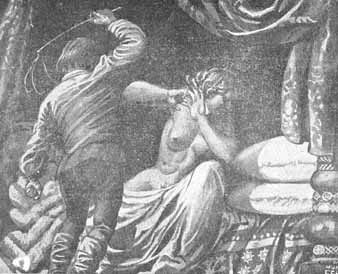
Let's just hope Kanerva doesn't start text messaging Vanhanen any time soon.

teisipäev, märts 18, 2008

püksid - byxor

In New York -- where I spent most of the last week -- the front pages of newspapers teem with fun headlines about former Governor Eliot Spitzer's appetite for call girls. In Estonia, on today's front page of Postimees is a debate over whether or not integration is an enemy of the Estonian language.

Urmas Sutrop, director of the Estonian Language Institute, made headlines last week when he said that integration was a threat to the Estonian language. Sutrop clarified his position today, explaining that by bringing 300,000+ speakers of Russian and Ukrainian into the estophone world, the language will inherit their grammatical errors and loan words from their native tongues, thus diluting the riigikeel (state language).

Rein Raud, rector of Tallinn University, writes in response that Estonian has already borrowed heavily from foreign tongues and sees no threat in borrowing some more. He gives several examples of common Estonian words of foreign origin in his piece. So, as I drank my morning coffee, I was able to learn that the Estonian word for trousers -- püksid -- comes from the Swedish word 'byxor'. I did not know that. See, that's what Estonian newspapers are for.

reede, märts 14, 2008

smug city

I wouldn't hold up Estonia as a model because I think they have been quite smug. Their particular problem is the Estonian Russians -- their integration has not gone as fast as it should have done in the past few years.

The Bronze Soldier riot was a wake-up call to them. They're not getting the solid allegiance of a new generation of Baltic Russians. Fifteen years ago no one would have dreamed that Russian teenagers would be rioting in the streets of Tallinn shouting 'USSR forever!'

--
Economist correspondent Edward Lucas in an interview with Alfa.lt last week.

The thing about this comment is that it is true. Yes, some Estonian politicians might strike an outsider as smug and self-satisfied. They suffer from 'Tallinn syndrome' -- where the country girl or boy from Haapsalu or Paide suddenly finds themselves surrounded by buildings that are taller than three stories and the international political jet set and are too absorbed in the euphoric moment of "I've finally made it, baby" to think about what comes next. Integrating Estonian Russians? That's the last thing on the list of things to do for a person afflicted with Tallinn syndrome. They are more concerned in skirting zoning laws.

Yet, on the flipside, the 'Western' European outlook on 'Eastern' European countries seems smug in itself. Hey, Estonia, you need to work on integration. Easier said than done. What is the solution? Feel good, useless legislation? National campaigns to get ethnic Estonians to view their Russian-speaking neighbors as 'equals'. That would be great, if ethnic Estonians actually liked their ethnic Estonian neighbors. Instead, Estonians tend to treat each other as competition. As someone once famously pointed out, the only authority an Estonian might be willing to salute is themselves in the mirror. But please, integrate those Russian-Estonian/Estonian-Russians, kohe!

So Lucas is right, but is the very expectation of what Estonia is capable of doing in itself wrong? Is it that Estonian syndrome, Flasher was talking about: the presumption of competence. I personally believe that, either by the basis of civilizational outlook or constant self-delusion, Estonia has become a quasi-Western European country. One may worry about the security implications of some teenagers burning an Estonian flag or chanting 'USSR Forever', but, shit, how about the security implications of publishing some drawings of the Prophet Mohammed in Denmark?

I mean first it was just the insult to Islam. Then it was the way society reacted to the insult to Islam. Then it was the way the police put extra pressure on those who may be insulted by the Danish cartoonists' insult to Islam. And then it was those anarchist lovers of multiculturalism who turned over cars and set fire to buildings to let ordinary Danes know that they are in solidarity with their friends who may have been insulted by the Danish police or the sinister cartoonists they protect. So, please, Denmark, integrate your Muslims and anarchists. Pass a law, build a new joint ungdomshuset-mosque, and stop selling flags to the Iranians to burn. Please, anything to make the uncomfortable reality of violent, idiotic youth go away.

Perhaps my world view has been too informed by the musings of lost existencialistas. Perhaps I too suffer from Tallinn syndrome. I have had my sõõrikud, drunk my coffee, rubbed elbows with people who know people. But I have heard the same conversation in the dormitories of Copenhagen that I have heard in the living rooms of Tallinn. People don't want to live their lives in fear and they do believe in integration. Yet beyond that, they know not what to do. What can an individual really do, other than work, eat, sleep, and occasionally reproduce? In the meantime, our hapless northern individualists find themselves hijacked by 'fascists' -- as a Danish colleague referred to the anarchists, Muslim extremists, and Bronze Soldier 'defenders' -- for whom they have little or no respect.

It appears that there are no easy answers. There are no laws to pass. There is no governmental interference that can make it all go away. We'll just have to cling to the life preserver of rote pragmatism and stomach it. To borrow a line from Braveheart: they can burn our R-Kiosks, but they can never take our freedom.

neljapäev, märts 13, 2008

järgmine peatus: 'the new cold war'

One of the reasons I routinely attempt to connect Estonia to other northern European countries for readers used to seeing it portrayed as just another piece of the geopolitical puzzle, is that Estonia is blessed with a quality one might find in Bergen, Reykjavik, Umeå, or Oulu: isolation.

On any map, Estonia is connected both to the central European landmass and is a stepping stone to the St. Petersburg region and Eurasia beyond. Yet on three sides Estonia is surrounded by water. To the south are the avenues of Riga and Europe, and to get there you must get on a bus or plane. This is not Benelux where happy backpackers can zoom from country to country by high-speed train, drinking all the way. Even within Estonia, travel is encumbered by unpaved roads, ferry connections, and aggressive drivers.

If a person wakes up in Kärdla, Hiiumaa, how long would it take them to get to Narva at the other side of their tiny Baltic nation? And for the residents of Võrumaa, how genuine were events like last year’s riots in Tallinn? Weren’t they just like every event in the world, broadcast by radio and television? In Estonia, the outside world takes awhile to seep in.

It is in this context that I should say the premise of Edward Lucas’ book The New Cold War: How the Kremlin Menaces both Russia and the West seemed troubling. Here Estonia is portrayed as the frontline in the behind-the-scenes battle between Western liberalism and Eastern illiberalism. Banks and gas pipelines are the carriers of the disease. President-Select Dmitri Medvedev might be the poster boy for New Russians, but who knows what his heirs or handlers might do with the channels of power they inherit.

From the perspective of The New Cold War, small fishing villages such as Omedu on Lake Peipsi where they sell smoked fish and onions are the new guard posts of the West. It seems a preposterous notion. But on Omedu’s side of the lake, the politicians are derided as idle or self-interested servants, held to scrutiny, and discarded when they are no longer useful. On the opposing side of the lake, the politicians are gods massaged by the media and industries they own. They are only accountable to the man at the top, not the people at the bottom.

This is the crucial difference that makes for the conflict described by Lucas and it is all true and widely known in Estonia. While Lucas tries to rouse Rip Van Winkle-like Western Europe to the fact that the narrative of 1989, of Russians embracing Western values, listening to the Scorpions and Billy Joel, eating Big Macs, and trudging down the road to the West is long over, it is not difficult to argue that Estonia never had much faith in its eastern neighbor to begin with.

More likely the Estonian government of the 1990s and early 2000s that successfully navigated the Estonian ship of state into the ports of the European Union and the North Atlantic Treaty Organization saw Russia like any Pärnu homeowner would view the retreating of the Baltic Sea after a flood. It was time to inspect the damage, repair what could be salvaged, and build a better foundation. Moving, in Estonia’s case, has never been an option.

And because of this quiet country cynicism, a better bulwark for the West could not be imagined. During last April’s nonsense, we pondered what would happen in our home city of Tartu should the “Pskov division” be “not far off.” And it was difficult to imagine Tartlased doing much of anything other than shrugging and going about their business. Either they would stand by the invader’s tanks and mock, as they have done for centuries, or, more likely, they would hunker down inside with a stash of alcohol from the local Selver and mock some more via Internet. If the invaders were to sever Estonia’s Internet connection, well: that would only result in one thing: a fierce and bloody guerrilla war.

And that leads us to the final question. For whom is this book written if the Estonians are already aware of what lies across the River Narva? Well I bought it in Heathrow Airport, and it is written by a British author in the English language, though many editions are planned in other languages. So I suppose the main audience is the readership of The Economist itself: Britons and those who take part in corner-booth international relations chats at cafes from Santiago to Hong Kong. This is a book written partially for those in the know and partially for the English-language audience that needs to know.

Inside you will find the sinister murders of Russian journalists and dry humor in explaining how Gazprom manages to waste so much of its money on “ludicrously grand buildings, holiday resorts, yachts, and other gimmicks.” It is as if Edward Lucas’ brain were uncorked and its contents, mixed from the briefings of Vladimir Socor’s postings at The Eurasian Daily Monitor, the behind-closed-doors musings of NATO officials, the paranoia of Lithuanian energy heads, and the rare moments of honesty on the part of Kremlin apparatchiks, were poured into nine chapters that somehow manage to tie the mess of the Putin years into a coherent framework. A book, if you will.

This is no easy task. Lucas’ final chapter: ‘How to Win the New Cold War, Why the West Must Believe in Itself’, could be a book on its own right. But rather than ponder where there could be more and where there could be less, readers should instead just read it. Some might read its title as a call to arms. But, rather, I see it as a very long letter written by a correspondent who has so much to tell you that he cannot squeeze into an article in The Daily Mail or The Economist. It’s a letter from the correspondent to you. In this way, the book is for everybody: the traveling journalist in Heathrow, the London commuter, the corner-booth conspiracy theorists in Santiago, Chile, and maybe even the citizens of small Estonian villages who wearily watch Russia from the other side of the lake.

esmaspäev, märts 10, 2008

naistepäevast

March 8 was International Women's Day, or naistepäev. In Estonia it is known as an old Soviet holiday, but when I crossed over into Helsinki yesterday I saw that they still celebrate the holiday in the 16th republic, too, at least on paper.

As an American, I was unsure how much attention I should pay to this holiday. I mean we already celebrate Valentine's Day and Mother's Day, so why exactly was there a need for International Women's Day?

But the problem is that all the other Estonian women in our lives are married to Estonian guys who indulge them with sweets and flowers on naistepäev. And once you give women another holiday, can you really take it away? So the adult woman in my life got a new book and some flowers, while the smaller ladies in my life -- one aged 4 years, the other 8 months -- got a fairy sticker book and a box of baby teething cookies, respectively.

Another dilemma is that even though I know that naistepäev is a holiday and I participated in it, I still in my heart don't believe it is a real holiday. It's as if I told Epp that June 1 is 'St. Justin's Day' -- which it is -- and that I deserve a little something extra because, well, it would be against the spirit of St. Justin's Day not to buy me something in appreciation of all the hard work I put into being fair and just. She might even take me up on it, but it still would be lacking in the credibility department.

laupäev, märts 08, 2008

'terve', i mean 'tere'

Estonia is considering hiring 300 unemployed Finnish police officers to handle its internal shortage of police. However, Finnish authorities have their reservations, namely lower salaries, variations in levels of police authority between the two countries, and the fact that Estonia might have to change some laws to make it all work:
Implementing the move would require a change in Estonian legislation, which currently requires that police officers be Estonian citizens.
I wonder how they'll clear that one up. Perhaps tweak the laws to require police officers be Estonian or Finnish citizens? It's been 15 years since the Riigikogu passed its Law on Aliens, forcing all Estonia loyalists into awkward acts of contortion to explain de jure legal continuity to the rest of the global village. But, may I dare say that some of the ramifications of those acts keep coming back to bite the government in the ass, such as in this case.

Another obstacle of turning poliisi into politsei is the language issue. This strikes close to home because just yesterday I was in Tartu Kaubamaja listening to some shoppers talk to a employee handing out free samples in the toidumaailm in a very, well, messy Estonian dialect. "Their Estonian is really bad," I thought to myself, before realizing that they were speaking Finnish.

I am not sure how deep Finnish-Estonian interoperability goes, but it seems as if some Estonians can quite easily communicate with Finnish speakers, while others cannot. This woman at the toidumaailm seemed to be doing fine, while I am not so sure someone speeding in Hiiumaa would understand if they were stopped by the poliisi. However, Estonia could use some more traffic police, so by all means, put Pekka out on the Tallinn-Tartu highway and give him some heat-seeking missiles. Please. Pyydän. Palun.

kolmapäev, märts 05, 2008

otepää

Estonia is the kind of country that looks small on a map, but when you get inside it you discover it is huge. It is for this reason that the Estonian winter capital of Otepää has eluded me to this day, even if I have visited all the neighboring towns and villages -- Tõrva, Võru, Põlva, Elva. I even got gas in Rõngu one time. But I never had a reason to go to Otepää. Until today.

Otepää is mostly famous for its cross-country skiing. The town has a skiing museum and has hosted the FIS World Cup in cross country skiing in the past. Most of Estonia's well-known skiers also live in Otepää. You can imagine what happens when Jaak Mäe bumps into Andrus Veerpalu at the grocery store. "So what are you doing today?" "Skiing"

I didn't get to do any skiing, but I did do some sledding, and my car got stuck in a snow bank, forcing me to do some Markko Märtin-inspired driving to get our family-sized vehicle to safety.

The day's weather just called for a quick day trip, to spend time doing real things away from an e-life that is sometimes more demanding than an actual baby. Everything is there for you on the screen -- online communities, online banking, telecommuting, online shopping. They might as well arrange deliveries of organic food to our house so I never have to peel my eyes away from the hypnotic allure of the Internet. Oh wait, we already get those deliveries.

But Otepää had been calling me. All day yesterday I felt it tugging at my insides, like the force of the moon directing the tides. And that's the other secret of Otepää. It is a holy place that sits overlooking Pühajarv (holy lake). It has an energiasammas (energy monument) that directs unassuming foreigners like me to come visit, eat pikkpoiss (meat loaf) at Edgari Trahter, and take photos of the knoll-laden Valgamaa countryside from the perspective of the vaadetorn (lookout tower).

Otepää truly is Estonia's pearl. Visiting was a rewarding experience and we will be back. You should go there sometime too.

teisipäev, märts 04, 2008

jesus medvedev

"I'm congratulating all my Russian friends on yesterday's choice, and not only because against the backdrop of rival candidates Gennady Zyuganov and Vladimir Zhirinovsky, Medvedev indeed looked like dear Jesus on the hill of Golgotha."

---- Jaak Allik, parliamentarian belonging to Rahvaliit, on the selection of Dmitri Medvedev.

pühapäev, märts 02, 2008

kerensky medvedev

The Russian people, burdened by numerous good choices in their presidential election, finally settled on Dmitri Medvedev yesterday, a 42-year-old fan of the rock group Deep Purple who will become the youngest Russian head of state since Prime Minister Aleksander Kerensky took over the reins from Georgy Lvov in July 1917 at the age of 36.

Kerensky, left, who bore a striking resemblance to British comedian Peter Sellers, has been reinterpreted by the post-Gorbachev Russian Federation liberals in a positive light. Medvedev has put himself on the side of Kerensky in his speeches, though a portrait of Nicholas II hangs in his office (Peter the Great hangs on Putin's wall).

It can be said that Estonia benefited as well from the February Revolution. In April 1917, Georgy Lvov, who became the first minister chairman of the Russian provisional government following the tsar's abdication, granted Estonia -- then bisected by two Baltic guberniyas, Estlandskaja and Livlandskaja -- autonomy within the Russian Empire. This followed a mass demonstration in St. Petersburg by 40,000 Estonians, half of whom were armed.

The Autonomous Governate of Estonia was headed by Tallinn's mayor Jaan Poska. It elected a diet, the Maapäev, which, following the October Revolution, proclaimed itself the sole authority in Estonia in November 1917, and later issued the declaration of independence in February 1918.

Contemporary Russian historians like to paint the emergence of Estonia on the political map as some kind of dirty deal between Lenin and the Estonian elite.

What they don't realize is that it was the Lvov-Kerensky government that set the whole move in motion from guberniya to autonomous governate to independent republic in less than a year.

Anyway, if you are truly bored, here's an interesting piece on how Russian succession is determined by hair-envy. Enjoy.

reede, veebruar 29, 2008

pucker up, it's the nordic way

Relations with Russia are bad. Is it possible for them to get better? And, even more importantly, who to look to for guidance?

During the Winter War, the Soviet Union seized one-tenth of Finland. The very port that Russia plans to start exporting gas to Germany through via Nord Stream is Vyborg -- Viipuri -- at one time an important Finnish city. One half of Karelia, the cradle of Finnish national identity, has been repopulated by Russians. And yet, when the Russian and Finnish foreign ministers get together it's all smiles, vodka, and kippis.

Not to mention, Finland has nearly five times the amount of people Estonia has; Finland has a GDP of $163 billion compared to Estonia's $27 billion; and as inspiring as Markko Märtin and Kristina Šmigun are, Finland has Kimi Raikkonen and Virpi Kuitunen. That is to say that in every way, Estonia's northern neighbor is stronger, richer, and more well known. It also has some serious historical baggage with its eastern neighbor. And yet, when it comes time to pucker up to Vladimir or Sergei, the Finns are ready with moistened lips.

Perhaps this is the secret that Edgar Savisaar knows and has kept his dacha, er, suvila busy with guests from Russia who have stakes in the transport business. That only by kissing Russia's ass can a nordic country -- once it has secured its independence -- ever truly be free. I hope it isn't really true, but those photos of Russian Foreign Minister Sergei Lavrov and former Finnish Foreign Minister Erkki Tuomioja make me wonder.

teisipäev, veebruar 26, 2008

cto?

Leave it the BBC to ruin a perfectly good February morning. Tim Whewall of the BBC goes to Kadriorg to ask President Ilves important questions like, why doesn't he speak Russian.

Ilves replies that to speak Russian would mean "accepting 50 years of Soviet brutalisation because most Russian-speakers settled in Estonia only after it was occupied by the USSR towards the end of World War II."

Then the Estonian media, which loves nothing more than to put any heated, divisive statement about Russia on the front page, picks it up, as does Russia's federal news agency Regnum, which notes that "Ilves is the first Estonian president who does not speak Russian."

Well, let's see, Estonia has only had four presidents. Konstantin Päts spoke Russian -- he was Orthodox, served in the Russian army, and was the son of one Jakob Päts and one Olga Tumanova. Lennart Meri spoke Russian, a skill he no doubt learned as a potato peeler in a Siberian work camp. And Arnold Rüütel, the former Chairman of the Presidium of the Supreme Council of the Estonian SSR, definitely spoke Russian.

But that's just the thing. In the race between Rüütel and Ilves in 2006, one of Ilves' strengths was that he spoke English -- one of the three main languages of the European Union, not to mention the operating language of NATO -- on the level of a native speaker. People were occasionally embarrassed by the fact that the only foreign dignitaries Rüütel could communicate with without a translator were Vladimir Putin and Aleksis II.

And that's sort of the rub. Russophiles and Russians might think of their language as a "world language" that is easy to acquire. But, considering Ilves has lived in Estonia for nearly two decades and not acquired it, I guess it defeats that premise. It also shows that for Estonians, it was more important to have an English-speaking president than a Russian-speaking one. That's got to hurt from the perspective of a country that still views itself as a counterweight to the United States. Hence the attention from Regnum.

Honestly, from my perspective, despite the angst reflected in the media, I have come to not be personally bothered by the shrinking language gap in Estonia. The majority complains about the ethnic Russians who refuse to speak their language -- meanwhile most of them already learned it and have jobs at Hansapank or Estravel.

You wouldn't even know their native tongue save for a name tag, and even then you might wind up with one of those wicked Estonian combinations like "Eha Petrushkovskaja" or "Olga Saar." You can't really tell the difference between people, and you shouldn't be able to, because this is one country, not two little countries sutured together.

Yes, there are those awkward moments sometimes where you ask a question or are asked a question which comes back in a dizzying array of consonants and vowels that could be Hungarian or Bulgarian or Yoruban. But it doesn't matter, because even the most desperate tourists in the world can make themselves understood by tap dancing and farting.

So, let's please give it a rest. Let Ilves wear a bowtie and learn French. Let Edgar Savisaar and the Russian transportation authorities haggle in Russian. And let me blog in English. It's my native language, and nobody has yet managed to take it from me.

esmaspäev, veebruar 25, 2008

the speech

I was a bit worried that President Ilves' speech last night would drown the celebratory mood of the Republic of Estonia's 90th anniversary in paranoia about the 'neighbor to the East' -- the source of all that is unhealthy in the world, Bolshevism, despotism, pelmeenid.

Thankfully, the only foreign country explicitly mentioned in Härra Ilves' speech was Ancient Greece. And that is how it should be, for despite the wishes of some, this country is not defined by its problems or its fears, but by its hopes and faith in progress.

Ilves touched on some relevant political themes -- energy, demographics, traffic problems, labor shortage, the switch to an intelligence-based economy. He also drew strength from appealing to Estonian national motifs -- the "blueberry forests of summer," the "stony book" on a "slab of stone" where is written the story of Estonia.

By the end of the speech, I felt so good, I was even happy to sit through the 'pingviini paraad' of notables and celebrities. Go read the speech for yourself here and let me know what you think.

pühapäev, veebruar 24, 2008

tähendus

There is an excellent piece about Estonia by Jüri Estam at La Russophobe. I highly suggest you read it today, February 24, the independence day of Estonia.

In the pantheon of nationalities, Estonians are still mostly an unknown quantity. The post-war era allowed crafty tourist-oriented campaigns to "brand" the nations of Western Europe for North American travelers.

Scotland was the land of whiskey, bagpipes, and the Highland Games. France was the land of chateaus, fashion, wine, and cheese. Switzerland was chocolate and watches. Germany was beer, bratwurst, and high-end automobiles. Italy was the grandeur of Rome and pasta. Finland is the home of Santa Claus, his sauna, and his reindeer.

But what of Estonia? What is Estonian nationality? Ask an Estonian and you'll get an answer like "the land" or "the language". But, to me, after having been in touch with this windswept peninsula at the roof of Europe, Estonian nationality is something like a classic Ingmar Bergman film from the 1950s or 60s. It's not the sparse dialog, it's not the medieval costumes, it's not the haunting northern landscape -- it's the sum of the whole, it's all the parts working together that 'make' Estonian nationality.

To me, the Estonians are a quantity unchanged. Even with all their technology and love of e-fficiency, it is not hard to imagine them eking out an existence in the Swedish or Russian imperial times, married to farms owned by Baltic German nobility, cast against a manic-depressive landscape of soul trying winters and liberating summers of endless daylight.

I once asked someone at the beginning of my adventures in this country, what Estonians were like. Were they like Germans, Swedes, Finns, or, God forbid, Russians? She answered my question by making me answer it by myself. "We are not like the Finns," she said. "My girlfriend has lived for decades in Finland and she still feels like an outsider. We are not anything else; we are simply Estonians."

And this is the paradox of Estonian national identity. It is defined by concepts that seem base -- paganism, serfdom, a self-sufficient agricultural mentality. And yet, it is still a high-brow concept that may only start to coalesce after one looks past the glowing articles about Tallinn's wild nightlife or Skype's Silicon -Valley-on-Gulf-of-Finland corporate culture, and spends some time out in the countryside with guys named Eino and ladies named Aino.

The Estonian national concept, like the Estonians themselves, takes a while to get warmed up. But once it gets started, you'll find yourself being passed one day by a stubborn, individualistic driver somewhere outside of Rio de Janeiro, and think to yourself, "That guy drives like a maniac. He must be an Estonian."

laupäev, veebruar 23, 2008

mu õnn ja rõõm

I just spent 24 hours in Tallinn and, boy, is every part of me exhausted. I was dragged kicking and screaming to see a hip hop concert at Club Hollywood, a place of ill repute in this nation's capital -- and I mean 'ill' in the sense of 'license to ill' and 'ill communication'.

It was as described by most roving journalists dispatched to this part of the world. There were young attractive women clothed in various fashion statements dancing on table tops. There were embarrassing attempts by fellows from the countryside to recreate ghetto fashion and posturing in this city of the Hanseatic League.

One highlight of my evening took place in the men's restroom. While resting there I began whistling the tune of 'Mu Isamaa' -- the Estonian national anthem. Before I knew it, four or five gentlemen in the toilet began to loudly sing the words -- mis mul nii armas oleks ka, kui sa, mu isamaa!

I also befriended some Nigerians who were more than happy to discuss the career of the innovative Nigerian afrobeat musician, Fela Kuti. Finally, without even trying, during the concert by Los Angeles' own Delinquent Habits, one of the emcees came over to my side of the stage with two shots of vodka which he persuaded me to drink.

The evening's climax came while waiting in line at a kiosk to buy a burger and fries at 3 am or so. There were some Swedish guys in line ahead who, for some reason, annoyed me. I decided that they needed a lecture about Imperial Sweden and Gustavus Adolphus, the "Swedish Rambo". They needed to hear how Sweden, in general, needs to pull its head further out of the Scandinavian social welfare sand and be more active in the Baltic Sea Region. I believe I finally told them that they should "spend less time listening to The Cardigans, and spend more time reading the works of August Strindberg."

They were unresponsive to my arguments, preferring to stuff their faces with hamburgers and wallow in Swedish self-absorption instead. I went home, pessimistic about the future of Baltic cooperation.

neljapäev, veebruar 21, 2008

abraham obama fitzgerald roosevelt

I have been watching the Democratic presidential primaries from afar. Though I earlier said I would support the institutional candidates, Hillary Clinton and John McCain, if pressed, I ultimately decided that whoever won the Democratic primaries deserved to win, and whoever eventually lost deserved to lose.

At the moment, the loser is Hillary Clinton. And it's not just because of Obama's pretty words -- it's because her campaign looks like John Kerry's in 2004. Bill Clinton is Tereza Heinz Kerry, the tempestuous spouse. Campaign Manager Mark Penn is a combination of Mary Beth Cahill and Bob Shrum, the clueless Beltway insiders. And when challenged, Hillary the candidate is either too silent or too wonky -- Kerry in a nutshell. There's a great list of reasons for Hillary's losses here.

But what of Obama? As I wrote earlier, Americans believe in recurring motifs in their history. Or rather, American politicians believe in using myths about their predecessors to create the 'rendezvous with history' meme that is essential to any campaign. This does not happen in Estonia, though on occasion President Ilves' continental bowtie reminds me of Jaan Tõnisson's gentlemanly top hat.

But in America, the 'torch is passed' concept is central. Clinton resurrected Franklin Delano Roosevelt; George W. Bush preferred his cousin Teddy. Reagan, in a truly old school move, had Calvin Coolidge's portrait hung in his office. You see, as a person born in 1911, Reagan could actually remember Coolidge.

For Republicans, Reagan himself has become the new motif. Every Republican candidate must appear 'Reaganesque' to win the nomination. John McCain is 'Reaganesque' because he is old and he was endorsed by Sylvestor Stallone, whose series of Rambo and Rocky films in the 1980s pit the rugged American protagonist against commies and terrorists, the arch enemies of freedom.

For Democrats though, it's more difficult. Clinton brings to mind a stained dress, Carter the Iran hostage crisis, and Johnson the Vietnam body count. Democrats have to go all the way back to John Fitzegerald Kennedy to resurrect their 'rendezvous with [partisan] history.' Even DNC Chairman Howard Dean has been parading Harry Truman around in an effort to reconnect the Democratic Party to its elected forebears.

And so, for Obama, it is Kennedy, the youthful, exuberant, and short-lived American president who has been summoned for the purposes of presidential myth making. It was, after all, the powerful endorsement of both Sen. Edward Kennedy and Caroline Kennedy Schlossberg, which finally gave Obama the veneer of establishment credibility.

But is Obama really a sunny and optimistic Kennedy? Or is he more a fire and brimstone Lincoln? Either way, there's some powerful myth making in the works as we speak and it could result in the eventual naming of new international airports and highways. Goodbye Honolulu International Airport, hello Barack H. Obama International Airport? An Obama victory might even result in the issuance some new currency, just so Americans can pay for goods with the audacity of hope. The wheels of American history are turning again. Stay tuned.

teisipäev, veebruar 19, 2008

pressure drop

What? Did you actually think I was going to stick my nose in the gigantic diplomatic mess that is the Republic of Kosovo? Let's just recall that it took slightly less than two years and a war for Russia to let go of Estonia in 1920. And let's also recall that Russia lost that war, just because it still feels good. Maybe there's a light at the end of the tunnel?

But here's something even more interesting -- the latest poll on support for Estonian political parties. Well, what do you know, the post-Bronze Soldier boost for Andrus Ansip's Reform Party has started to decline amidst a slow down in the real estate market and concerns about inflation and less tourists.

Despite this, Reform's ability to work with its sometimes fractious coalition partners, Isamaa-Res Publica Liit and Sotsiaaldemokraatlik Erakond, has kept the party afloat with 35 percent of respondents saying they support the party of wealth plus patriotism.

The real news to me is that it looks like Sotsid and the Rohelised are eating into the top three parties' support. IRL has 13 percent support compared to SDE and the Greens, who have 12 percent support. Can you believe that Marek Strandberg's Greens are polling as well as Mart Laar's IRL? What happened?

The final piece of the puzzle is Eestimaa Rahva Liit, the agrarian party who, with a consistent 5 percent of support, are ripe for acquisition. My only question is who will swallow ERL first?

esmaspäev, veebruar 18, 2008

palju õnne, narva

If you are ever in the mood for a good chuckle and have a reasonable grasp of the Estonian language, open up a history book of the Estonian Soviet Socialist Republic.

Inside you will find scant mention of the 'fascist dictatorship' that ruled Estonia for 22 very brief years from 1918 to 1940, but instead will discover the intricate details of meetings between the Estonian communist intelligentsia in 1917. Jaan Anvelt brought his well-worn edition of Das Kapital. Viktor Kingissepp served tea and biscuits.

This was not the history of a people or a place, but of a political movement for whom people and places were mere props in their master plan for humanity. Monuments in the ESSR commemorated events that to people today would be utterly meaningless.

One such monument was to Eestimaa Töörahva Kommuun, a puppet people's government set up in Narva on 29 November 1918. It didn't last long. Kingissepp died at the hands of Estonian authorities in 1922. Anvelt, who fled to Russia after the war, died at the hands of Stalin during the purges in 1937.

Because of the chaos that ensued during World War I, the Russian Revolution, and finally the October Revolution in the Russian Empire, the official mouthpieces of the Communist Party called for smaller local councils to be established that would be later reintegrated into a post-tsarist Bolshevik super state. The undemocratic Eestimaa Töörahva Kommuun, led by Estonian communists Kingisepp and Anvelt, was such an organization.

As a city, Narva is isolated in Estonia by both language and geography. Almost every other major Estonian city speaks Estonian as its majority language, while Narva is Russophone. Narva is also nearly 200 kilometers from Tallinn, making the trip to Estonia's border city a long bus ride. It is for these reasons, perhaps, that the Narva City Government today finally got around to moving a monument to the Eestimaa Töörahva Kommuun that was displayed on a wall next to Narva's City Hall.

The monument may find a new home at the Estonian Historical Museum in Tallinn, which would be a fitting place for the likenesses of Anvelt and Kingissepp. The communists have once again found themselves in the Estonian history books, just in a less prominent way.

reede, veebruar 15, 2008

ethnicity and nationality

I have recently been keeping my eye on the race to succeed Eero Heinäluoma as chairman of the Social Democratic Party in Finland, with the excellent blog, A Lamb with No Guiding Light as a daily source of fresh English-language info.

Some people, particularly those on the Internet, really don't like SDP, but having come face to face with Erkki Tuomioja and known some party members, I must say that even if their policies irritate, their bleeding hearts are often in the right place.

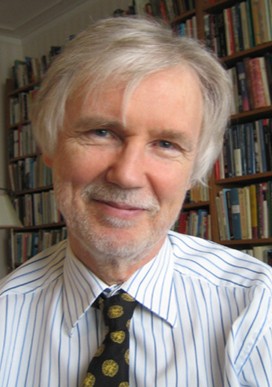
Tuomioja, the former foreign minister, is now a candidate to be party chair, while fresh-faced former MTV VJ Maria Guzenina-Richardson (photo) is running for vice chair. Tuomioja is famous in Estonia because his grandmother, Hella Wuolijoki, was born in Valgamaa in southern Estonia. Guzenina, who is not famous in Estonia, owes her name to her Russian family roots. And yet, nobody considers Guzenina to be Russian, nor does anyone consider Tuomioja to be Estonian.

Finnish, it appears, is a nationality, as opposed to an ethnicity. Finns are defined more by their relationship to the omnipresent, omni-taxing state than their shared ancestry, even if they all happen to look the same.

Somehow, here in Estonia this concept of ethnicity and nationality is mixed up. People talk about "Estonians" as if being Estonian meant being devoid of foreign roots, but those who do so forget that President Ilves had a Russian grandmother while Estonian Europarliamentarian Katrin Saks had a Russian grandfather. Minister of Culture Laine Jänes and Tallinn Mayor Edgar Savisaar both have Russian mothers, for instance. Yet the public sees them as indisputably Estonian.

How can one speak of one ethnicity then, when even those who are deemed most representative of that ethnicity actually have a diverse background? The answer, it seems, is that Estonianness is more of a national identity than an ethnic one. Estonians, therefore, are defined more by their relationship to the sinine must valge and "Leto Svet" than the fact that they all happen to look the same.

This, I think, is a concept that those hoping to understand Estonia should embrace.

This post has been updated to reflect that Guzenina is running for vice chair of SDP, not chair.

esmaspäev, veebruar 11, 2008

the nordic model

Estonians are frequently asked by their nordic compatriots something along the lines of, "Why didn't your country adopt the Nordic model when it was reconstituting the state in 1991-1992?" The line of questioning today also leads us to, "Will Estonia adopt the Nordic model in the future?"

President Ilves was recently asked this in an interview with the City Paper, the question and reply:
Estonia, it is commonly claimed, wants to be regarded a Nordic country. Still there are obvious and profound differences between Estonian and e.g. Norwegian welfare policies. To what extent does the President consider the Scandinavian/Nordic welfare state a good model for Estonia?

I am sorry to see that such outdated clichés are still spreading. I recommend a little homework in the future, or an examination of what is happening in Estonia – Estonian and Nordic welfare policies are not so different, actually they are increasingly similar. The primary question is money.
Money, yes, but also history and, very importantly, contemporary history. You get the sense reading nordic impressions of Estonia that they a) do not know Estonia, and b) do not know themselves.

Estonia in the past has been criticized as being sort of an imaginary West. Anatol Lieven warns us in the updated version of The Baltic Revolution to not be fooled by the Scandinavian-looking airports. You may feel that you are in the West, but you are not really in the West.

It's the "imitation" West, fake like those "Scandinavian sweaters" old Russophone ladies sell in Tallinn's Old Town. It may look and feel like a real Scandinavian sweater, but since it was knitted by Eva Ivanova and not Bo Svensson, it's not the real thing, even if Bo Svensson pays the Chinese to make them while he tans himself aboard his yacht in the Adriatic.

I would argue that if Estonia had copied the "Nordic model" in the 1990s it would have arrived at even more of a precarious position as a "fake West." The first reality is that the modern Nordic welfare state was formed by primarily social democratic parties over the past century. The model was designed by consensus over time. It was not something that could be translated into Estonian by talented researchers at the Ministry of Social Affairs and then force-fed to the Riigikogu.

Estonia organically chose other models. It chose a flat tax, partially because it was easy to implement and partially to attract investment in what was then a very poor country. Estonia since has chosen policies though that do copy the Nordic model.

A classic example is the Mother's Salary, implemented in 2004, that provides state financial assistance to mothers of newborns so that they can support their growing families -- and the fattening of the citizenship rolls -- while retaining their jobs. That's a policy that all the flat tax advocates in the world should ignore when they talk of the "Estonian model". President Bush admires Estonian taxation policy. I have a feeling he wouldn't admire the mother's salary.

So, organically, Estonia is embracing policies that mirror its neighbors. Partially because Finland and Sweden have positive birth rates, and Estonia has a negative one, some geniuses came to the conclusion that this kind of social support policy might help to raise the birth rate in Estonia. and, wouldn't you know, the birth rate has risen in Estonia since that policy was introduced. So, organically, Estonia came to adopt part of the Nordic Model, not because it was told to, but because it found out the hard way that it works.

This is what the other Nordic countries do not understand about Estonia. Estonia is still a country in transition. It is likely that in the future, as Estonia accrues more wealth, it may adopt more of these classic Nordic welfare policies, not because they want to buy the whole model, but because the policies are shown to work in countries similar to Estonia. So the idea that Estonia would copy the "Nordic Model" because it likes the way "Nordic" sounds is silly. Estonia will arrive at those policies organically if they are indeed as good as the Norwegians make them out to be.

But, amidst this backdrop, we have to admit that the era of the Nordic Passport Union is behind us. The social democratic parties that built social democracy in the nordic countries in the 1950s and 1960s have given way to the government of Fredrik Reinfeldt in Sweden, who supported Bush in both the 2000 and 2004 elections; the government of Anders Fogh Rasmussen in Denmark, who advocates limiting immigration and lowering taxes; and even across the Gulf of Finland, it is the National Coalition Party of Sauli Niinistö that has the popular momentum.

Is this the 'Nordic Model' they were talking about? It is certainly the "Nordic environment" that Estonia is surrounded by, an environment of tax-freezing, immigration-limiting governments run by economists and bankers, rather than career civil servants. In this way, Estonia fits in quite nicely.

And what of Nordic cooperation with supranational organizations? Denmark, Norway, and Iceland are in NATO, while Finland and Sweden are not. Finland, Sweden, and Denmark are in the European Union, while Norway and Iceland are not. Finland has adopted the euro as a currency, while Sweden and Denmark remain skeptical of the European Monetary Union. This diversity begs the question, is there a model here to follow?

And, of course, linguistic policies. Estonia has been urged by some to adopt the "Nordic Model" when it comes to languages, but proponents of such are usually referring to the Finnish model. The model of Norway, Sweden, and Denmark is actually to grant municipalities extensive rights in determining their working languages. Hence, Danish is the official language of Denmark, and is co-official in the Faroe Islands, but Faroese is not an official language in Copenhagen. So again, which model to follow?

My only prediction is that if there is a Nordic policy that works well and makes sense for Estonia to adopt it, then it will be adopted. To merely adopt a model at the bequest of a traveling bureaucrat would be more in tune with the model of "imitation West" than the real thing. Estonia, like the Nordic countries, will continue to develop and create policies where it sees fit. It may also happen that the traditional Nordic countries might borrow a policy from Estonia in the future, if they find it to be in their best interests.

neljapäev, veebruar 07, 2008

johannes walker

As I was loading old newspapers and advertisements into the ahi the other day, I caught a glance of a reklaam (advert) for a peculiarly named brand of whiskey, "Johannes Walker."

"That can't be," I said to myself, shaking my head. I took another look and realized that I was looking at an advertisement for the Scottish whiskey "Johnnie Walker."

My eyes, having scanned through many issues of Postimees, were just accustomed to seeing the j, o, h, and n, and assembling "Johannes" from them instead of what was actually written, you see.

As I have written previously, Estonia is the kind of country where, if you have a foreign name, it makes your life a bit more complicated. It's not that they are unfamiliar with English names, it's just that they are not used to guys ordering taxis using those names.

I recently asked a friend in Tartu named Stew what name he uses when he orders taxis. He confessed that his wife usually does the ordering, but when pressed he uses "Sten" just to make his life easier. Then there's the editor of Baltlantis, who I am pretty sure is not named Vello Vikerkaar. Surnames too get "estonianized" without one asking. If your family name is "Johnson" it is likely that you will be rendered "Johansson" at the Post Office.

When I order a taxi, I have settled on using the name "Juhani." I like this name. I have been informed that mostly Finns are named "Juhani", but that will help explain my subtle yet definitely foreign accent. I have also noticed that the people at the taxi call centers are nicer when you say your name is "Juhani" rather than "dzha-steen" or "joo-stin". If I used my English name they might switch immediately to English and charge me double. As Juhani, I can pass as an a põder (reindeer) of the Markku Peltola variety and pay the actual rate.

What I would like to know is what names you foreigners in Eesti have used to order a takso at midnight? This should be interesting. I am also interested in knowing what names Estonians use when they are abroad. Epp's name is so unique that there is no English-language variant to adopt. Her uncle Tiit, though, goes by "Tim" in England with good reason. And when we met with a friend named "Ahto" in New York recently, he proudly passed off his name as "Otto", you know, like that bus driver on The Simpsons.

teisipäev, veebruar 05, 2008

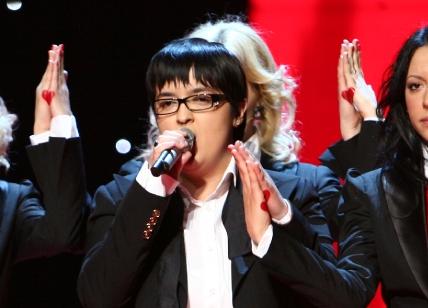
serbians perplexed by 'leto svet'

It's not even been a week, and Estonia's Eurovision entry "Leto Svet" is already raising eyebrows in Belgrade:

"There will be at least one song in the Serbian language at this year's Eurovision Song Contest, even if you don't count the hosts, joked Saša on the OGAE Serbia website.

One gets the impression that the lyricist has looked in the 'At the Restaurant' chapter of a Serbian phrase book, as the words for peas, green beans and lobster are mentioned!

Serbs are asking themselves if this is a desperate step by the Estonians to get a place in the final, which they haven't achieved since the introduction of semi-finals in 2004. Unfortunately for Estonia, Serbia cannot vote in the semi-final they take part in.

Is it just me, or does Peeter Oja bear a striking resemblance to last year's winner? Anyway, here's more:
Beta news agency reports from Tallinn that the Estonian contest winners, Kreisiraadio, will brave singing in Serbian as they battle for the Eurovision title in May in Belgrade.

But from the song's title, to its lyrics, it seems that the many intricate grammatical inflections of the Serbian language were lost upon the band.

Beside the puzzling Serbian lyrics, which seem to consist of a list of food items, the song also features words in Estonian and German.

This is it Eesti! This could be the year that Eurovision comes back to Tallinn!

mälu instituut

President Ilves this week announced the establishment of the Mälu Instituut, or Institute of Memory, which despite its interesting name, serves an honorable purpose -- to look into the human rights violations committed in Estonia in the period from 1944-1991.

I would take it a step further and argue that the Institute of Memory should study the entirety of the Soviet period, not just the human rights violations, because from living here, at least, it sometimes seems that the 1960s and 1970s have fallen down some collective mental black hole.

It seems especially pertinent to address this condition of national memory loss as we celebrate the 90th anniversary of the founding of the Republic of Estonia. What everyone knows, but won't say, is that out of those 90 years, 50 were spent under foreign occupation. That's not to diminish the symbolism of the event. I mean in three years, from 1917 to 1920, Estonia went from being part of two tsarist provinces to an independent country subject to international law.

But what of those 50 years? Perhaps the reason that we hear so little of them, except the dramatic beginning and end of Soviet rule, is because the older generation -- who experienced the Soviet period as adults -- are not used to telling their stories. There are a number of reasons for this, but I would peg one down as simple childhood trauma.

The elders of today experienced the beginning of the Soviet occupation as children. They were separated from their families, dispossessed of their land. Some families were not reunited until after the death of Stalin in 1953. A full decade or more had elapsed. So in a way, their personal memories were destroyed. What they did remember, they did not wish to discuss in public.

A second factor is that the current middle-aged generation in Estonia went through a deep revolution in identity in the 1980s. They disowned their Soviet heritage, they divorced themselves from their pasts as party members. Estonia in 1991 was something real, but a childhood singing songs about Lenin was now "fake". So for them too, the Laars, Ansips, and Savisaars of Estonia, the Soviet period is nothing to gather around and reminisce about.

This blotting out of the 1960s and 70s as a sort of a wasteland of useless memories, is interesting when you consider that in the United States, there are stacks and stacks of books that cover this period in great detail. Indeed a major campaign issue of this year's contest between Barack Obama and Hillary Clinton has been their interpretation of who was most responsible for the Civil Rights Act of 1965.

There are actually many books to be written about in this period, especially with regards to the emergence of a new national intelligentsia in the 1960s that replaced the one forced underground or into exile in the 1940s. But for some reason it lacks the relevance in today's Estonia that it has elsewhere. It would be a worthy task to record memories of this time before they are lost forever.