neljapäev, september 29, 2011

el yunque hellhound

Dear readers. I am writing to you from my friend's bungalow in Sonoma County. California is a joy. Grassy hills loom like green and blue ghosts. Strangers wave to you or ask you directions in relaxed, friendly, undemanding tones. In the afternoon I consumed zebra tomatoes and Chubby Hubby. For dinner we had tamales and taquitos. Tomorrow, my friend promised to restock his medicinal marijuana supply at the Peace in Medicine shop. "They sell it in stores here?" I asked. "Yes," he replied, "welcome to civilization" …

Almost everyone is speaking English here. I say this as someone who accidentally said, "ei" instead of "no" when the server at a café asked me if I wanted any organic "mesclun," which I unfortunately by that time heard as "mescaline," but actually is a green salad of French origin lacking hallucinogenic properties. In addition to mesclun, one can purchase crystals at the crystal shop downtown, or stock up on patchouli oil at the equivalent of a hippie five-and-ten nearby. Walking the sun-kissed streets, we ponder the significance of recent events, such as the moment that Maria Shriver began to wonder about the identity of the father of the family maid's son.

"Maybe he was lifting heavy furniture," my friend suggests. "Or maybe the kid started speaking with an Austrian accent …"

Russian Prime Minister Vladimir Putin is also a topic of discussion. As it was revealed earlier this week, Putin will reassume his position as president once Dmitri Medvedev's term ends next year. No one in the West openly believes in the charade of Russian "democracy" anymore, but now it's clear that that country's leadership doesn't really care either. I wonder who the "opponents" are that Putin will "defeat."

Estonians are once again chattering what the return of Putin will mean for their country. During the Medvedev years, the Estonian president had several meetings with his Russian counterpart, one that ended with him walking out of a conference and another that saw him praised for managing to sit through a Victory Day parade. There were even slight murmurs of hope among the more optimistic that the Medvedev thaw could continue, following the painful era of the border treaty debacle, in which the Russians used a magic diplomatic eraser to remove their signature from said agreement, and the Bronze Soldier affair, which saw the redeployment of noxious Stalinist and Third Reich propaganda, consumed with enthusiasm by local idiots.

Few in the US are interested in this. They would like to hear more rambling Rick Perry sound bites, blather on about baseball, or watch VH1's top hip hop jams of all time. In the meantime I am still trying to figure out what to do with my deposit in an eco hotel in the El Yunque rain forest in Puerto Rico. We were supposed to go last year, but were unable to do so. It was unfortunate because it is a goddamn beautiful place. When I inquired about swimming pools, I was informed that we could bathe in slow-moving natural waterfalls nearby.

The hotel promised to hold the deposit for a year, ending in Jan. 2012, and we initially planned to return, but now, with three kids and plenty of responsibilities, it is looking more and more impossible. How I wish someone would finally invent a method to "beam" me to different geographies for a limited fee a la Star Trek. Sadly, technology still lags the imaginations of 1960s Hollywood screenwriters. The deposit at the oasis in the jungle, called the Casa Cubuy Ecolodge, is $480. We are trying to hand it off to an interested party as soon as possible for as little as $300. You can contact me directly for this one time offer.

laupäev, september 10, 2011

exile on tallinn street

I am a foreigner here. I am many other things, but this is my chief designation in the eyes of society. This is perhaps the situation of anyone who is a foreigner anywhere. Now I regret all the times I inquired as to the source of a person's accent in the US. "And where are you from? The former Yugoslav republic of Macedonia?"

Foreigner. This is not necessarily a burden. It lifts you above the others, singles you out from the pack. Anyone can be a writer, but not everyone can be a foreign writer. Anyone can play guitar, but not everyone can be a foreigner playing guitar. Some of Estonia's most successful musicians are foreigners: see Dave Benton or Ruslan Trochynskyi from Svjata Vatra. Anyone who's seen Ruslan yield his scythe and croon about sexy time in Ukrainian remembers him for his foreignness. But who are the guys backing him up? Ah, just a bunch of Estonians. So, there you have it. Foreigners are special. When you walk down the street, my fellow foreigners, hold your heads up high!

And yet, just as being a foreigner sets you apart from the lumpenproletariat, the "flotsam" of Esto society,it also makes you invisible. Conversations typically revolve around language acquisition or reactions to the local cuisine. Few people really talk to you about anything important, because few people really know how to talk to you. Whole conversations cascade around you of which you can play little role, maybe because you don't understand everything being said, but mostly because you have so little to contribute. I recently watched two acquaintances have a deep conversation about forestry. Forestry! What the &%¤£ do I know about forestry? Even if we were speaking the same language, we'd be speaking different tongues. Do you catch my drift?

This was an issue in my second book. Most of the main characters, the deep characters, the ones who carried around with them meaning, were foreigners. The Estonians were like cardboard cutouts of people, two dimensional, but not only for my lack of ability to translate them into text, but because so few of them had shared any shred of their souls with me. This was perhaps less because of the national character of the Estonian people, than because of the simple fact that I was an outsider, a foreigner, and somehow disconnected from the reality around me. Being a foreigner gives one the unique ability to walk down the street in one land, and still simultaneously, metaphysically, be in another.

Not like it would be any better there. I feel the same claustrophobia around most of my countrymen. Just as Estonia is too quiet, America is too loud. When I arrive home to New York, I snake through the sweaty bowels of John F. Kennedy International Airport, only to cross through the gates of US customs, where I am always made to feel as if I have done something wrong, though at last check, I have committed no crime. I get nervous standing there, wondering if my name has somehow wound up on some kind of list. "No Teen Idols!" "But I'm not Timberlake, I'm not Bieber!" "Guards, take him away!" "I swear, hey, what are you doing? Get your hands off of me! I'm innocent! I can't even dance, watch me, I'll prove it to you." "Mmm. Resisting arrest? That's another 10 years." "No, no, there must be some mistake!" "Tell it to your lawyer, kid."

America. The over-saturation of stimuli, the clamor of the crowds, the thousands of TV sets suspended from the ceilings blaring the day's misfortunes, pundits yelling over one another, people climbing over each another, the aroma of fried chicken and pizza, old newspapers, Andean flute players, Penn Station, New York City! One never feels so alive as when he's cruising the 6, drunk as a skunk, standing next to some punk Wall Street broker with a flattop who is singing along to The Supremes on his iPod. "You can't hurry love. No, it just has to wait ..."

And when you finally emerge from the swampy mess, battered and chafed, and you land back in Estonia, you exhale. I feel this every single time I make the journey between the two countries. The heat of America, the coolness of Estonia. The more I think about it, the more it reminds me of the Estonian sauna, running between the oven-like conditions of the saun to the ice waters of the lake, only to find peace somewhere in between for a few fleeting moments.

Just as the Americans annoy me with their 24-hour cable news networks, the Estonians annoy me because they don't know how to live, they don't know how to enjoy themselves. Each day I watch construction workers slave late into the evening, 10, 11 o'clock at night, cigarettes dangling from their lips, blue circles beneath the eyes. There is this incredible urgency to everything they do, because summer only lasts so long, and soon it will be too cold to work anymore. I am sure that it all makes sense, but at the same time I feel that they are committing suicide, that never-ending work and drink and smoke are the Estonian version of harakiri.

I cannot change anything though. I cannot advocate a mezzogiorno for my neighbors. I cannot organize one for myself. Could you imagine in Estonia stopping work at around 1 pm to rush home and eat a prolonged, savory meal until about 5 in the evening, lounging around, munching on olives and fennel and telling pointless jokes and stories? No. Here it would be condemned as rape, a brutal, graphic violation of the Protestant work ethic. It just doesn't happen. Even when Estonians do relax, it involves the consumption of hard liquor, stuff that hits the bottom of your gut like a fiery asteroid. There must be moving, doing, consuming ... The more I think about it, I don't fit into America or Estonia or anywhere. I have become a perpetual foreigner. I will be a foreigner everywhere I go.

teisipäev, august 30, 2011

¡Ilves! ¡tarand! ¡Ilves!

"I don't think that guy is going to be reelected," a university professor confided in me one autumn day in the last years of the '00s. "He's just too arrogant. Estonians want their president to be a man of the people."

It's true that when people criticize Estonian President Toomas Hendrik Ilves, they immediately seize upon the 'a' word: arrogant. But what they forget is that arrogance is one of the defining traits of the Estonian people. No matter which one of them you get in Kadriorg, he (or she) is likely to be arrogant. And so I didn't take my professor's prediction too seriously. If anything, most Estonians relish their leaders' arrogance. They like a leader who acts like he knows what he's doing.

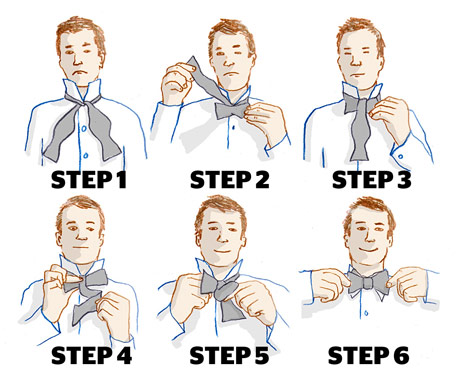
And then there was the matter of Ilves' trademark bow tie, which some took as comedy and others as treachery. I recall a blog post criticizing Ilves for wearing a blue and yellow tie during a meeting with Swedish counterparts. Heresy! Treason! Vanity! There it is, the 'v' word. And it's also very Estonian. Just as they are an arrogant people, the Estonians are utterly vain. They buy tabloids in vast quantities just to read up on the personal lives of people who are famous only because they have been featured in said tabloids. They change their Facebook profile photos every fortnight. The vain president, the vain first lady, the vain businessman, the vain athlete, the vain model, the vain author, the vain chocolatier. Read all about it! What do all these Estonians have in common? The 'v' word.

So, like all other Estonians, Ilves is perceived as arrogant and vain. But he is also a smarty pants. When they say "US educated," they don't mean that he sold crack outside of PS 21 in Bedford-Stuyvesant. This gentleman was valedictorian of his high school class, got a bachelor's at Columbia, and then his master's at the University of Pennsylvania. And his son went to Stanford! Jeesus, the Ilveses are smart people. They are of brainy stock. While being a nerd might get you humiliated in junior high school, it tends to work to your advantage when consulting with other world leaders. Drop in a forgotten quote from a Greek philosopher here, construct meaning out of a random historical fact that no one remembers there. Watch the jaws drop. Suddenly, you're the person humiliating the others. And it feels great.

Lyndon Johnson used body language to get his way. The long, tall Texan would lean in, enveloping the individual he wished to persuade with his presence, his face a millimeter away from his target, suffocating his victim with "supplication, accusation, cajolery, exuberance, scorn, tears, complaint and the hint of threat," his eyebrows moving up and down, until the errant senator or congressman caved in and agreed to vote Johnson's way. They called it the "Johnson Treatment." The "Ilves Treatment" is to be made to feel as if you never attended a day of school in your life.

Indrek Tarand, Ilves' opponent in the presidential election embodied many of these characteristics. Tarand is known as the man who ran an advertisement in Eesti Ekspress upon his university graduation in 1991, "Indrek Tarand lõpetab ülikooli, kõik pakkumised oodatud"/ "Indrek Tarand is finishing university, awaits all offers." Even the arrogant and vain Estonians were bowled over by that move. And that's really all you need to know about Indrek Tarand. His successful campaign for European Parliament was taken right out of The Candidate, with Tarand cast as Robert Redford's Bill McKay, a gum chewing, bluntly honest novice who isn't afraid to lose and yet somehow manages to beat the establishment. Ilves' has his bow tie, Tarand has his cool shades. Therein lies the difference.

I was on the same flight with Tarand, a plane ride to Copenhagen in June. When I saw him, I stared at him a bit, as if he were an old friend. Then I recalled that I only knew him from the tabloids. When he caught me looking at him, Tarand winked at me. I wondered if he recognized me from the tabloids. We sat across from each other but didn't say a word. But all the time up in the air over the blue Baltic Sea I felt that we had something in common. We had both sold our souls to Estonia. I wonder sometimes if President Ilves feels that way too when he's jetting around the world.

In the end Ilves defeated Tarand, receiving 73 votes to his 25 in parliament. It was the first time since 1991 that an Estonian president had been selected in the first round, a sign of "political maturity," Ilves said approvingly. It was probably best that both men kept their day jobs, Ilves in Kadriorg, Tarand in Brussels. These Estonians know how to promote themselves and how to promote their country. They stand out, they look good, they find wise or witty things to say. And, most importantly, they act like they know what they are doing.

laupäev, august 20, 2011

iceland square

Sometimes when I look at photos of rural Afghanistan, down into the verdant valleys where the farmers are growing poppies and the zealots are shouldering rifles, I wonder how that place could exist on the same planet as the suburbs of New York, where some kid in a Yankee hat is stuffing his face with pepperoni pizza and playing games on his Wii, or even some remote jungle village in the Amazon, where an uncontacted tribe is looking up for the first time at a helicopter and smiling photojournalists.

It's August 2011 in all of these places, except it's a very different August 2011. August is the eighth month of our calendar. Two thousand and eleven is how many years have more or less passed since the birth of Christ. But the concepts of time and place here are relative. What is more important is our societies' relationships to time and place, and where we place ourselves on the belt of time.

This is what crosses my mind when I look at the old photographs of Lenin's statue coming down in what is now Iceland Square in Tallinn in August 1991, surrounded by mustachioed Estonians dressed like they stepped out of some 1970s fashion vortex. That door to another dimension has a name: it's called the "Fall of the Soviet Union." We know the looks, the sounds, the characters, the drama. Reagan, Thatcher, Gorbachev, Yeltsin, Mitterand, Kohl. It's been replayed so many times in our minds and on our TV screens that we have to remind ourselves where we were on those days 20 years ago. And most of us weren't on Iceland Square.

To me it all seemed rather normal. The late 1980s. The early 1990s. The Intifada. Palestinian kids throwing rocks. German reunification. Teens wielding hammers. Tiannanman Square. Men standing in front of tanks. Armenian earthquakes. Gulf wars. Shuttle explosions. Nuclear meltdowns. Ozone holes. Ruined oil tankers. This was the evening news at the dawn of the era of the 24-hour cable news network. We watched it every night. Suffice to say that in my August 1991, a universe of skater kids, stonewashed jeans, fluorescent t-shirts, I wasn't really surprised by the Fall of the Soviet Union. It was just one of those things that happened.

I can't even conceptualize how short-sighted I was. But when your school has to order new maps every few years to keep up with the emergence of countries that haven't existed since 1940, or 1914, or, in many cases, never at all, you develop a thick skin to geopolitical change. The very idea that the Soviet Union could return though seemed out of the question. All the kings horses and all the kings men, couldn't put Comrade Dumpty together again. Ding, dong, the socialist witch was dead. The whole idea of the Soviet Union by that point was like some stale, moss-covered cracker you found wedged in the backseat of your car. It had passed its expiration date sometime in the late 1980s, if not before. Taking down a statue of Lenin seemed like the most natural thing to do. It was old metal junk. And what do you do with old junk? That's right, you throw it away.

Twenty years later and I am sitting in the former Soviet Union, except I rarely think of it as such. Sometimes in an antique store, a classic Soviet clock or radio will be pointed out to me as a curiosity. I recently enjoyed an exhibition in Tallinn about life in the Estonian Soviet Socialist Republic. Old bookshelves, ancient cars, silly clothes, squeezable meals in metal tubes. So that's how it was back then, before the fabric of Soviet time was torn open, and people crawled out of the vortex, blinded by the neon lights of the West. That's how it was. And now Estonia is part of the West. The "former Soviet republic" era is long over.

Tomorrow is Islandi päev -- Iceland Day. It was proclaimed to coincide with the Republic of Iceland's recognition of Estonian independence two decades ago. President Ólafur Ragnar Grímsson will be on hand to celebrate one of the few occasions where his country played a significant geopolitical role in recent decades. But he will also be discussing Iceland's EU accession negotiations with his Estonian counterpart. Talk about a wrinkle in time. Could people have even imagined this future 20 years ago? And can we even conjure up what life could be like in 20 years time? That's what I would like to know.

esmaspäev, august 15, 2011

deathman

Nothing like a good shooting to make one nervous. Sometimes it feels like you aren't safe anywere. Norwegian islands, Finnish shopping malls, the Estonian Ministry of Defense. And this was supposed to be the quiet, boring part of the world.

Read all about it. Karen Drambjan has his own English-language Wikipedia entry, one he probably didn't even write himself. Fifty seven years old. Divorced. Failed politician. In a dire financial situation. And a writer of manifestos, like all those who fancy themselves as important from the vantage point of history.

According to news report, Drambjan, an Armenian by birth who acquired Estonian citizenship in 1993, called Estonia a "morally bankrupt, neo-fascist country." He was also convinced that the current government was about to initiate a campaign of ethnic cleansing against the local non-Estonian population, which by some definitions would include him.

But why listen to Drambjan, when taxi driver Travis Bickle does such a better job? "All the animals come out at night - whores, skunk pussies, buggers, queens, fairies, dopers, junkies, sick, venal. Someday a real rain will come and wash all this scum off the streets." Keep going, keep going, "I think someone should just take this city and just... just flush it down the fuckin' toilet." Go on, go on, "The idea had been growing in my brain for some time: true force. All the king's men cannot put it back together again." Perfect.

Drambjan entered the Estonian Ministry of Defense in Tallinn on August 11, armed with a pistol and explosives, believing that he would be the spark that would set off the inevitable Estonian civil war, where the "slavish" Slavic community would rise up and throw off its chains. To do this, he took, for some time, two people captive. He was later killed in shootout with Estonian K-Komando, who are just not the kind of people you want to mess with. And that was it, really. No civil war. Just some ink in the newspapers and one middle-aged body in a bag. From one man's belief in the profundity of his violence, many were made uncomfortable for a few hours, then baffled by his political statements, then went shopping and forgot about it altogether.

Was Drambjan like Norway's Anders Behring Breivik? He was in that he let his radical beliefs get the best of his sanity, and that he thought that an individual act of public violence would set off a period of bloodletting that would end in a desired political solution. Breivik attempted to accomplish this by murdering teenage members of a left-leaning political party. Drambjan did it by setting off smoke bombs and explosions in the entrance of a government ministry and taking a two people hostage.

But neither were successful. In the end, people were puzzled by how the actors' political gripe translated into the actors' violent actions. Immigration sure is a hot issue in Europe, but how does that justify the murder of teenagers? Estonian minorities probably do feel alienated from the political process -- there isn't one minister in the current government from a minority group (and there is only one woman, period) -- but how does taking a security guard hostage change anything?

One flaw of mankind is our inability to simply stop trying to understand things. We continue to search for that "Aha" moment where everything clicks and where Behring Breivik or Drambjan sort of, kind of make sense, but it eludes us. We are forced instead to conclude that both of them, despite those powerful manifestos, were actually just crazy, which seems terribly simplistic, but was probably true.

It does not surprise me though that Drambjan was involved in the effort to keep Estonia's Bronze Soldier on Tõnismägi or that he was a member of the United Left party. What fascinated me about that controversy was that the most compelling argument for keeping it in place -- respect for the dead -- was overwhelmed by neo-Stalinist rhetoric about fascism and liberation, the kind of rhetoric that is fanned by Russian state-controlled media and probably swallowed whole by individuals like the late Drambjan.

Anti-Estonian rhetoric is based on recycled Stalinist propaganda. Go read what Pravda wrote about Estonia in the 1920s and the 1930s. It's virtually unchanged. And this was Stalinist media, overseen by one of the greatest mass murderers in history. The entire political system that he designed was built on murder -- the murder of the tsar and his family, of the Whites, the counterrevolutionary social democrats, the kulaks, and the original Bolsheviks -- Trotsky, Kamenev, Zinoviev; the list goes on and on and on. His propaganda was designed to justify that murder. Conflict with the immoral fascist West, and counterrevolutionaries, was not only inevitable, it was necessary. Violence was justified against these others, who were out to sabotage a brilliant future and therefore were undeserving of life.

It is an extremely paranoid worldview, shaped by extremely paranoid men, men deep in Taxi Driver territory, fellows who fancied themselves as important players in the history of mankind. Guys sort of like Behring Breivik and Drambjan.

teisipäev, juuli 26, 2011

multilingualismo

Down, down, down into the belly of the whale, through the looking glass, down the rabbit hole, out the keyhole, out into the sunlight of a Pärnu street scene where a young woman is playing an accordion, another is selling ceramic mugs, and a third is drinking beer before noon, calling out to her friends in Finnish, that archaic northern tongue that sounds so ridiculous to Estonian ears.

I don't know why it surprises me to see signage in Finnish in Estonia. They are Estonia's second largest foreign investor, one of its greatest sources of tourists, and, let's not forget, its fourth largest minority, weighing in at just under 1 percent of the total population. But to actually see their language in windows and on menus and basically everywhere, that's a different story, especially when the Estonia I read about is supposedly so bent on eradicating Russian and every other foreign language from public eye.

It's just not true. Horseshit, is what it is. In reality, the Estonian public space is a free-for-all of languages. Just the other day I walked into Rademar in Viljandi and was astonished to see a sign in Swedish, with the Estonian printed in smaller lettering below. How was this possible? Okay, I have two Swedish friends in Viljandi, make that three, but do they really deserve their own signs at Rademar? It doesn't add up. I have deduced after many cappuccinos that the sign was acquired from Sweden, and the Estonian text was added later. That's the only plausible explanation, right?

Russian goes without saying. Every train station I enter in Estonia, every water park, every menu I pick up has some of those eye-tickling Cyrillic letters below the Estonian language. English is often there too. But there are others. Latvian, Lithuanian, Polish, and German. Italian, French, and Spanish. Danish and Norwegian. You can even find Icelandic on the plaque on Iceland Square. In fact, I'm trying to think of languages I haven't seen in Estonia on signs or menus or products. I'm sure there are a few. Irish is one, sure. Haven't seen any Thai recently. Or maybe they are out there lurking somewhere. Maybe there is a shop window somewhere in Otepää that displays the store's contents in the Estonian, Irish, and Thai languages. You never know.

And so it happened that I went to a handicrafts seller in the basement of the De la Gardie shopping center near the Viru Gate in Tallinn looking for some ceramic plates with bees painted on them. A birthday gift for my dear wife. The seller was an upper middle-aged woman, creases at the eye, gray hair pulled back into a pony tail. I conversed with her in Estonian, and everything was done in the national language, effortlessly, politely. Then when she went to get a cardboard box from a neighboring merchant, the neighboring merchant made a remark about her accent.

"These Estonians are always making fun of my accent," the seller said to me in Estonian, returning with the box.

"What accent?" I asked.

"You don't know? I'm not Estonian, I'm Finnish."

"You are?" I squinted at the woman, at her high cheekbones, pouting lips, studying her. Yes, aha, mmhmm, definitely Finnish, like Kekkonen, now I see it, now I see it. "Well, if it makes you feel any better, I'm American," I said.

"You are?" she stepped back. "Well, then, why the hell aren't we speaking English?" she asked in English.

"I don't know," I said in English.

Her English was pretty good, but she said that she spoke Italian even better. "It's my home language," she said.

"So you are a Finn living in Estonia who speaks Italian at home."

"My husband is Italian. Was Italian. He's dead," she said. "But I speak to my children in Italian. We used to live in Rome before we moved here."

"Come va?" I asked her.

The woman's eyes narrowed again. "Bene, bene. You speak Italian too?"

"Just a little," I said. After she finished packing the ceramic dishes with the bees on them, she handed it to me. "Kiitos," I thanked her in Finnish.

"And Finnish!" she was surprised. "You speak Finnish too! Amazing!"

"I only know two words," I told her. "Kiitos and perkele."

"But those are very important words," she said, nodding. "Maybe the most important words."

On the way out of the center I got into an elevator with two Brazilians wearing identical Ronaldinho t-shirts, mumbling away in Portuguese about feijoada or João Goulart or whomever or whatever. They were still beside me when we stepped back into the sunlight of Tallinn street scene in July, girls playing accordions, processions of German tourists floating by, Finns sipping beers and calling out to each other from cowboy bars. What a crazy country.

kolmapäev, juuli 13, 2011

tormented

Another media-inflamed controversy, in the town where I live. According to news reports "several dozen" attended a ceremony in the German cemetery in Viljandi to commemorate the July 8, 1941 "liberation" of Estonia from Soviet rule by Nazi German forces.

It was condemned.

Ala Jacobsen, chairwoman of the Estonian Jewish community, said, "The usual attempt to portray people who collaborated with the Nazi occupational regime as 'warriors against Bolshevism,' and furthermore on the day when the mass murder of the citizens of Viljandi and Estonia who belonged to the 'wrong' ethnicity began [...] appears completely idiotic."

The news of the small gathering of several dozen in Viljandi also reached the Holy Land. From his offices in Jerusalem, Wiesenthal Center's Israel director Efraim Zuroff was moved to speak, "No one is disputing that the Estonian population suffered under the Soviet Union. But to celebrate the Nazi invasion, in which 99.3 percent of Estonia's Jews ended up being murdered, is unacceptable."

A small gathering of several dozen draws a reaction from two individuals, and then ensnares the rest of us. Bolshevism. Nazism. What a joy it is to be a denizen of the post-war world. We talk and argue and talk, and never really get anywhere. My particular favorite is the tenuous link between these several dozen and the rest of the Estonian population. From this several dozen, a whole larger mass of individuals can be smeared.

Per one comment on ERR, "I think one should say straightforward what Estonian people are doing here: They are trivializing the holocaust crimes and other human rights violations committed under the Nazi-regime."

Shame on you, Estonians. Shame on me. I live here and did nothing to stop the ceremony. I didn't even know it took place. It seems that none of my friends or acquaintances did either. It hasn't been mentioned in any conversation. It would have just slipped by if it wasn't for all the media coverage.

But now it's on my mind and it's a good thing too because I had nearly forgotten about it. Oh, Holocaust, it's been too long. How I have missed you. In sixth grade, it was The Diary of Anne Frank. In eight grade, it was Night by Elie Wiesel, and the mandatory viewing of Schindler's List. In tenth grade, we were summoned to the auditorium to view old film reels of emaciated bodies being bulldozed into mass graves. We were each given a yellow sticker. On it, the Star of David, the number 6,000,000, and the slogan, "Never forget." I took it home and placed it somberly above my desk.

Holocaust. We used to have such an intimate relationship, and yet I have become desensitized to you, detached from you over the years. We've grown apart. All the other death, all the other suffering. The massacre at Mai Lai. The carnage of Chechnya. It's all just a blur, really, a long, red river of nightmares. Forgive me Holocaust for forgetting about you. It's nothing personal. You understand me, don't you?

A warm night in the Old Town. A conversation with a middle-aged German and a middle-aged Estonian. I'm the third corner of the triangle, the clumsy not-so-young youth. Summer in Tallinn. Three glasses of Chardonnay and torment.

"My father's generation was tormented," said the German. "That generation was taught to give orders and follow out orders, give orders and follow out orders. They were all tormented, so tormented."

"All the Germans, they carry around with them this huge guilt," said the Estonian. "But we Estonians, we are proud of it." The Estonian tapped her shoulder. She was being ironic.

"Why do some people still admire Hitler?" I asked the German. "Not only did he murder millions of people and destroy his country, but he lost. He was a loser. Why do people admire a loser?"

The German seemed perplexed. "I hate that man with every bone in my body," he said.

I wondered if I hated Hitler. Really hated him. It all seemed so distant. Far, far away. Nearly all my relatives who were adults at that time are dead. This German was born a decade after the war. He only knew his parents' inner torment second hand. His guilt is acquired.

"I've become desensitized to it," I confessed to the German. "I've heard about it so many times."

"Ever been to Auschwitz, Dachau, Bergen-Belsen?" He countered with a raised eyebrow. The German leaned in especially close to me, so I could hear him utter the ugly names, smell the torment on his breath.

"No," I answered.

"You should go," he nodded, knowingly. "Everyone should go."

Should we? To be honest, it's not high on my list. "Hey, honey, let's take the kids to Auschwitz this summer! They'll love it." I'm sure that would go over well. Why would I purposefully go to a place of such profound suffering? To feel more guilty? To feel more tormented?

Once we drove from Paldiski to Tallinn and stopped at the Klooga camp memorial. It was a peaceful place, and I allowed myself a modicum of quiet reflection at the suffering of others. My children were there, and I had no idea how to even explain the significance of the Holocaust to them. They're too young anyway. Why torment them with history?

I can begin to see how the post-war generation is haunted by it though. For my generation of Americans, it is Vietnam that was the tormenting conflict. It still feels close to me after all these years, breathing down my neck. Vietnam. I am always thinking about it in some corner of my mind. We are all scarred by it. It is a deep scar, a blot on our souls. The German has his Auschwitz and Dachau and Bergen-Belsen. I have my Mai Lai and Agent Orange and Punji Sticks. A nightmare, a recurring nightmare. The ghosts of Southeast Asia never rest.

I admit that I really fell in love with Anne Frank when I read her diary. Ah, those Jewish girls, with their dark eyes and their unleavened cakes. And I felt as if I knew that girl. I felt as if I lived in the Annex, that I knew Peter and Margot and Lies Goosens. It seemed so incomprehensible to me at the time how such a young person could die. It didn't make any sense. None of it does. All of the death, all of the suffering, all of the torment and blurry nightmares, and in the end, the only thing that can still reach me, that can breach my insensitivity, that I can remember, is the voice of someone who was once very much alive.

teisipäev, juuli 12, 2011

in the belly of the whale

Today I saw something that disturbed me. It was a drunk. I don't know why it bothered me to see him. There are so many drunks in this country. It's a sizable demographic. They could have their own flag.

I think why this drunk was different from the others was because he was in such close proximity to me. I stood right behind him in line at the automatic bottle deposit, the Taaraautomaat, at the Maxima supermarket in Viljandi.

He had long, skinny, sinewy legs, the color of urine. Dirty clothes from who knows where. A baseball cap and shaggy brown and gray greasy hair suspended just above the shoulders. I watched as he fished through his bag of empties and found one half-full beer. Then he tipped the brown glass bottle back and like some kind of neanderthal man guzzled it down, grunting in between gulps.

The Taaraautomaat works this way: you place the bottle into the opening, and it is spun around until its barcode is read and is taken into the machine. The Taaraautomaat keeps note of your deposit and in the end you are issued a receipt that you can take to the nearest cashier. Drunks live off this system of collecting empty bottles, depositing them at the Taaraautomaat and obtaining enough money to buy more beer. I am unique in this regard. Most of my empty bottles are for Värska mineral water or Kali. Occasionally, there will be a beer bottle in the mix, but not often.

When the drunk finished his last beer and popped it into the machine, he pushed the green kviitung button and was rewarded with a receipt to take to the cashier. He had a satisfied look on his face, a bit of a grin, as if to say, "Ah, that last beer hit the spot." Then he sauntered into the supermarket, in search of his next fix.

I can't figure out why that drunk distressed me so. I've lived in New York City, Washington, DC; I've been harassed by drunks from Vancouver to Bangkok. So why did this one drunk ruin my mood so much? Perhaps a bit of my childlike humanity resurfaced this morning for whatever reason. The part of a person that still feels things. But then, after I saw the drunk, whatever innocence I had in my heart was gone. It wasn't yet noon.

Sometimes I feel as if I am being swallowed by the ocean itself. An immense wave is taking me down with it. Down into the depths of the deep. Down into the aquatic mysteries, among the seaweed and nautiluses. Deep into the belly of the whale.

teisipäev, juuni 21, 2011

something salty

Estonia, Estonia. You never cease to surprise me. Just when I thought I had turned over every rock, leafed through every page, looked up every tree, a new piece of information assembled itself before my very eyes.

This new find has nothing to do with deportations or bailouts. It has to do with food. From hanging out at the local ökopood ("eco store") in Viljandi, I have learned that there are exactly two kinds of foods in Estonia: magustoit ("sweet food") and midagi soolast ("something salty").

Forgive me if I seem naive, but I never really thought of food this way. Sure I understood that junk food basically fell into two categories: salty and sweet. On one side you have your potato chips and on the other side you have your chocolate chip cookies. But to take that principle and apply it to all foods? That's what is new to me.

Under this new Estonian principle, if a food has salt in it, it is described as midagi soolast. This is the most important information the Estonian eater needs to know. Whether it is pizza or Indian curry or pork chops and sauerkraut, it's all just food from the saltier side of the spectrum. And so the seller doesn't ask, "Do you want Indian curry or rhubarb pie?" or even, "Do you want lunch or a snack?" She asks, "Do you want something salty or something sweet?" It's all just midagi soolast or magustoit.

More baffling to me is if all Estonians actually think this way. Rather than desiring a particular kind of meal, be it Indian curry or pork chops and sauerkraut, the hungry Estonian's brain only registers desire in terms of salt and sugar. The Estonian doesn't think, "I could really go for some Armenian food." The Estonian thinks, "I could really use something salty. Maybe followed by something sweet."

I guess I think similarly, but in my mind, salty food is just regular food. Breakfast, lunch, dinner -- 90 percent of the time, all the food items are salty. There is no need to define it as salty as far more important information can be shared about it. And, to me, "sweet food" is simply dessert. In fact, the very crude Estonian-English dictionary in my brain translates magustoit as "dessert." The terms are equivalent.

Even more peculiar here is the Estonian habit of mixing salt and sugar in the same food. This is most likely to occur with some kind of porridge or pudding. You add equal amounts of salt and sugar to the mix, producing an odd yet stimulating taste. These recipes call for dishes that are "not too salty, not too sweet."

I'm really not sure into what category these mixed dishes fall. Are they midagi soolast or magustoit? Is it possible that they could actually be both?

teisipäev, juuni 14, 2011

human cattle

Someone asked me about the legacy of the June 1941 deportations from Estonia. About 10,000 people were loaded into cattle cars in the span of two days and removed to Siberia. More than half of them were women. A quarter were children.

I would say that the deportations not only destroyed lives in the sense that many of those who were deported died from disease, hunger and horrendous working conditions, not to mention execution. They destroyed the families of those who remained behind. And even if the person who survived the deportation managed to return to Estonia, he (or she) was often a shadow of the person he once was.

For Estonia's younger generations, the deportations are less tangible. But for the post-war generation, the memory of the broken families and broken people created by the actions of the Soviet state linger. I wonder sometimes how it is possible that Estonians, who can really be considered historical activists, like Mart Laar or Imbi Paju, are driven so passionately to tell the story of this period of history.

Then I remember that they were raised by those very people whose lives were destroyed by Soviet actions. And what a contrast it must have been to be a small Soviet child in the golden 1960s surrounded by adults who were not keen to talk about themselves or their childhoods or what had happened to their various relatives. Even for them it must have been hard to fathom a situation where they were woken up in the night and placed into a cattle car bound for Siberia.

I don't know what to tell my own children about the deportations. I had a hard time explaining to my eldest, now seven, that Estonia was at one time not free. She did not understand the concept of an Estonia that was not independent. How do I explain to her how people were rounded up and loaded into cattle cars? How do I even try to explain to her what the motive behind such actions was? As time grows between the present day and the collapse of the Soviet state, its ideology becomes even more far-fetched and preposterous. Its crimes are inexplicable.

teisipäev, juuni 07, 2011

notes from the north

As I have discussed previously, living in northern Europe does funny things to you. While one might feel as if he is living on an oil rig in the Arctic during the long winters in Estonia, the same person finds himself at the center of a very perverse sleep-deprivation experiment every time June rolls around.

This is because, as everyone knows, the sun rises earlier and earlier (and sets later and later) until the longest day arrives towards the end of June, and the sun sets at 10.38 pm only to rise at 4.02 am, making for 18 hours of light.

These extremely long days cause all kinds of bizarre behavior among the locals. It becomes completely appropriate for a neighbor to mow his lawn at 6 am on any given Sunday in June, as the sun has already been up a good two hours. It is also completely appropriate for the same neighbor to cut down dead tree branches with a chainsaw at 10 pm, as he has got a good half hour until the sun really sets. In summary, Estonians take advantage of the long days to work even more.

The term "sunset" is relative here. The sun does disappear from the sky, and so a state of "night" does exist somewhere between 11 pm and 4 am. At the same time, light is still lurking on the horizon, and so total night does not really ever arrive. What you get instead is an extended dusk that returns at dawn. The light at around 10 pm is also not like the afternoon sun. Instead a hazy dusk falls upon the land, akin to the grayish light that occurs right before a thunderstorm, lending a certain eerie quality to this time of day.

Going to sleep, especially when you have children, becomes more absurd as the June days wear on. It's hard to convince a child that it's "nighttime" when light is visible through the blinds. In this circumstance, the time one goes to sleep, and the length of the period of rest, become completely arbitrary. Feel free to nap during the day and work all night. Indeed, the other day in Setomaa, I started a painting job at 5 pm, knowing I would have plenty of time before "night" rolled around. I worked until nightfall, that is, about 11 pm, and went to sleep in a curtain-less room, only to be awakened by ecstatic birds at 4 am. I was back on the job, paintbrush in hand at 4.30 am. A new day had begun and I had gotten probably less than five hours of sleep the night before.

This is just one manifestation of the freakish quality of Estonian life. Another came yesterday, when a friend delivered bottles of organic astelpaju mahl to our house. We weren't home at the time, so it was left at a neighbor's apartment. I went to go pick it up later, unaware of the size of the order (my wife had placed it), and was surprised when he pulled a dozen bottles of the yellow stuff from his refrigerator, placed it back in the cooler it came in, and handed it to me.

I make it a point to always speak to my children in English, no matter how complicated the situation. And so I found myself sitting across from my youngest daughter who asked for a cup of astelpaju mahl, which in English translates as sea-buckthorn juice. This drink is popular in northern Europe but I have never encountered it anywhere else, so I had to look it up just to find the proper English translation.

"More astelpaju mahla, please," my little daughter begged of me.

"Don't you mean 'more sea-buckthorn juice,' honey?" I was forced to ask her.

"Yeah," she responded. "That."

It was 10.30 pm.

esmaspäev, mai 23, 2011

in the land of the soviets, 5. osa

Well, this is getting to be a little like the Pirates of the Caribbean franchise, isn't it? What's next? Blog posts in 3D?

So many things have happened in recent weeks that I haven't discussed on this blog. Microsoft bought Skype for an exorbitant sum, making the front page of The Financial Times and causing much "We've made it!" rejoicing among Estonians, but eliciting grumbles from this writer, who desires not to see his lovely Skype cluttered up with useless Microsoft applications that don't work.

Another Lennart Meri Conference took place, which I did not attend as a) I was in Moscow at the time and b) I was not invited on account that I am nobody. "And you, who are you?" That's the thing about that conference. You have to be somebody. You can shake hands with the greats but then you notice their eyes lowering to your name tag to see what country or think tank you represent. Then when they see you are unlikely to write a blurb praising their genius on the back of their forthcoming book, they turn away and flee to the nearest person, who hopefully might be somebody.

Time is money.

Anyway: highlights of the conference were the fact that Estonian President Toomas Hendrik Ilves sat on the floor during one of the sessions (because he's a man of the people!) and gave a great keynote speech, which was covered with gusto on The Economist blog, Eastern Approaches. The main thrust of the speech was to "lambaste the prejudice that the secure, rich countries of the western half of the continent manifest towards the east and south alike," according to the blog. The full text of the speech can be found here. Do not read it on an empty stomach. It involves turkey and fish soup.

It's interesting to see the Estonian leadership assume the "voice of the East," when during the 1990s it often seemed keen to separate itself from that East, appearing innately Nordic, when it came to European Union enlargement, and staunchly Baltic, when NATO enlargement was involved, but never the cursed former Soviet. No, Estonia was formerly Swedish in those days (and now is Swedish again, according to some critics).

To be honest, Western Europeans are known the world over for being self-satisfied windbags who are thoroughly convinced -- in state-run schools, perhaps -- that they are the zenith of mankind, the crown of creation, and that some horrible stitch up in history has given the trigger-happy Americans, the barbarian Russians, and the labyrinthine Chinese the keys to the future. The attitude is noxious and deserves to be lambasted. But there's one problem. The Estonians do it too.

In this aspect, the Estonians are deeply Western European. Even when it comes to the "Lazy Latvians" referred to in Ilves' speech (he didn't call them that, someone else did). What is the national sentiment toward Latvia, apart from jokes that they have six toes (maybe a dig at inbreeding, much like the anecdotes about the "fish-faced Finns")? An acquaintance of mine just got back from Latvia yesterday, where he complained of the indigenous people's slowness in accomplishing anything. Things there went kuradi aeglaselt, he said, "fucking slowly." Estonians complain about getting shaken down by hungry cops in Riga, forced to pay so-called "traffic fines." The association is clear: Latvia is a sketchy, Eastern European country.

And why hasn't Latvia reformed/performed as successfully as Estonia? It's hard to find a reason without falling prey to so-called "Orientophobia." Not that Estonia is so great. In a recent interview, Ilves claimed that there are no oligarchs in Estonia. "We don’t have oligarchs in this country," he said. "Estonia, I think, is the only country in the post-Soviet area that does not have oligarchs."

This is true, in the sense that no one in Estonia actually uses the term "oligarch" to refer to influential local businessmen. But such influential local businessmen do have a lot of power, and can make life easier or more difficult for you. Then again, such influential local businessmen exist in every country I assume. Certainly they exist in my home state of New York.

But what does all of this have to do with Russia? Here is an interesting fact for you. Throughout most of the past century, the most popular names in Estonia have been Russian names. This is not because of the enormous size of Estonia's Russian minority. The Estonian Statistical Office recently reported that 75 percent of babies born in Estonia last year were born to ethnic Estonian parents. And yet the top names given to children in April 2011 were Darja and Maksim.

This is not a new phenomenon. In an Eesti Ekspress article, I learned that the number one name given to males in Estonia in the 1920s was Nikolai. For girls it was Maria. In the 1930s, the top names were Vladimir and Valentina. In the 1940s, Vladimir and Valentina ruled, only to be replaced by Vladimir and Tatjana in the 1950s. The 1960s were the decade of Sergei and Irina. The 1970s? Sergei and Jelena. Only in the 1990s and the 2000s have "Estonian" names returned to top the list: Martin and Kristina in the 1990s, and Markus and Laura in the 2000s. Not that there is anything particularly ethnically Estonian about those names. They might as well belong to German or British children.

So, what does this all mean? One could hypothesize Estonian Russians are using far fewer names than their ethnic Estonian counterparts. And Estonians have a multitude of variations for the same name. From the root "Martin" comes Marten and Märtin and Märten and Mart and Märt and Marti and Martti. All of these get counted as different names. So if 10 babies are born, two of them are named Maksim and the other eight are named Martin, Marten, Märten, Märtin, Mart, Märt, Marti, and Marti-Mart, then Maksim becomes the most popular name in Estonia.

Can any great, horrendously formulated stereotypes be drawn from this data? Can the name-poor Russians be considered as collectivists for their habit of giving children the same names? Can the name-rich (well, sort of) Estonians be considered rugged individualists who dare to be different by tearing proper names to shreds and dancing all over them with tremas and tildes?

I just don't know.

reede, mai 20, 2011

in the land of the soviets, 4. osa


"Something happens to these guys in OMON," a Russian friend told me during my visit to Moscow. "They take them away, train them, and then," he pointed a finger at his head and turned it from side to side. "They just don't see people as people anymore. They see them as something else."

Supposedly the Russian security apparatus -- and I had no real means to distinguish between a traffic cop and militsiya other than a difference in uniform -- are kinder and friendlier when compared with their Belorussian counterparts. Belarus is supposedly a "nasty and ugly regime" my Russian friend said, but what "nasty" means there is that the police will beat up anybody, even pregnant women. Here, you have to stick out a bit more to feel the wrath of OMON come down on you. Again he put his finger to his temple and spun it. Crazy indeed.

So why do they do it? "Most of the guys that join the security apparatus are from outside Moscow. They have nothing. They see it as a step up to a better life," he said.

Aha. Trade your soul for a better life. It's the same old song, isn't it? It always is.

It's an interesting thing about the Russian security presence. On one hand, Moscow feels extremely safe because of it. I didn't have one troubling experience with another civilian. I probably felt more safe there than I used to in Washington or New York. The metro is clean and beautiful. The shopping centers are shiny and new. The people are friendly, when they are in the mood. Within the first half hour of landing in Moscow, we were given free samples of Starbucks espressos at the airport and befriended a tourist -- a plump, middle-aged Russian woman, back from Thailand -- who toasted the "good American coffee" with us and smiled.

So, other than the concern about Chechen suicide bombers, I never really felt unsafe in Moscow. I tried to keep an eye out for Chechen militants, but I actually have no idea what Chechens look like. My impression is that Russians are experts at telling the national origin of a person based on looks. At one club, a woman approached me to ask if I was from Italy. "I could just tell," she said. But Chechens? My idea of a Chechen is of a man with a long beard dressed in military fatigues and an automatic rifle slung over the shoulder. The joke about Chechnya these days is that it has more independence and autonomy than it would have it had become a independent satellite of Moscow. But other than that, there isn't much that's funny about Chechnya. I'm told that average Russians don't even think of it as part of their country anymore. "No one goes there," said my Russian friend.

So, other than the Chechens, the scariest people in Russia are actually the police. This is not because they are all brainwashed, baton-wielding psychos. Most of them are skinny, polite, and look barely old enough to shave. I think that the reason the Russian police are frightening is simply because justice is fickle and arbitrary in their country. And once you are in the hands of the police, your fate is up to them. Every officer is his own God. "I wouldn't dare drive from Moscow to St. Petersburg," said an acquaintance. "The roads are bad, and there are too many hungry cops."

There are too many hungry cops in Russia, except the hungry cops don't want food, they just want money. "They'll search you until they find something wrong, or they'll make something up," said my Russian friend. "Then they will levy an on-the-spot fine, which you should pay if you want to get on with your business." This endemic corruption slows Russian life. There is a whole "black market" of bribes passing from hand to hand, a "shadow economy" of traffic fines and building violations. And because of this, people are afraid of the police, or rather, at their mercy.

I wondered how it was that the Moscow subway was so quiet. Then I realized that everyone is actually under surveillance. Even though the signs of the market economy are obvious -- advertisements for Somersby cider or a Ringo Starr concert -- the officers are always there. Each time I passed one, I made sure to avoid eye contact. At the same time, I was told that no one would mistake me for a Russian. "Your hair is too long," said my friend. "Most men here wear their hair short. People here want to blend in, so that no one will notice them."

I kept thinking about a story I had read in Estonian writer Andrei Hvostov's new book Sillamäe Passioon, about how he had also been stopped by the police in Russia, and apologetically did as instructed to get out of the situation. Hvostov wrote that he was stopped because he was still, under his new Western clothes, an old Soviet person, and that, like animals, they could smell the fear on him. In the end, they fined Hvostov for having American dollars in his pockets.

For the most part, though, I wasn't afraid of the Russian cops, if only because I had never really witnessed them in action. And by standing out so much, I became, in a weird way, invisible to the police. "No one will bother you if you have an American passport," I was informed. See, Uncle Sam is still looking out for me. In addition to some obvious minuses, there are real benefits to being a superpower with standing armies on several continents. I clutched my American passport when the police pulled us over on the way out of Moscow. We were singled out, my friend said, because we had foreign license plates.

A quick period of questioning by a boyish traffic cop revealed that my friend had forgotten his insurance certificate at home. The fine? A few thousand rubles if we wanted to get back on the road, the cop said. My hands were now sweaty, but my Estonian colleague in the back seat informed me that everything would be okay. "This stuff happens all the time," he said, leisurely munching on a pickle, business as usual, reading a fresh issue of The Economist. After the fine was paid, we got back on our way, hoping the police wouldn't call ahead to their hungry friends down the road so that they could shake us down for the same violation.

On the way out of town we drove over a bridge graced by enormous bronze soldiers, one with a rifle extended violently in the air. If there hadn't been a twirling neon Nescafe sign beyond the arresting image, I might have thought I was leaving Pyongyang.

teisipäev, mai 17, 2011

in the land of the soviets, 3. osa

It does surprise me now when I think of it, the disregard with which I have treated the Russian language. I've been so careless. I guess I never thought I needed it, and I am still not sure if I do. Actually, I probably don't need to learn it, but, whatever, I have learned some of it along the way.

This may amuse you, as I live in a country where 25 percent of the population considers itself Russian. The reality though is that a significant chunk of that minority gets along just fine in Estonian, so I've never really felt a dire need to know the Russian language. If someone accosted me in Russian on the street, I usually just shrugged and said, "Ma ei tea," which was most often the truth.

I've found the alphabet to be particularly prohibitive to learning Russian. I am an audio learner, not a visual one. I picked up most of my Estonian by ear. People complain about cases, but before I knew anything of cases, I was listening to the radio. I developed a feel for the swing of the language, the music of its sounds. And since Estonian is written quite fortunately in the Latin alphabet, it wasn't that hard for me to match sounds with newspaper headlines and signs.

This is not the case in Russian. I have had no formal introduction to this language and so I have had to learn as I go along. And what fun it is. Welcome to a magical world, where 'S' has become 'C,' 'V' has turned into 'B,' and 'P' is suddenly 'R.' But it doesn't end there. 'Z' is '3,' 'E' is 'Э,''H' is 'N,' and this crazy-looking thing -- д -- is 'D.' I don't know how Russians refer to these letters. I am sure they all have charming diminutives, like Alyosha and Kolya and Maša.

To cope, I have invented my own names. I call и "the backwards N," for instance. It, quite logically, makes an 'I' (ee) sound. Backwards R -- Я -- makes a 'ya' sound. The letter that resembles W -- Ш -- makes a 'sh' sound. Й -- which I have dubbed the 'Christmas present' for the cute little bow on top -- makes a y/j sound. And then there's the matter of this sucker -- Ж -- which sort of looks like an insect, at least to me. Read it quick before it crawls off the page!

Got that all down? Great. Now read Таганско-Краснопресненская through the window of a metro train as it speeds down the tracks. Maybe reading Cyrillic is easy for some people, but it isn't for me. I've always been a little dumb in this regard. When I was a kid, I used to listen to my brother's cassette of Billy Joel's 1987 live album КОНЦЕРТ, which I pronounced as KOHLIEPT ("koh-lee-ept"), and couldn't figure out why my fellow Long Islander would give an album such a stupid name. Later I discovered the Russian alphabet in the series of Encylopedia Britannicas in his room and tried to spell my name, but couldn't find a 'J.' In my visa, they started it with the equivalent of a 'D.'

My wife has accused me of both whining and complaining when it comes to learning the Russian language. But she, like other Estonians of her generation, became acquainted with it as children, when their minds were hungry for new symbols and sounds. My wife remembers the 1980 Olympics when they released the mascot Misha the Bear into the air. (They are still selling Misha merchandise in Moscow, by the way). The trip to Russia for her was like a journey back in time, way back to a place where Kino was still playing on the radio and every shop sold Тархун (Tarkhun), a super sweet green soft drink that is flavored with tarragon. She met a man in the market who used to be stationed in Viljandi 20-something years ago. Those were the days.

Kino was, somewhat ironically, the soundtrack to my trip. Everywhere I went, someone was playing the songs of the late, great Viktor Tsoi who died outside of Riga, of all places, in a car accident in 1990. Tsoi's voice is rough, resigned. The music has a heavy beat, the sparkling math of the guitar runs drags the songs through to the end. It's not pretty, but it grows on you, and it seems to make sense when you are standing in the middle of an urban jungle of 10 million people. As enjoyable as it is, Kino isn't exactly an advertisement for learning Russian. It just makes it seem more impossible. But neither does Singer Vinger make you want to reach out for that T nagu Tallinn book, does it. Maybe post-punk isn't the proper gateway to language learning.

The most comical aspect of learning to read Cyrillic is that the Russian language nowadays contains so many English loan words. And I'm not talking about МакДональдс (McDonalds) or данкин донатс (Dunkin' Donuts), I'm talking about sounding out a sign on a parking garage that looks like this ПАРКИНГ, only to discover that it says "Parking." This reminds me of the time I sat at a railroad crossing in Tartu watching the trains to Russia, trying to decipher the text painted on each carriage as it zoomed by, only to determine in the end that it read "Trans Service."

But now I am back in Estonia, explaining to people where I have been. To some, Moscow sounds very foreign and vaguely threatening. When my wife announced to a little girl that she had visited Russia, the girl reacted, "You went to Moscow? But why? Don't you know that they kill Estonians there!"

Some Estonians of my generation have been to Moscow, though, mostly as children a long, long time ago. They are a little more forgiving.

"So, say something in Russian," said Margit, standing behind the cash register of the local cafe.

"Advin cappuccino, brazauska," I said, drumming my fingers on the counter.

"It's not 'brazauska,'" she said turning toward the cappuccino machine. "It's puzhalsta."

"Oh, I thought it was 'brazauska.' You know, like that Lithuanian guy. Algirdas Brazauskas."

"No, no," she steamed the milk. "Puzh-al-sta. At least, that's what I learned in school."

Some time passed as she finished the cappuccino. Then she placed it on the counter.

"It sounded like Brazauskas to me," I shrugged.

"Damn it, Russian is hard!" Margit said and rubbed her temple, as if a headache was fomenting. "Fucking hard."

I took a sip of the hot drink and smiled, but only a little bit, because at least someone else agreed with me.

"Maybe, you're right," I said. "Maybe it is puzhalsta."

esmaspäev, mai 16, 2011

in the land of the soviets, 2. osa

Who can really learn anything about a country over the weekend? I can say that Moscow was not what I expected, and, because of this, I have become more aware of how "mass media" influences our views of other countries and peoples.

How was Moscow not what I expected? First, it is not the boom town it has been made out to be in Western media. The Western narrative since Putin took power is that Moscow is just vibrating with petrodollars, swimming in cash, and everybody is just rolling in it, cappuccinos in the morning, premium vodka at night, wall-to-wall swank.

Hmm. Sure, Moscow has its shiny skyscrapers and enormous shopping centers. I bet it looks a thousand times better than it did 10 years ago. But, coming from Estonia, I'm not tremendously impressed by this. My impressions though may be biased by a) the fact that I spent my time with local journalists, not the most lucrative business to be in; and b) I just managed to avoid these oases of over-consumption. Maybe the journalists who are typically dispatched by big money Western media to cover Moscow are put in touch with local handlers who make sure to show off the city's most tantalizing parts.

Here, I can say I had the same preconceptions about Moscow's people. I expected them all to be fabulously wealthy, dressed in flamboyant colors, sporting designer everything, white iPod headphones hanging from their ears. Maybe I've seen too many music videos, but I don't remember seeing one person listening to music in public. In all honesty, the Muscovites I saw on the trains look tired, wore dark colors, and avoided eye contact. "Why does everyone look so tired here?" I asked my Estonian friend. "Moscow is an exhausting city," he said. "Everyone I know spends every spare minute asleep."

We talked a lot about Estonia. From Moscow, Estonia seems peripheral. It barely manages a blip on the national radar. Moscow is still the imperial capital of the post-Soviet world. It's streets are packed with diverse nationalities: Kyrgyz, Uzbeks, Kazakhs, Azeris, Armenians, Georgians, Ukrainians, Belorussians, Moldovans, not to mention internal minorities from the south and north and east. The Russian border is very long and the country has a very long list of neighbors. Because of this Russians are probably more interested in their place among the world's so-called great powers than any little nation state perched on its northwestern border.

And there are big differences between Moscow and Tallinn. This was another surprise. I expected that Moscow, while having a, how should we say it, different style of administration from Tallinn, would essentially consist of the same mix of crumbling Soviet architecture and glitzy shopping malls. But the key difference is that Estonia has de-Sovietized itself. Perhaps it was easier because Estonia was only under Soviet rule for 50 years versus 70. It's not easy to erase 70 years, especially when the regime was homegrown. Whatever the reason, Lenin is still everywhere in Moscow. He's in the park. He's in the subway. He's on that guy's t-shirt. Lying in that mausoleum. No one did away with that scheming Bolshie. No one knows really what to do with him.

And what should they do? Tear up all the enormous monuments? Paint over the frescoes? Chip away the elaborate mosaics? And then what are you left with? And with whom do you replace him on the pedestals? Yeltsin? Putin? Ronald McDonald? Or bring back Nicholas II? That doesn't seem right either. There is no easy answer here. Still, while the "post-Soviet" nature of Moscow seems indestructible to any mere mortal tourist, the old monuments give off a moldy air. Soviet Communism's been dead for 20 years. The May 9 rallies and the pointy Red Army hats they sell in the kiosks are starting to look like the trappings of American Civil War reenactments. So how do you de-Sovietize Moscow?

It would be like trying to de-Catholicize Rome.

laupäev, mai 14, 2011

in the land of the soviets

Russia, Russia. A riddle wrapped in an enigma blanketed in blini, soaked in vodka ... and all that jazz. I've been drinking beer religiously since I got here. It was never my intention to drink so much, but it was never really my intention to come to Russia, and it certainly was never my intention to let go of the vast prejudices I have against this country.

My mind is given to fantasy, and like any man I let it drift. Virtually everywhere I go, I conjure up alternate realities. In Edinburgh, I wonder how life would have turned out if I had married some plump, freckled, emotionally damp and dank Scot with beer and mayonaise dripping from her lips -- you know the breed. Married off, living in a glen, eating haggis, sporting a kilt, digging Simple Minds. I can almost see it. But no. Here in Moscow, I haven't caught myself pondering an alternate existence where I "go Russian" at any moment. It is beyond my faculties to imagine such things and I don't know why.

My mind is clouded here. Overcast. Everywhere there is fog and smoke, cigarettes dangling from every mouth. Occasionally, I suspect that Russians do not drink water. They eat sushi or Caucasian or American fast food and then down it with cigarettes and beer. Then, when they are feeling completely hungover, they reinvigorate themselves with some strong coffee. And so it goes, coffee, cigarette, beer, coffee, cigarette, beer, caffeine, nicotine, alcohol, caffeine, nicotine, alcohol, like a dehydrated lullaby, until the end of time.

This may account for the cheerful disposition of the militsiya, who still wear the outrageously oversized hats they donned for the filming of Spies Like Us in 1985. And that's the thing about Moscow: it feels like it's still 1985 here. Of course, the Moscow of 2011 is a long way from the one of 1985. But there is something about the cigarette smoke hanging in the air, the haircuts that are frozen in time, the glazed over look in the eyes, that seems a bit off.

Today we saw Lenin. The descent into his eerie crypt was one I will never forget, nor the shriveled fingers of a man who died the year my 87-year-old grandmother was born. His mausoleum has the ambiance of a deserted aquarium, and the biggest fish lies in state, his round, white head illuminated from above, at last at peace. I still don't know how to digest the October Revolution. I cannot deny its significance and yet I cannot tell you exactly why it is significant. It remains indigestible.

History is always at play in Russian-Estonian relations. In recent years the word battles have often descended into the absurd. Surely, the Estonians can afford the Russians the opportunity to grill sausages and drink beer every May 9, if the Russians can look the other way when the Estonians do the same thing on June 23. But a comment by Russian President Dmitri Medvedev shot to the top of the Estonian news media this week for his lamentation at the "underdeveloped political foundations" of the country given its take on the events 70 years past.

I actually don't think Medvedev really knows what he's talking about. But I also don't think that many in Russia care one way or the other. This is a vast country, and Moscow is its locus, where Kyrgyz mix with Armenians to drink and smoke and take in a Duran Duran concert and then maybe have a coffee. And in the shadows of extraterrestrial Soviet monuments, the street vendors are selling Spongebob Squarepants balloons. We pass them on the way to another cafe.

kolmapäev, aprill 27, 2011

missed america

I've been reading The Life and Times of the Thunderbolt Kid, Bill Bryson's memoir of growing up in 1950s Iowa. I curl up with the book late at night after the children have gone to sleep and muddle through a few humorous pages before I hear the sound of the book hitting the floor and I drift off into slumber.

Bryson and I have some things in common. He was a kid from Iowa who by some twist of fate wound up as a writer in the UK. And I am just a kid from New York who by some other, more hilarious twist of fate, wound up as a writer in Estonia.

Anyway, I like Bryson and, moreover, I envy him. I envy him because the America he writes about is one I never knew, and yet long for, as does every American a little bit in his or her heart. The 1950s have been skewered for their open racism and intractable gender roles, their dismissal of everything ancient or spiritual for better living through chemistry. But they still sound good after all these years.

Case in point: Chuck Berry. I listen to his songs as I zoom around Viljandi, which might as well be some place in Iowa. "Maybellene" "School Days" "Brown-eyed Handsome Man" "Thirty Days" "Carol" "Memphis, Tennessee" There is so much energy in the music, energy and hopefulness. You get the sense of what it must have felt like when people got their first cars and were suddenly free to go wherever they wanted to, on their own, at any time, if they just had a few nickles and dimes for gas. Over the mountains. Across the desert. Just like that. Free.

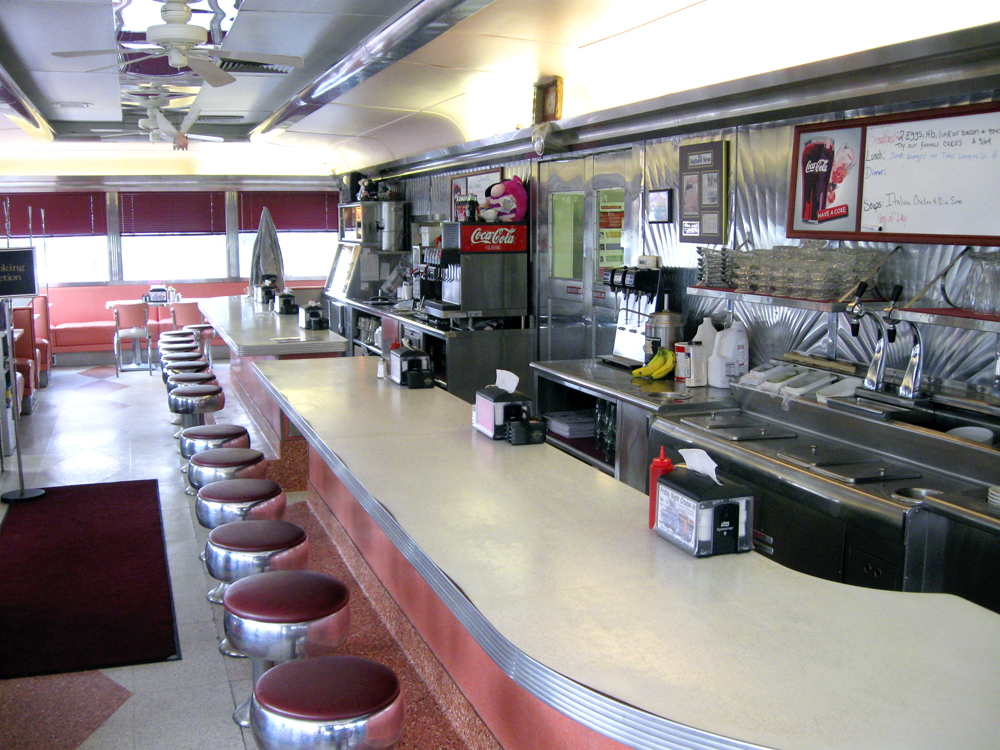
Sometimes I imagine myself following suit, hopping in a car and setting out to explore the roads of America, spending the nights in seedy motels, breakfasts at local greasy spoon diners. Intriguing stories, colorful people, bacon at every meal, and all the time the revving guitar licks of Chuck Berry propelling me forward. But then I think that most of America probably doesn't look much like that anymore. These days it's probably "big box" chain stores from sea to shining sea. Starbucks, Lowe's, Home Depot, Kentucky Fried Chicken, Walmart.

I recently told a colleague from Alabama of my desire to see the South, to sip mint juleps on mossy plantations, to encounter the mystical land where the trees sink into the earth at night and the natives speak some twangy, Huckleberry Finn-worthy dialect, to boldly go where it's not unusual to find a reptile in your sink in the morning. He looked at me like I was crazy. "We've got all the same shit you have up North," he said. "Starbucks, Lowe's, Chick-fil-A. Except there's even more of it down South." I don't want to believe him, but I fear he may be right.

Best not to take the family along for the ride then. My eldest daughter doesn't care too much for Chuck Berry anyway. She doesn't understand why he talks that "weird way," and why he has such a "strange name." I thought this was a function of her ambiguous national outlook, but then again, when was the last time you met a seven-year-old boy named Chuck? While the last rays of the "golden days" of America still warm my shoulders, to my daughter they are more like the redshift of some distant, long-dead stars as measured through a high-powered telescope. "How weird." "How strange." "What does it all mean?" Get out those calculators!

I have a hard time comparing my ideas of America to the Estonians' ideas of their own country. Sometimes I get the feeling that I am living through the country's "golden days" though -- a time when everyone suddenly had their own car and the freedom to drive it wherever he or she wanted, to Narva or Pärnu, or even straight to Portugal, stopping at little mom-and-pop cafes along the way.

The current adult generation of Estonia was born into cramped Khruschevka flats and leaning, wooden 19th century ghettos, and now many occupy grand, well-furnished apartments, drive respectable automobiles, spend their summers at their personal cottages, and take off in winter to sunbathe alongside the Britons and Germans and other Western European purveyors of horrible haircuts in places like the Canary Islands, Turkey, and Thailand.

The country has experienced a "big bang" of improved living standards and increased access to material goods. Some of them are still using wood furnaces and dry toilets, but now they have mobile phones and big screen TVs -- whatever they are good for. Of course, the elderly have been screwed in the scramble, but, lest we forget, the elderly were the poorest group in 1950s America too, afforded a spare bedroom in the homes of their more successful children.

I wonder if Estonians of the future will look back on these years as an era of "happy days," but I doubt it. Despite the efforts of the best song smiths, they are still cranking out crappy europop, and there is no Chuck Berry-like savior in sight. And the country seems to carry on a perpetual doomsday mentality, where the silver lining of every cloud is overlooked to focus on its dark and stormy center. "Don't worry, it will get worse." This is the country's graveyard mindset. While their Nordic neighbors profess to be the happiest on earth, the Estonians often proclaim their deep dissatisfaction with each other and everything else.

Even now, as warm summer sets in, people are openly friendly to one another, but probably think the country is heading in the wrong direction. Given that most of them have never had it so good, I wonder why that is.

pühapäev, aprill 17, 2011

igal tibil on auto tänapäeval

How doth the little crocodile
Improve his shining tail,
And pour the waters of the Nile
On every golden scale!

The setting: a parking lot in Tartu, Estonia's second largest city. The parking lot is situated on top of a hill. To the rear stands the university library, across the street is the Vanemuine theater. Both buildings are culturally significant, both are sprawling masses of gray. Neither has any discernible shape. The day is gray and misty. The parking lot accommodates the maximum number of vehicles.

The characters: My daughters, two little girls high on gelato, running around the (mostly) dry fountain in front of the library. A friend named Kristjan, a wiry Estonian man in his mid thirties with deeply set, Finno-Ugric features, and deeply set hatred of neoconservatism. He is dressed in black and seems preoccupied with the state of the world. Me, a Roberto-Benigni-meets-Luciano-Pavarotti colossus of awkward gestures and jerky body movements, dressed in a gray coat and flat cap. I am in dire need of a shave and haircut. Finally, a young woman, perhaps in her early twenties, dressed in a white coat with jeans. She is tiny, and perhaps stands as tall as my elbows. The woman has long blond hair that may or may not be genuine, and one of those eyelash jobs that consist of generous helpings of mascara and tiny false pearls.

The young woman approaches me. Kas te saate mind aidata? she asks. Mul on aku tühi. Kas teil krokadiilid on?

My brain is a bit slower than usual, perhaps because I have just consumed a giant glass of melted ice cream. Still, it quickly processes that she needs my help and that her car battery is empty. The last bit, about the crocodile, throws me off. In the distance, my children are running wild in front of a sculpture of the revered semiotician Juri Lotman's profile. Kristjan is watching them with an unsatisfied look on his face that tells me that he is now thinking intensely about global inequality.

I mumble something like, "I'm sorry," to the young woman and walk away. She frets, biting her lip. She looks around for another person to save her. As I walk toward my car, I think about crocodiles. I think about their big jaws. A certain poem by Lewis Carroll comes to mind. I think about how if the woman's car battery is empty, someone will have to jump the car. To do that, would require jumper cables. Then something clicks in my tired, gelato-weary brain. The jumper cables resemble the jaws of a crocodile. Perhaps the animal-obsessed Estonians refer to jumper cables as crocodiles?

I return to the woman a moment later with the cables in hand. I have been saved so many times by other travelers in situations just like this. Now it is my opportunity to return the favor to the universe. The woman shows no sense of relief, and she has no reason to, as my oldest daughter is now tugging at my sleeve. "I need to go pee pee," she says. "I'll be right back," I tell the woman.

Twenty minutes later, my daughter and I emerge from the library, during which time she locked herself in the bathroom, and I stood outside the woman's toilet, unable to rescue her until an inquisitive librarian inquired as to why the strange man was hanging around the woman's toilet and promptly entered and liberated the frustrated child. In the parking lot, the woman is still standing in front of her car. My wife Epp has now appeared, following an afternoon meeting with some witches and conjurers on the edge of town. After some light bickering about what took so long, laughter ensues when I explain the toilet situation. Now, to rescue the woman.

"Every chick has a car these days," Kristjan remarks to me with a grin before I pull my car in front of the young woman's tiny white car. Igal tibil on auto tänapäeval.

I have the cables in hand. I am ready to jump the young woman. But there's one problem. Does red go on the positive or negative? And which to connect first? I am almost 98 percent sure that red goes on positive and black on negative, and positive is connected first. I have done this so many times before. Why can't I remember now? I think about calling my father, but decide against it, as not to embarrass myself again. Epp calls our business partner Tiina who knows everything about cars, as her father is a mechanic, but she does not pick up. Just then, two men and a woman pass by I inquire about the colors and they are eager to help. The men speak Estonian. One is dressed in a red jacket. He has the kind of sturdy figure and round face that make him immediately recognizable as an Estonian. To me, with his short red hair and big cheeks, he looks a bit like the outgoing Virginia Senator Jim Webb, but nobody here knows who that is. His friend is darker and lankier. The woman is dolled up. Long black boots, black dress, blond (from the bottle), miserable makeup job.

While the he helps consult the young woman on letting the battery charge, the dolled up woman complains loudly to the Jim Webb lookalike. He answers her back in Russian. This throws me off completely. Are these guys Estonian Russians? It's possible. Tartu has a sizable Estonian Russian minority (about 16 percent of the population considers itself Russian), but most are well integrated into society and the "us and them" vibe that still pervades to some extent in Tallinn is absent here.

When the young woman's car successfully starts up, I thank the Jim Webb lookalike in Russian. "Sbasibo," I say, awaiting a quick, happy retort in Russian. Instead he looks incredibly confused, as if he doesn't understand the word, or as if I have even insulted him. I say Aitäh instead. Then the two men wave to me and rejoin the Estonian Russian woman, who is still pouting beside the car. I imagine she might have been jealous of the young woman in trouble.

On the way out of Tartu, we try to decipher the ethnopolitics of the parking lot situation. Kristjan hypothesizes that the Jim Webb lookalike was an Estonian guy with an Estonian Russian girlfriend. "Estonian women prefer to partner with foreign guys like you," he says. "That means Estonian guys have to partner with Estonian Russian girls. But then who do the poor Estonian Russian guys hook up with?"

"I don't know," I answer. "Uzbeks?"

"Chinese!" Epp proposes and laughs from the backseat. She might be serious.

We drive on. "Can you believe the Estonians reelected Andrus Ansip?" Kristjan says, glaring out the window at some unfinished suburban housing developments. "This is very Estonian. We have an economic collapse, and we'd rather blame ourselves than a politician. High unemployment? It's my fault. It's all my fault." He taps himself on the shoulder.

"There is a photo of Ansip in that sports club over there," I gesture at a building on the edge of the city. "It's on the wall. It's of him, Siim Kallas, and Anders Fogh Rasmussen. I guess they took a sauna together."

The part of the city we are driving through now is an ugly landscape of gray buildings, power lines, mud, and mist.

"Sure," says Kristjan. "I bet they had a nice little neocon summit in there."

In the backseat, the children are now fast asleep, their sugar highs finally crashed as we head back to Viljandi.

teisipäev, aprill 12, 2011

the missionary position

I was reading some of the colorful comments regarding an interview I did with ERR last month. While I decided not to join in the fray, I did come away from it feeling a little more bitter and less satisfied with life.

I actually have little reason to feel bitter today. The weather is gorgeous. Not a cloud in the sky. The huge mounds of dirty snow are melting. At lunchtime I went for a walk around Viljandi, took in the lake, the winding old streets, the proud renovated homes that gleam in the sun and the shanty-like dumps that still stand beside them looking as if the Germans only retreated yesterday.

Viljandi. I took a deep breath and tried to accept that winter is really over. In my heart I don't believe it is, but the weather and the calendar say it is so. I had resigned myself to an endless winter. Antarctica until the end. It's been months since I succumbed to the cold. And now it's suddenly mild? And I am just supposed to forget about all that? But I must adjust. I have no control over the weather just as I have no control over the condition of Viljandi's houses or sidewalks. Estonia just is what it is and I strongly suspect that I will be unable to change it in any meaningful way. How could I? I am just one man, and certainly not gifted with the self confidence or spiritual fortitude to join the ranks of Dr. King or Gandhi, both of whom were assassinated, I'll add. No, just a puny individual. Ok, I may be a little taller than most, but so what?

Just as I succumbed to winter and now spring, I have come to accept that I am not going to wean the drunks at the A ja O off the bottle. I am not going to stop your cousin from blowing his salary at this country's myriad casinos. I am not going to make your waitress more perky, or neuter your neighbor's cat so that your property doesn't smell like a club urinal during Spring Break. I am not going to "integrate" the Estonian Russians or tame the vehicular insanity of the Tallinn - Tartu highway. I can barely get my children to put their jackets on. How am I supposed to change Estonia? I can't even vote.

Yet, the impression I get from reading ERR comments, and the reason I stopped reading them on Baltic Business News a while back, is that it seems so many foreigners think that they can somehow change Estonia. That it would be easy, if only everyone listened to them. Not only that, it seems as if they are frustrated that Estonians haven't listened more attentively to their exceptional and brilliant ideas. It is my observation that when so-called Westerners come to Estonia they often fall into the trap of assuming this "missionary position." The perspective includes a) the belief that one has come from a superior culture and b) the same person is therefore entitled to lecture the locals about the "proper" ways to do things to make the inferior culture more like the superior one.

I admit, I have done the very same thing here on this blog, over and over again. It's most likely unavoidable and probably not just a symptom of the imaginary West-East or American-European divide. Estonians who find themselves confronted by the peculiarities of any given Western country also tend to gripe. "What, no free Internet?" "Paper checks? You guys are still using these old-fashioned things?" "You still have a landline?" "This bread is terrible." "What do you mean they don't sell astelpaju siirup at the corner store?"

Still, I doubt that any of these Estonians actually thought that by writing a well-intended blog post or commenting anonymously on an online news story they could change things. It's one thing to opine about paper checks. It's another thing to expect their immediate elimination based on the sharing of one's superior wisdom. There are only 1.3 million Estonians, remember, and they live in 132nd largest country in the world, right between the Dominican Republic and Denmark. Most are aware that changing the financial idiosyncrasies of the United States is beyond their means.

Given this sense of resignation, the sight of Western missionaries nudging into the Estonian melee to point out how things really should be becomes more and more hilarious. "Hey, you, disenfranchised Estonian Russian kid, learn Estonian already. And you, grumpy waitress, be more friendly. Haven't you heard, the customer is always right?" I may have been that very person, I probably still am, but if I am, I don't really expect Estonians to take an American like me very seriously anymore.

Maybe it's because I am an American. Fifty years ago I might have had the cultural firepower to go around bragging about my shining city on a hill, where the plumbers live right next to the doctors, but these days the doctors live beyond tall fences, down long driveways, far removed from the plumbers, who may or may not be citizens. And don't ask me. Ask everyone else. Sixty-three percent of Americans think our country is heading in the wrong direction. It is the majority opinion.

Sadly, rather than just bringing our bright ideas to Estonia, it appears us men of the West have also brought our bitterness and dissatisfaction. And if you read most online comments in Estonia, it's more of the same. Fingerpointing and vitriol. It makes you wonder if we really are so different.