neljapäev, aprill 01, 2010

põhjamaade satelliit

It's all becoming very clear to me, the whole thing. My perspective is informed by time and distance. Only with time and distance is it possible sometimes to make sense of things.

It began with a newspaper on a Wednesday morning. Sami Seppänen, CEO of Finnish telecommunication firm Elisa's Estonian office, had finally done it. He had unearthed the domestic Holy Grail. The chalice of Kalev. Estonia's Nokia. What is it, you ask? I wanted to know too, so I read the whole article.

Nordic trade unions, Sami wrote. They are always on strike. It's such a pain, that it makes sense for the Nordic countries to outsource their manufacturing to nearby Estonia. And they are already coming.

"Electronics producer Elcoteq is expanding its manufacturing in Tallinn, the Danes' Flexa is closing its factory in Denmark and moving its furniture manufacturing to Estonia, the Finns' Incap wants to close its Finnish factory and bring its electronics production to Estonia, the Swedes' car tire maker Trellborg is bringing from Sweden part of its production over to Estonia, and Ericcson Estonia's production is also growing."

It's like a perfect storm, no, even better, a shooting star, a Nordic meteroid of manufacturing jobs is headed this way, set to recreate the awesome collision in Saaremaa that Lennart Meri hypothesized gave the Scandinavians their "Thule" so many years ago. But how should we feel about this? How should we feel now that the search is over, and Eesti Nokia is on its way across the Baltic, packed away in boxes of electronic equipment?

The Scandinavians and the Estonians have a long, intimate history. As far back as the fabled year of 1991, when the Estonians regained their independence, historians familiar with old chronicles agree that it was not the Americans or Brits or French who were most eager to recognize it. Instead it was Reykjavik, followed quickly by Copenhagen, that, two days after the August 20 reaffirmation, restored relations on the basis of the de jure relations that had existed since 1922. Reading Seppänen's article, I began to wonder, maybe this was the secret plan all along: to pry the Estonians away from Moscow so that they could become the "sixth Nordic country," akin to the "fifth Beatle," a nifty little R&D and assembly shop, a satellite across the sea.

Of course, no Estonian is content to be the fifth Beatle. Even if he just plays organ on a few songs, he wants full membership in the band. He wants to be on the album cover, not in the liner notes. The Estonian wants to see his somber tricolor up there, tossing in the air alongside the crosses of the giants. He aims to look Stockholm in the eye, not up the nose. And so the joy with which Estonia's Nokia is received is muted. Others whisper. What can sate the Estonian's hunger for status, money, and international prestige?

At night, I pace back in my workshop, trying to put it all together. For years, the Estonians have dreamed of their own Nokia, their own launching pad to prosperity. But what if Seppänen is right? What if Estonia's Nokia doesn't come in the form of shiny communication devices, but as manufacturing jobs outsourced to a sunny corner of an often troublesome galaxy of labor. I worry as I pace. Will the Estonians be content? It's up them, I determine. Something to mull over as they assemble consumer electronics and detail rubber tires.

neljapäev, märts 25, 2010

isa teab paremini

While the Estonian parliament wrestled with a new bill that would raise the age at which residents can begin receiving their pensions, a journalist sent me a few questions: Why don't Estonians take to the streets to protest unpopular government decisions? How come Estonians prefer to cower behind anonymous Internet comments rather than to make their voices heard in public?

Like the men and women on Toompea, I struggled to find an answer. What could it be? What makes Tallinn unlike Athens and Paris? How come other Europeans let their representatives know when they are angry, but Estonians, yawn, are content to yell at the TV set or beat their chests in cyberspace?

Could it be temperament? Could it be that the glacial Estonians are too slow and peaceful to pick up placards and storm the capital to voice their concerns? Or maybe it's the weather? Surely, a late March thaw is no time to stand around in a crowd of cold and unhappy people? I toyed with this idea at first, but eventually came to dismiss it. It is true that the Estonians are stereotypical northerners. It is true that Estonia is cold. But neither stopped the Icelanders from bringing Geir Haarde's government to its knees last winter. Why, they even burned Christmas trees at protests in Reykjavik. So if there is an explanation for the Estonians' aversion to mass demonstrations, that isn't it.

With the iceman theory debunked, I tried my hand at the good old reliable post-communist explanation. Estonians were held captive at gunpoint for around 50 years by Moscow. You needed a visa to visit Hiiumaa. Under such circumstances, of course Estonians are protest shy. Why would anyone conditioned under such a system assemble in public to question the status quo? That's just asking for trouble. I started to buy into this theory too, until I remembered the Latvians with their umbrella revolution and the Ukrainians with their orange revolution. They had communist pasts too, why, they had even been constituent parts of the same commie super state. Still, that hasn't stopped them from taking it to the streets in recent years. Like the iceman theory, the post-commie theory doesn't hold up.

So what could it be? What keeps Estonians indoors accusing each other of being national socialists or communists or both from the comfort of their own homes rather than taking their grievances to the halls of power? Without a simple theory to fall back on, I began to stitch together my own, new theory, a political one at that.

According to my political theory, Estonia has been run by basically the same politicians for years. Since 1999, Estonians have had Mart Laar (Isamaa) as prime minister, followed by Siim Kallas (Reform), who was replaced by Juhan Parts (Res Publica), who was succeeded by Andrus Ansip (Reform), whose current minority government is a coalition with Laar's conservative fusion of Isamaa ja Res Publica Liit, and includes Parts as minister of economic affairs and communication.

It is true that the current coalition is a minority government, which, by definition, means that most Estonians did not vote for it. However, the opposition, a motley crew of Centrists and Social Democrats plus two smaller parties that are on life support, the Greens and People's Union, is in no shape to offer any serious challenge to those in power. Reform and IRL's jobs are secure. And, with parliamentary elections 12 memory-loss inducing months away, Ansip's government is in a position to do basically whatever it wants. Estonians know this and therefore don't bother to waste their time trying to influence those who probably will be unmoved by street demonstrations.

Critics of social democracy often refer to social welfare policies as manifestations of the "nanny state," where the imaginary "nanny" of bureaucracy is entrusted to take care of you from cradle to grave. I would argue that what we see in Estonia these days is a paternal "daddy state," where the government makes its decisions and, in most cases, once the leadership decides on something, it's set in stone. Isa teab paremini, as they say, father knows best. And if you disagree, what are you really going to do? Vote for Centre Party leader Edgar Savisaar? If you're a pensioner, chances are you probably already do. And if you're not? Well, I'm sure the party spokesperson will circulate some talking points to allay your concerns.

neljapäev, märts 18, 2010

autod

My father-in-law was right. Andres said we should get a Volkswagen Sharan. But we didn't, we got a Mercury Villager, an Ameerika auto as they call it here. We've paid for it ever since.

Ameerika auto in Estonian doesn't have the negative connotation you think it does. If you drive one, it does not necessarily mean that you are obese or prone to support any war your government presents for your approval. What it means is that if some hooligans decide to rip off your windshield wipers and do damage to your antenna, as they did to our car during the pronksöö in '07, you'll have to order spare parts. From America.

Had we listened to Andres and bought a Volkswagen, we wouldn't have had that problem. There are VW service centers all over Estonia and Germany isn't as far from Estonia as the US. If the Saksa Kultuuri Instituut on Kastani Street in Tartu can be stocked weekly with fresh issues of Frankfurter Allgemeine, then it's fairly easy for an Estonian mechanic to fix a Saksa auto. But we didn't listen to him because the Villager was such a good deal. Plus it had been shipped here from Staten Island by some Estonian-American international car merchant. It still had the dealership's label of Freehold, NJ, on the back. I took it as a sign.

I shouldn't complain. The old red caboose, which I nicknamed "Zhou Enlai" on account of its color and license plate letters and numbers, was fairly reliable, zooming across South Estonian country roads for years, hauling books from Tartu print houses to Tallinn warehouses. But even good things must come to an end, and this winter Zhou froze to death. He's been sitting in a lot in Ülejõe ever since as we contemplate either getting him a new engine or putting him and his rare spare parts out to pasture.

And so now we hunt for a new car, something a little more reliable than Zhou. One of our friends, an Estonian mechanic named Akko who came to Tartumaa via Tajikistan, recommended a KIA, a Korea auto which sounds nice when you say it, but, having seen too many Vietnam movies as a kid, reminds me of a certain dreadful acronym. We were contemplating the KIA, when friends and family came out of the woodwork to point us in other directions. Supposedly the new KIAs are better than the old ones, and the reason why this KIA is such a sweet deal is because that's all it's worth. But it's hard to make decisions when one know-it-all is telling you that a car is a great deal and the other know-it-all is telling you it's a shitbox. What to do?

Looking for cars is a disorienting experience. If you spend enough time looking, you can't help but notice how ridiculously they are all named. Only the drug companies, with their Nolvadexes and Removabs and Jantovens, can beat the car companies with their Fabias and Cordobas and Mondeos. They sound like minor characters from some long lost Shakespearean production. But in this forest of names and numbers, we will find our next ride.

This new car must be energy efficient, we've determined, smaller, but with enough legroom for big people like me, popular enough in Estonia that it is easy to find spare parts, not too expensive, have five seats and preferably four doors (though two doors might be ok), and be automatic because even though we've given up on Ameerika autod, the guy behind the wheel will still be an ameeriklane and in America 75 percent of cars on the road are automatics (in Estonia, it's the other way around). I am writing this post now because I need your help. I am also writing it because I know how passionate people are about vehicles.

esmaspäev, märts 01, 2010

põdrad

I knew I was nearing reindeerland as soon as I headed towards the Tallinn docks. Some cheeky Finnish youth actually said "Welcome to Helsinki" to me as he trudged through that day's blizzard towards the ship with a bundle of discount booze in his arms.

I had the privilege of spending some hours amongst Estonia's northern kin that day. Some notes on the neighbors:

* According to a recent column by Finnish Foreign Minister Alexander Stubb (left) in Finnair's in flight magazine, his country is among the happiest in the world, if not the happiest. How this washes with having three public shooting sprees in as many years is anybody's guess. Maybe those three mass murderers were the only unhappy people in Finland?

* Grouped by some wacky 19th century anthropologists with Japanese and Koreans as part of the "yellow race," there is some truth to Finland's eastern orientation. Finnair maintains reliable services to many cities in Asia, including three destinations in Japan and China each. Even though Finns have had preciously little to do with Asian culture or history, they seem to know what they are doing. It's hard to tell the Finnish elements and the Japanese elements in their marketing campaigns apart.

* Even though Finland has its problems, some Finns still seem to think that life is infinitely better there than in Estonia, which I think they see as troublesome and less stable. Finnish media covered a small protest outside the independence day gala by marginal figures, for example, while Estonian media ignored it. Why? If only Estonia was more pragmatic, if only they knew how to deal with Moscow, if only Estonia had a world class Olympic hockey team, if only Estonians were, basically, Finns, then they would rise rapidly on the happiness scale, according to this line of thought. Little Estonia still needs to grow up. Big Finland is waiting patiently for the day to arrive.

* Some Estonians stereotype Finnish women as being ugly. This is not true.

* Finland seems to enjoy its own monoculture: all the things you could possibly need are produced within the country, with each brand contributing to the national identity. In Finland, your whole childhood can be Moomin, your pantry and closets filled with Marimekko dishes and attire, your communications needs serviced by Nokia. It's easy to spot Finns in airports: they sport the same hairstyles, spectacles, and fashion accessories. It's like they have some kind of secret national uniform. Estonia also has attempted to replicate Finnish monoculture by building its own Esto world of consumer goods, but, so far, it's less convincing.

* Along with consumer monoculture, there is also genetic homogeneity. Researchers will tell you that Estonians are actually genetically closer to Latvians than Finns. That's true, but one should keep in mind that Finns are remote from basically all other Europeans because they descend from a relatively small founder population. This may be why so many Finns look alike. Each one is like genetic concentrate.

kolmapäev, veebruar 24, 2010

manifesto

To All The Peoples of Estonia


Never in the course of centuries have the Estonian people lost their ardent desire for Independence. From generation to generation Estonians have kept alive the secret hope that in spite of enslavement and oppression by other nations the time will come in Estonia "when all splinters, at both end, will burst forth into flames" and when "Kalev will come home to bring his children happiness."

Now this time has arrived.

An unprecedented struggle of nations has destroyed the rotten foundations of the Russian Tsarist Empire. All over the Sarmatian plains ruinous anarchy is spreading, threatening to overwhelm in its wake all peoples living within the borders of the former Russian Empire. From the West the victorious armies of Germany are approaching in order to claim their share of Russia's legacy and, above all, to take possession of the coastal territories of the Baltic Sea.

In this fateful hour the Estonian National Council, as the legal representative of our land and people, has, in unanimous agreement with Estonian democratic political parties and organizations, and by virtue of the right of self-determination of peoples, found it necessary to take the following decisive steps to shape the destiny of Estonian land and people.

ESTONIA,

within her historical and ethnic boundaries, is declared as of today an

INDEPENDENT DEMOCRATIC REPUBLIC.


The independent Republic of Estonia shall include Harjumaa, Läänemaa, Järvamaa, Virumaa, with the city of Narva and its surroundings, Tartumaa, Võrumaa, Viljandimaa, and Pärnumaa with the Baltic islands of Saaremaa, Hiiumaa, Muhumaa, and others where the Estonians have settled for ages in large majorities. Final determination of the boundaries of the Republic in the areas bordering on Latvia and Russia will be carried out by plebiscite after the conclusion of the present World War.

In the aforementioned areas the only supreme and organizing authority is the democratically supported Estonian Salvation Committee created by the Estonian National Council.

The Republic of Estonia wishes to maintain absolute political neutrality towards all neighbouring states and peoples and expects that they will equally respond with complete neutrality.

Estonian military forces shall be reduced to the extent necessary to maintain internal order. Estonian soldiers serving in the Russian military forces will be called home and demobilized.

Until the Estonian Constituent Assembly, elected by general, direct, secret, and proportional elections, will convene and determine the constitutional structure of the country, all executive and legislative authority will remain vested in the Estonian National Council and in the Estonian Provisional Government created by it, whose activities must be guided by the following principles:

1. All citizens of the Republic of Estonia, irrespective of their religion, ethnic origin, and political views, shall enjoy equal protection under the law and courts of justice of the Republic.

2. All ethnic minorities, the Russians, Germans, Swedes, Jews, and others residing within the borders of the republic, shall be guaranteed the right to their cultural autonomy.

3. All civic freedoms, such at the freedom of expression, of the press, of religion, of assembly, of association, and the freedom to strike as well as the inviolability of the individual and the home, shall be irrefutably effective within the territory of the Estonian Republic and based on laws which the Government shall immediately work out.

4. The Provisional Government will be charged with the immediate organization of the courts of justice to protect the security of the citizens. All political prisoners shall be released immediately.

5. The city, county, and township local governments will be called upon to continue their work, which has been violently interrupted.

6. For maintenance of public order, people's militia, subordinated to local governments, shall be immediately organized and citizens' self-defence organizations established in the cities and rural areas.

7. The Provisional Government in instructed to work out without delay, on a broad democratic basis, bills for the solution of the agrarian problem, and the problems of labor, of food supply, and of finances.

E s t o n i a ! You stand on the threshold of a hopeful future in which you shall be free and independent in determining and directing your destiny. Begin building a home of your own, ruled by law and order in order to be a worthy member within the family of civilized nations. Sons and daughters of our homeland, let us unite as one man in the sacred task of building our homeland. The sweat and blood shed by our ancestors for this country oblige us to do it, and we must do it for the sake of our future generations.

May God watch over Thee
And amply bless
Whatever thou undertake
My dear homeland!

Long live the independent democratic Republic of Estonia!

Long live peace among nations!


The Council of Elders
Estonian National Council
February 24, 1918

laupäev, veebruar 13, 2010

west end girls

There's something utterly depressing about hearing the Pet Shop Boys in a supermarket in Estonia. Maybe it's the cold synthesizers or the singer's sad tales of broken romance, but I'd rather hear anything else, I even welcomed Madonna's "La Isla Bonita" after suffering through one of their tunes.

I guess it reminds me of being on the Brighton waterfront at 2 am, with some guy screaming at me that his boyfriend OD'd. I told him, "What do you want me to do? Get him in one of those taxis and take him to a hospital." But he didn't. All he did was cry and scream. What a nightmare. And of course I didn't help, being not only a foreigner with a dead cellphone but a callous bastard, too. But that was then.

I think little of Estonian politics these days. The Ansip years stretch on, buoyed by the prime minister's steadfast belief that he is always right (Crisis? What crisis?). Ansip has supposedly modeled his career on Denmark's Andres Fogh Rasmussen's but he actually reminds me a bit of his overly confident counterpart to the north, Matti Vanhanen. In the same way that Ansip can argue that his country's concerns about the planned Nord Stream pipeline are solely environmental, Vanhanen can tell the Finnish press that an underwater pipeline is good for the environment and European energy security. Matti and Andrus, two sides of the same Balto-Finnic coin (which will hopefully be a euro on both sides of the gulf by this time next year).

I think Estonians are bored with Estonian politics too. Party support has ossified. Reform and Centre trade leads every few weeks, depending on whose leader most recently said or did something dumb. IRL and SDE limp by with their reliable slices of the remaining electorate. The same tired politicians continue to hurl the same insults at each other and few care. The central spread in this weekend's Postimees isn't about Estonia at all; it's about Ukraine. I have to say, I am more eager to read about Ukraine than Estonia.

The underwhelming victory of Viktor Yanukovich over Yulia Tymoshenko last week has caused all sorts of soul searching in Estonia and, in general, the West. Estonians look at the electoral map of Ukraine with its Russophone, industrial east and see Ida Virumaa, perhaps glad that they've only got one county like that, rather than half a country. Americans look at the electoral map of Ukraine and see the irreconcilable "red states" and "blue states." Geopolitical nerds fantasize about a velvet divorce between West Ukraine and East Ukraine. As usual, we blame ourselves. If only we had done more, Ukraine wouldn't have fallen back into the hands of the Kremlin's stooges, some analysts argue. We've missed a prime opportunity and it's all our fault.

Indeed, there are lessons to be learned. I think everyone in the West sympathized most with Yulia over Viktor, even if, as any Ukrainian-born cab driver will tell you, she's just as mercurial and crooked as the rest. It started with her role in the Orange Revolution. I did enjoy watching her spar with Russian Foreign Minister Sergei Lavrov in a series of articles, because anybody who gives it to Lavrov is ok with me.

Tymoshenko, let's not forget, also has the hair. Never underestimate the power of the hair. With Tymoshenko, for the first time, perhaps ever, people in the West had a distinct image of Ukrainians, and a positive image at that. She became Ukraine's romantic nationalist face, with a mug more magnetic than Viktor Yuschenko's or Viktor Yanukovich's. Show the photos of Yulia and the Viktors to anyone on a street in Tartu or Stockholm or London or Vancouver, and most people would probably choose Yulia. She seemed so different from what we've come to expect from Soviet and post-Soviet leadership: not only was she dynamic and charismatic, but she was also female.

Think about it. Who was the last female leader of Ukraine? Actually, I did a little research, and Serafima Hopner was secretary of the Communist Party of Ukraine for a few months in 1918. That's better than Estonia, though, where there has never been since 1918 a female state elder, president, or prime minister. In the West, especially after 12 years of Margaret Thatcher, gender seems less of an issue. Ireland's had two successive female presidents. Even in Finland, Latvia, and Lithuania, women have held the highest office. But still in Estonia, it seems that we are faced with an ensemble cast of middle-aged men who are always right.

Despite the progressive, northern light in which Estonians would like to view themselves, I think the population would actually be uncomfortable with a Yulia-like candidate serving as prime minister or president. At one level, some female candidates have done well as mayors and parliamentarians. But at the top? Estonians swear they are not religious, but they prefer their leaders to be like their Evangelical Lutheran pastors: dour, conservative, plain, righteous, and, most of all, male.

There have been a few exceptions. Marju Lauristin comes to mind as an Estonian leader who was one of the faces of the Popular Front in the '80s and continues to play a role in the domestic debate. She was also the head of SDE for five years, from 1990 to 1995. But Estonia hasn't had a woman running for PM since then and there will probably be no female face at the debates in 2011, either. How is that possible? How is it possible that in a country where 54 percent of the population is female, the heads of all the major political parties are male, and only one minister out of 13 ministers in the government is a lady?

I am sure there is a logical, Estonian explanation for that, and I'd be glad to hear it. In the meantime, while some analysts say that the Ukrainian presidential elections are an example to Russia, which does not have free elections, one could also see them as an example for Estonia, too.

neljapäev, veebruar 11, 2010

käärmann

People talk about war too much, maybe because violence seems so profound, maybe because for people like me who have never been in one, it's hard to connect with those who have, people who have known true horror, those who have run through the woods with weapons, hunting one another like they were wild game. Alfred Käärmann was intimately acquainted with such terror. He died Feb. 4 at the age of 87.

Käärmann's story is similar to that of many metsavennad, the Estonian republican "forest brother" guerrilla groups that fought the Soviets in this country deep into the 1950s. He was drafted into service by the German Reich in February 1944, fought on the eastern front, and went into the woods in Võrumaa in October 1944. The next year, he lost his arm after a fight with Red Army troops. Despite this, he spent seven more years in hiding until his capture in 1952. He did time in Soviet labor camps until 1967, and was only allowed to return to Estonia in 1981.

In his later years, Käärmann was a member of the Congress of Estonia that led the movement to restore the Estonian state. He was also an author and wrote several books about his experiences. Most importantly, unlike many forest brothers, he lived to tell his tale, to even make it into the New York Times as their Saturday Profile in 2003. Because of his high profile, Käärmann is sort of the forest brother to me, the one who represents all the others. I feel connected to him because of those interviews and books, though I never had the pleasure to meet him in person.

Estonia is a country with strong folk traditions, and I personally feel that the drama that went down in the woods more than 60 years ago is being woven into these traditions. There is something deeply Estonian about going it alone, preferring to live off your wits in a hole in the ground for seven years, even if you've only got one arm, rather than be captured and sent to a prison camp. Resilience is the word. Käärmann was resilient. Some might call such a person a hero. But heroes are still just people, and people die. When they die, they become history.

neljapäev, veebruar 04, 2010

communication breakdown

Our friend and business partner Tiina composed a letter to an American publishing company informing them of our decision not to reprint the entire appendix of a book we had translated into Estonian. The reason? Many of the sources were either inaccessible or irrelevant for Estonian readers.

Though Tin's English is strong -- it's one of the main languages in her home, along with Estonian and Swedish -- I was asked to edit this letter, just in case. I was glad I did. To put it bluntly, Tin was blunt. Too blunt. Absolutely rude. Tactless. Rather than trying to assuage the publishing house about our good intentions in cutting part of the book, she went to work on detailing exactly why we had absolutely no need to republish all that crap in their manuscript.

With some buttery, flowery, feel-good American language, I was able to smooth out the kinks in Tin's text to make it sound as polite and quasi-British as possible, cutting of course the obligatory insincerity that pollutes English discourse ("I'm terribly sorry"), and dressing it up in sunny, optimistic tones ("Let's work together to make this book a success"). Our relationship with our partners would remain cheerful but still smart and businesslike.

It wasn't really Tin's fault that the letter came out that way. It's just that if you communicate the way Estonians communicate in English, you can come off sounding like a rude bastard. If your newly renovated house is ugly, they won't tell you that it's different, they'll tell you that's ugly. If they don't like your food, they won't tell you that they're full, they'll tell you it stinks. Estonians are not liars. They'll tell you to your face what they think of you and not even feel the slightest need to polish it with niceties. This cultural idiosyncrasy, as you can imagine, might pose some troubles for Estonian diplomacy.

Such problems work in other ways though. Just as an Estonian might come off as blunt and tactless in English, an American might come off as abrasive and downright ridiculous in Estonian. It was recommended to me, for example, that for a certain media project I contact a university professor who I'll call Virve. "You should work with Virve," said one academic. "She's quite talented." "Oh, you should talk to Virve, she'll help you, she's really good," said another. Finally, even Epp gave it her blessing. "Talk to Virve. She's one of the best."

So I wrote a letter to Virve and said I was contacting her because her colleagues recommended her and said she was quite talented - päris andekas. I thought such flattery might automatically win her friendship. People are vain, right? They like to hear good things about themselves, right? It works in New York. My colleagues always tell me when someone says something good about my performance. But in Eesti?

"Päris andekas?" Virve was surprised. "Should I take this as a compliment or does it have anything to do with my age and gender? This is something we usually say to a school girl."

A school girl? Shit. I checked it out with Epp who confirmed that, in this context, telling someone they are talented, especially a man telling a woman she is talented, is rather patronizing. "Patronizing?" my body temperature dropped. "Oh no, what have I done? What have I done?" I felt like an idiot. Not only had I been patronizing to Virve -- who, surprise, was too busy to help me -- but my patronizing tone had perhaps even been laced with subtle sexism. And all because I told someone that they are talented! (Still ashamed, I'm rubbing my face even as I write this).

These are just the things that happen when multiple cultures collide. There's no stopping it. It's hard though to rectify some situations because some Estonians, particularly some male Estonians, are the opposite of open. There are infrequent displays of, "That's ok, bro, it's all water under the bridge." There's a paucity of self-deprecating jokes. In short, a lot of the Estonians I've met are convinced that they're just about perfect; it's pure coincidence that they happen to be surrounded by assholes. Nobody's perfect, though, not even these Estonians. Life is messy. People are messy. Even people with the best intentions make mistakes. Maybe honesty and openness in these situations are the best policies because not every letter can be edited by a well-meaning friend, nor every conversation monitored for correct usage of vocabulary.

pühapäev, jaanuar 31, 2010

vaene vaino

Even though I live in a post-socialist country with ruins of the state-command economy to be found just around nearly every corner, I have a hard time digesting just what this Estonian Soviet Socialist Republic entity was and, in general, what Communism meant.

The perversions of Stalinism terrify the soul, but they are still abstract. Even if one is to meet old survivors of the deportations and the GULAG system, they are still old and crooked, shadows of the youthful faces in black and white photos they hold out with wrinkled hands and say, "This is me. This is what they did to me."

The cultural divide between my partner and me is wide in some respects because of this, but can still be bridged. She remembers the one, two, three succession of Brezhnev, Andropov, and Chernenko; my geopolitical memory fades in at the moment that Gorbachev takes over. My first-hand knowledge of the Cold War is of its end game. Still, a recent documentary opened my eyes to the reality that, even in the 1980s, there may have been seven time zones between the New York metropolitan area and Eesti NSV, but there were some things young people shared, namely Dallas and Knight Rider.

Disko ja Tuumasõda (Disco and Atomic War) is a film by Jaak Kilmi and Kiur Aarma that investigates the role that Finnish TV played in encouraging pro-Western attitudes, or even Western identity, among Estonians beginning from the 1950s until the late 1980s. The narrated film relies on a combination of reenacted scenes, old photographs and news reels, interviews, and, of course, great clips of JR Ewing getting shot and Michael Knight talking to his car KITT -- a jetlagged (or inebriated) David Hasselhoff even shows up for a special appearance in Helsinki!

"Have you ever seen Dallas?" she asks.

"Have I ever seen Dallas?!" I respond.

The basic answer to the question is yes, I have seen Dallas. The longer answer is that the program is tattooed on my mind, that I know the theme song by heart, I can even see the aerial images of Texas circa 1980 that were used in the opening credits. To this day, I use the intrigues of the Ewing family as a moral compass for life. You don't want to be like JR, right, you want to be like Bobby.

"Yes," I finally tell her. "We watched Dallas."

The odd angle of this story is that, in the old days, Estonians weren't supposed to be watching Finnish TV. Moscow put pressure on both the Finns and the Eesti NSV leadership to put an end to the Nordic capitalist contamination of pure communist minds south of the Gulf of Finland. And the poor guy who was ordered to put a stop to Estonians watching Dallas was Karl Vaino, first secretary of the communist party of Estonia from 1978 to 1988.

Even in old news clips, Karl Vaino comes across as a hapless bureaucrat that would love to comply with Moscow's orders if only they were possible. Stop Estonians from watching Finnish TV!, the geriatric hardliners in the Kremlin bark. Vaino, a yes man, tells them that, yes, he will. The only problem is how. Among the more creative scenarios dreamt up include building some kind of metal divider in the gulf to block the signals coming from Espoo. Such proposals are earnestly discussed by the party leadership, but later abandoned when it turns out that they make absolutely no sense!

And here is where a new understanding of the Soviet system comes into focus: local bureaucrats with no domestic legitimacy being ordered by central authorities with no domestic legitimacy to carry out orders that border on the absurd. And they say yes, of course they do, even if it's impossible, the Karl Vainos of the Soviet Union said yes, cracked down on smouldering dissent, and then continued to ignore the social issues at hand, right up until the whole rotten tenement of a state came crumbling down.

In the end, the only one who sees through Vaino is Gorby himself who arrives in 1986 to be briefed by Vaino and then to go out and tell the media at the airport with the aura of a movie star that the loyal local bureaucrat must be doing a bad job because he says everything in Estonia is ok and it's so obviously not. In the end, Vaino is replaced by Vaino Väljas and he retires to Moscow (where he still, at nearly 87 years of age, lives). He gives one filmed interview to German media where he is asked what precipitated the restoration of the Estonian state. Vaino's answer? Finnish television.

esmaspäev, jaanuar 25, 2010

hurmaa

Any food one could desire is available within Estonia. The hitch is that it is available somewhere in Estonia and that somewhere can change at anytime. You might be able to procure some celery one day at the Selver down the street, for example. But the next week, you won't find it there, but at the Konsum across town. How would you know? You've simply got to go hunting for it.

Fresh produce flows into and out of E-land from myriad locations: Georgia, Brazil, Morocco. It's not even the more exotic products that are difficult to keep in your cupboard, though. I fell in love with Fazer Cacao -- cocoa powder so strong it gives you an uplifting headrush with every sip. I'm not sure where I got it, but then -- poof! -- in a cloud of chocolate dust, it was nowhere to be found. I trekked through Maxima, Konsum, Säästukas, but, no, all gone. One seller tried to pawn off a bag of Nesquik on me, like it was the same thing. Let me just say that I really want to vote for Kalev on the poll to your right, but my allegiance to Fazer Cacao keeps me on the fence.

Which brings us to a curious fruit called persimmons by Englishmen, "cachi" by paesans, and, as I have come to learn in not one but two separate supermarkets, hurmaa by eestlased. Hurmaa. It's a curious name. It doesn't sound like your typical Estonian fruit or vegetable. Õun (apple), jõhvikas (cranberry), maasikas (strawberry), kartul (potato), porgand (carrot), and then, hurmaa? Como? It sounds like an Estonian national park. Between Soomaa and Lahemaa, there lies Hurmaa, an endless grove of pure imagination. And the best thing about my favorite fruit, hurmaa/cachi/persimmons, is that they must have imported a shit load of them to Tartu, because they're everywhere. Maybe the food import gods knew I'd be here, because I didn't see anyone else loading up their bags at the local shop. See, I need things like this to function in society. I need hurmaa to show me that, even if my car doesn't start because it's -15 F/-26 C outside, even if my fingers ache and my face is frozen in one, oddly Eskimo-like position, there was a reason I hiked through the tundra all the way to the supermarket.

The frozen car situation is quite a new experience. I was proud as ours revved up and got us to the office to unload some Petrone Print books. I thought of all those other poor suckers in their pussycatmobiles. I felt vindicated in sticking with our ride, arrogant even. But then pulling out of the parking lot, klunk, nothing. The Antarctic silence was broken only by the hum of my AM radio, which refused to go off. In fact, even removing the key from the ignition would not turn the electric in the car off. It was a ghost car. The lights were on. The radio refused to die. And the annoying air-bag light, which never goes off, kept blinking and blinking. "What's going on?" she was bewildered. "Maybe it's the weather?" I was honest.

I was reminded of a time I went to go help out a writer friend with car trouble who was stranded on a country road in north Estonia. When I approached, his Estonian wife declared: "I should have married an automechanic, not a writer. A mechanic could fix this car. What's he going to do?" she gestured at her mees. "Write a story about it?" With a stroke of good fortune, the writer friend was able to get his machine going after a few hours in distress and ride it back to the autobody shop in Tallinn where manly Estonian men fix things. But that was in the summer. And our car? We had to abandon ship. It's still sitting there in thick pack ice. There is some hope amongst the crew that the weather will soon turn for the better, and the ship will sail again. Until then, we are here camped out on the ice, with nothing but Fazer Cacao, Hurmaa, and each other for company.

kolmapäev, jaanuar 20, 2010

kaks tuhat kümme

I am so frustrated with the state of my Estonian language skills. Frustrated, angry. I'm angry at myself. I'm simultaneously lying flat on my face in the ring and yelling at myself to get up. Get up off that mat, Giustino, get up!

You might think of the main facets of language ability - speaking, reading, writing, and listening comprehension - as a sort of regatta where the sailboats begin the race and, though one may pull ahead of the other from time to time, they are generally neck and neck on their way to the highly anticipated climax, the finish line of fluency.

But it's not really like that. No, language abilities are like the tides: the words flow in and the words flow out. My vocabulary has expanded and contracted multiple times, each time gaining new words and expressions, only to later lose some of them. I know other foreign guys here who don't even bother with the Estonian language. I think of them as perpetual tourists: "I'm on vacation, darling, and besides, all the help speak English." There are still others who have acquired fluency, who quip little indigestible sayings -- they are called kõnekäänud -- to you that make little sense, even if you do manage to translate them, unfold them, stake them out, and examine them under a microscope.

Take Nokk kinni, saba lahti. What does this mean? "Imagine you are a bird," says a friend (and it's always animals with these Estonians). "You are pecking away with your beak, your nokk, but if you peck too hard, then," she lifts up a foot, "your beak gets stuck and your tail, your saba, is lahti, exposed." But it doesn't end there. "Then the bird struggles to get free," she leans in to demonstrate, "and it pulls and pulls and pulls, and then, bang!," she tosses her head back, "the bird loses its balance." I stare. "It's like you try to fix one problem, and you just wind up with another problem," she tries again. "Ok," I nod. I'm still waiting to use this expression in real life, but the best I've done so far is quote from a gin advertisement: nokk džinni, saba lahti.

The most formidable Estonian speaker I have met so far is Epp's uncle, the legendary Onu Tiit. Tiit is the Mount Everest of Estonian listening comprehension challenges. With a muddy south Estonian mumble, even his kids sometimes don't understand what he's talking about. Usually I have to ask him to repeat things two times before I have a good idea of what he's saying. Onu Tiit probably doesn't know this, but he has now inspired me to press on. I will study, study hard just so that I might one day understand around 75 percent of what he says. When Tiit talks to Epp, she understands 100 percent. Poor little Giustino. He wants to run, but still can only walk.

While my comprehension skills boat fell back in the race, reading comprehension glided ahead. Each day I scan the Estonian online news media, learning more about this intriguing windswept peninsula. Some people think newspapers are the enemy, and being a journalist myself, and having seen the unscrupulous characters in the business who delight in fomenting discord amongst their fellow men and women by printing and distributing deliberately inflammatory texts to the masses, I tend to agree. "The shit's going to fly once this story hits the streets," I recall an old editor of mine chuckling and rubbing his hands together with manic, sleep-deprived glee. "We could start a war," he was giddy. "I can hardly wait." Indeed, it's a miracle the entire world hasn't spontaneously combusted by now, given the content of your fresh morning copy of Postimees, or Eesti Päevaleht, or Õhtuleht. But I keep reading. I have to keep reading.

From my sojourns in the Estonian infosphere, I've learned that the Russian chauvinist of the week is Sergei Markov. You may recall United Russia MP and political scientist Sergei as the venelane who took credit for organizing the 2007 cyberattacks on Estonian private and public IT systems. For this, he was banned by the Estonian government from entering the Schengen area, though his name was later controversially removed from that blacklist during Justice Minister Rein Lang's one-month reign at the helm of the interior ministry after Ansip fired the previous minister, Jüri Pihl. Lang later handed those ministerial duties over to Marko Pomerants.

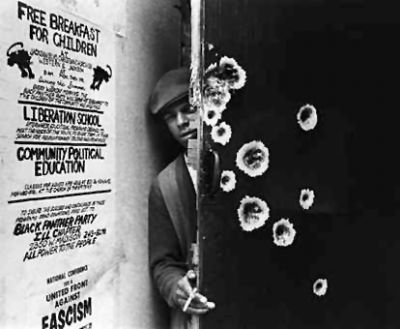
The Estonian media feels that it is its job, it's raison d'etre, to keep us abreast of the ravings of Russia's political establishment. Markov is quoted in this news story as saying that he wouldn't be surprised if Estonian or Latvian Russian Black Panther Party-like groups were formed to bring about "total democracy" in these countries. Not like he's hoping for that sort of thing, but the guilt would belong solely to the "undemocratic Estonian and Latvian governments" should such events come to pass. Of course, a mere political scientist, Sergei wouldn't be willing to pack heat himself in the name of civil rights. Those kinds of menial jobs are usually doled out to the Kremlin youth. This is the kind of nonsense I wake up to when I eat my breakfast cereal. And you wonder why I am frustrated from time to time.

Good thing we've now got contingency plans. Six years after Estonia, Latvia, and Lithuania joined the North Atlantic Treaty Organization, the collective defense organization has agreed in principle to draft plans to come to the aid of the Baltic countries in case of an attack from somebody. Good to know. According to our trustworthy correspondent Edward Lucas over at The Economist, it was the Poles who finally pushed the deal through, somehow convincing the recalcitrant Germans and "other countries" (who?) to drop their opposition.

Baltic defense plans will essentially be an "annex to existing plans regarding Poland, but with an added regional dimension," writes Lucas, leaving room for Sweden and Finland to take a role in the planning too, as they damn well should, considering they own most of Estonia, anyway, (it's rumored, for example, that the replacement investor for SAS in Estonian Air might be Finnair. One can only hope). A big bilateral American exercise, including a fabulous USO show, is already planned for the Baltic this summer, too, and is likely to widen to include the other aforementioned countries, Lucas writes.

As I've mentioned previously, while I am glad NATO finally got around to doing what it was created to do, I am curious to see the contingency plans for older members Denmark and Norway. Like Estonia, they are also water-bound and exposed. But such things would never happen because it would be so uncivilized, and Moscow, being the Third Rome, is on a mission to civilize, not to undermine civilization, right?

This is precisely the logic behind President Toomas Hendrik Ilves' recent declaration that Moscow is not a threat to Estonia. Estonia is in the EU and NATO, the clubs of the civilized. It may even soon have the euro as its currency. And the Third Rome wouldn't attack a country that has the euro as its currency, would it? That would be a PR disaster. For some reason, the Russian elite is still sensitive to how it is seen in the West. And this odd tango between Europe's perceived moral authority, and Russia's self-assigned role as savior of humanity, is what, in the end, keeps us safe at night. Estonia in its 90-year-long soap opera of a history has never been more secure than it is right now, argues Ilves.

He may be right, because as caustic as domestic politics can get, one only need to look at the 1920s and 1930s in Estonia to see how divided the country was back then, how ripe it was for the picking. Estonia endured a Communist attempted coup in 1924, followed by the rise of the right-wing Vaps in the early 1930s, the failure of Jaan Tõnisson's government, and the eventual benevolent dictatorship of Konstantin Päts, who let the Commies jailed in 1924 out of jail in 1938 (not a smart move). Some think of the Soviet period as some kind of total lobotomy that severed all connections to Estonia's political past, but these divisions exist today. You'll find Estonians who strongly support Päts' rule: even if he was a dictator, his heart was in the right place, he was looking out for the national interest, building the state, they say. Then there are those who praise the Vaps as sharply dressed, goodtimey patriots who, if they had been successful, would have staved off a Soviet invasion in 1939, somehow, some way, I'm sure of it. There are Tõnisson people, too, still kicking around. Tõnisson was such a great speaker and gifted diplomat. He could have charmed the two-headed snake of 1930s authoritarianism into submission. That's the thing about history. It never ends. It just goes on and on and on.

No wonder then that Andres Anvelt recently became head of the Social Democrats in Tallinn. If the name Anvelt rings a bell, you're right, Andres is the grandson of notorious Estonian Communist Jaan Anvelt, who led a short-lived Bolshevik government in Tallinn before going underground. Involved in the 1924 uprising, he subsequently fled to Moscow, where he worked for Comintern until he was beaten to death during an NKVD interrogation in 1937, and declared an enemy of the people. With that kind of background, it's only natural that Andres would join SDE, which has interestingly become the ideological offspring of Estonia's deep left wing past. That's what I love about Estonia. Every family's got a few reds or Vaps in it. These people are so mild mannered in person, and yet they've passionately indulged themselves in every passing ideological fad.

But that's just the news in 2010. I crumple it up and burn it in my wood-heated home. The Estonian word of the week, by the way, is vingerpuss. It means 'practical joke.'

neljapäev, detsember 31, 2009

kakstuhat üheksa

According to Barbi Pilvre, the chronically dysfunctional state of the Estonian Victory Monument -- which has been in various states of illumination and repair since its grand opening in June -- is the failure of the year 2009. I agree.

But there have been other failures. Having more than 100,000 unemployed people in a country of 1,340,000 people is a failure, for one. Then there was the horror of watching both Sweden and Finland succumb to the overtures of the German-Russian Nord Stream project, a geopolitical energy deal that sends shivers up the backs of all on the east coast of the Baltic Sea. And Obama didn't even visit Tallinn. Failures, failures, failures all. Line them up. Watch them fall into the sea.

Ouch, Nord Stream. That one really cut. It hurt to see two larger adjacent countries fold in the face Saxon-Slavic pressure, to admit that even with 9 million people and a coastline to rival India's, Sweden is still, in the context of northern European geopolitics, about as intimidating as a lobster. Their security environment and Estonia's are not so different. If Russia really is to buy that Mistral warship from the French -- capable of transporting and deploying up to 16 helicopters, 13 battle tanks and 450 troops -- then surely, they could anchor that sucker off of Gamla Stan or Suomenlinna and bring down hell and fury there, too. But the Swedes and the Finns do not object. Such scenarios are regarded as outlandish. Why?

It appears there is not so much a difference in actual threat, but a difference in threat perception. One central difference between the foreign policies of the Swedes and the Finns and the Estonians, is that the Russian state lacks overt political objectives in the prior two countries. The Russians do not provide the Swedish ambassador with a list of demands to improve relations, as they did in 2002 to the then Estonian ambassador to Moscow. Russia has demands for Estonia, any tango over the laying of pipe in its waters would lead to more avenues for the Slavic octopus to slide its tentacles up the trousers of Estonia's decision makers and play this country like a puppet show. "Hi, I am your prime minister," the Russian Octopus would throw its voice holding up the doll-like Estonian PM. "We've now decided to give the Russians a more privileged interest in our land, because if there's one thing the Russians love, it's having a privileged interest."

No, no, no. Nasty, slimy, grotesque, icky. No. Keep your clothes on. Keep the Russians out and the boys from NATO in, at all costs, even if it means a stronger commitment to the war no one can ever win, Afghanistan. Anglo-led divisions have been in and out of there since the 1830s and yet, the tribal rivalries, the cumbersome terrain, it still feels brand new. And now there are Estonians there, again. To borrow a line from the esteemed Scottish-born poet Byrne: "And you might find yourself living in a shotgun shack/ And you might find yourself in another part of the world/ And you might find yourself being a 20 year-old from a small northern European country patrolling the steppes of Helmand province." And he always finds himself marching in the same direction.

But enough about failures. Who needs failures? Why dwell on failures when everyone knows that failure is just another word for success? Barbi Pilvre may say the monument is a failure for being mired in a state of perpetual renovation. Others might say it's a success for even having been built at all. Even if it was lit up for only a few minutes, what wondrous, successful minutes those were. Sure the economy is still down, but we might get the euro next year, even though we were supposed to get it years ago. The country might have taken a few punches thanks to the financial crisis, but it hasn't burned up in the same decadent, spectacular burst of mismanagement that characterized the Icelandic or Latvian crises. That's success, not failure. The ship of state is in good hands. Estonia is a success story.

Who to salute? Prime Minister Andrus Ansip. According to Ansip, the Reform Party [his party -- Ed.] has welded today's sleek, slick 2009 model Estonia from the corroded junk metal of Soviet socialism. You don't have to wait in line for hours anymore to obtain matches to start the wood furnaces in your homes: there are boxes and boxes of matches at the local Selver or Säästumarket or Comarket or Rimi. That's progress. That's why the Reform Party was and continues to be the most popular party in Estonia according to all polls. Even when they went down in municipal elections, the polls still showed them on top. They've got the upper hand. Great success.

But what do I know, anyway? I could just be making all of this stuff up. But if I am capable of making up the past, and capable of distorting the present, then I might as well predict the future as well. Estonia, I think you are in for a long, boring year. Political life will ossify. The glögi at the local Selver will taste the same as it did in the first decade of the 21st century. Cultural life will ferment with a hint of artsy superficiality and a pinch of dastardly behind-the-scenes badmouthing. And as for getting by, existential politics, well, mu kallis Eesti, we have been getting by, little by little, by and by, for decades. Like the Estonian foot soldier in the central Asian mountains, we know we can march in but one direction.

Piparkoogi mees ja naine courtesy of Nami-Nami, a food blog.

pühapäev, detsember 27, 2009

new yorgi hing

Italians and Jews. Jews and Italians. For a significant chunk of my life, these were the two main ethnic groups around me, the bread and butter of my existence.

Sure there were Canadien transplants and Irishmen and Germans and even the old ice-blooded melange of English, Dutch, and Scotch, not to mention Indians and Pakistanis and Chinese and Taiwanese and Koreans but, no, when it came down to it, the others were but patterns on the wallpaper. Here, it was either Jews and Italians, or Italians and Jews.

Take my high school band. The guitarist? Jew. Bassist? Italian. Drummer? Jew. Singer? Italian. Backing singer? Jew. Trumpeter? Italian. Saxophonist? Jew. And, yes, other trumpeter? Jew, too. There was a third backing singer on occassion. A Pole. That's diversity.

Where did we come from? How did we get here? New York has been overdeveloped but the wildness still sneaks through the cracks. This isn't really our land. This isn't the Mediterranean. This isn't Poland. This is a place where the indigenous names are sprawled across palate-tickling consonants and vowels. The latest addition to the roster of federally recognized tribes is a local one: Shinnecock. They have the luxury of owning the original real estate deed to a piece of Long Island now frequented by the likes of such titans as Billy Joel, Jerry Seinfeld, and Martin Scorcese. But they'll have the last laugh. After receiving recognition 10 days ago, it's almost guaranteed they'll build a casino. They just want what their neighbors have. Call it a case of keeping up with the Seinfelds.

Yesterday I sat in a mall here and the strangest thing happened to me. A man sat down next to me and started to talk. From his looks, he could have been an Italian. Or a Jew. Either way, within five minutes I knew his daughters' ages, knew the story of how he had once plopped all three of them on a wagon and dragged them around this very mall on Christmas Eve way back during the first Clinton Administration when they were all just little girls.

"My oldest is 22, my youngest is 17," he said. "Is she your first?" he pointed at my younger daughter, who was asleep on my chest.

"No, I have an older one, too."

"Well, I guess you just got here. You should take off her hat. Unbutton her jacket. It's hot in here."

I did as I was told but I was concerned. Something was not right. Who was this strange man and what did he want? Money? A special favor? No. His story checked out. The 17-year-old daughter emerged from a nearby boutique and they left together. He even wished me a Merry Christmas. I was puzzled. I tried to think if any random Estonian had ever started a conversation with me in a public place. And I sat. And I thought.

***

Epp wanted to know if I felt nostalgic at the mall. But when I was a child, most of this overdeveloped stretch of Long Island was just fields. It wasn't like this, I tried to explain. The subdivisions, big box stores, acres of parking lots, Lowe's, Sports Authority, Target, Home Depot, K-Mart, Starbucks, none of it was here. I watched them plow it under, piece by piece. And yes, I felt a little bit hurt as they did it. I felt like it was not exactly theirs to develop. Even if I did not own those fields, they were still part of my environment. Once the new temples were erected, though, the curious bystanders went inside. I was one of them.

When I think of my childhood, I think of this reflexive grasping for nature. I remember the snails crawling along the wooden fence in our backyard. I remember the smell of low tide at the beach. The most enthralling entertainment around was The Muppet Show. If my childhood had a host, it might as well have been John Denver. Well, maybe just part of it. Because the mall did make me nostalgic. I was thinking of how my cousin and I went shopping when we were adolescents. I bought Pink Floyd, he got Psychedelic Furs. We stayed up late at night listening to Depeche Mode, discussing the plot twists of Die Hard. These were our totems. Audio, cinema: they linked us to something much greater than ourselves.

I imagine that Estonia is undergoing a similar experience as it watches its fields give birth to shopping centers. You have not been bombarded by a shopping experience until you've walked through the mall at Lõunakeskus in Tartu around the holiday season. It's a disorienting, mind altering experience. You cannot even walk anymore; your brain is overpowered by each advertisement, each revolving sign. You become one with the Coco Chanel perfume, the Timberland boots. It's non-stop action, Lõunakeskus. On one day the ice-skating rink at the center of this commercial octopus might serve as a platform for a hockey game, another day might see it host a figure-skating competition. Lõunakeskus will not rest, it will not stop until you reach into your pocket and buy something.And in the midst of this muddle my older daughter is asking me questions.

Do you believe in God?

I, uh ...

Was Jesus God or God's son?

God's son. At least, that's what they say.

If he died, then how could he come back to life again?

It's complicated.

Good thing we have Christmas presents to blow the hell out of all theological discussions. How did he come to life again? Who cares? Who can care when there are more boxes to open or chocolate to consume? Say grace? Say, how about some more mashed potatoes? God bless you Christmas. God bless you for stuffing your gingerbread dynamite in the cracks of self awareness and laying waste to it all. Destroy, destroyed, destruction, enlightenment. The paper ruffles and the boxes tear, the high of opening gifts lights the air afire. I care to know the answers to no questions other than the one question, the most important question of them all: What did Santa bring me this year?

Santa brought me Henry Miller's Quiet Days in Clichy and a new brown belt. I needed both. Almost a month ago our bus pulled into Roma at 5 am. We all got out in the rain, and I waited on a platform next to a Nigerian drunk who was vomiting all over himself for a train to take me to Termini. I got out at Termini and followed the streets down to the River Tiber, over the river, and onwards to Vatican City. I sat at the foot of the city finishing off Tropic of Capricorn and eating a leftover sandwich of prosciutto and mozzarella. All around me priests and policemen floated by as I regaled myself with Miller's foul language (he's fond of words, all of them). And I wondered if Ratzinger had read this book. He should. He should read it. He might like it. Ratzinger can communicate in dozens of languages. Why not know one tongue more intimately? Miller was from a southern German Catholic family, so's Ratzinger. Why, they're practically cousins.

For the longest time, I have been trying to explain away some of these attributes that allow me to wallow in vulnerability. How come I do not think about God? Ever? Why are they lining up for mass and I am asking Santa for another dirty book? The soul is important and yet, I am not nourishing it, not even at Christmas time. Or am I? I try to explain it away. It's not me, I might think, it's my roots or it's the town I grew up in. It's the company I keep, or the books I read, or the stars that were in the sky on the day I was born. But, as I get older, I am understanding to an even greater extent that it is none of those things. It is simply me.

I even once met a guy who was born on the same day of the same year as me. He had been living one floor above me during my last semester of college. The university had taken possession of a particularly unruly fraternity's house and turned it into student housing. By some turn of luck they had housed me there, along with a group of other seniors who were keen on making use of the premises for wild keg parties. We even invented a name for our imaginary frat: Lambda Lambda Lambda. And this guy, my birthday twin, was at the center of the racket. He asked me for $20 the day before the first party. They day after the first party, he returned to my door with $80.

"We need to throw a few more parties before March," birthday twin said. He wore a black leather jacket, had potato peel-colored hair that was already fading to gray, spoke in a dry deadpan, and always looked a bit amused. "I'm saving up for spring break."

"Where are you going?"

"Mississippi!"

"You're excited about going to Mississippi?" I cocked an eyebrow.

"Southern belles!" he grinned. "Southern belles! I've got a friend at Ole Miss and he's promised to hook me up with some Southern belles!" He played with the remaining cash in his hand. "So are you in for the next one?"

"Sure," I said.

"You had a good time last night?"

"Definitely."

"Good," he snatched $20 back from me. "I'll need this to get us started."

That was my birthday brother. We shared rising signs and moon signs, but when it came down to it, I lacked his adroit business sense and fondness for the Southern lifestyle. It's like I said. It's simply me. Me and nothing else.

***

I went for a walk through a nearby nature preserve yesterday, still hung up on the question of culture. The wild and raw land of the original inhabitants here has been beaten back and reshaped into the image of America's mother country: England. Even now the process is not complete. Everything will be ordered and manicured and named. When I was a teenager I could disappear into the thickets of the nearby forests for hours. Now, most have been tamed and converted for public use or razed to give way to new housing units. I could not resist, though, to just stroll off the path into the forest and then out the other side. To avoid the paths altogether. In the center, I met animal tracks of all different shapes and sizes. Deer had certainly been here. But maybe something else. Maybe a bear? Probably not, but, what a thought.

I know none of the names of the trees or bushes or birds. I wish I had Fred Jüssi along for the stroll. I wish I was Fred Jüssi, just so I could disappear into the forest with a great excuse ("It's my job!") I need to learn more. Right now I know little of nature and little of God and I am 30 years old. There is obviously still much to do. In the evening my father called me from my grandmother's house with a boyish urgency to his voice.

"There's a photograph here," he said. "It's of cousin Cosmo in San Giorgio, except he's dead."

"I don't understand."

"It's like a photo of his wake. He's in the coffin. Do you know who Cosmo is?"

"No."

"Me neither."

"But where did you get the photo?"

"It was on my mother's kitchen table."

"And where did she find it?"

"She said she doesn't remember."

Grandma just turned 91. She's forgetful. But how did she dig up a photo of a man nobody remembers from a village our family left over a century ago? It had been a century until I returned last month. But I'm getting ahead of myself. That's another story.

"She doesn't remember?" I was skeptical.

"She says she doesn't know how it got there."

When my grandfather died, he lingered. I never saw him again, but I felt him in interesting places. He'd just be there, sitting in the chair when I came home late at night. And I was never scared, because it was him. His air was in the chair. He was just relaxing. Maybe flipping through a celestial magazine. Sometime after that he faded away. I figured he was gone for good. Now, I wasn't so sure again. Who knows what goes on in that house at night? Of course, there was a manicured, orderly, curated explanation for it all. Grandma had simply resurrected cousin Cosmo and then forgotten about him altogether. There were a lot of memories in her 91 year-old head. How to balance the events of, say, Dec. 26, 1939, with the events of the same day 70 years later? I decided, though, to believe that some other power had compelled cousin Cosmo to resurface. The photo on the table. My father at the house. For me, the whole thing seemed too perfect.

pühapäev, detsember 13, 2009

christmas in tallinn

I would have walked right past him had two other people not stopped to help him up. And when I saw them stop, I knew they must be foreigners. Only foreigners would stop to help a disheveled drunk with a bleeding head wound in the frosty streets of Tallinn's Old Town.

"Are you ok? How can we help you?" said one foreigner, a man.

"Your head is bleeding! Do you need help? What happened?" said the second, a woman.

"I have a passport!" slurred the drunk. He looked to be about 50 years old, and the top of his shirt was unbuttoned. When he leaned forward, I saw the blood stains on the medieval stone wall.

I stood back, ready to assist. The man turned to me. "Can you speak Estonian?"

"Yeah," I said. "Kas ma saaksin teid aidata?" (Can I help you?) I addressed the drunk in Estonian, but knew it was no good.

"I have a passport!" he said again and reached towards his inner pocket.

"Oletko suomalainen?" (Are you Finnish?) I tried in my best Finnish accent.

"Yes, I am Finnish," he nodded. "I'm fine, I'm fine, I'm just," he paused to hiccup, "fine."

"Maybe you can call someone?" said the foreign man.

I went into a nearby shop and approached the clerk, a young, dark-haired woman who was texting a friend.

"There's a guy outside your window. His head is bleeding," I told her in Estonian.

"There's a guy outside my window," she murmured, still mesmerized by her mobile.

"Can you help at all? I mean do you have any tissues, paper towels?"

"Oh, ok." She finally put her phone in her pocket, and pulled on a jacket. "Where is he?" We went outside together with some tissues for the drunk's bleeding head.

"What am I supposed to do?" she panicked when she saw him.

"I don't know. Call the police?" I said.

"The police? I don't know." She looked around and accosted a round, bearded man in the street and they began to speak in Russian. The man called to someone while the foreigners helped the distressed Finnish drunk up.

"I'll just go back to my hotel," he said, staggering towards the street. "I'm fine, I have a passport," he lunged towards me.

"I have one, too. Are you going to be ok? It's cold. Kylmä," I said.

"Yes, yes," he buttoned his top button. "Fine, just fine, just."

The burly Russian man hung up his phone. "Is everything going to be ok?" I asked him, this time in English.

"Yeah, he'll be alright" he said and walked away. The clerk also returned to her shop and beloved mobile phone.

"Are you sure you'll be ok?" asked the foreign woman.

"Yes, I have a passport, I am going to my hotel," the drunken Finn slurred and limped towards the Town Hall Square.

On the way up the street the foreigners introduced themselves: two tourists, a husband and wife from Oslo. Oslo: I had been there before. I recalled there were drunks and junkies aplenty lining the streets from Prince Haakon's doorstep straight down to the train terminal. And yet these two cared enough to help some stranger in a foreign city. Were the Norwegians just the penultimate specimens of human dignity, or was it just by luck that these two kind ones had passed the drunken Finn, Tallinn's own Little Match Girl?

I bid the Norwegians God Jul and felt ashamed for not having stopped by myself to help a fellow human in distress. Had it not been for the Norwegians, I would have stepped over him like a crumpled, day's old copy of Postimees. Was that the spirit of Tallinn in me, or the spirit of New York, or just the plain old mean-spirited spirit of indifference?

esmaspäev, detsember 07, 2009

matilde ja mina

Disappointment. Utter disappointment. When did it set in? First I had to use the restroom. But it was midnight at the Tallinn bus station and the public pay-for-relief toilets all close at 11 pm. Which means that if you've got to go and you're on the night bus to Tartu or Saint Petersburg, you are quite literally shit out of luck.

"Is there a toilet around here?" I ask the night watchman at the station.

"Not at this hour," he frowns. "Believe me, it's a big problem."

The poor fellow had to hold it until morning. It's amazing what people are forced to do in order to earn a living.

So I let myself go behind some trailers parked on the other side of the bus station parking lot. I tried not to make too much noise, should I attract the attention of adjacent alcoholics. When you think of the term "alcoholic," you might think of an old man with a strawberry for a nose and the stink of rotten innards that shocks the air with its outrageous foulness. But the alcoholics at the Tallinn bus terminal weren't old, they were kids.

I watched them pass a bottle of moonshine around. It had no label. Just a bottle of vodka. Not water. Not juice. Not even limoncello or a 40 oz. Pure alcohol. And how old were they? 19? There was some commotion at the Tallinn bus terminal. Some yelling, some chest beating. Some cry of the frustrated Estonian youth. Maybe it had something to do with unemployment, I don't know. But when Epp told me that the meteorologist for Postimees was beaten to death with a baseball bat outside of Tallinn's Old Town two weeks ago, it didn't come as a complete shock. There are evil people in that city, Tallinn. They lack hope and access to necessary facilities.

The taxi driver was bad. He broke the cardinal rule: don't bitch to your customer about how great things were during "Russian times' (vene ajal -- which actually means "Soviet times" in Estonian, he wasn't talking about life as a subject of that affable chap Nicholas Romanov). Oh, vene ajal this and vene ajal that. "In Russian times, trains were going everywhere all the time: Riga, Moscow, Minsk."

"Who the hell wants to go to Minsk?"

That shut him up.

And the worst thing is that I was coming from Copenhagen airport. All of Kastrup was enlightened by Tivoli-like goodness. There were oceans of Tuborg Julebryg, the Danish beer maker's delicious Christmas blend, waiting to be swum, steppes of chocolate waiting to be traversed, armies of titanic flight attendants waiting to be noticed, and, the most endearing, my old girlfriend, Matilde, waiting for a late-afternoon rendezvous.

For me, my study abroad period in Denmark in 2001 was deafening in its destruction of all things sentimental and sane. It was like trying to sleep inside a timpani during the 1812 Overture. My neighbor was your typical Scandinavian nutcase. Every time she got in a fight with her boyfriend, she'd visit my room just to make him jealous. He'd sit there in her room moping, blasting "I Just Can't Get Enough" by Depeche Mode, while she would tuck herself into my bed and light up a smoke. This happened two or three times, and each time I told her, "I'm sorry, but you just can't smoke in here."

But there were others. The Swedish aristocrat who hated my guts. The Faroese girl who invited me to fix some furniture in her room and then rewarded me with morss (juice from concentrate). The ex-model who used to date the son of the star of an American 1980s TV show, and kept telling me about how she really preferred his dad. "He was just so funny." Only once did I see a normal pige in all of Denmark: she was wearing a shirt with a picture of the Buddha on it and seemed genuinely pleased by the efficiency of Danish mass transit. She was smart. She didn't talk to me.

Through all of this, there was Matilde, the chocolate milk I drank every morning on my way to school. She was always there waiting for me, soothing me in times of distress. And when I saw her there in the airport -- I actually saw about 50 boxes of her there -- my eyes moistened. It had been too long. Yes, I cut my teeth on sweets in Denmark. I pounded the sugar, I saturated my blood. And in the airport I had to relish one more. One more Matilde for old times. It was good. Just as I remembered.

The dark is rising now. In Denmark and in its former possession, Eistland. The dark consumes us, breaks our souls on a wheel of mist and moisture and night. It's sinister. It's the kind of creeping dread that can make a man fall in love with a box of chocolate milk. In such a despondent crapper of humanity as the Tallinn bus terminal, you'd think they'd make it an all night party, just to help us live through this. There should be batches of fresh piparkoogid, vats of simmering hõõgvein, Hanseatic bus drivers in medieval costumes, and toilets that stay open all night long that you can use for free. Free toilets? I know, what you're thinking: that's socialism.

The bus that night eventually dropped me off in some foggy forlorn armpit of south Estonia called Veeriku. I walked past the glimmering Selver, the oase di pace of Tartu, a spark of northern commercial vibrancy in a junkyard of imperial trash, then crossed the miserable railroad tracks where trees are ugly and want to die, and the buildings look as if they permanently contemplate suicide. This was my spot on the earth, for now, the only thing redeemable about it being my little family, a family of women so resplendent they could light up a mining shaft.

As soon as my head hit the pillow, I knew that I would have to procure the necessary ingredients just to survive here. Lemons would have to peeled for more limoncello, armfuls of spaghetti, fusilli, and penne bought just to keep our insides aglow. We would need kalamata olives and pesto and a lifetime supply of passata di pomodoro. And, most of all, dolci, sugary sweetness, loaves of gingerbread dough, ladles full of glögi. There is light at the end of the tunnel. I believe in it, I can almost see it. The more chocolate milk I drink, the brighter it gets.

***

By the way, My Estonia is now available via Amazon (finally). It should also be available soon through, Amazon UK, Barnes and Noble and other online bookstores. Enjoy.

reede, detsember 04, 2009

dead parrot

I couldn't resist. Here's a quick deconstruction of British conservative journalist John Laughland's piece in The Brussels Journal, "The De-Russification of the Baltics Serves a Geopolitical Purpose."

While I will not reprint the whole article here, I believe it contains some interesting and all-too-familiar anti-Baltic memes. Taken one by one, each can be unfolded and discussed. But put them all together, and you have one mesmerizing anti-Baltic ideological stew.

Laughland, Point One: Take the case of the Baltic States. These territories formed part of the Soviet Union from 1944 to 1991, when they became independent a few months before the Soviet Union itself was dissolved completely. They had enjoyed a brief period of independence between the wars, as a result of the humiliating peace forced on a defeated Russia, weakened by revolution, by Germany and Austria at Brest-Litovsk in 1918.

Here are two memes in one paragraph: Baltic independence was brief and the result of a humiliating peace treaty forced on a defeated Russia. I take issue with both. First, the interwar period of independence was not brief. 22 years is not brief. 22 years is a whole generation. Within 22 years, a person is born, raised, and may even get married and sire offspring. Georgia's period of independence from May 1918 to February 1921 was brief. Second, when countries lose wars, they are forced to sign treaties, weakened by revolution or otherwise. I am sure it was "humiliating" when Cornwallis surrendered at Yorktown, too. Nobody feels empowered after losing a war and signing away real estate.

Laughland, Point Two. During independence, the Baltic states became dictatorships (Lithuania in 1926, Latvia and Estonia in 1934). Prior to 1918, Latvia and Estonia had never existed as states: they had been part of the Russian empire from the 1720s onwards, i.e. since shortly after Scotland and England united to form the United Kingdom, and before that they had belonged to Sweden and earlier to the Teutonic Knights. (The history of Lithuania is different.)

Meme three and four: the Baltics were under dictatorships in the '20s and '30s and there is a lack of historical precedent for statehood. But, wait a minute, a lot of countries were ruled by dictators in the 1920s and 1930s. Poland, Germany, Italy, not to mention the USSR. So, the point here is? Second, plenty of states devolved from empires without having experienced recent periods of independence, especially in the 20th century. At least half of current EU countries were not independent in 1914. Good to see though that, in regards to this point, Lithuania doesn't count as a Baltic state.

Laughland, Point Three:
Their incorporation into the USSR in 1944 was therefore not, as many claim today, an act of naked Russian aggression but instead the restoration of a status quo ante which had existed for centuries and which in any case was supported by a significant section of the Baltic political class, many of whose members were ardent Communists.

Meme five and six: a) That whole blockade Tallinn harbor, shoot down commercial aircraft, and threaten to invade with our vastly superior military unless you do everything we say thing wasn't "naked Russian aggression" at all. That was just, like, you know, the "restoration of a status quo ante which had existed for centuries." So if the British took back Ireland in 1940, shot de Valera, and deported the Irish ruling class to Tasmanian slave labor camps, it wouldn't have been "naked British aggression," just a restoration of the way things had been before. I'm telling you, there is a Monty Python sketch in here somewhere. "I didn't kill you, mate, I just restored the status quo ante." b) Baltic political class? Ardent Communists? Really, in whose political interest was it to get a) executed or b) deported by the Soviets? The "Communists" they found to play the roles of statesmen in their orchestrated coups weren't even politicians (or communists for that matter). The prime minister of the Soviet-picked government in Estonia was a poet and doctor, his assistant PM a historian, and his foreign minister was a school master. These men were neither ardent communists nor members of the political class.

Laughland, Point Four: As a result of their long existence as part of Russia (and, later, the Soviet Union) these territories, especially Latvia and Estonia, have large Russian minorities.

That's true, though not in the way he means it. Estonia's largest minority before the Second World War was the Russian minority, about 8 percent of the population.

Laughland, Point Five: When they achieved independence in 1991, the Baltic States decided to adopt as their founding constitutional principle a piece of political fiction known as the theory of occupation. They claimed that they had been “occupied” by the USSR, rather than incorporated into it, and that their independence was merely the restoration of an interrupted statehood.

Meme seven: the occupation never happened. The problem is that, be it political fiction or not, most countries in the world believed it because they had never recognized the original occupation and annexation. They rightly returned Baltic assets kept for 50 years to said countries. Call it a return to the status quo ante. Or maybe just a nefarious Western conspiracy.

Laughland, Point Six:
This theory of occupation is, quite simply, a lie. Occupation is a specific situation in international relations when one country dominates another by installing troops on its territory.

So, according to this definition, the ultimatum to create the bases pact in 1939 and uninvited entry of Soviet troops in June 1940 would count as an occupation. Good to know. From this point on, Laughland careens into the stratosphere. He's bouncing off satellites, diving through black holes. Here's an example: The most important of these measures has been, in Latvia and Estonia, the dogged introduction, over two decades now, of laws on citizenship whose goal is to erode the national identity of Russians by closing their schools and by preventing them from voting.

Say wha? 2+2=5? I keep reading that sentence over and over again, and I get the feeling like he wrote this late at night from a jumble of talking points provided by the Russian foreign ministry.

I think the Russian argument, transmitted via Laughland, is that if all the people in Estonia were allowed to vote for parliament (since they already can vote in municipal elections), regardless of where they were born or what passport they held, then Edgar Savisaar's Centre Party would be running the show and eating out of the Kremlin's hand. But that's not really true. When Savisaar raised the issue of reforming citizenship laws during his address to the Centre Party congress last week, the Social Democrats (SDE) and the Estonian People's Union (ERL), the two parties that would most likely form a government with the Centrists should they win in 2011, quickly said they would not back such reforms. It's just not going to happen the way you want it to happen, Moscow. It just isn't. Sorry.

Supposedly the Russians are gearing up for another exhausting propaganda campaign to waste more time trying to slime Estonia, Latvia, and Lithuania, with the desperate hope that if they repeat the same lies over and over again, they will suddenly become true. I find these campaigns dull and so tiresome I regret even writing this blog post. I also regret actually reading Laughland's article.

neljapäev, detsember 03, 2009

la dolce vita

I just got back from a whirlwind trip of Puglia and Calabria in Italy. I'd love to tell you about it, but I already have a 70-page manuscript and it's growing and growing and growing. It's a book, not a blog post.

At dinner one night in Puglia, though, I was asked a harmless question. We were munching on olives, waiting for the first course.

"Do they have pizza in Estonia?" asks cousin Beppe.

"Sure," I say in Italian. "There's a great restaurant in Tartu where I live called La Dolce Vita. The boss is Italian."

"Boss?" Cousin Lino shudders at the word.

"Boss?" Beppe is equally as astounded.

"Hah," snorts Lino. "I can't believe the mafia is in Estonia, too."

"Mafia? No, no, no, no, no," I throw my hands up in protest. "He's not in the mafia. He's just the boss. The owner. The proprietor."

"Then why didn't you say so?" Beppe looks incredulous. "Don't you know that 'boss' in Italy means only one thing: mafioso?"

"No, I didn't know that."

"Well, now you know," Lino spits out another olive pit.

"Anyway, I didn't think they had mafia in Puglia," I say. "I thought the mafia was in Sicily, the 'Ndrangheta was in Calabria, and the Camorra was in Napoli."

"I can't believe how much he knows," Beppe shakes his head. "How do you know these things?"

"Everybody knows these things," says Lino. "It's common knowledge."

"But who's running things in Bari?"

"The Sacra Corona," Beppe and Lino simultaneously announce and roll their eyes.

"Sacra Corona?"

"They're not Barese," Lino cuts swiftly through the air with his hand to deny the association. "They're from Lecce."

"Lecce," Beppe sighs and grabs another olive.

"And you guys aren't in Sacra Corona are you?"

Lino smiles and raises his right hand, palm facing me. "No," he swears.

Beppe also raises his hand. "No," he gives his word of honor.

"Me neither," I laugh and raise my hand to face theirs. "No."